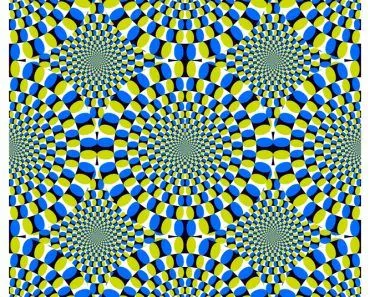
The Wagon wheel effect is an optical illusion that is caused by the brain processing images in a certain way. The brain fills in the voids between images by creating an illusion of continuous movement between similar images. Therefore, if the wheel rotates most of the way along one frame (image) to the next, the most apparent direction of motion for the brain to comprehend is backwards.
Ever observed that a car’s wheel spins backwards when it moves fast? Relax, it isn’t supernatural. There’s a perfectly reasonable scientific explanation to it..
We have all observed this strange visual phenomenon before. A car wheel appears to be spinning backwards, even though we know that it is doing exactly the opposite!
At first, when a car begins to speed up, everything seems normal. The car’s wheels are spinning just as one would expect. However, as soon as the wheels start gaining considerable speed, an anomaly occurs.
At a certain point, the spin of the wheels appears to slow down gradually, and then, for a brief moment, it stops completely. When it resumes, the spin is moving in the opposite direction. We can clearly observe that the car wheels seem to be spinning backwards (opposite to its direction of motion).
Is This An Optical Illusion Or A Real Phenomenon?
Actually, it’s a bit of both, and is known as the Wagon wheel effect.
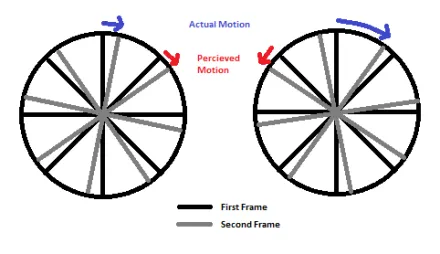
This effect is observable mainly on television or in movies. The cameras used in movies don’t capture continuous footage, but rather many images per second. Usually, this capture rate is approximately 24 to 50 frames per second. Our brain fills in the voids between these images by creating an illusion of continuous movement between similar images.
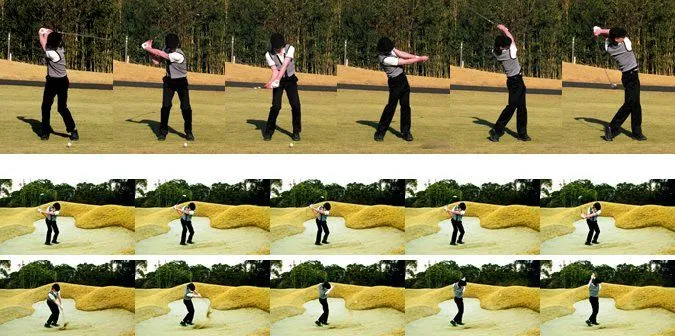
Therefore, if the wheel rotates most of the way along one frame (image) to the next, the most apparent direction of motion for the brain to comprehend is backwards. This is the explanation for the phenomenon in movies.
However, we also observe the same illusion in real life. Surely we can’t blame shutter speed for that too!
So What’s The Reason?
There are two theories currently rolling around in this particular field of study…
1) Visual Cortex

The visual cortex, which acts almost like a movie camera, processes sensory input in temporal packets, taking a series of snapshots and then creating a continuous scene. Perhaps our brain processes these still images in the same way as it does the frames in a movie, and the mistake in perception results due to a limited frame rate. This occurs when the light is strobed (not continuous).
2) Perceptual Rivalry
According to this theory, adjacent spinning wheels are observed by people as if they were switching direction independently of each other. According to the movie camera theory, the two wheels should not behave differently, as the frame rate is the same for everything in the visual field.
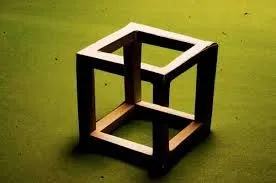
This has led some scientists to a theory that explains the effect as a result of perceptual rivalry, which occurs when the brain creates two different interpretations of one situation, as a way to explain an ambiguous (something that isn’t clear) scene. The perception that is dominant is what we “believe” (in this case, that the wheel is actually spinning backwards).
How Does The Frame Rate Cause The Backward Spin?
On a screen, the trick has a name: temporal aliasing. A camera doesn’t film continuously, it grabs a burst of still photos, typically 24 frames per second for film. The wheel keeps turning during the dark gap between two photos, but the camera only ever shows you those snapshots, and your brain joins them up into smooth motion.
Here’s the part that flips the direction. Picture a wheel with evenly spaced spokes, so each spoke sits exactly where its neighbor did a fraction of a turn earlier. Now suppose that, between one frame and the next, the wheel turns almost a full spoke-spacing but stops just short. Spoke A never quite reaches the spot where spoke B used to be. Your eye has no way to tell that spoke A traveled forward by 90% of the gap; the simplest reading is that the spoke nearest that spot slipped backward by the remaining 10%. Repeat that across 24 frames every second and the whole wheel appears to creep the wrong way. Speed the wheel up until it turns exactly one spoke-spacing per frame and every snapshot looks identical, which is the moment when the wheel seems to freeze before it reverses.
So why do we sometimes catch the effect with the naked eye, under steady sunlight, where there are no frames at all? That puzzle is real. The Dutch researcher J.F. Schouten first reported the illusion under truly continuous light back in 1967. One camp argues the brain itself samples the world in discrete snapshots, rather like a movie camera. A 2005 study by Rufin VanRullen, Leila Reddy and Christof Koch sharpened the case, finding that the continuous version of the illusion almost vanishes when you stop paying attention to the wheel, which hints that it is tied to how attention samples motion rather than to any fixed internal frame rate.
Do Propellers, Fans And Helicopter Rotors Do It Too?
Absolutely. This belongs to the same family of optical illusions, and any evenly spaced, fast-spinning object can fool a camera the same way a wagon wheel does. Aircraft propellers, ceiling and desk fans, helicopter rotors, even a fidget spinner can be filmed apparently standing still, crawling backward, or wobbling. If the blade rate happens to line up with the frame rate, a propeller can look frozen in mid-air.

Phones and cheaper cameras add a second twist. Most of them use a rolling shutter: instead of capturing the whole frame in one instant, the sensor scans line by line from top to bottom, so the top of the image is recorded a fraction of a second before the bottom. A blade racing across the frame during that scan gets smeared into a bent, curved, or even detached shape, which is why smartphone photos of a propeller so often look like the blades have melted or snapped off. The astronomer Phil Plait flagged a striking example of warped, floating propeller blades shot from an airplane window, and traced it to exactly this combination of frame-rate aliasing and rolling shutter.
So, it’s true, this whole thing has more to it than meets the eye, because science always has a hand in the phenomena we observe!
Here’s a detailed explanation of this bizarre anomaly.
References (click to expand)
- Investigation of Aliasing Effects∗ - University of Washington. The University of Washington
- Aliasing. Embry–Riddle Aeronautical University
- Quiz 2: Sampling, Reconstruction, and Aliasing (due 2/5). Carnegie Mellon University
- VanRullen R, Reddy L, Koch C. Attention-driven discrete sampling of motion perception. PNAS (2005). PubMed Central.
- Rolling shutter. Wikipedia.
- Plait P. The case of the floating, stationary, disconnected, warped propeller blades. Bad Astronomy (SYFY).