Table of Contents (click to expand)
Retrograde motion is the apparent east-to-west backward drift of a planet against the background stars, which occurs when Earth, moving faster on an inner orbit, overtakes an outer planet like Mars. The term also covers retrograde rotation, where a planet spins opposite to its orbital direction. Venus, Uranus, and Pluto all rotate in this backward sense.
If you are into astronomy or astronomical observations, then you probably know that the path planets take around the sun (in our solar system) is usually elliptical. However, astronomers have also observed that some planets do not move forwards, but instead seem to be moving backwards. Are these planets actually moving backwards in their orbit or is it some sort of optical illusion or aberration?
First, let’s take a look at the difference between Retrograde and Ordinary Motion.
Retrograde Motion Vs Direct Motion
Rotation in the opposite direction of what is traditionally seen in the cosmos is called retrograde. The planets Venus and Uranus spin clockwise, which is considered retrograde motion. Some small moons also orbit clockwise around their planet, and are thus called retrograde satellites.
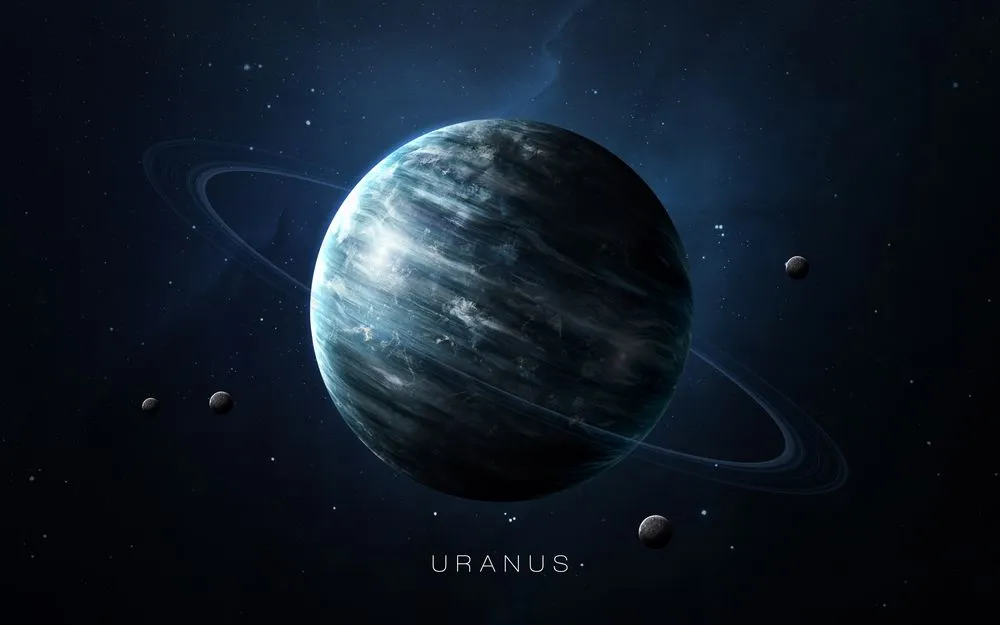
Some comets and small asteroids orbit the Sun in retrograde orbits. These are the exception, rather than the rule, for the motion of celestial objects. The apparent motion of most celestial objects across the night sky is from east to west, but it is possible to observe a body moving west to east, such as an artificial satellite that is orbiting eastward overhead.
By that surface logic, an eastward-moving satellite might look retrograde, since it bucks the usual east-to-west drift of the night sky. However, since satellites you see going eastward would be seen orbiting Earth counterclockwise if seen from the Pole Star, they’re considered direct satellites. There are also artificial satellites that go clockwise, as seen from the Pole Star; these are called retrograde satellites and can be seen in the sky moving westward. Retrograde motion should not be confused with retrogradation. The latter term is used in reference to the motion of the outer planets (e.g., Mars, Jupiter, Saturn). Although these planets appear to move from east to west on a nightly basis in relation to the spin of the Earth, they are typically drifting slowly eastward with respect to the background of the stars, which can be observed by noting the positions of these planets several nights in a row.
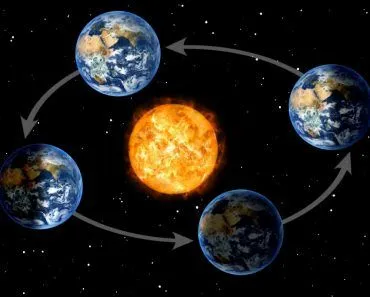
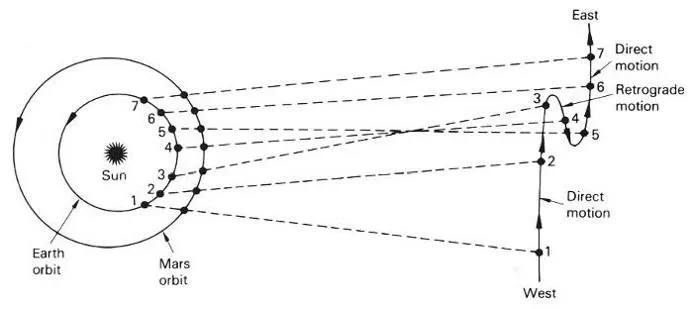
Planets moving in the typical west-to-east direction against the stars are said to be exhibiting direct motion. However, since Earth completes its orbit in a shorter period of time than these outer planets, we occasionally overtake an outer planet, like a race car on a multi-lane race track! When this occurs, the planet we’re passing will appear to stop its eastward drift, and it will begin to drift back towards the west. This is retrogradation, since the planet appears to be moving opposite to the typical direction for planets. Finally, as Earth swings past the planet in its orbit, it appears to resume its normal west-to-east drift on successive nights. To establish a deeper understanding of this phenomenon, let’s take a look at the retrograde motion of our closest neighbor, Mars.
Retrograde Motion Of Mars
Under normal circumstances, the red planet appears to drift eastward against the background stars (upwards in the gif below), but when it’s being overtaken by the Earth, our faster motion makes Mars appear to be going backwards (downwards in the gif below). The normal direction is called direct motion, while the temporary backwards swing is called retrograde motion.
It’s worth being clear about the underlying speeds, because pop-science illustrations sometimes get this wrong. Earth orbits the Sun at roughly 30 km/s while Mars orbits at about 24 km/s, so on average we move nearly 24% faster around the Sun than Mars does. When Mars is near perihelion (its closest approach to the Sun), it speeds up by about 10%, but even then it never moves around the Sun faster than the Earth. We always overtake Mars at every opposition, never the other way round.
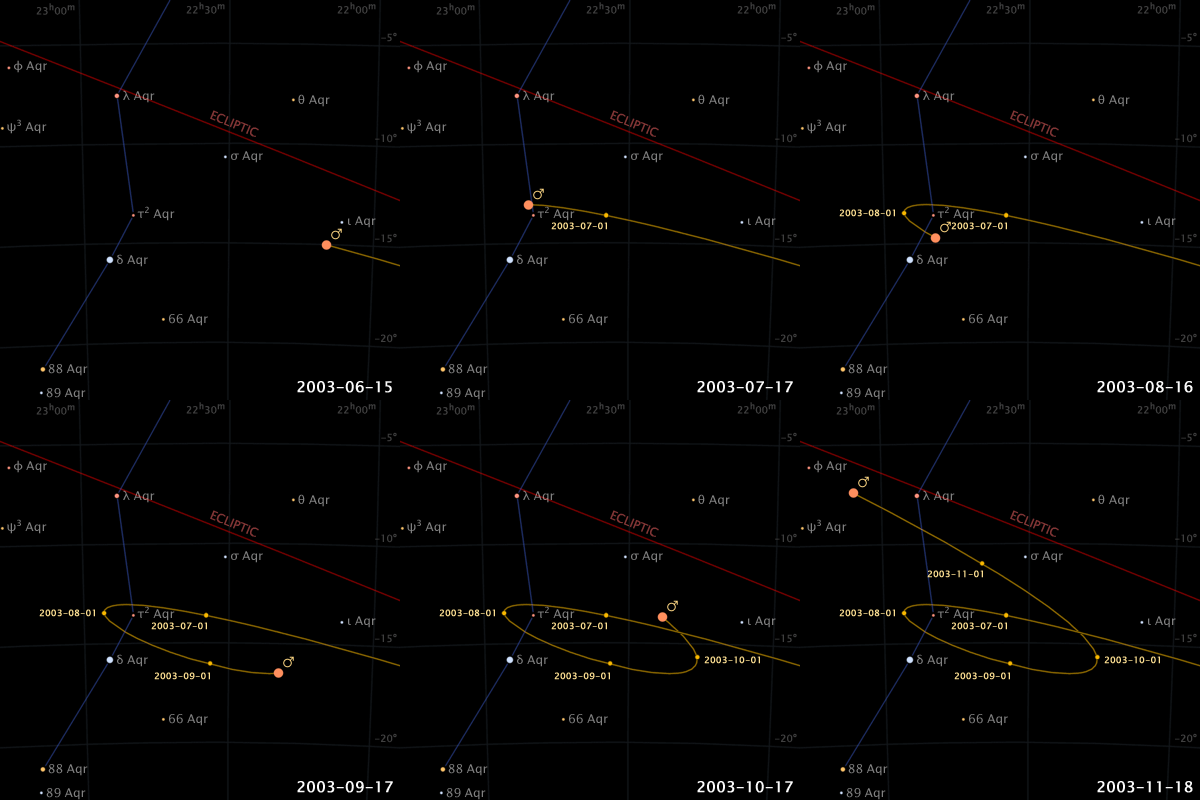
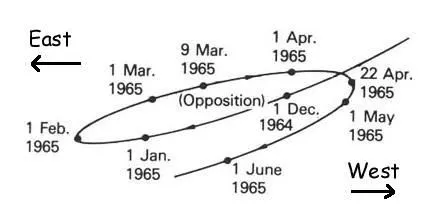
The above gif shows that Mars creates a loop (mapped carefully in the year 2003), because its orbit is somewhat tilted and moves relatively fast. In each “loop”, the planet appears to move to the east (from right to left) prior to it being in the opposite direction from the Sun, at which point it slows down and reverses its path when near opposition (the middle of the loop), and then finally resumes its eastward motion after passing opposition.
As the planets stop moving east and start moving west, their motion slows and may even appear to stop if they have a more-or-less straight line of motion. As a result, the ends of the retrograde motion period are referred to as “stationary” points. In the image, it can be seen that the dots are relatively close together near the stationary points, and further apart elsewhere.
In the illustration above, Mars’ motion slows as it approaches a stationary point, speeds up and then slows down again as it goes through retrograde motion, then speeds up after passing the second stationary point. However, unlike the retrograde loop observed in 2003, the 2005 opposition produced an S-shaped motion relative to the stars. Which of the two types of retrograde motion occur depends on where the planet is, relative to the nodes of its orbit (the directions as seen from the Sun, where the plane of the planet’s orbit crosses the plane of our orbit).
If the planet is near a node, heading either upward or downward during the retrograde motion, an S shape is produced. If the planet is near the top or bottom of its orbital motion (heading up and then downward, or down and then upward) during the retrograde motion, a loop is produced.
In conclusion, the apparent retrograde motion of an outer planet like Mars is more of an optical perception than an actual reversal in its orbit. True retrograde rotation, on the other hand, like that of Venus, Uranus and Pluto, really is a planet spinning the “wrong” way.