A magnet cannot bend a beam of light traveling through empty space, because photons (light particles) carry no electric charge for a magnetic field to grab. Magnetism does affect light moving through a material, though: a magnetic field rotates light’s polarization, an effect Michael Faraday discovered in 1845.
Pick up a fridge magnet and go to your window. Make sure it’s at the time of day when sunlight falls at that sweet angle onto the floor, bathing it in a magnificent vermilion hue. Now, take your magnet and hold it above the window where the light is streaming in.
Observe the path of the sunlight. Does it change in any way because of the magnet? Do you notice a shift in its angle? Perhaps a slight tilt? If you do, you should have your house exorcised, because that’s not the work of the magnet. A magnet sitting next to a sunbeam does not bend its path at all. Some might argue this point, namely stating that light is an electromagnetic wave. In that case, shouldn’t a magnet be able to attract or repel it? Isn’t that how it should work? Actually, no. If the laws of physics are of any consequence, that’s not how magnets work. That said, the full answer has a twist: while a magnet won’t deflect a ray of light through empty air, a magnetic field can subtly tweak light passing through certain materials, as we’ll see toward the end.
How Does A Magnet Work?
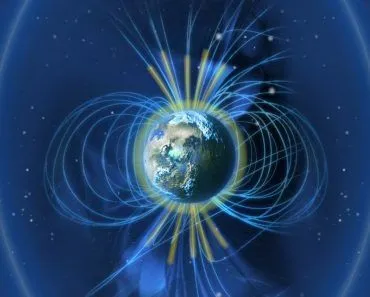
A magnet is basically any object capable of attracting or repelling certain other materials through a magnetic force. (Note that a magnet does not tug on a stationary electric charge, the way a charged balloon does. It acts on magnetic materials and on moving charges, which is a different thing.) The force of magnetism is a direct consequence of an object’s atomic makeup. All objects in the known universe are made of atoms, which consist of electrons, protons and neutrons. Electrons and protons possess a negative and positive charge, respectively, while neutrons remain electrically neutral. Protons and neutrons stay in the center of the atom and form the nucleus, while electrons circle this nucleus. The spin of these electrons creates a current, which turns these little guys into tiny magnets.
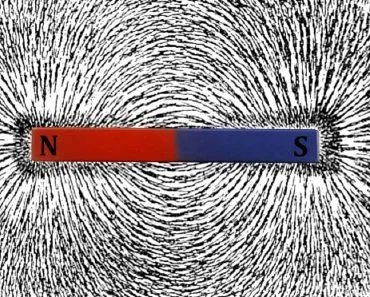
Typically, most substances have an equal number of electrons spinning in opposite directions, thus cancelling each other out, so most substances don’t exhibit magnetic properties. However, in substances like iron, large groups of electrons spin in the same direction, lending it a net magnetic moment. The force generated by these aligned electrons creates a magnetic field, an area around the metal where a magnetic object will face the magnet’s force of attraction or repulsion. This field causes the electrons in the object to align their spin motion, thus lending the object magnetic properties. However, not all objects behave the same way under the influence of a magnetic field.

Types Of Magnets
The most common type of magnetism is diamagnetic, in which objects exhibit weak repulsion at all times. The other types include paramagnetism, wherein objects become magnetized only when brought in contact with a magnet, but lose their magnetism as soon as the magnet is taken away. There is also a third kind of object, those which are ferromagnetic and possess the characteristic capability of staying magnetized permanently. Only three elements from the periodic table are ferromagnetic at room temperature: Iron (Fe), Nickel (Ni) and Cobalt (Co). So, when we talk about magnets, we’re generally talking about ferromagnetic substances. These are the substances that generate a strong magnetic field and influence the behavior of any magnetic substance within range of the field to a large extent.

The Magnetic Field
So what exactly is a magnetic field? There are two schools of thought that explain the concept. Classical scientific theory suggests that a magnetic field is essentially a cloud of energy around magnetic objects that attract or repel other magnetic objects. However, according to the more complicated and difficult to comprehend theory of quantum mechanics, charged particles interact by exchanging fleeting, “virtual” photons that you can never catch in flight, and this exchange is what pulls objects closer or pushes them away. Quantum electrodynamics describes this with stunning precision, even if the picture of particles trading invisible photons feels deeply counterintuitive.

Now that we know how a magnet works, it’s time we address the question at hand. Why isn’t the path of light, an electromagnetic wave, affected by the magnetic influence of a strong magnetic field?
Why Can’t A Magnet Bend Light?
As we’ve come to understand, a magnetic field is the consequence of electrons spinning in one direction. These in turn affect the spin of other electrons in the vicinity and cause them to become magnetized. Basically, electrons affect other electrons, leading to what we observe as the attraction or repulsion of magnets. In the case of a ray of light, all we have to work with are photons. Photons are particles with no electric charge, so a magnetic field has nothing to grab onto. It cannot pull or push a beam of light off course the way it would a stray iron filing.
Wait a minute, isn’t light an electromagnetic wave? Yes, light is electromagnetic, but that simply means it possesses an electric and magnetic field, which does not necessarily distort other fields. Mathematically, if there are multiple electric and magnetic fields in an area, they are all simply added together. For example, an apple on your table is unaffected by the introduction of an orange to the same table. You’ve simply got two fruits on the table. The same principle essentially applies to electromagnetic fields.
But wait… there’s more!
Delbrück Scattering
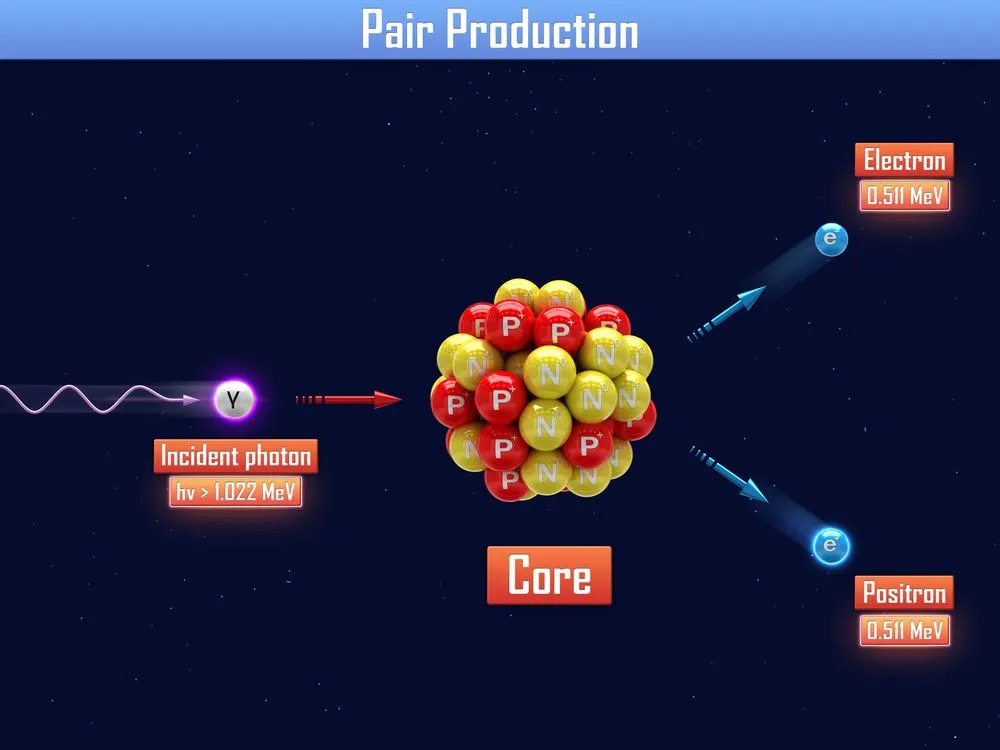
While the above explanation works well in the classical theory of physics, as we dive down into the quantum realm, we see something much more weird and fantastical. Quantum theory says the vacuum is never truly empty: a strong field briefly conjures virtual electron-positron pairs, and a passing photon can scatter off them. In the intense electric field surrounding a heavy atomic nucleus, this lets a high-energy gamma-ray photon deflect ever so slightly. The effect is named Delbrück scattering, after Max Delbrück, who proposed it back in 1933.
Here’s the part the older textbooks got wrong: this is not just math on paper. Delbrück scattering was measured experimentally in the 1970s and has been confirmed many times since, in good agreement with the predictions of quantum electrodynamics. Physicists have even watched two photons bounce off each other directly. In 2017, the ATLAS experiment at CERN’s Large Hadron Collider reported the first clear evidence of light-by-light scattering, using the dense clouds of photons that swarm around near-light-speed lead nuclei. So light can nudge light, just barely, and only under extreme conditions you will never recreate with a fridge magnet.
Thus, while there may be some very specific conditions under which a magnet may slightly affect light, in daily life and real-world conditions, light traveling through empty space sails right past a magnet untouched.
Do Magnets Give Off Light Or Photons?
Here is a fair follow-up question: if photons are floating around a magnetic field, does a magnet actually give off light? Bring a fridge magnet into a dark room and you will wait a very long time for a glow. The photons swarming a still magnet are the same virtual photons we met earlier, the ones constantly emitted and reabsorbed as they ferry the magnetic force. Their energy and momentum do not add up the way a real photon’s must, so they never break free and fly off as light. A magnet resting quietly on the fridge radiates nothing you could ever see or measure downstream.

Now wiggle it. This is where the answer flips, and it settles a question people often ask: why is no light produced when the magnet does not move? The rule that governs every kind of electromagnetic radiation is that an accelerating electric charge radiates. A charge sitting still, or gliding along at a steady speed, produces steady fields and no waves at all. Shake that charge back and forth, though, and its changing electric field spawns a changing magnetic field, which spawns another changing electric field, and the self-sustaining pair peels away as an electromagnetic wave, which is to say real photons. Jiggle a magnet and the charges bound inside it accelerate too, so a magnet whose field is changing in time genuinely throws off radiation. Wave one gently and those waves are far too low in frequency and energy to notice; drive the change fast enough and you are, in effect, running a small radio transmitter.
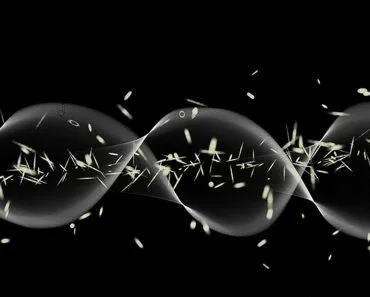
So are photons themselves magnetic? Not in the sense of carrying a magnetic charge for another magnet to tug on, but every photon of light is itself a braided electric and magnetic field. That is exactly why light and magnetism keep turning out to be the same story told two different ways.
So Does Magnetism Affect Light At All?
Here is where it gets interesting. Everything above is about light cruising through a vacuum. Send that same light through a piece of glass or a crystal while a magnetic field runs along its path, and the magnet suddenly has a say. The plane of the light’s polarization slowly twists as it travels through the material, and the amount of twist grows with the strength of the field. This is the Faraday effect, and Michael Faraday spotted it in 1845. It was the first hard evidence that light and electromagnetism are two sides of the same coin, decades before James Clerk Maxwell tied them together with his equations.
The trick is that the magnetic field is not bending the light directly. It is reshaping how the electrons in the material respond to the passing wave, making left-circular and right-circular light travel at slightly different speeds. Those two components fall out of step, and the net result is a rotated polarization. This is not some obscure curiosity, either. Engineers build the effect into Faraday rotators and optical isolators, the one-way valves that keep stray reflections from sneaking back into a laser, and into sensitive probes that measure magnetic fields and electric currents.
So the honest answer to “can a magnet affect light?” is a layered one. A magnet cannot bend a beam crossing open air, because photons carry no charge. But aim that light through the right material, and a magnetic field will quietly rotate it. Light and magnetism are deeply entangled. You just need the right stage to see it.
References (click to expand)
- Defying physics, engineers prove a magnetic field for light. Cornell University
- H C VERMA (2018). Can a magnet bend Light. Youtube
- Light and Magnets... and Gravity | Physics Van | UIUC. The University of Illinois Urbana-Champaign
- Get a Straight Answer - www-spof.gsfc.nasa.gov
- Magnetism. Encyclopaedia Britannica
- Faraday effect. Encyclopaedia Britannica
- Delbrück scattering. Wikipedia
- ATLAS observes light scattering off light. CERN
- Photons as Carriers of the Electromagnetic Force. Physics Van, University of Illinois Urbana-Champaign
- Radiation Basics. Naval Postgraduate School