Table of Contents (click to expand)
- What Is Holding A Bean Together?
- Why Does Heat Turn A Hard Bean Soft?
- Are Canned Beans Cooked Or Just Soaked?
- So Why Doesn't A Year In The Can Change Anything?
- Why Do Canners Add Calcium Chloride, And Does Hard Water Matter?
- Why Does Tomato Sauce Keep Beans Firm, And Baking Soda Do The Opposite?
- Why Doesn't Soaking Overnight Cook A Bean?
- Why Are My Beans Still Hard After Cooking For 4 Hours?
- Should You Drain And Rinse Canned Beans?
- So, Why Do Canned Beans Stay Firm For A Year But Soften In Minutes?
Canned beans are already fully cooked: they are soaked, boiled, sealed, then heated in the sealed can to about 116 to 121 °C (240 to 250 °F) to kill botulism spores. The glue that holds a bean's cells together, a plant polymer called pectin, only comes loose at roughly 80 °C (176 °F) and above, so a can sitting at room temperature has no way to soften further, however long it waits. Tip the beans into a hot pot and that glue starts dissolving again within minutes, while calcium, acid and cold hold it in place and heat, salt and baking soda let it go.
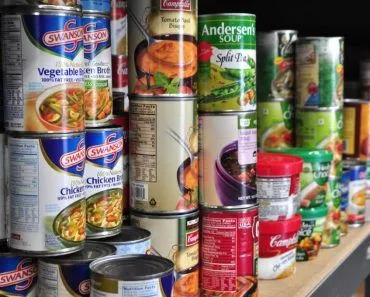
Picture the pantry shelf. A can of black beans has sat there since last year's chili season. You open it and the beans are as firm as the day you bought them, neither mushy nor hard.
Now tip them into a pot of simmering sauce and walk away for twenty minutes. Come back and they are soft. Some have split, and a few are paste. A year in liquid did nothing. Twenty minutes in hotter liquid did everything.
It gets stranger. Dry beans soaked overnight in cold water swell to twice their size and still stay hard enough to chip a tooth. So water plus time cannot be the whole recipe. The missing ingredient is one piece of chemistry. It also explains the tomato-sauce rule, the baking-soda trick and the ancient bag of beans that will never go soft.
What Is Holding A Bean Together?
Bite a raw carrot and listen to the crunch. That sound is the walls of millions of tiny plant cells snapping, along with the glue between them. A bean is built the same way: starch-filled cells with stiff walls, and a thin layer of glue holding the block together.
That glue is mostly a long, chain-like molecule called pectin, the same stuff that sets jam. In the seam between two cells, pectin chains lie side by side. Calcium ions, tiny charged specks of calcium, clip one chain to the next. A 2023 study from KU Leuven in Belgium, Kyomugasho and colleagues, calls this seam "the glue between plant cells."
The starch inside the cells matters for creaminess rather than hardness. The same study tracked starch, protein and pectin side by side. Pectin was the one that followed firmness. Starch's contribution to texture was "insignificant." In why chips soften but bread goes stale, starch is the star. Here it is a bystander.
A bean is firm because its cells are glued together by pectin, and that glue only lets go when it gets hot.

Why Does Heat Turn A Hard Bean Soft?
Both the can and the pot depend on one odd property of pectin. As the water warms, pectin holds steady. Then, past a threshold, it starts to let go.
The Leuven team cooked red kidney beans at six temperatures, 70 to 95 °C (158 to 203 °F), for up to six hours. Below 80 °C, nothing happened. The softening rate at 70 and 75 °C was "≈0", so the beans came out of a six-hour bath as firm as they went in. Softening "was evident at ≥80 °C," and it sped up with every extra degree.
At 95 °C, a normal simmer, the order of events was clear. The starch had swollen after about 10 minutes and the protein had set by about 60. Yet the beans kept softening until about 120 minutes. The pectin was still dissolving out of the seams. Once it was gone, the cells slid apart and the bean was done. Pectin loosening, the paper concludes, is "the rate limiting step of bean softening." Starch and protein still change during cooking. They just finish early, and the pectin sets the clock.
In many vegetables, heat also chops the pectin chains into shorter pieces. In beans, the 2023 study found the chains mostly come unstuck rather than chopped. Either way, the switch is heat, and it is off below roughly 80 °C.

Are Canned Beans Cooked Or Just Soaked?
They are cooked, and thoroughly. The idea that they are merely soaked sits at the root of the whole puzzle. It deserves a proper look.
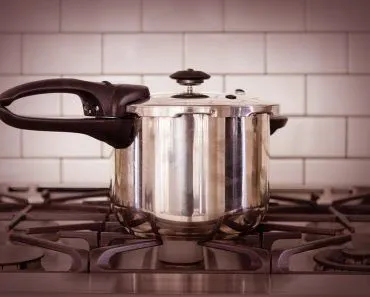
Beans are a low-acid food. Federal regulations define that as a pH above 4.6. It matters because low-acid foods are where botulism lives. The spores of Clostridium botulinum shrug off boiling water. So, says the National Center for Home Food Preservation, "all low-acid foods should be sterilized at temperatures of 240° to 250°F." That is 116 to 121 °C. Water only gets there under pressure, as we explain in can water be hotter than 100 °C. A canner at 10 to 15 psi (69 to 103 kPa) does it in the kitchen.
The home-canning procedure for dried beans reads like a recipe: soak 12 to 18 hours, drain, then "boil 30 minutes." Pack into jars with the cooking water, then pressure-can. Factories run the same logic at scale. The beans get hotter, for longer, than most home cooks ever take them.
So the bean on the shelf was cooked once, to a target texture. Then it was stored in the same low-acid category as canned soup. Whatever softening it was going to do, it did in the canner.

So Why Doesn't A Year In The Can Change Anything?
Put the two facts together. The only reaction that softens a bean needs the pectin to reach about 80 °C, and a pantry shelf sits near 20 °C (68 °F). If six hours at 70 °C does nothing, twelve months at 20 °C will not do it either. At room temperature the softening reaction is effectively switched off. Another year on the shelf makes no measurable difference.
Nor is there anything left to soak up. The beans went into the can swollen with water and were cooked in that water. Bean and liquid are already in balance. There is no dry middle waiting to hydrate. The only clock that softens beans runs in a hot pot.
What the shelf does change is quality. The USDA's shelf-stable food chart lists low-acid canned goods, beans included, at "2 to 5 years." Flavor, color and vitamins drift over that window. Firmness stays where the canner left it.

Why Do Canners Add Calcium Chloride, And Does Hard Water Matter?
Flip a can of beans over and calcium chloride is often on the label. It is there to strengthen the pectin. More calcium means more clips, and a bean that survives the canner without turning to paste. He, Purcell and Huber tested this on canned Great Northern beans in 1989. Adding calcium "significantly increased the hardness of processed beans." Sugar, oddly, did the same. US rules list calcium chloride as a firming agent, allowed up to 0.4 percent in processed vegetables. That also answers "which canned beans are softest." Firmness is a dial the canner sets, not a property of the bean.
The same chemistry runs in your tap. Hard water is water with extra calcium in it. Colorado State University Extension warns cooks to "avoid using hard water because it can prevent pulses from softening." In a pot of dry beans, every extra clip is another minute of simmering. If your beans are always stubborn, the water is a fair suspect.

Why Does Tomato Sauce Keep Beans Firm, And Baking Soda Do The Opposite?
Most of the old cook's rules about beans act on the same pectin seam, pushing it one way or the other.
On acid, Colorado State and Nebraska extension agree. Add tomatoes, lemon, vinegar or wine only after the beans are tender, because acid "can prevent beans from becoming tender." Fraeye and colleagues at the Leuven lab measured why. The pectin chemistry runs slower in acid and faster in alkaline water. That is why baked beans in tomato sauce keep their shape through a long simmer.
Alkaline water pushes the other way. A 2024 study by Cimini and colleagues cooked Italian beans with 2 grams of baking soda per liter of water. Plain water took about 32 minutes to reach the target softness. Baking soda took about 21 and its cousin sodium carbonate about 13. That is a 34 percent and a 59 percent cut, from a pinch of powder. Two things are at work. Sodium ions "weaken cotyledon tissue by quickly breaking pectin linkages," elbowing the calcium clips out. And alkaline water speeds up the chemistry that loosens the chains.
There is a catch, and Nebraska's extension states it. Baking soda "will destroy the B-vitamin thiamin and may give the beans an off-flavor." Use a small pinch, or a pressure cooker, or patience.
Generations of cooks were told that salt toughens beans. Colorado State calls it "a common myth" and says salt "actually shortens cooking time." Van Buren showed in 1983 that sodium chloride softened canned snap beans. The sodium in salt loosens the pectin, the same way it does in baking soda. The myth had the chemistry backwards, which is a remarkable thing to get wrong for a century.

Why Doesn't Soaking Overnight Cook A Bean?
Because soaking is plumbing, not chemistry.
A dry bean is a sealed packet of starch and protein. Drop it in water and the water works in through the seed coat, and the bean swells. Soaking beans are "doubling to tripling in their size," per Nebraska. Abu-Ghannam and McKenna timed this for red kidney beans at 20 to 60 °C in 1997. Warmer water gets in faster, but the pectin never lets go. The water never gets near 80 °C.
So a soaked bean is a swollen bean with its pectin intact: bigger, heavier, still hard. What soaking buys you is time. The whole simmer can then go on loosening the pectin. Nebraska puts that at "45 minutes to 2 hours" for most beans.
Raw and undercooked kidney beans contain a natural toxin, a protein called phytohaemagglutinin. The FDA says it "can lead to nausea, severe vomiting, and diarrhea." Its instruction: soak "for a minimum of 5 hours and then" boil "in fresh water for at least 30 minutes." Canned kidney beans are fine, because the canner already did that. A kidney bean that has been soaked but is still crunchy is not safe to eat.

Why Are My Beans Still Hard After Cooking For 4 Hours?
People type this question at 8 p.m. with guests arriving. There are four usual suspects, and all four work on the pectin.
The biggest culprit is age. Beans stored warm and humid develop the hard-to-cook defect. A 2023 review defines it as "high resistance to softening during cooking." The leading explanation, in that review and in the Cimini study, goes like this. During storage an enzyme frees calcium and magnesium locked up inside the bean. Those ions turn the pectin into "insoluble calcium and magnesium pectates, leading to hard beans." The bean has, in effect, added its own calcium chloride. In the Leuven experiment, aged beans took about 270 minutes at 95 °C to reach the softness fresh beans hit in 120. Old enough, and they may never get there.
The other three you have met: hard water, acid added early, and altitude. Water boils cooler in Denver, as we cover in why water boils faster at altitude. Colorado State's rule: "increase cooking time by 5% for every 1,000 feet above 2,000 feet elevation." A pot at 7,000 feet (about 2,100 m) "may take 25% longer."
So the fix for beans that will not soften is fresh beans, soft water and acid at the end. Add a pinch of baking soda if you must, and use a pressure cooker. Or, on the night in question, a can.

Should You Drain And Rinse Canned Beans?
The liquid in the can is the cooking water, plus salt, plus leaked starch. Draining it does nothing to the texture, but it does change the sodium.
Duyff, Mount and Jonnalagadda measured this in 2011 across five brands each of five bean types. Draining alone cut sodium by 36 percent, from a mean of 503 mg per half-cup serving to 321 mg. Draining and rinsing cut it by 41 percent, to 295 mg. Rinsing "doesn't impact beans' fiber, protein, or nutrients," adds Case Western Reserve. So rinse if you are watching salt. Keep the liquid if you want a thicker chili. Either way the beans stay as firm as the canner made them.

So, Why Do Canned Beans Stay Firm For A Year But Soften In Minutes?
Mostly, it comes down to pectin and heat.
Pectin, clipped together by calcium, holds millions of cells in a block. Heat is the switch that lets it go, at roughly 80 °C. The canner threw that switch once, hard, at 116 to 121 °C (240 to 250 °F), and cooked the beans to a chosen firmness. Then the can cooled and the switch went off. No water is left to absorb and no reaction is running. A year on the shelf changes nothing about the texture.
Your stove throws the switch again. Within minutes the pectin that survived the canner starts dissolving into the sauce. The cells slide apart, and the beans go from firm to soft to paste on a timer you control. Most kitchen tricks work on that same seam. Acid and calcium keep it intact, while salt and soda loosen it. Altitude lowers the boiling point, which slows the simmer. Age can lock the seam with extra calcium and magnesium.
Notice what is missing from that explanation: no mystery preservative, no special bean, and no "just soaked." The beans in that can were cooked once, to a chosen firmness. They will hold it until a pot takes them back past the temperature where pectin lets go.
References (click to expand)
- Bean softening during hydrothermal processing is greatly limited by pectin solubilization rather than protein denaturation or starch gelatinization — Kyomugasho et al., Food Research International, 2023 (PubMed)
- Influence of pectin properties and processing conditions on thermal pectin degradation — Fraeye et al., Food Chemistry, 2007
- 21 CFR § 113.3 Definitions (low-acid foods) — Legal Information Institute, Cornell
- Ensuring Safe Canned Foods — National Center for Home Food Preservation
- Beans or Peas, Shelled, Dried, All Varieties — National Center for Home Food Preservation
- Shelf-Stable Food Safety — USDA Food Safety and Inspection Service
- Effects of Calcium, Sucrose, and Aging on the Texture of Canned Great Northern Beans — He, Purcell & Huber, Journal of Food Science, 1989
- 21 CFR § 184.1193 Calcium chloride — Legal Information Institute, Cornell
- Cooking with Dry Beans and Other Pulses — Colorado State University Extension
- Cooking Dry Beans from Scratch Can Be Quick — University of Nebraska–Lincoln Extension
- Analyzing Cooking Efficiency of Gradoli Purgatory Beans: Effects of Dehulling, Malting, and Monovalent Carbonates — Cimini et al., Foods, 2024 (PMC)
- Two Effects of Sodium Chloride Causing Softening of the Texture of Canned Snap Beans — Van Buren, Journal of Food Science, 1983
- Hydration Kinetics of Red Kidney Beans — Abu-Ghannam & McKenna, Journal of Food Science, 1997
- Natural Toxins in Food — U.S. Food and Drug Administration
- Hard-to-cook phenomenon in common legumes: Chemistry, mechanisms and utilisation — Perera et al., Food Chemistry, 2023
- Sodium Reduction in Canned Beans After Draining, Rinsing — Duyff, Mount & Jonnalagadda, Journal of Culinary Science & Technology, 2011
- Rinsing canned beans reduces sodium content by up to 40% — Case Western Reserve University