Table of Contents (click to expand)
Water molecules have an easy time escaping off the surface when the air pressure above them is less. Since this is a naturally-occurring condition in high altitude regions, the boiling point of water is reduced and thus it attains the boiling
Cooking is significantly impacted by a few factors that have nothing to do with the recipe, ingredients or the stuff that you’re going to cook. One of those, which also happens to be scientific, is the effect of your location, i.e. the geographical location where you’re cooking. More specifically, it affects a very important component of cooking: the way water boils.
The thing is, if you boil water in high-altitude regions (like mountainous regions), it boils faster than it would at the ground level.

As it turns out, a lot!
How Does ‘Boiling’ Work?
You would already have a basic idea about how the constituent particles of water (or any substance in its liquid phase) behave under normal conditions: they have little freedom to move around and bump into each other, in contrast to either solids (where constituent particles are tightly packed in a crystal lattice) or gases (where particles have a lot of freedom to move around easily). But. when you start heating a liquid (say, water), things start to change.
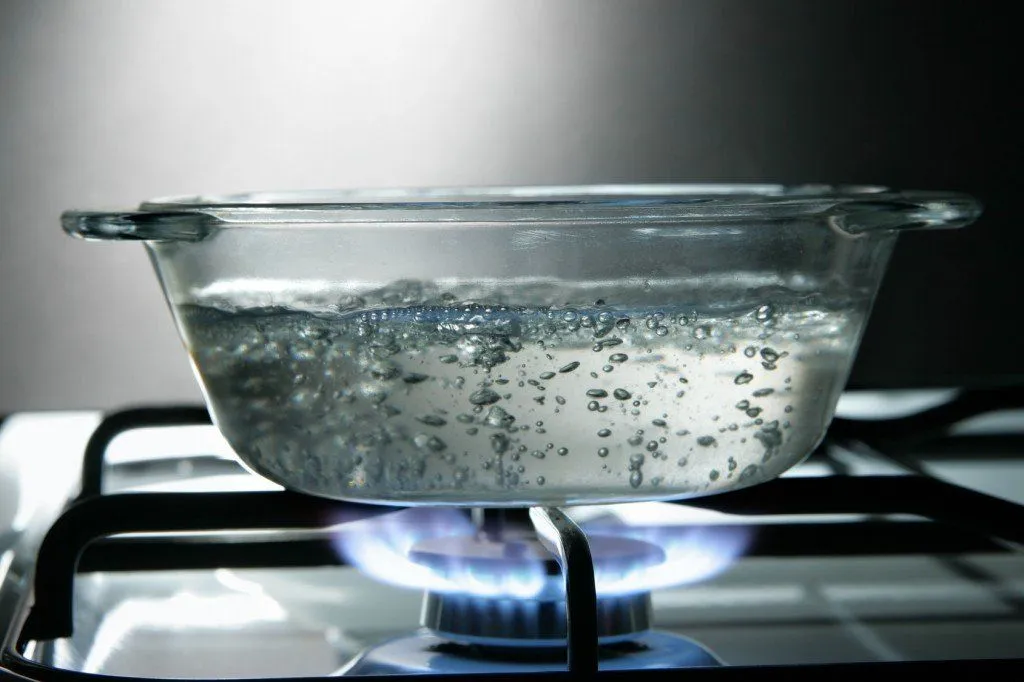
The constituent particles now get energy (from heat) to break free from the intermolecular forces holding them together in one place. This continues till heat is supplied to water, and after some time, a point is reached when the temperature of water ceases to increase any further and starts to turn into gas (water vapor). In everyday life, we have a name for that point: boiling point.
Look up any definition of ‘boiling point’ in books or the internet, and notice that apart from stating that ‘it’s the point when a liquid changes its state to gas’, along with a mention of ‘a fixed pressure’, i.e., the point when liquid becomes gas at a given pressure. This goes on to show that pressure does have an effect on the boiling point of a liquid.
Vapor Pressure
A liquid in a closed container experiences a certain amount of pressure by its own vapor (present in the empty space just above the liquid and below the lid of the container). This pressure is known as vapor pressure.
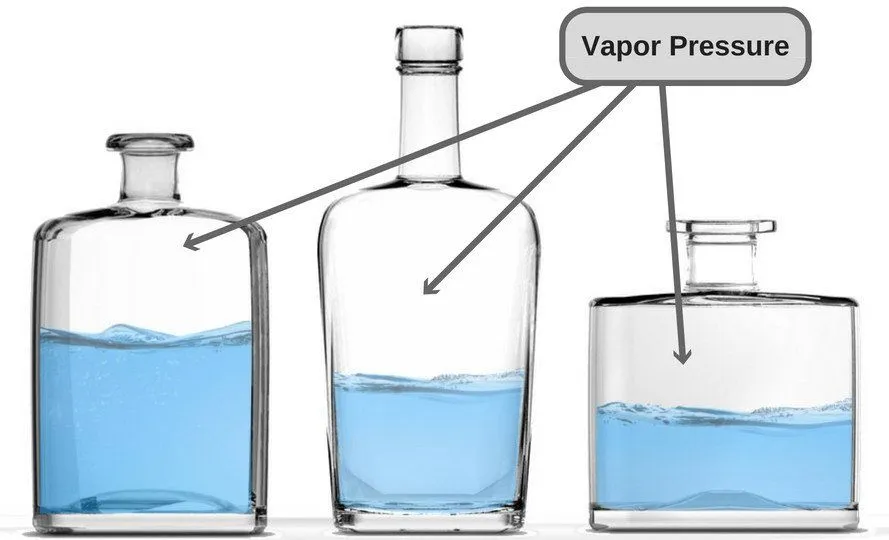
In more technical terms, it could be said that vapor pressure is the pressure exerted by vapor that’s in a thermodynamic equilibrium with its condensed phases. The term ‘thermodynamic equilibrium’ signifies that the liquid has now reached a point where the rate of evaporation and condensation of the liquid has become constant. Now, when we talk about boiling point in terms of vapor pressure, the former could be defined as the point where the vapor pressure becomes same as the atmospheric pressure, i.e. the air pressure that pushes down on the liquid from above.
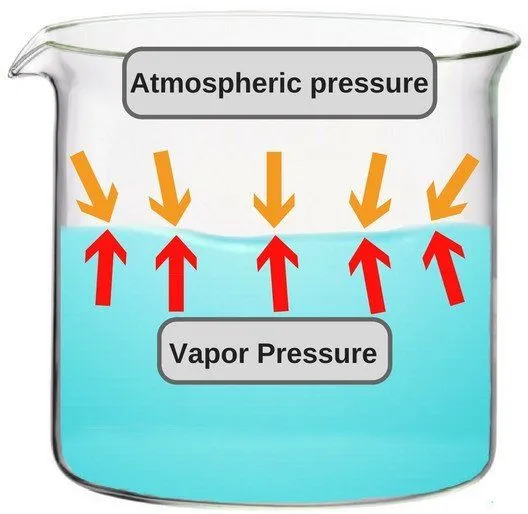
How Does Altitude Affect Boiling Point Of Water?
You see, air pressure highly depends on the altitude you’re at. In mountainous regions, the air pressure is a little lower than what it is at sea level. This is what makes rescue operations on peaks like Everest quite difficult to the point of being dangerous. While that’s not great for flying helicopters, it’s definitely useful for boiling water. This is because when atmospheric pressure is less, the liquid experiences less downward force pushing down on it from above, and hence water molecules find it much easier to run around and then simply escape off the surface to turn into a gas.
To put it in perspective, consider this: suppose you are carrying a heavy container filled with water upto the brim. It goes without saying that you would prefer walking instead of running such a situation, because the weight of the container pushes down on you and makes your life miserable. But as soon as you pour some of the water out, the container becomes lighter and you could jog. Some more water out of the box, and you could even run carrying it, for there is virtually no pressure on your head.
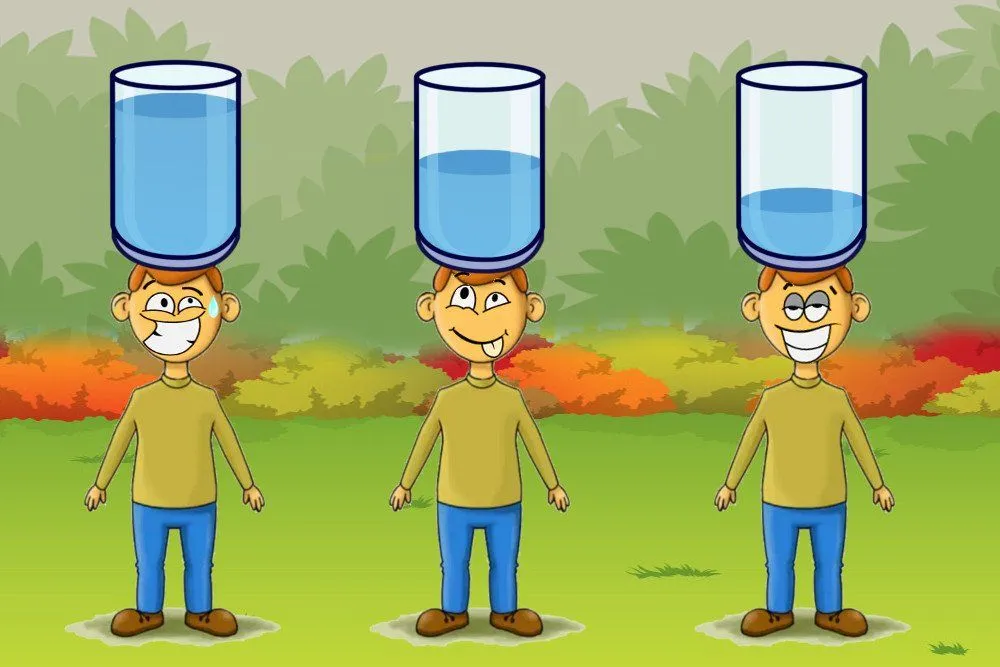
Similarly, water molecules have an easy time escaping off the surface when the air pressure above them is less. Since this is a naturally-occurring condition in high altitude regions, the boiling point of water is reduced and thus it attains the boiling temperature quicker than at the ground level with the same heat. Simply put, it boils faster.
Next time you’re making tea on top of a mountain, this small bit of information could save you a lot of fuel. One caveat though: water boiling sooner doesn’t mean food cooks faster. Because that boiling water is cooler (89.6 °C at 3,000 m vs. 100 °C at sea level), eggs and pasta and beans actually take longer to cook in the mountains, which is exactly why high-altitude cookbooks exist.
Does Water Really Boil Faster, Or Just Cooler?
Here is the part that trips almost everyone up, and it is worth slowing down for. On a mountain, water does two different things at once, and people tend to blur them together. First, it reaches a rolling boil sooner, because the boiling point itself has dropped and your stove has less of a temperature gap to close. Second, and this is the catch, that boiling water is cooler than the boiling water in your kitchen at sea level. Both statements are true at the same time.
So when someone asks “does water boil faster at high altitude?”, the honest answer is yes for the time it takes to start boiling, but the boil you get is a weaker one. Boiling point is simply the temperature at which a liquid’s vapor pressure equals the surrounding air pressure, so lowering the air pressure lowers that finish line. At the summit of Mount Everest, where the air pressure is only about a third of the sea-level value, the finish line drops all the way to roughly 70 °C (158 °F) instead of 100 °C (212 °F). The bubbles look just as enthusiastic, but the water inside the pot is nowhere near as hot. That single fact is the source of nearly every “why won’t my food cook up here?” complaint, which we will get to shortly.
What Temperature Does Water Boil At Different Altitudes?
Because boiling point tracks air pressure so closely, you can put rough numbers on it. As a handy rule of thumb, the boiling point of water drops by about 1 °F for every 500 ft (roughly 0.5 °C for every 150 m) you climb. The reason is that the air thins out as you go up: atmospheric pressure measures about 14.7 psi at sea level, around 12.3 psi at 5,000 ft (1,500 m), and only about 10.2 psi at 10,000 ft (3,000 m).

Translated into temperatures, water boils at 100 °C (212 °F) at sea level, around 95 °C (203 °F) at 5,000 ft, and roughly 89 °C (193 °F) at 10,000 ft. A famous real-world checkpoint sits in between: at Old Faithful in Yellowstone, perched at about 2,240 m (roughly 7,350 ft), the surface boiling point is only about 93 °C (199 °F). Keep climbing and the trend simply continues, until you reach the Everest figure of about 70 °C. None of this requires a fancy instrument to feel; it is the same lower-atmospheric pressure story, just read off a thermometer.
Does Altitude Affect The Freezing And Melting Points Too?
If lower pressure drags the boiling point down so dramatically, you might expect the freezing point to swing around too. It barely does. The freezing (and melting) point of water sits essentially at 0 °C (32 °F) whether you are at the beach or on a Himalayan ridge. Ice on Everest melts at practically the same temperature it does in your kitchen.
The reason comes down to how much the volume changes during each phase change. When liquid water turns to vapor, its volume balloons by a factor of roughly a thousand, so the surrounding air pressure has an enormous say in when that happens. When water freezes into ice, the volume changes only slightly (water is one of the rare substances that actually expands when it freezes), so pressure has very little leverage over the solid-to-liquid line. Lowering the pressure to high-altitude levels nudges the freezing point by only a hundredth of a degree or so, which is far too small to notice. In short, altitude rewrites where water boils but leaves where it freezes almost untouched.
Why Does Food Take Longer To Cook At High Altitude?
This is where the cooler boil comes back to bite you. Cooking food in water is governed by temperature, not by whether the surface is bubbling. Your pasta, beans and hard-boiled eggs need the water to actually reach a certain heat to cook through. At sea level that ceiling is 100 °C, but on a mountain the water tops out lower and simply cannot get any hotter no matter how long you leave the flame on. The food sits in cooler water, so it takes longer to cook, not shorter. As a general guide, expect to add cooking time the higher you go, and recipes for boiled and simmered dishes often need to be stretched out considerably at elevation.

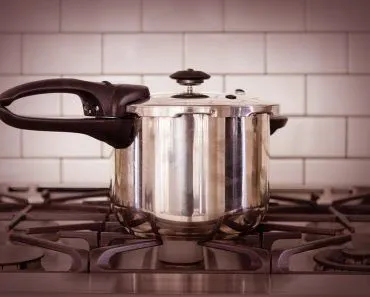
This is exactly why a pressure cooker is a mountain cook’s best friend. By trapping steam in a sealed pot, it raises the internal pressure, and since boiling point follows pressure, the water can climb past its normal ceiling. At about 15 psi above the surrounding air pressure, water boils at roughly 121 °C (250 °F), hotter than any open pot could ever manage. That extra heat undoes the altitude penalty and then some, which is why pressure cookers can cut moisture-based cooking times by around a quarter to a third. The same physics that makes mountain water boil sooner but cooler is the physics a pressure cooker quietly reverses.
References (click to expand)
- High-Altitude Cooking | New Mexico State University. New Mexico State University
- Phase Change. Brooklyn College
- A Carlson. Understanding High Altitude Cooking - DigitalCommons@USU. Utah State University
- Boiling Point. CHEM101 ONLINE: General Chemistry. Lumen Learning
- How Hot is Old Faithful? Old Faithful Virtual Visitor Center. U.S. National Park Service
- High Elevation Food Preparation Guide. Colorado State University Extension
- Freezing at High Altitude. Physics Van, University of Illinois Urbana-Champaign