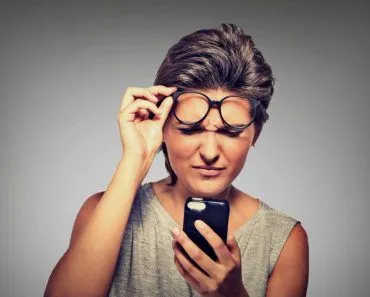
Blind people wear sunglasses or dark glasses to protect their eyes from UV rays and physical hazards, to sharpen any vision they still have (most are not totally blind), to signal others alongside a white cane, and for comfort in social settings.
In response to this question, most people would say that people with visual impairment wear shades so they don’t stand out in social settings. The fact that the disfigurement of their eyes might make others around them uncomfortable encourages those people to shield their eyes behind dark glasses.
While that IS one of the reasons why blind people wear sunglasses, it certainly isn’t the only one.
To Enhance Their Vision
In regards to the blind, it’s generally assumed that they have absolutely no sense of vision. However, contrary to popular belief, most blind people aren’t totally blind, i.e., they can see or at least perceive certain types of visual cues. According to the American Foundation for the Blind:
Legal blindness is a level of vision loss that has been legally defined to determine eligibility for benefits. The clinical diagnosis refers to a central visual acuity of 20/200 or less in the better eye with the best possible correction, and/or a visual field of 20 degrees or less. Often, people who are diagnosed with legal blindness still have some usable vision.
There are people who are legally blind, yet have a very small field of vision that enables them to see in a narrow zone (often known as ‘tunnel vision’). Special glasses help these individuals focus better and make out details more efficiently.
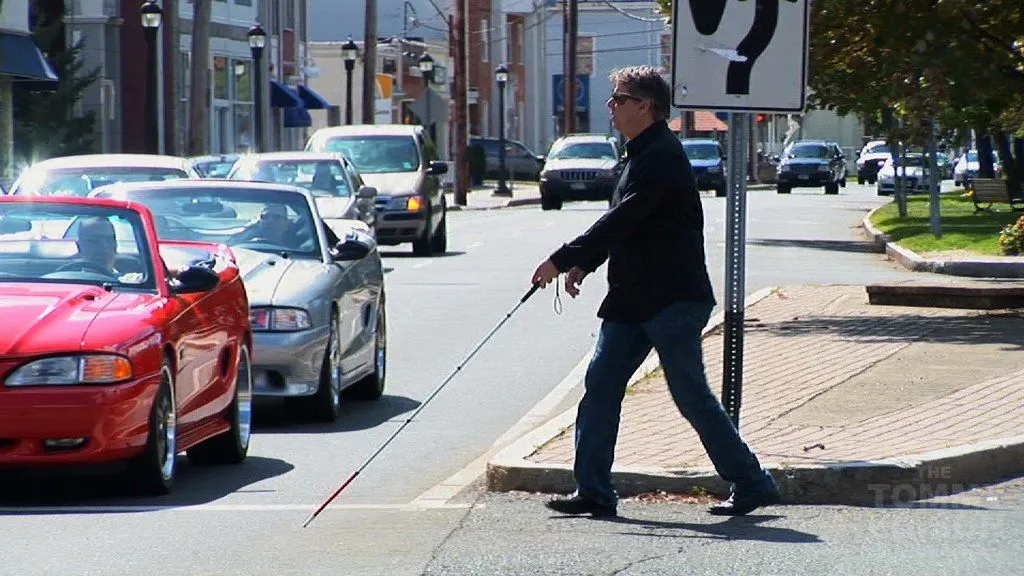
To Protect Their Eyes From The Sun
Just like anyone with healthy eyesight, most visually impaired people need shades to protect their eyes from certain harmful components of sunlight. Prolonged exposure to UV rays, for instance, can cause inflammation of the cornea, cataracts or even some forms of ocular cancer. Since blind people have little or no means to determine whether their eyes are being bombarded by these harmful UV rays, the need to wear shades becomes even more compelling.
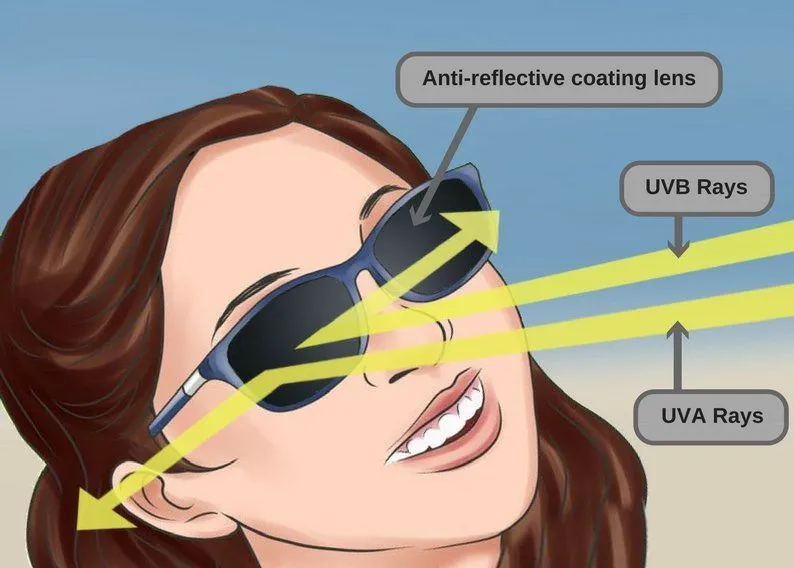
While some blind people wear regular shades that block harmful UV radiation and bring down the intensity of ambient light, others wear custom-made shades that shield their eyes from certain colors to which their eyes are specifically sensitive.
To Protect Their Eyes From Physical Dangers
A sighted individual can easily avoid getting stuff in their eye by bending, ducking or simply closing their eyes instinctively when they see something coming towards them. However, visually impaired folks have no means of protecting their eyes from things like low-hanging branches, cabinet doors in the kitchen, stuff blown by the wind etc. Glasses help them shield against such physical hazards.
To Notify Others
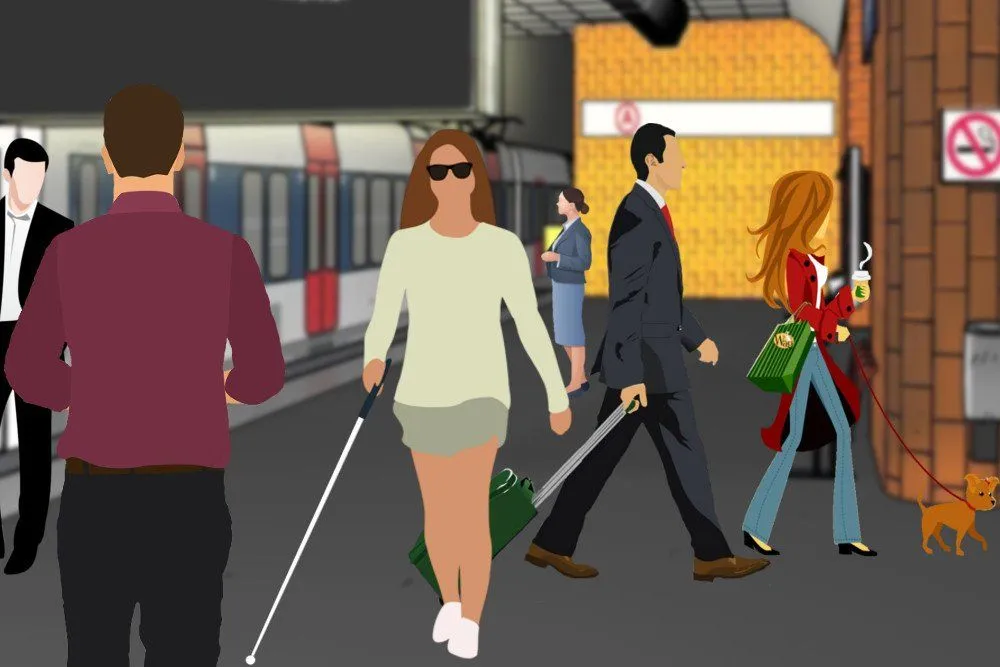
Another reason why blind people wear glasses is to notify others at a distance, especially in crowded, public places, that ‘I have little/no sense of vision’. This, along with the white cane they usually carry, implicitly tells others to be a bit more careful around them.
Aesthetic Reasons
Many visually impaired people wear shades to put others around them at ease, especially during a conversation. Since a blind person’s eyes might not continuously look in the direction of the source of the sound, blind people might have trouble making and maintaining eye contact with others. This is another reason why they cover their eyes under glasses, in a bid to take any awkwardness out of conversations.
Some people lose their sense of vision following tragic accidents or injuries, which might scar, or in some way disfigure their eyes permanently. As a result, they like to keep their eyes hidden from people, especially in social settings.
Are Blind People Sensitive To Light?
For many people with low vision, shades aren’t just about blocking the sun, they’re about coping with light that is genuinely painful to be around. This heightened discomfort or pain in response to light is called photophobia, and it’s a hallmark of several eye conditions rather than a fear in the everyday sense. A person with photophobia may need to squint, look away, or shield their eyes even in ordinary indoor lighting, which is one reason you’ll sometimes see someone wearing dark glasses inside.

One of the clearest examples is achromatopsia, a rare inherited condition in which the cone cells of the retina (the cells that handle color and bright-light vision) barely work or don’t work at all. According to the U.S. National Library of Medicine’s MedlinePlus, achromatopsia affects roughly 1 in 30,000 people worldwide, and those affected usually have an increased sensitivity to light and glare along with significantly reduced sharpness of vision. With the cones offline, the eye leans on its rod cells, which are built for dim conditions and are quickly overwhelmed in bright light. The upshot is that normal daylight, or even a brightly lit room, can feel dazzling and uncomfortable.
This is where dark shades earn their keep. As the Cleveland Clinic notes, treatment for achromatopsia often includes dark-tinted glasses whose lenses filter out specific types of light, cutting the overall flood down to a level the eyes can actually use. So for someone who still has some usable vision, a good pair of sunglasses can be less of a style choice and more of a tool that makes the visible world tolerable.
Why Do Some Wear Red Or Colored Glasses?
You may have noticed that the shades aren’t always plain black. Some people with low vision wear lenses in deep red, magenta, amber, or plum, and there’s real science behind those colors. Rather than simply dimming everything evenly, a tinted filter removes particular wavelengths of light, and for certain conditions that selective filtering does more good than a neutral gray lens.
Red and magenta tints are the standout example for cone disorders like achromatopsia. The U.S. National Institutes of Health’s GeneReviews entry on achromatopsia states plainly that dark or special filter glasses, or red-tinted contact lenses, reduce photophobia and may improve visual acuity. A 2007 study in the journal Optometry fitted patients with tinted lenses and found that, while their measured visual acuity did not improve, both experienced a dramatic reduction in photophobia. The idea is that long-wavelength red light doesn’t strongly stimulate the light-flooded rod cells, so a red filter lets a person take in a workable amount of light without the painful glare.
It’s worth being clear about what these lenses can and can’t do. A red or magenta filter can make bright environments bearable and may sharpen contrast, but it cannot hand back the experience of color to someone whose cones don’t work. The tint manages the discomfort and makes the most of whatever vision remains, which, for many people, is exactly the help they need to get through a sunny day.
A Few Reasons, One Pair Of Shades
Therefore, there are a number of reasons why the visually-impaired wear dark shades. It’s generally assumed that all visually-impaired people are completely blind, but that’s usually not the case. They generally have some degree of vision, which helps them in public and everyday life.
References (click to expand)
- Low Vision and Legal Blindness Terms and Descriptions - American Foundation for the Blind
- Visual Impairments | Health Policy Institute | Georgetown University - hpi.georgetown.edu
- UV Protection - American Optometric Association
- Achromatopsia - MedlinePlus Genetics, U.S. National Library of Medicine
- Achromatopsia - Cleveland Clinic
- Achromatopsia - GeneReviews, NCBI Bookshelf, National Institutes of Health
- The use of tinted contact lenses in the management of achromatopsia - Optometry (2007), PubMed