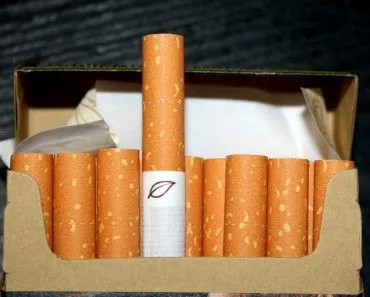
Cigarettes burn fast because they are short, loosely packed with dry, finely shredded tobacco, and wrapped in thin, porous paper that often carries burn accelerants like diammonium phosphate. A typical cigarette lasts about 5 to 10 minutes. Cigars, by contrast, are bigger, tightly hand-rolled from humidified whole leaf, and take 30 to 90 minutes to smoke.
For those readers who are cigarette smokers, you likely know the feeling… the sensation of finishing your final few drags of the last cigarette in your pack. There is no doubt that cigarettes have a laundry list of potential health risks, and this article is in no way advocating for cigarette smoking, but long-time smokers often lament how quickly their cigarettes burn after only a few minutes and a handful of drags.
On the other hand, if you’ve ever smoked a cigar, you may have caught yourself wondering just how long the darn things can last, as some cigars may take two hours or more to smoke! Now, if these two smokeable items are both made primarily of tobacco, why is there such a difference in how fast they burn?
The Art Of The Cigar
If you know anything about cigars, or perhaps even consider yourself a connoisseur, you understand some of the craftsmanship, care and intention that goes into the rolling of a fine cigar. Cigars are made entirely from tobacco leaves, often with wild and exotic blends that each carry a distinct aroma. Those leaves are rolled and then stored at a tightly controlled humidity (the classic “70/70” rule of roughly 70% relative humidity and 70 °F, or 21 °C), which keeps the finished cigar at about 12-15% internal moisture and protects the essential oils that give it its remarkable flavor.

Cigars are made around the world, but the major producers are Cuba, Honduras, Brazil, Mexico, Ecuador, Nicaragua and the Dominican Republic. Cigar production flourishes in these places for many reasons, whether they have excellent soil for tobacco production, long traditions of cigar-rolling, a perfect climate, or some combination of all three! Some of these locales are legendary for the quality of their cigars (and their price!) because of how much time and effort goes into production.
Many top-level cigars are hand-rolled, using only the finest and freshest leaves for the filler and the wrapper. The tobacco is very evenly and densely packed, ensuring a slow burn due to low oxygen flow through the body of the cigar. Cigars are very sensitive to changes in humidity and temperature, so a cigar that is left out in the hot sun may dry out in a matter of hours. For this reason, serious cigar smokers store their stogies in humidors, to ensure ongoing freshness and the best possible taste to their cigars.
A good cigar should be slightly damp (around 12-15% internal moisture, drawn from that 65-70% RH humidor environment) when smoked, for ultimate freshness, flavor, and a slow burn. That built-in moisture is what keeps the tobacco burning at a controlled rate instead of racing through the leaf. Depending on the size of the cigar, the density of the tobacco and how leisurely you puff, a good stick will typically last anywhere from 30 to 90 minutes, with very large formats like Churchills and Double Coronas pushing past two hours.
The Industry Of The Cigarette
Although cigarettes are also made from tobacco (apart from a handful of very elite brands), few people would call cigarette production anything close to an art. Humans have been smoking tobacco and other plants for thousands of years (archaeological evidence from the Great Salt Lake desert pushes tobacco use back over 12,000 years), but cigarettes only entered their heyday in the 20th century, once industrialized agriculture allowed for mass production. The cigarette industry took off, peaking in the mid-1960s, when about 42% of US adults smoked. That figure has since collapsed to under 10% (the CDC reported 9.9% in 2024, the first time the rate has fallen below 10% in recorded history).
For at least the past century, the cigarette industry has been about cheap production, manipulative advertising, dangerous and addictive additives, and high profit margins. The very nature of cigarette manufacturers (churning out billions of sticks every year) should indicate a clear difference in attention to detail and quality between cigarettes and cigars. The tobacco that is used in cigarettes is also of much lower quality, and is often not fresh, particularly by the time it reaches the consumer.

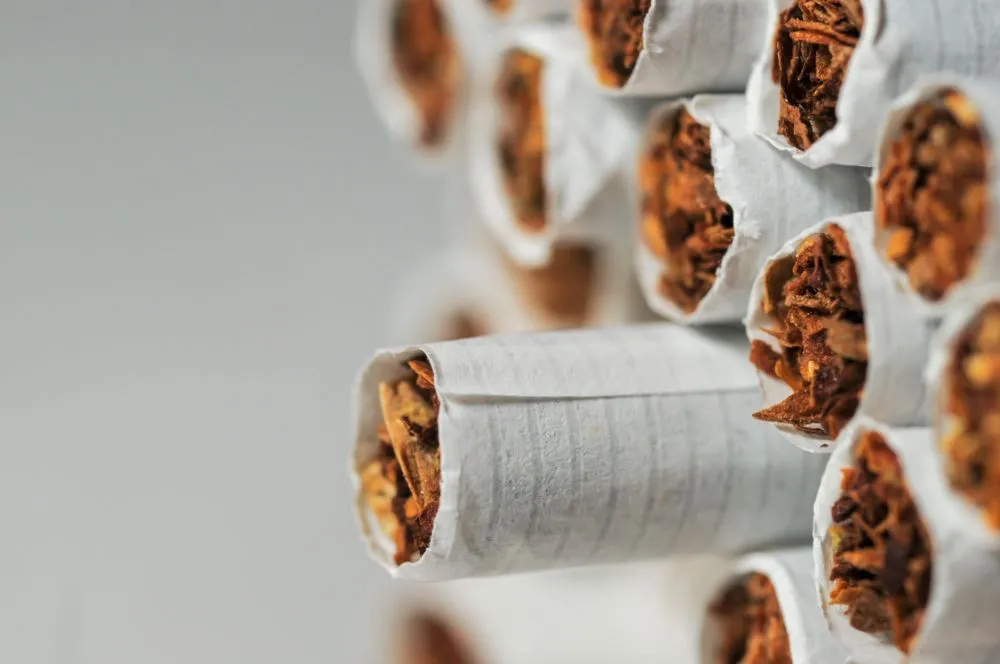
Cigarettes are also loosely rolled, in comparison to cigars, which is why so many people “pack” their cigarette packs. This is the process of repeatedly hitting the pack of cigarettes against the palm of your hand (top-down) in order to compress the tobacco further into the cigarette. When you “pack” your cigarettes, it increases the density of the tobacco in the wrapper, which allows less air to get in between the individual pieces of tobacco. For those with a basic understanding of how things burn, reducing the surface area where oxygen can access the fuel source will slow down the fire. This results in a slower-burning cigarette.
However, even if you pack your cigarettes extremely well, there is no such thing as a cigarette that lasts for thirty minutes. The dryness of the tobacco, as well as a cigarette’s low volume in comparison to a cigar, will speed up the burning process. Also, remember that the outside of a cigarette is wrapped in dry paper, which burns rapidly, ensuring that the tobacco stays lit. It is in the manufacturer’s best interest for cigarettes to burn rapidly, ensuring return customers, so this incredibly flammable wrapper is quite useful for their sales tactics.
Additionally, manufacturers add hundreds of chemicals to cigarette tobacco that you simply will not find in a premium cigar. The big one for burn rate is a class of salts known as burn accelerants, with diammonium phosphate being the most notorious: it makes the tobacco burn hotter and faster, and it keeps the cigarette lit between puffs. The familiar laundry list of nasties associated with cigarette smoke (formaldehyde, acetone, arsenic, cadmium, lead, hydrogen cyanide, tar) are mostly combustion byproducts that form once the additive-laced tobacco and paper start burning, not ingredients sprinkled in for flavor.
One thing worth correcting, though: in the United States, the United Kingdom, Australia, Canada and most of the EU, modern cigarettes are actually required by law to self-extinguish if they are left unattended. These so-called fire-safe or “fire standards compliant” cigarettes have two or three thin bands of less-porous paper running along the rod that act as speed bumps, smothering the burn if no one is drawing on the cigarette. Every state in the US has mandated them since 2011, and the rule was credited with a roughly 19% drop in residential fire deaths from smoking.
Why Does My Cigarette Burn So Fast (When Your Friend’s Lasts Longer)?
Here is a question we hear more often than you might expect: why does one cigarette seem to vanish in three minutes while the next stick from the very same pack hangs on? The brand and its recipe set the baseline, but several everyday factors nudge an individual cigarette’s burn rate up or down.

The biggest factor is simply how you smoke it. Every puff drags fresh air through the rod and over the glowing ember, and that oxygen is the fuel supply for the little fire. Take more frequent or harder puffs and you feed the ember more oxygen, so it burns down faster. It is the same principle that makes a tightly packed cigarette burn slowly: the less air that reaches the tobacco, the slower the burn.
The weather plays the same trick. Smoke outdoors in a stiff breeze and the moving air feeds the ember extra oxygen between puffs, so the cigarette smolders away faster than it would in still air. This is also why people swear that cigarettes “burn faster in the cold.” It is rarely the temperature itself; it is the wind that usually comes with it, plus the very human habit of puffing quickly to finish the thing before your fingers go numb.
Freshness matters too. Once a pack has been open for a while, the finely shredded tobacco dries out, and drier tobacco catches and burns more readily (the same reason a humidified cigar burns so slowly). A stale, bone-dry cigarette will race through its length faster than a fresh one.
Finally, take a close look at the filter. Most modern cigarettes carry a ring of tiny laser-drilled ventilation holes near the mouth end. Plenty of smokers cover those holes with their lips or fingers without realizing it, which forces each puff to pull harder through the tobacco and burns the rod down a little faster.
Can You Make A Cigarette Burn Slower? Packing, Paper And The “Additive-Free” Question
So if all of that speeds a cigarette up, can you deliberately slow one down? Within limits, yes, and it comes down to the same levers the cigar rollers pull. Packing the cigarette (tapping the pack against your palm to compress the tobacco, as described above) raises its density, so less air reaches the fuel and the burn slows. Keeping the pack sealed and fresh so the tobacco does not dry out helps, as does smoking out of the wind. None of this will turn a five-minute cigarette into a cigar, but it does shave the burn rate down a little.

Brand-to-brand differences are real, and they come from the recipe. A more densely packed rod, a less porous paper, and moister tobacco all burn more slowly. Manufacturers also reach for chemistry: burn additives, including the diammonium phosphate mentioned earlier and potassium organic salts such as citrate, are worked into the tobacco and paper to control how a cigarette burns and to help keep it lit between puffs.
This is where so-called additive-free brands such as Natural American Spirit enter the conversation, since smokers often report that they seem to burn more slowly. Leaving out the added burn salts is a plausible part of why. One thing has to be crystal clear, though: “additive-free” and “natural” do not mean a safer cigarette. The U.S. Food and Drug Administration is blunt about it, pointing out that the tobacco plant itself carries addictive nicotine and toxic metals such as cadmium and lead, and that the harmful chemistry appears the moment any cigarette is lit, additives or not. A slow burn is not a safe burn.
A Final Word
As this comparison should make clear, cigars are designed for relaxation and luxury, so they are hand-rolled with damp, high-quality whole leaf that slows the burn and allows you to actually taste the flavors and aromas. Cigarettes, on the other hand, are engineered to burn quickly: lower-grade tobacco, a loose pack, a thin and porous paper wrapper, and burn accelerants in the recipe all push the cigarette through its life in a matter of minutes. The drastic difference in burn time is no accident; it is exactly what each industry is designing for.
References (click to expand)
- Chemicals in Cigarettes and Tobacco: What's Burning? National Jewish Health.
- Garner, W. W., Bacon, C. W., & Bowling, J. D. (1934). Cigarette and Cigar Tobaccos: Relationship of Production Conditions to Chemical and Physical Characteristics. Industrial & Engineering Chemistry, American Chemical Society.
- Rabinoff, M., Caskey, N., Rissling, A., & Park, C. (2007). Pharmacological and Chemical Effects of Cigarette Additives. American Journal of Public Health.
- Chemicals in Every Cigarette. U.S. Food and Drug Administration.
- Current Cigarette Smoking Among Adults in the United States. Centers for Disease Control and Prevention.
- Eldridge, A., Betson, T. R., Gama, M. V., & McAdam, K. (2016). The science behind the development and performance of reduced ignition propensity cigarettes. Fire Science Reviews.
- Cigarette Filter Ventilation and its Relationship to Increasing Rates of Lung Adenocarcinoma. Journal of the National Cancer Institute (2017).
- Liu, C., & Parry, A. (2003). Potassium Organic Salts as Burn Additives in Cigarettes. Contributions to Tobacco & Nicotine Research.
- Chemicals in Every Tobacco Plant. U.S. Food and Drug Administration.