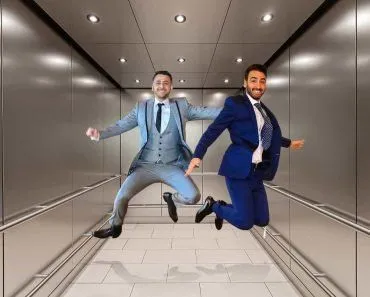
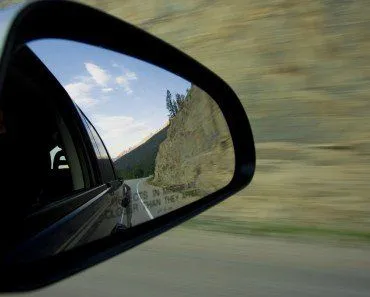
Elevators have mirrors mainly to ease claustrophobia: the reflection makes a cramped cabin feel larger and gives riders a distraction, so the wait seems shorter. Mirrors also help wheelchair users, who usually can’t turn around inside, by acting like a rear-view mirror so they can reverse out safely. They aid security too, letting everyone see what the other passengers are doing.
Elevators are awesome, right? A cubical that transports you to a whole new level? Who would have imagined such a thing 200 years ago?

Well, in the 1850s, a brilliant guy named Elisha Otis came up with the invention of safety brakes for elevators. If he was inventing safety brakes, that suggests that elevators already existed… right?
History Of Elevators
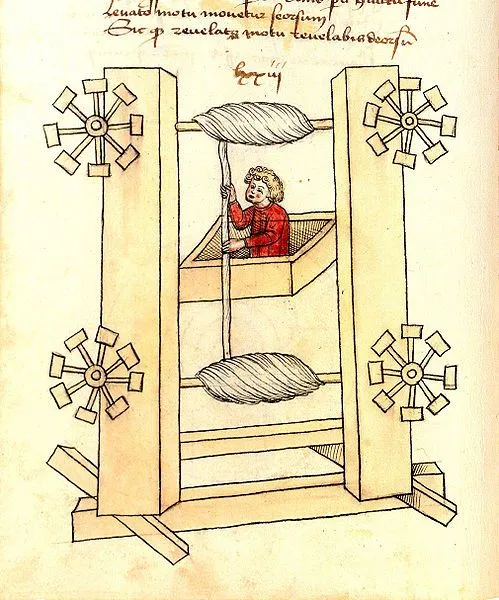
The history of the concept of elevators goes back over 2,000 years. The Roman architect Vitruvius credited the Greek mathematician Archimedes with building a primitive hoist around 236 BC, worked by ropes wound around a drum and turned by hand. However, these elevators weren’t the standard and speedy tools that we see today. Those ancient elevators were platforms to hoist goods and the heavy materials used for building structures.
Modern-day elevators are cabins with multiple safety measures, making them essential in any (tall) building.
Now, why did we need safety brakes to begin with?
Older elevators worked by hoisting ropes, bringing the cabin up and down, but these ropes would sometimes break, resulting in horrendous accidents and even death!
Elisha Otis invented a device that could prevent this mishap from happening. These safety brakes spring out from the cabin’s wall when the elevator exceeds its rated speed, or if the cable breaks. The brakes prevent the cabin from falling any further, thus preventing any tragic accidents.
Okay, so safety… checked?
Actually no. There’s more to safety and security in an elevator than not falling to one’s death. There were additional problems with riding in an elevators with closed doors. Remember, this is a small, steel cabin with thick walls and mechanized doors encasing one for an unknown number of seconds or minutes!
How Does A Mirror In The Elevator Help?
The feeling of uneasiness and anxiety in an elevator is also known as claustrophobia. We have all experienced similar feelings at least once while using these machines, haven’t we? Particularly if the doors don’t open right away!
This is a fear to which many people are subject, and it’s challenging for these people to use elevators in their day-to-day lives.

To overcome this problem, elevator manufacturing companies had two solutions: either increase the elevator’s speed to reduce the time people spend inside the elevators or to install mirrors.
Wait, mirrors? How are mirrors supposed to boost safety?
Mirrors were a possible solution because they serve as a distraction for people without resorting to the other method, which involved increasing elevator speed and adding more problems than it solved.
Furthermore, mirrors make the elevator space seem larger than it is, helping claustrophobic people overcome their fears.

The tremendous amount of elevator mirror selfies on Instagram shows that these manufacturing companies went with option two of installing mirrors inside the elevator.
There’s actually more to the mirrors than mere selfies. Elevators are slow and boring. One second can feel like an entire minute. Mirrors in elevators, accompanied by the “elevator music” of classic songs, is a little more bearable, no? If you agree, that design is absolutely serving its purpose.
When elevators were still in their infancy and pretty slow, people would stand in them and experience a heightened sense of time because they were idle. Their totally understandable dread of falling from an elevator dangling in midair by only wires was all they could think about. Therefore, mirrors were erected to give people something to gaze at while they waited and to divert their attention.
Mirrors also allow you to see what everyone else is doing, which matters a lot when the ‘safety’ factor is considered. This capacity for observation prevents certain offenses, such as theft, unsolicited touching, or contact that might occur when the small elevator cabin is jam-packed with unknown passengers.

Mirrors are also an excellent aid for people who use wheelchairs. In fact, accessibility is often credited as the original reason mirrors appeared in elevators, starting with high-rises in Japan. A standard cabin simply isn’t big enough to turn a wheelchair around, so a passenger who rolled in facing forward would otherwise have to back out blind. A mirror on the rear wall acts just like the rear-view mirror in a car: it lets the rider see the doorway and the corridor behind them and reverse out safely, without having to twist around or guess.

Elevators are helpful not only for wheelchairs, but also for transferring bulky items up several levels, such as desks, computers, furniture, or large and heavy equipment. They remove the worry of having to push these items up the stairs. Elevator mirrors will also facilitate the movement of these heavy pieces of furniture while moving, shifting, or redecorating.
Elevator mirrors also serve the purpose of verifying that one last check on your outfit and hair before entering a building. If not for that elevator mirror, you might still have your morning breakfast stuck between your teeth.
We should marvel at the problem-solving skills of these elevator manufacturing companies. Who knew that mere mirrors would save so many accidents and mishaps from happening? Pretty mirror selfies featuring your outfit of the day are just a plus to the many existing benefits of these reflective surfaces.
Why Are Elevator Mirrors Flat And Not Curved?
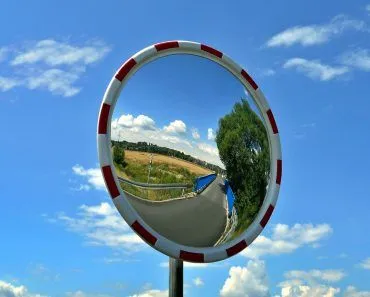
Have you ever noticed that the mirror in a lift is always a plain, flat sheet, and never one of those bulging convex mirrors you spot on shop ceilings or parking ramps? That is not an accident. It comes down to the kind of image each shape produces.

A flat mirror is what physicists call a plane mirror, and it obeys one wonderfully simple rule: light bounces off at the same angle at which it arrives. The result is a virtual image that sits as far behind the glass as you are standing in front of it, stays upright, and is exactly the same size as you are. Because your reflection is life-size and undistorted, a plane mirror on the back wall makes a cramped cabin look like it stretches back roughly twice as far, which is exactly the roomier feeling the design is going for.
A curved mirror would ruin that effect. A convex mirror (one that bulges outward) always shrinks whatever it reflects into a smaller, upright image, which is handy for a wide security view but useless for making a small space feel bigger. A concave mirror (one that curves inward) does the opposite, magnifying your reflection up close and even flipping it upside down once you step far enough back. Either one would leave you staring at a warped, funhouse version of yourself inside an already tense little box. The humble flat mirror wins because it simply tells the truth.
Are Elevator Mirrors Required By Law?
Here is the part that surprises most people: in some places, that mirror is not just a thoughtful extra, it is written into the building rules. In the UK, the government's accessibility guidance, known as Approved Document M, sets out how lifts in public buildings should be designed for wheelchair users, and the mirror is given a very specific job.
The guidance treats 1100 mm wide by 1400 mm deep as the smallest lift car that lets an accompanied wheelchair user get in and out. A car that size is big enough to enter, but not big enough to turn a wheelchair around inside. So a rider who rolls in facing forward has to reverse straight back out, and doing that blind is both awkward and unsafe. To solve it, the document says that “for lifts of a size that does not allow a wheelchair user to turn around within the lift car, a mirror is provided in the lift car to enable a wheelchair user to see the space behind the wheelchair.” In plain terms, the mirror becomes the rider's rear-view mirror for backing out.
The rules do offer an alternative: build the car with doors on opposite walls, a so-called through car, so a wheelchair user can drive straight in one side and out the other without ever reversing. Where that is not practical, the mirror is the accepted fix. So the next time you check your hair on the way up, remember that in many buildings that reflective panel is quietly doing accessibility work that the design guidance specifically calls for.
References (click to expand)
- Elisha Otis | Safety Brake, Elevator Design & Industrial Revolution. Encyclopaedia Britannica
- Who invented the elevator? - Science | HowStuffWorks. HowStuffWorks
- Why Do Elevators (Almost Always) Have Mirrors? Mental Floss
- Analysis of the E15 Passenger Elevators. web.mit.edu
- Images Formed by Plane Mirrors - University Physics (OpenStax). Physics LibreTexts
- Mirrors: convex and concave image characteristics. Physics LibreTexts
- Access to and use of buildings: Approved Document M. GOV.UK