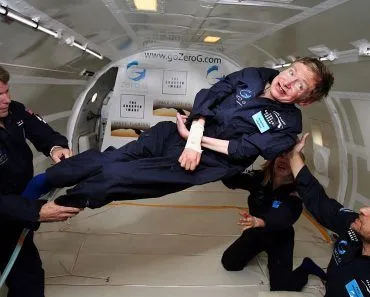
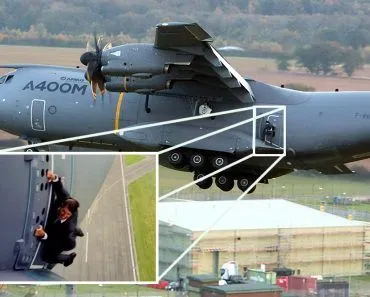
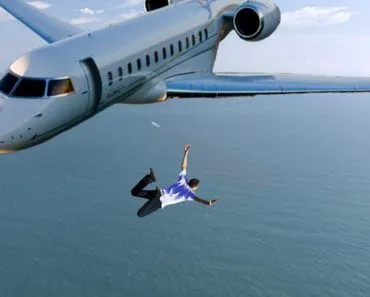
Fighter pilots pass out because high G-forces during steep climbs and tight turns drain blood from the brain. The condition is called G-LOC (gravity-induced loss of consciousness). An untrained person typically grays out around 4 g and blacks out near 4.5–6 g; with anti-G suits and the AGSM straining manoeuvre, trained pilots can stay conscious up to about 9 g, and a few stunt pilots up to 12 g.
Armed forces of any country represent top-order fitness levels, something to which we all aspire. Their jobs expose them to extremely demanding situations, and often demand spectacular acts of bravery. However, there are times when the forces of nature simply get the better of them, in equally harrowing ways. Could you imagine falling unconscious while flying an aircraft? Well, fighter pilots are faced with that risk all the time.
Why Do Fighter Pilots Lose Consciousness While Flying?
Such a thing happening in the first place is an incredibly scary proposition, as it exponentially increases the probability of a catastrophe. Fighter pilots are routinely engaged in speeds easily comparable to the speed of sound.
As exhilarating as it sounds, this subjects their bodies to high values of G force, which can have a dangerous impact on their bodies. Amongst the more extreme examples of the consequences is pilots passing out mid-flight. This is known as G-LOC, or gravity-induced loss of consciousness. As you may expect, it is important to understand G forces before we can understand their effect.
What Is G-force?
G-force, gravitational force equivalent, or simply G, is a measure of acceleration in multiples or fractions of 9.8 m/s2, or the gravitational pull of Earth. It is perceived as a sense of excessive sense of weight or force that is not otherwise commonly experienced.

For example, if you were to suddenly accelerate while driving, you would be pushed back into the seat. On the flip side, you would be forced forward into the steering wheel upon hard braking. This is G force in action.
However, G forces are not restricted to forward and backward directions, as the body can accelerate in any direction.
Before we proceed any further, it is important to note that even though G forces are measured in multiples of gravitational acceleration, they are not necessarily caused by it.
What Are The Various G Forces Experienced By Pilots?
When airborne, fighter pilots are open to accelerate, and consequently experience G forces in all 3 dimensions. G force acting on pilots can be classified as linear, radial, and angular. Linear G forces correspond to changes of speed in a straight line, whereas radial G forces arise due to changes in direction. An example of radial G forces is sharp dives or turns. Angular G forces are experienced due to a combination of both changes of speed and direction.
How Does G Force Affect Fighter Pilots?
The effect of G-force is felt the most on the moving parts of the body. Although the pilots are strapped down to their seats, their organs and bodily fluids can still slosh around inside. Consequently, the effect of G forces is felt chiefly on those organs and substances, which in turn affects the body adversely.
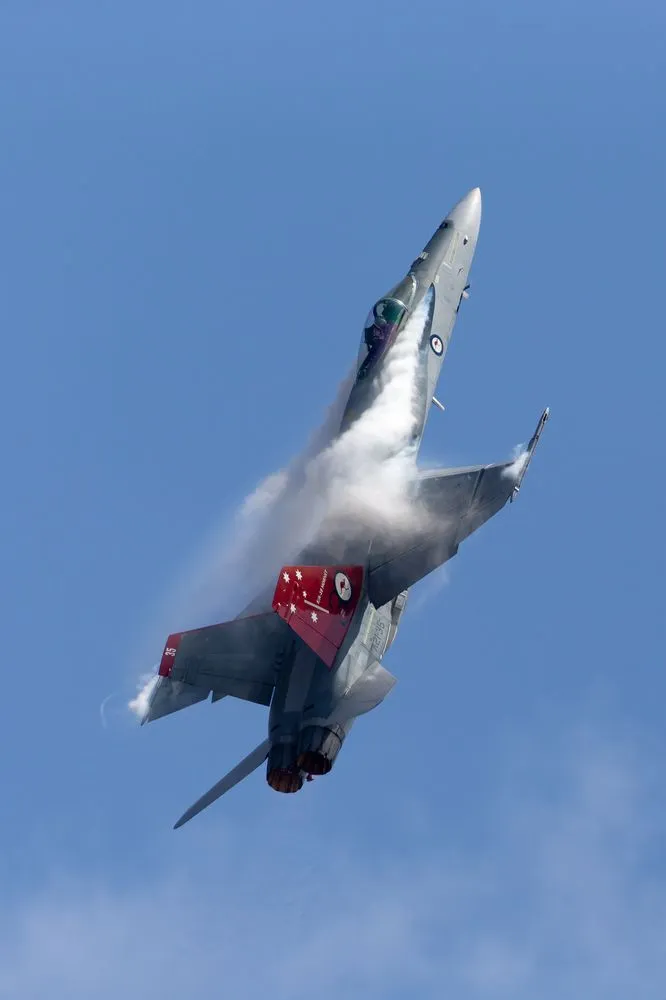
When accelerating vertically upwards, pilots often experience a reduction or loss of vision, blackouts and an increase in heart rate and blood pressure. Similarly, when they dive, blood rushes to their head and results in a ‘red-out’, accompanied by reductions in blood pressure.
What Is G-LOC?
G-LOC, or gravity-induced loss of consciousness, is an extreme end-point of high G-force exposure. Under sustained positive G (head-to-foot acceleration), blood pools in the lower body and starves the brain of oxygen. Pilots typically experience a progression: at around 3–4 g vision narrows ("grey-out"), at roughly 4.5–6 g they lose vision while remaining briefly aware ("blackout"), and beyond that they suffer full G-LOC, an unresponsive lapse that lasts 10 to 30 seconds and is followed by another period of disorientation. During those seconds the aircraft is effectively flying itself, with potentially catastrophic consequences.
How Are Fighter Pilots Trained To Combat G-LOC?
In order to increase their threshold for G-LOC, fighter pilots must routinely subject themselves to artificially created high G-force scenarios. This is aided by means of ‘human centrifuges’ that rotate at high speeds to simulate extreme in-flight situations.
Fighter pilots are trained in human centrifuges.
This acclimatizes pilots and reduces the risk of G-LOC during actual air time. While they can survive high G forces for very short intervals of time, they are trained to sustain up to 9Gs, although stunt pilots often push their limits to 12G.
Can Civilians Experience G-LOC?
As human beings, we are used to some amount of G forces acting upon us at all times. Consequently, we are natively trained to handle some amount of this force. An average, untrained civilian can handle no more than 5G before passing out. However, it is not common to find contraptions that can accelerate enough to make you fall unconscious.
Some rollercoasters and slingshot rides are capable of accelerating at paces that can cause us to pass out temporarily, as is shown in the video above. However, passing out in such scenarios is also largely dependent on a person’s physical fitness. Thus, it is possible for civilians to pass out long before a pilot’s threshold is reached.
What Can Be Done To Avoid G-LOC?
While we cannot entirely escape the effect of G forces on our bodies, there are means to reduce their impact. It is interesting to note that all methods to reduce the effect of G forces are hinged around one principle—reducing the motion of moving parts. That is to say, by making the independent bodies one with the accelerating system, the effect of G forces can be avoided.
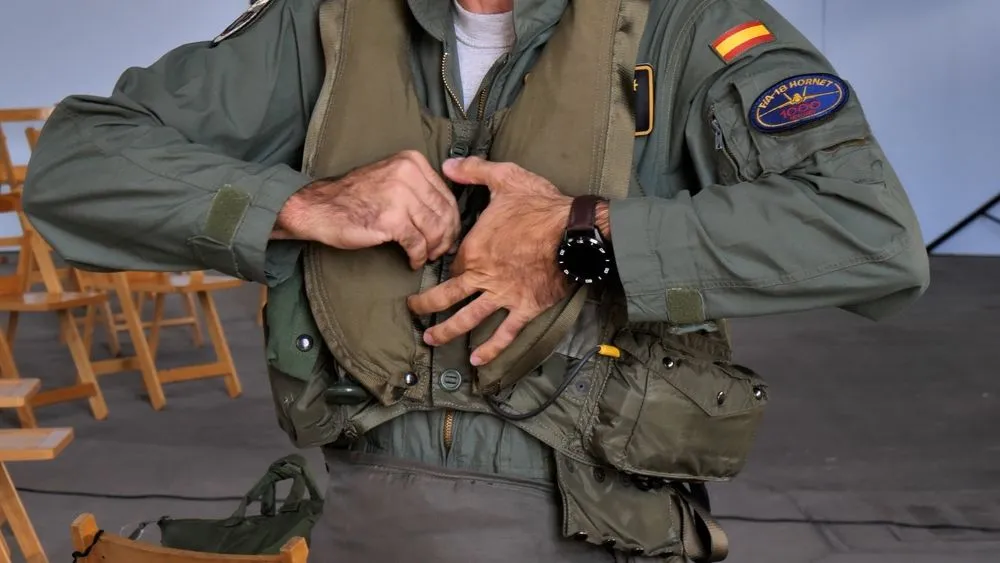
With consistent training, pilots are also equipped with pressurized suits, colloquially called G suits. They moderately compress the body by means of inflatable bladders. This reduces the available space for blood to move around freely. This keeps blood available to the brain. Modern G-suits are paired with the Anti-G Straining Manoeuvre (AGSM), a coordinated tensing of leg and abdominal muscles combined with short rhythmic breaths against a closed glottis, which is what actually lets pilots ride out 9 g pulls in fighters like the F-16 or F-22.
While the thrill of acceleration is unmatched, its ill effects are equally hazardous. Thus, we’re advised to wear tight-fitting helmets on motorcycles and properly cinched seat belts in cars at all times. The secret again, lies in taming the impact of G forces.
References (click to expand)
- Tu, M.-Y., Chu, H., Chen, H.-H., Chiang, K.-T., Hu, J.-M., Li, F.-L., … Lai, C.-Y. (2020, November 2). Roles of Physiological Responses and Anthropometric Factors on the Gravitational Force Tolerance for Occupational Hypergravity Exposure. International Journal of Environmental Research and Public Health. MDPI AG.
- (2010) Effects of repeated exposure to acceleration forces (+Gz) and .... The National Center for Biotechnology Information
- (2004) Libelle Self-Contained Anti-G Ensemble - Scholarly Commons. Embry–Riddle Aeronautical University
- (2017) An Investigation of the Effects of Sustained G-Forces on the .... diva-portal.org