NASA simulates zero gravity on Earth using parabolic flights (the 'vomit comet'), drop towers, and underwater training. Learn how microgravity is created and why astronauts aren't really floating; they're falling.
A day after she returned to Earth, astronaut Heidemarie Stefanyshyn-Piper was welcomed by more than 100 people in a gleeful welcome-home ceremony held at Ellington Field. However, what stirred global news wasn’t her achievement — a 12-day stint in space — but rather two embarrassing moments spurred by disorientation and syncope. The fifth of six speakers, she wobbled twice and almost tumbled to the ground while talking. Heidemarie had yet to completely readjust to Earth’s gravity.
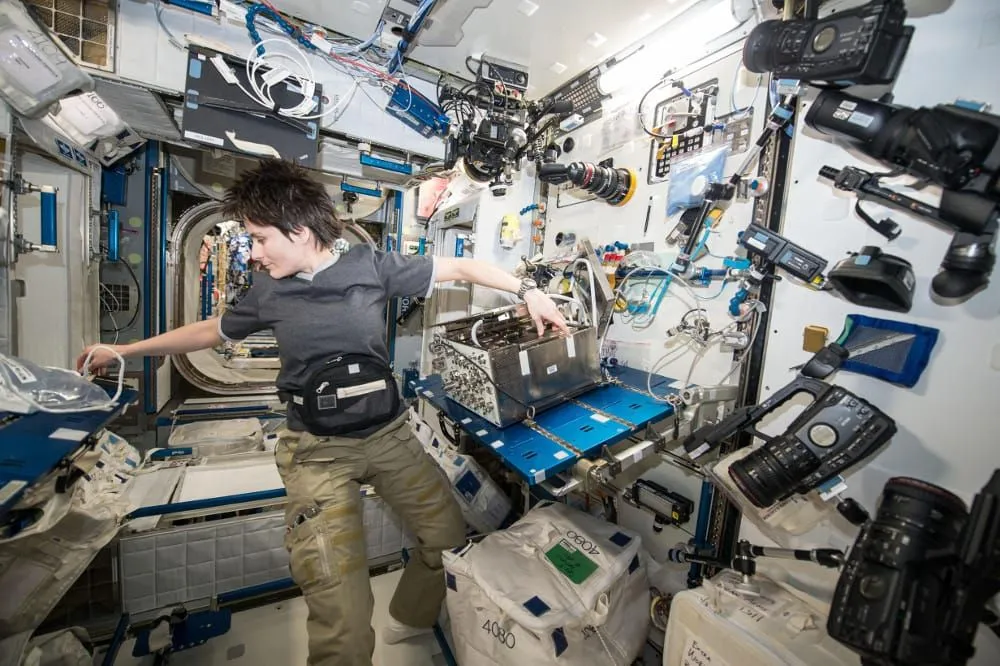
Low gravity, such as the orbit in which the International Space Station (ISS) rotates, is a completely different environment than Earth’s. Being the creatures of habit that we are, it takes us some time to accustom to an alien environment. The ISS circling around us is subject to 90% of Earth’s gravity, yet its travelers tend to suffer from minor inconveniences. Long-term exposure is known to weaken bones and muscles. This is disconcerting for astronauts who are planning to spend months on the space station. Imagine the repercussions in deep space.
To help the astronauts adapt, NASA, as part of their training, subjects the astronauts to such an environment every day. The enclosed region of “zero” gravity is not located in space, but is created right here on Earth. The question is… how does NASA achieve this?
What Is A Free Fall?
The word “zero” is very misleading here. If gravity was nonexistent in space, the moon, some 400000 km away, wouldn’t revolve around us constantly. It is the gravity in space that keeps Neptune rotating around the Sun, and what keeps the Sun glued to our galaxy. Gravity is a force that exudes from mass, which, I’m sure, can be found everywhere in the Universe. Its pull might approach zero, but never reach it. It cannot be escaped.
What Is Microgravity?
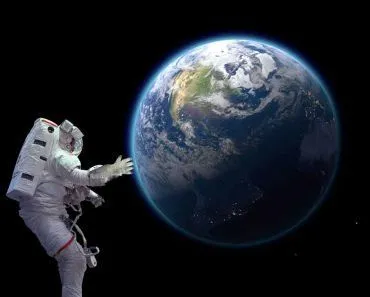
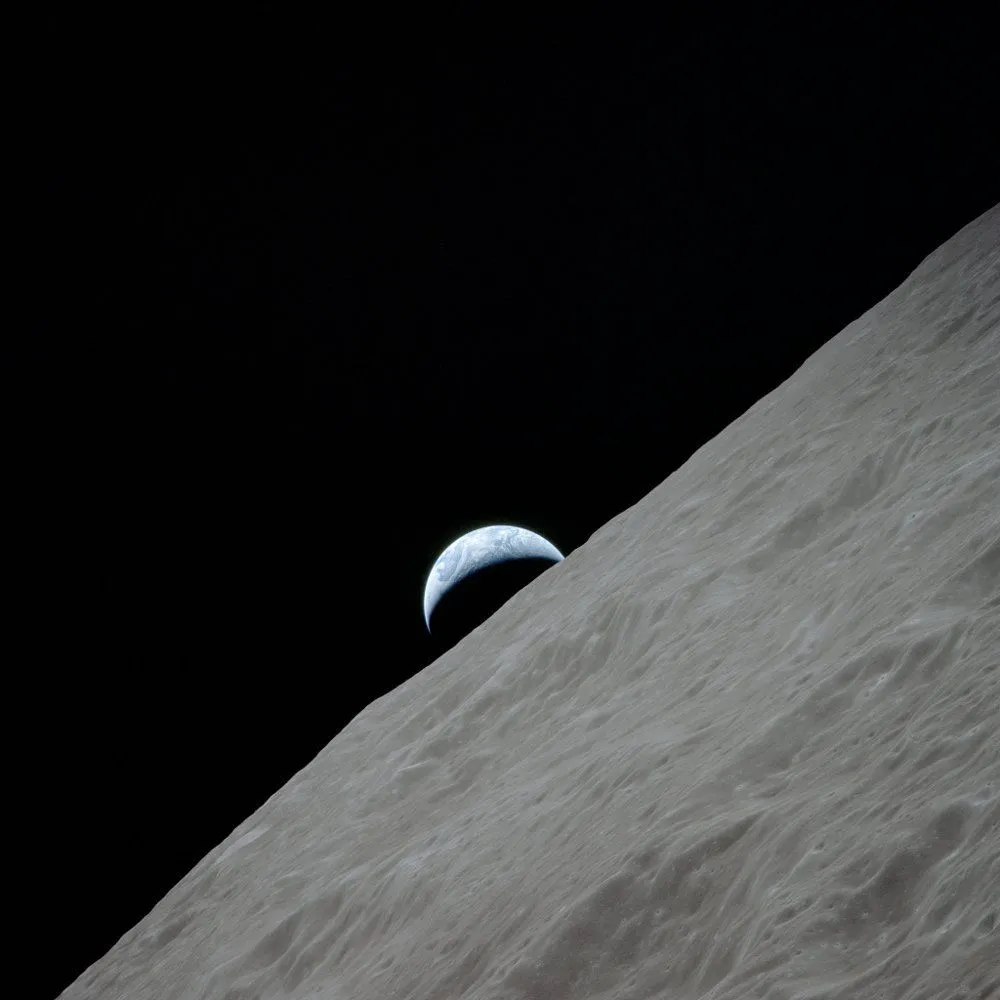
The appropriate term to describe what astronauts experience in outer space is microgravity. NASA creates regions of microgravity, which enables its astronauts to simulate the experience of floating in space. However, their floating is an illusion; the astronauts are not floating – they’re falling.
Galileo claimed that objects, regardless of their mass, would touch the ground at the same time when dropped from any height. The most clichéd example is the simultaneous release of a hammer and a feather; without air resistance, they must fall at the same rate. And this is exactly what the commander of the Apollo 15 mission, David Scott, demonstrated on the moon.
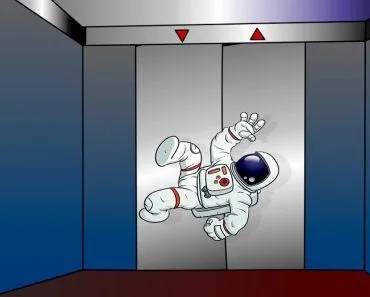
Similarly, the ISS and its inhabitants fall towards the Earth at the same rate. What ensues is akin to two objects gradually rising in an unleashed lift racing down its shaft. Deprived of any underlying surface to rest on, an object feels weightless. In fact, our weight is nothing but the equal and opposite force — known as the normal force — exerted by the Earth’s surface when our feet push against it.
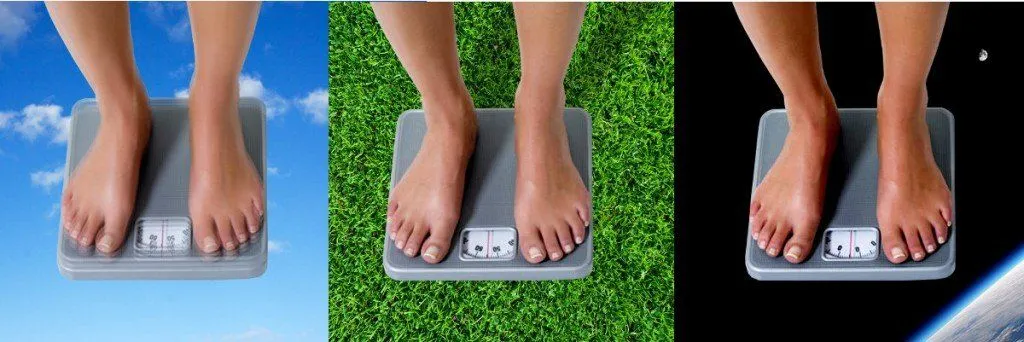
Weighing machines determine an object’s mass by calculating this normal force and dividing it by Earth’s acceleration due to gravity. This is achieved by a nimble calibration. However, if the ISS is falling towards the Earth, why doesn’t it crash into it? What causes it to orbit the planet instead?
The ISS or the moon, for that matter, are not falling towards the Earth but around it. Discussing why would mean to digress; a detailed explanation can be found here.
Experiencing Microgravity
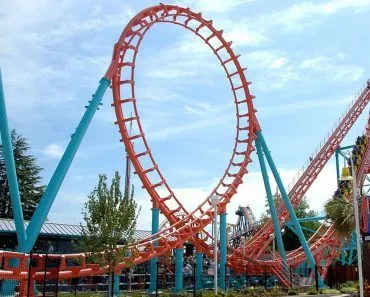
There are multiple ways that microgravity can be experienced without – as in the case of a falling lift – dying. You can experience it, albeit for a few seconds, on the summit of a roller coaster when the seat and your body become unglued. At this moment, the seat and your body fall at the same rate, until the contact and with it, your weight is restored.
Vomit Comet
NASA provides the experience of microgravity by making its astronauts rove in a huge airplane. Nicknamed the “vomit comet”, the airplane, like a roller coaster, climbs into the sky, floats momentarily at the top and then slides down to the other side until it reaches the same altitude where it began. The “floating” of its occupants occurs immediately after the airplane’s nose begins to stoop. The astronauts float for about 20–25 seconds per parabola as the aircraft’s body eventually becomes parallel with the Earth’s surface.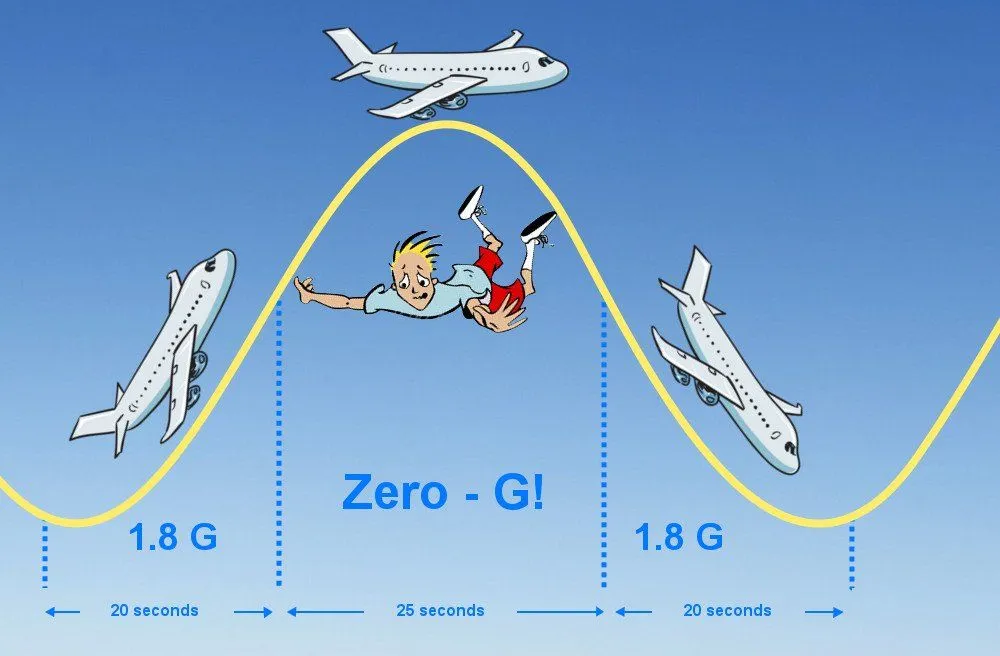
Subsequently, the nose turns to face the ground, implying that the aircraft is retreating back towards the Earth. The gravity now gradually increases. In a training period of 2-3 hours, the aircraft traces this parabola 40–60 times, wherein the astronauts test their equipment and practice eating, drinking and maneuvering each time the gravity is “turned off”.
Zero G Corporation
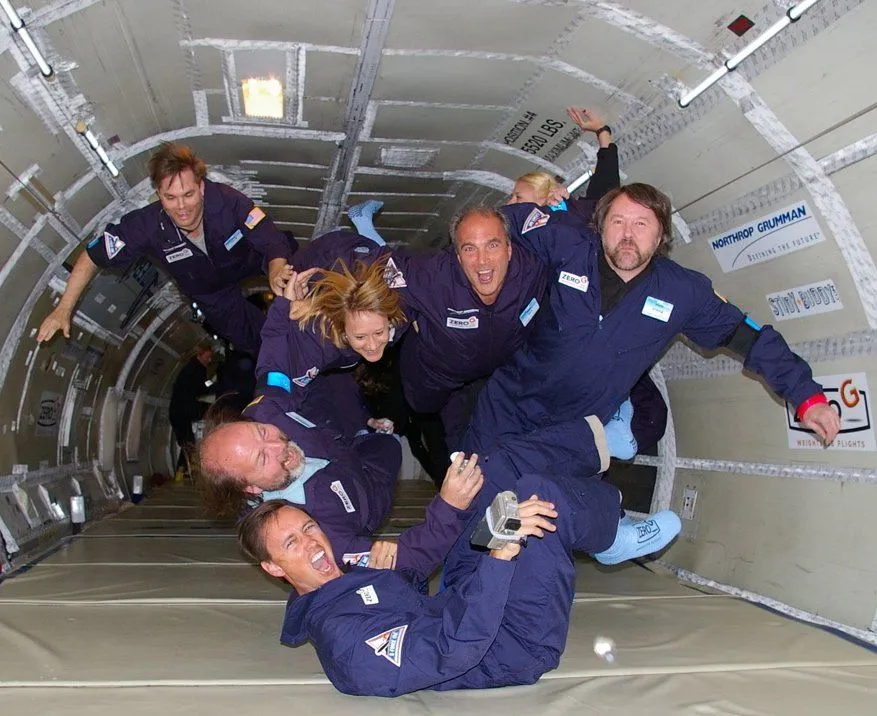
The excitement or, well, nausea, isn’t exclusive to NASA’s astronauts. The Zero G Corporation offers non-astronauts the opportunity to experience microgravity on its G-force One airplane. One can hitch a ride from a myriad of airports situated in New York, Florida, Oakland, Las Vegas and many other places. Tickets have historically cost around $8,200 per person. The commercial aircraft, however, traces only 12-15 parabolas to reduce the extent of nausea that can be induced by doing 60 of them.
Drop Towers: The "Zero Gravity Chambers" That Really Exist
If you have ever searched for a “zero gravity room” or an “anti-gravity chamber” and come away confused, here is the honest answer: there is no enclosed box on Earth that switches gravity off. What does exist, and what people are usually picturing, is a drop tower. It is the simplest way to manufacture microgravity, because it leans on the one trick we have already met: free fall. Seal an experiment inside a capsule, drop it down a tall shaft, and for as long as it is falling, everything inside is weightless.
NASA’s flagship version is the Zero Gravity Research Facility at the Glenn Research Center in Cleveland, a National Historic Landmark that has been in service since 1966. The experiment package free-falls 132 meters (433 feet) down a steel vacuum chamber, giving researchers 5.18 seconds of microgravity. That sounds brief, but the quality is extraordinary. The shaft is pumped down to a near-vacuum so that air resistance almost vanishes, leaving a residual acceleration of less than 0.00001 g, far steadier than anything a roller coaster or even the vomit comet can offer. At the bottom, the capsule plows into a pit of polystyrene beads and decelerates at up to 65 g, all in a fraction of a second.

Glenn also runs a smaller 2.2-second drop tower for quicker, cheaper experiments, and similar towers operate elsewhere, such as the 146-meter facility at the University of Bremen in Germany. The catch with every drop tower is duration. A few seconds is plenty to watch how a flame, a droplet or a crystal behaves without gravity nagging at it, but it is useless for training a human body to live in space. For that, NASA needs methods that last minutes or hours, not seconds.
Underwater Training: The Neutral Buoyancy Pool
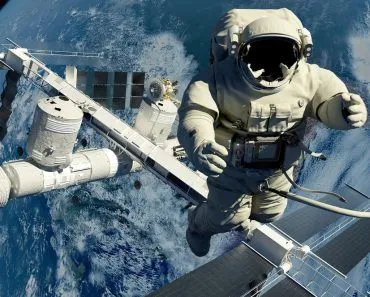
To rehearse a spacewalk that might run for hours, NASA turns to water. At the Neutral Buoyancy Laboratory (NBL), part of the Sonny Carter Training Facility near the Johnson Space Center in Houston, astronauts practice in one of the largest indoor pools on Earth. It stretches 61.5 meters (202 feet) long, 31.1 meters (102 feet) wide and 12.2 meters (40 feet) deep, holding roughly 6.2 million gallons of water and a full-scale mockup of the International Space Station sitting on the bottom.

The clever part is the word neutral. A suited astronaut is fitted with a careful mix of lead weights and foam floats until the pull of gravity downward is balanced exactly by the upward buoyancy of the water. The astronaut neither sinks nor bobs to the surface, and so drifts in a convincing imitation of floating in orbit. A team of safety divers hovers nearby to adjust the trim and lend a hand.
It is worth being clear about what this is and is not. Unlike a drop tower or the vomit comet, the NBL does not produce real free fall, so it is not true microgravity. The astronaut still feels their own weight pressing inside the suit, and the water adds drag that space never would, which is why divers move slowly and deliberately underwater. What the pool buys instead is time, hours of it, letting crews choreograph every bolt and handhold of an extravehicular activity long before they ever leave the ground.
NASA doesn’t create a microgravity environment with the sole incentive of aiding astronauts. It is also curious how physical processes unfold in space. The ISS has proven to be a convenient laboratory for a variety of experiments.
For instance, we have discovered that fire burns differently in space; in microgravity, the “traditionally” oblong flames assume a spherical shape. We have also found that viruses in microgravity become more virulent, and that crystals shape better without anything pulling them down. Without artificial microgravity, these peculiarities would have been impossible to discover on Earth.
References (click to expand)
- What Is Microgravity? - NASA. The National Aeronautics and Space Administration
- How are astronauts trained for weightlessness? (Intermediate) - Curious About Astronomy? Ask an Astronomer - curious.astro.cornell.edu
- How Do We Know It's Really Microgravity? - NASA
- Weightlessness and Its Effect on Astronauts - Space.com. Space.com
- Reduced Gravity Drop Towers and Test Rigs - NASA Glenn Research Center
- Neutral Buoyancy Laboratory - NASA Johnson Space Center