Table of Contents (click to expand)
Contact lenses expire because the sterile saline solution sealed inside each blister pack stays sterile only for a few years (the printed date is usually 3-5 years after manufacture). Over time the seal can weaken and the solution's pH shifts, letting germs in. Wearing contacts past that date, or past their replacement schedule, can lead to eye infections.
Not everyone is blessed with 20/20 vision. The less fortunate rely on some help, either through glasses or contact lenses. Contact lenses don't cover your face with potentially chunky glasses (and the hassle of losing them), but contact lenses require plenty of care. You need to consistently keep them clean and moist with lens solution.
They are soft and rigid lenses, and you can even get them in different colors. However, they all have one thing in common. They shouldn’t be worn past their expiration date, nor past their use limit.
Can Lenses Expire?
First of all, contact lenses are carefully sterilized and packaged because they are technically medical devices placed on the eye to correct vision. Each lens sits in a tiny pool of sterile saline solution, sealed inside its own blister pack. That sealed, sterile saline is really what carries the expiration date. The date you see printed on the box is usually 3-5 years past the manufacturing date, and that is how long the manufacturer can guarantee the solution stays sterile.
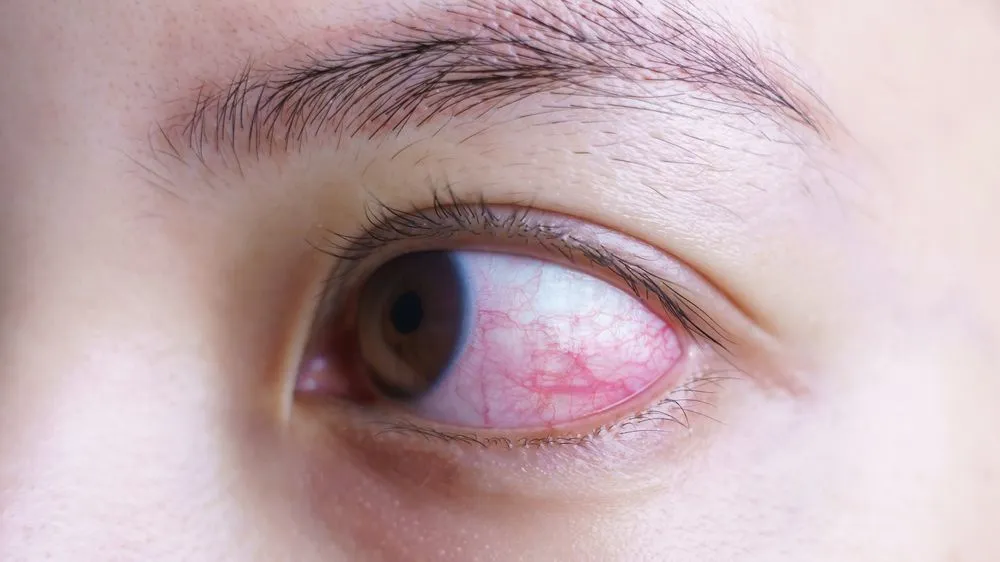
Over those years, the foil seal on the blister pack can gradually weaken, and the saline's pH can drift away from the value that keeps germs in check. Once that happens, dirt and microbes can slip in and contaminate both the lens and the solution. Wearing contaminated lenses is terrible for the eyes, as it can cause irritation, redness, and eye infections.
That is why manufacturers can't guarantee a lens is safe to wear past its printed expiration date. It isn't that the plastic suddenly rots; it's that the sterility behind it is no longer assured.
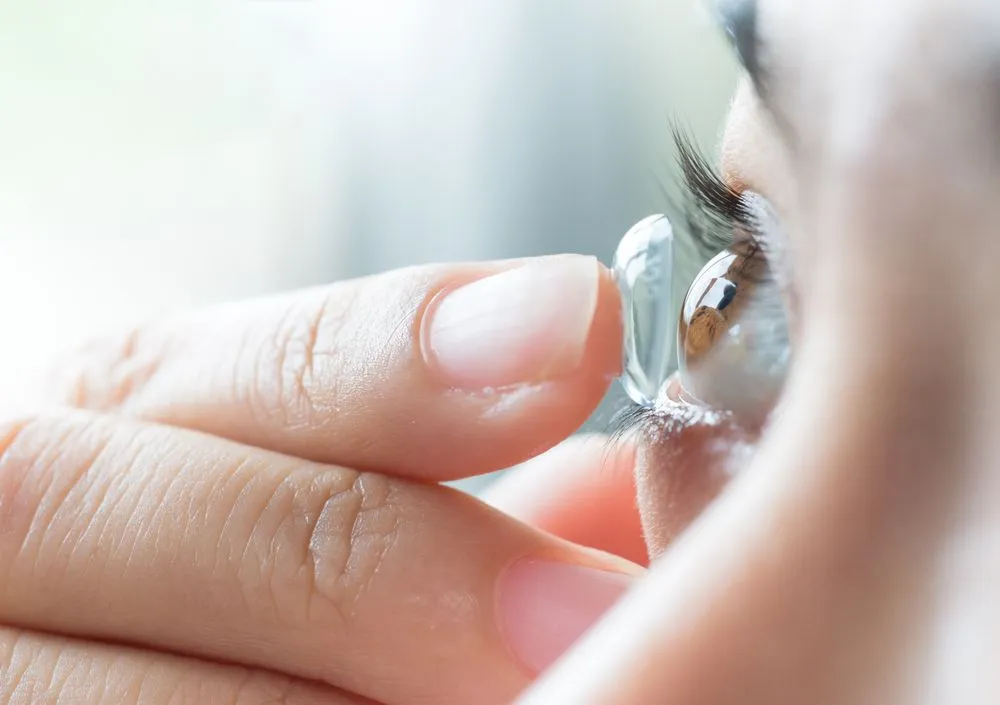
Additionally, wearing them past the recommended period is also a bad idea. Why? Because of natural deposits that form on the lenses over time. There are three types of deposits: organic, inorganic, and environmental.
Organic deposits include biomolecules like proteins, lipids, carbohydrates, and organic pigments. Such deposits come from interactions inside the internal eye environment. Proteins in the eye, like albumin and lactoferrin, react with the lenses and clump together. Such clumps cloud the lenses and make one’s vision blurry. Certain lipids used in lens manufacturing react with water from sweat or tears and form cloudy spots.
Inorganic deposits include minerals like calcium or phosphorous salts. These deposits form jelly-like bumps on the lenses and are commonly seen on extended wear contact lenses. Calcium (from handling the lenses with dirty hands) mix with eye proteins and lipids to form bumps. With time these deposits grow bigger and affect the wearer’s vision and irritate the eyes. Exposure to tobacco smoke can also react with inorganic elements present on the lenses and discolor them.
As the name suggests, environmental deposits come from various particles present in the air, such as rust, dirt, dirty water, polluted air, etc. Germs like Pseudomonas aeruginosa and Staphylococcus aureus are commonly found on contact lenses. Exposure to such germs can cause eye infections, and no one really wants that, right? In other cases, the containers we keep our lenses in may also be dirty and harbor germs that spread to the lenses.
These deposits form naturally with time, and there isn’t much we can do to avoid them, apart from cleaning the lenses regularly with lens solution. That is why we should carefully pay attention to the recommended duration printed on the labels. They don't all have the same time periods either. Some last only a day, some are good for weeks, and others can be used for months.
Why Does The Wear Time Differ?
The durations differ according to the lens type. Primarily, there are soft contact and rigid gas permeable lenses (RGP).
Soft contact lenses are made of soft, flexible plastics for better comfort. They allow oxygen to pass through the cornea, and wearers quickly get used to them. They aren't very resistant to deposit build-ups, however, so they come on shorter replacement schedules. Most soft lenses are daily disposables (a fresh pair every day), two-week lenses, or monthly lenses that you toss after 30 days.
The soft versions do come with extended-wear versions that last for 30 days, but it’s best to consult your doctor before you wear them while sleeping. Soft lenses are more prone to deposit formation, meaning that soft extended wear lenses can form large deposit build-ups if they aren’t managed carefully. Your eyes also need a break from contact lenses, so it’s recommended to rest and move through life without lenses from time to time.
Rigid gas permeable lenses are made from slightly less flexible plastics, but they allow better oxygen diffusion. They are sturdier and resist deposit build-up, thereby lasting longer and providing sharper vision. However, people find them more troublesome to wear, and it takes longer to get used to them. Sometimes debris can also get stuck under the lenses and irritates the eyes.
You have to find the right balance between comfort and usage time. Don’t take the recommended use label as a suggestion, as it is not good to over-wear contact lenses.
Why Shouldn’t You Over-wear Contact Lenses?
Sadly, this is why many people suffer from contact lens overwear syndrome.
Contact lenses, over time, develop deposits, jelly bumps, and abrasions that interfere with the oxygen diffusion from the environment to the eyes.
The cornea is a body part that doesn’t have blood vessels. It doesn’t get oxygen from the blood, but rather from the environment. By restricting oxygen to the cornea, complications like corneal edema can develop.
Wearing damaged lenses for long periods of time can also cause eye infections, irritation and redness, and it may lead to permanent eye damage.
It’s definitely better to keep changing your contact lenses in the safe, recommended and accurate way.
Conclusion
Contact lenses are a great way to help people see without changing the way they look through the use of glasses. Glasses also are troublesome in certain physical activities like sports. Even so, glasses seem like the more straightforward option at times.
New research is focusing on making stronger contact lenses that allow for greater oxygen diffusion. Lenses are also being turned into drug delivery devices that release medication straight onto the eye. This is no longer just theory: the FDA has approved a daily disposable lens (ACUVUE Theravision with ketotifen) that releases an antihistamine to ease eye allergies, with lenses that deliver glaucoma and dry-eye medication now in development.
The bottom line is to take care of your lenses because good lenses = good eyes. More importantly, don’t wear expired ones and change them out regularly to keep your vision clear!
References (click to expand)
- Types of Contact Lenses - American Optometric Association. The American Optometric Association
- Types of Contact Lenses. The United States Food and Drug Administration
- Contact Lenses: What Can Go Wrong? - Optometrists.org. optometrists.org
- Coral-Ghanem, C., & Bailey, M. D. (n.d.). Maintenance and Handling of Contact Lenses. Contact Lenses in Ophthalmic Practice. Springer-Verlag.
- Bailey, C. S. (1990). A Review of Relative Risks Associated with Four Types of Contact Lenses. Cornea. Ovid Technologies (Wolters Kluwer Health).
- Key, J. E., II. (1990). Are Hard Lenses Superior to Soft? Arguments in Favor of Hard Lenses. Cornea. Ovid Technologies (Wolters Kluwer Health).
- Snyder, C. (2004, September). Contact lenses—now, and then. Contact Lens and Anterior Eye. Elsevier BV.
- About Contact Lens Types. Healthy Contact Lens Wear and Care. Centers for Disease Control and Prevention (CDC).
- Approval Package for ACUVUE Theravision with Ketotifen. U.S. Food and Drug Administration.
- Use of Ketotifen Fumarate-Eluting Daily Disposable Soft Contact Lens in Management of Ocular Allergy. PMC, NCBI.