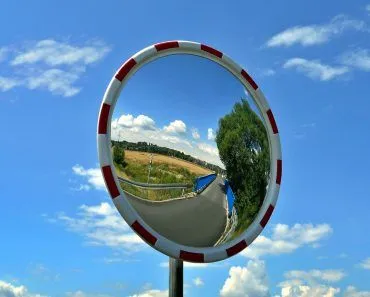
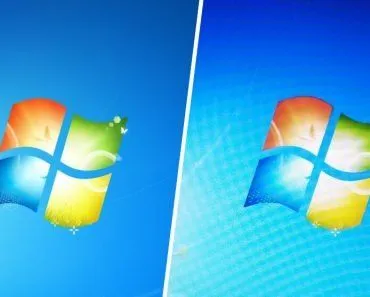
Your face looks weird in a non-mirrored selfie because the brain isn’t used to seeing this version of your face!
How can a simple filter cause hundreds of people to question their identity and self-esteem?
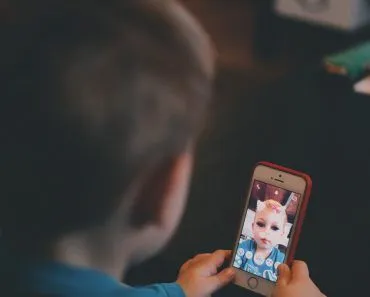
Well, that’s what the inversion filter from TikTok seems to do. It reverses a facial selfie and shows you what your face looks like when it’s not reflected in a mirror.
The effect of this reversal is uncanny: the inverse image looks like you, but slightly different, highlighting every defect you didn’t even know you had.
You might notice that your left eye drops off more than your right eye, or that your chin is slightly longer on the right than on the left. Or that you have a crooked smile that gives your expression of joy a distinctly “serial killer vibe”.
The image essentially looks like an uglier version of what you see in the mirror every morning…no wonder it can drive people to have an identity crisis.
But why should simply turning a picture from left to right have such a pronounced effect on the perception of our faces? Why should we think we look ugly? And is that the way other people perceive us?

Our Asymmetrical Faces
Our faces are not symmetrical, even though our facial features are symmetrically distributed—an eye on either side of the face, a nose and mouth in the middle, and ears on both sides of the head.
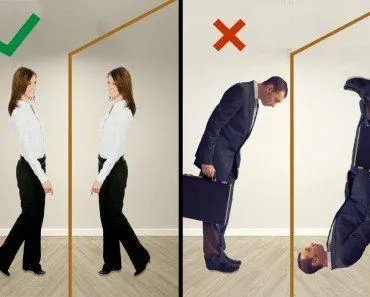
However, Mother Nature is not a perfectionist. As the body evolves from a small embryo into a mature human, environmental and genetic factors make these symmetrical elements imperfect. Normally, we don’t notice these asymmetries, because we always see only one version of our face—the one that we see in the mirror. When we see our face in the mirror, we see the reversed version, but because our faces are asymmetrical when we flip the mirror image, we notice just how different our face looks!
When we see our face in the mirror, we are in fact seeing the opposite version of reality. People who look at us see this non-reverse version of our faces.
The same goes for selfies. When we take a selfie, the technology can either flip the image like in a mirror or keep it non-reversed. It is this non-reversed version that we find so odd. The non-reversed version is also what other people see when they see you.
However, that doesn’t explain why we feel that we look “ugly” when a filter exposes us to the non-reversed versions of ourselves.
The Mere-exposure Hypothesis
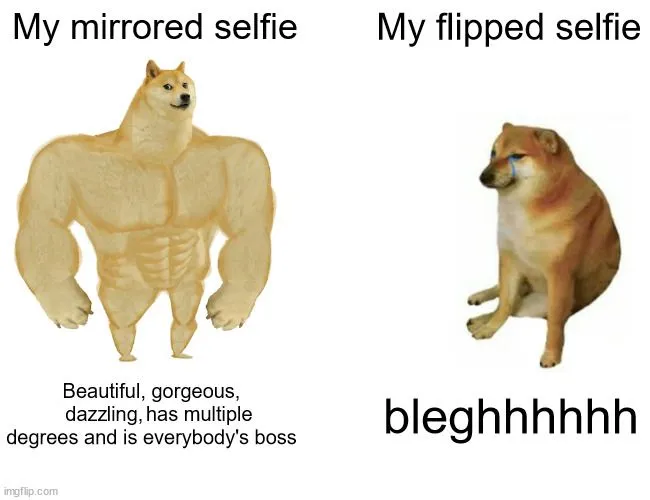
This is where the mere-exposure hypothesis comes into play, which states that we simply prefer things with which we’re more familiar. If we apply this hypothesis to our self-image, we could say that we prefer our mirrored faces simply because we’re accustomed to seeing that face.
This was corroborated by a 1977 paper that found that individuals preferred the mirror image of their face over their “normal” non-reversed mirror face, which usually appears in photographs. Family and friends of the subject preferred the non-reversed version, as that’s what they were used to seeing.
Our brain is simply not used to seeing this version, even though it acknowledges that this is “me”. The result is like looking at a strange alternate universe image of ourselves—one in which we aren’t very good-looking! Participants in an experiment studying face perception between inverted and non-inverted images were also similarly shocked. They called their non-reversed faces “crooked” and “asymmetrical”.
Also, keep in mind that these are photographs. When people see you in real life, they see a moving version of you. In the photograph, mirror or non-reversed, the lighting conditions, the angle of the camera, and the background can make your asymmetries stand out to you.
How The Brain Detects Faces
This phenomenon also raises an interesting question—does the brain detect faces differently from other visual cues?
The answer is yes. Through neuroimaging technologies like fMRIs, neuroscientists have found several regions in the brain that light up when we’re shown faces, as opposed to other visual cues. Regions in the temporal and occipital lobe showed particularly high activity, along with parts of the limbic system that attached emotions to familiar faces.
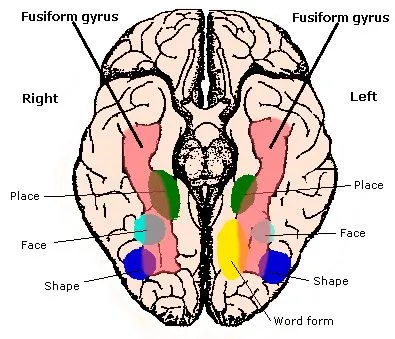
Interestingly, the right side of the brain seems to do the heavy lifting when it comes to recognizing faces, even faces that are upturned or inverted, like in the TikTok filter. Although, the left hemisphere can identify images if the right side of the brain is injured or one cannot see from the left eye (information from the left eye goes to the right, and vice versa).
One particular region that has generated a great deal of interest is the fusiform face area which is located in the temporal lobe. It seems to process faces, both of others and ourselves.
Our brains are so sensitive to the perception of ourselves that it has separate neural pathways that recall how we looked in the past, as opposed to how we look now, as well as how we perceive ourselves both in the mirror and in photographs.
Do People Actually See You Inverted In Real Life?
This is the question that sends everyone spiralling after they try the filter: is the inverted version the real me? The short answer is that the non-reversed face (the one the inverted filter shows you) is much closer to what other people see than your familiar mirror reflection is. Every time you look in a mirror, you see a left-right flipped version of yourself, so your reflection and your true face are opposites. The people sitting across from you have never seen that mirrored face at all.

Interestingly, this preference flips depending on whose face you are judging. In a 2023 study published in Maxillofacial Plastic and Reconstructive Surgery, participants were shown true (non-reversed) photographs of other people alongside the mirror-flipped versions. Roughly 82% picked the true, non-reversed image of someone else as the better likeness, because that is how they are used to seeing other people. When those same participants judged their own selfies, however, the pattern reversed: most leaned toward the mirror-flipped version, the one they greet in the bathroom mirror each morning. In other words, the "ugly" inverted face is not a glitch. It is much closer to the face your friends and family already know and like.
That said, a flat, frozen, inverted selfie is still not exactly what people see. In real life, others view you in three dimensions and in motion, with shifting light and constantly changing angles, which softens the asymmetries that a single still frame freezes in place. So the inverted filter is a fairer mirror than your actual mirror, but it is not the whole truth either.
Mirror Or Camera: Which One Is The Real You?
If the mirror lies by flipping you, does that make the camera honest? Not quite. A front-facing phone camera introduces a distortion of its own, and it has nothing to do with your bone structure. Most selfie cameras use a wide-angle lens, and because we hold the phone so close, the features nearest the lens (usually the nose) get exaggerated relative to everything behind them. This is plain optical perspective, not a flaw in your face.
The effect has actually been measured. In a 2018 study in JAMA Facial Plastic Surgery, researchers built a mathematical model of facial proportions and found that a selfie taken from about 30 cm (12 inches) makes the base of the nose look roughly 30% wider, and the tip about 7% wider, than the same face photographed from about 1.5 m (5 feet), the standard portrait distance. So a close-up selfie literally stretches the centre of your face outward. This is also why your "whole body" or face can look subtly slanted or off-balance in an inverted selfie: you are seeing genuine asymmetry plus a layer of lens perspective, both at once.
So which one is the "real" you? Neither, on its own. The mirror gives you the correct proportions but the wrong handedness (left and right are swapped). A close selfie gives you the correct handedness but exaggerated proportions. The most faithful version sits somewhere in between: a non-reversed photo taken from a comfortable arm's length or further, which is roughly how a friend a metre or two away actually sees you. If you want a kinder, truer self-portrait, step back and hand the phone to someone else. For more on why mirrors swap left and right but never top and bottom, our explainer on how mirrors reverse images digs into the geometry.
A Final Word
If your self-esteem has suffered a blow after looking at your non-reversed face, you can take comfort in knowing that scientists cannot decide what makes a person beautiful. In pop culture discourse, we’ve been told that the most symmetrical faces are the most beautiful, but some other studies would disagree.
One study found that skin health mattered just as much as symmetry, and the personality of an individual also affected how people perceived beauty. The artist Alex John Beck’s Both sides of exhibition displayed photoshopped images of symmetrical faces and the results were eerie. Our asymmetrical faces give us an oomph of personality, so don’t start spiraling next time you see your non-reversed image!
References (click to expand)
- Guntupalli, J. S., Wheeler, K. G., & Gobbini, M. I. (2016, November 22). Disentangling the Representation of Identity from Head View Along the Human Face Processing Pathway. Cerebral Cortex. Oxford University Press (OUP).
- Mita, T. H., Dermer, M., & Knight, J. (1977, August). Reversed facial images and the mere-exposure hypothesis. Journal of Personality and Social Psychology. American Psychological Association (APA).
- Frautschi, R. S., Orfahli, L. M., & Zins, J. E. (2021, April 12). Reflecting on Your Reflection: Examining the Effect of a Non-Reversing Mirror on Self-Perception. Aesthetic Surgery Journal. Oxford University Press (OUP).
- Oranges, C. M., Schaefer, K. M., Gohritz, A., Haug, M., & Schaefer, D. J. (2016, November). The Mirror Effect on Social Media Self-perceived Beauty and Its Implications for Cosmetic Surgery. Plastic and Reconstructive Surgery - Global Open. Ovid Technologies (Wolters Kluwer Health).
- Verosky, S. C., & Turk-Browne, N. B. (2012, April 1). Representations of Facial Identity in the Left Hemisphere Require Right Hemisphere Processing. Journal of Cognitive Neuroscience. MIT Press - Journals.
- Leehey, S., Carey, S., Diamond, R., & Cahn, A. (1978, September). Upright and Inverted Faces: The Right Hemisphere Knows the Difference. Cortex. Elsevier BV.
- Al-Bitar, Z. B., Hamdan, A. M., Shqaidef, A., Garagiola, U., & Naini, F. B. (2023). Perception of frontal facial images compared with their mirror images: chirality, enantiomorphic discrimination, and relevance to clinical practice. Maxillofacial Plastic and Reconstructive Surgery.
- Ward, B., Ward, M., Fried, O., & Paskhover, B. (2018). Nasal Distortion in Short-Distance Photographs: The Selfie Effect. JAMA Facial Plastic Surgery.
- Corballis, M. C. (2018). Mirror-Image Equivalence and Interhemispheric Mirror-Image Reversal. Frontiers in Human Neuroscience.