Table of Contents (click to expand)
Mirrors reverse left and right when you look in them, but they don’t reverse top and bottom. Reversing left and right is called a reversal along the horizontal axis. However, a mirror also reverses images in a front-to-back fashion. This means that if you’re pointing north, your mirror image is pointing south.
Although we may use various kinds of fashionable mirrors in the modern world to gaze at our own reflection, there’s one thing about mirrors that hasn’t changed since the very first time they were used, and is never going to! This constant truth about mirrors is that they only reverse left and right, but not top to bottom.
It’s all well and good that it’s true, but what’s the reason behind it?
The Problem Of Reversal In A Mirror
Stand in front of a mirror and lift your left hand up. What will happen is that your mirror image will lift its right hand up. That means it reversed left with right, or in more scientific terms, the image carried out a reversal along the horizontal axis. However, did you notice the bizarre thing? Sure enough, the mirror reversed left and right, but why didn’t it reverse top and bottom? In other words, why didn’t your mirror image point towards the ground when you raised your hand?
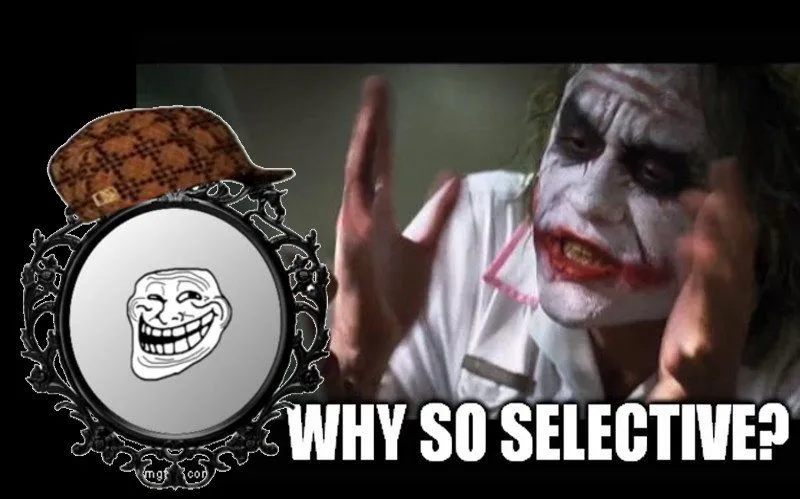
For starters, it’s not a mirror’s choice to perform this kind of selective reversal. Like any other inanimate object, mirrors don’t have a brain to decide which elements to reverse and which to ignore.
People who do not properly understand how a mirror works may foolishly believe that a mirror is either a mysterious object filled with magical powers or a scientific device with an incredibly complex structure that is far beyond the understanding of mere mortals. However, let me inform you that a mirror is neither of those things. On the contrary, it’s a rather simple, plain surface that reflects the light that falls on it.
What’s Really Happening?
Notwithstanding the fact that left and right appear to be so clearly reversed in a mirror image, it doesn’t actually happen that way at all! A mirror reverses neither left and right nor top and bottom; rather, it does so in a front-to-back fashion. Here’s an example of a front-to-back swap from Terminator 2: Judgment Day:

This means that your image has not been flipped, but actually turned inside out. Think about turning a glove inside out; it’s the same thing as the mirror, where your personal image acts as the glove that’s being turned front-to-back (for the sake of this article, let’s neglect the biological and physical impossibilities associated with such a twist!).
‘Left And Right’: A Flawed Means Of Representation
To be honest, both scientifically and physically, ‘left and right’ is not the ideal way of representing directions, as they are entirely dependent on a subject’s orientation. For instance, my left is different from the left of the person standing in front of me. Therefore, it’s not scientifically accurate to use left and right when talking about mirror images.

Let’s tackle this situation using proper directions, e.g., north, south, east and west. Since this explanation requires a little volleying between you and your mirror image, let’s represent the ‘real you’ with ‘RY’ and your mirror image as ‘MI’.
Standing in front of a mirror, when you move your hand (RY’s hand) to your east, sure enough, MI’s hand also moves towards the east. Something similar happens when RY’s hand goes up; MI’s hand also goes up! This is because these directions lie along a plane that is parallel to the mirror. MI seems to follow every motion of RY, as long as it’s in a direction that lies along a plane parallel to the mirror.
Now try this; stand in front of a mirror and point towards the mirror (let’s say you’re pointing north). In this case, although RY is pointing north, MI is pointing in the opposite direction, i.e. south.

It might baffle you at first, but the reason for the direction reversal in this case is the fact that images are reversed along the axis that’s perpendicular (makes a 90-degree angle) to the mirror. In other words, the mirror shows you an image that is the ‘turned-inside-out’ version of the real you.
To put it all in simple words, a mirror does not reverse/swap left and right, contrary to what most believe; it does so in a front-to-back fashion.
Therefore, if you find someone who’s really angered at the seemingly biased reversing nature of mirrors, tell them that their anger is not justified. As fiction so often tells us…
What Does ‘Lateral Inversion’ Mean (And Why Is It The Wrong Word)?
If you ever sat through a physics class, you probably met this whole puzzle under a fancier label: lateral inversion. Textbooks define it as the apparent left-to-right swap of an image in a plane mirror, the bit where your raised right hand becomes the reflection’s left hand while up stays up and down stays down. So when someone searches for a ‘reverse mirror image’ or a ‘laterally inverted’ one, that effect is exactly what they mean.
Here’s the catch, though, and it lines up perfectly with everything above: ‘lateral inversion’ is a slightly misleading name. The mirror never grabs the left of your body and shifts it over to the right. It only ever reverses the one axis pointing straight into the glass, the front-to-back (in-out) axis. Right and left aren’t really reversed at all; that’s simply how our brains read a front-to-back flip when we mentally turn around to face our own reflection. As the University of California, Riverside puts it, ‘mirrors reverse in-out, and that’s all they can ever do.’
The everyday proof is parked outside every hospital. Look at the front of an ambulance and the word ‘AMBULANCE’ is often painted in mirror writing. The driver ahead glances in the rear-view mirror, the mirror flips that painted lettering once more, and the word snaps into normal, readable order. It’s lateral inversion put to work, no magic required.

Why Do You Look Different In Photos Than In The Mirror?
Here’s a question that sounds unrelated but is really the same physics wearing a different hat: why does your face look slightly ‘off’ in photos, even though it looks perfectly fine in the mirror every morning? The answer is that front-to-back flip again. The mirror hands you a laterally reversed version of your face. A normal camera doesn’t; a photograph captures you the right way round, exactly as the friend standing in front of you sees you.
Almost no face is perfectly symmetrical, so the mirrored you and the photographed you are genuinely two slightly different faces. The reason the mirror version feels ‘more you’ is psychology, not optics. You’ve stared at your reflection thousands of times, so your brain has quietly adopted that flipped face as the official version of you. The unflipped photo then looks faintly wrong, even though it’s the face the whole world actually sees.
Psychologists have measured this. In a classic 1977 study, Theodore Mita and his colleagues showed people two prints of their own face, one true and one mirror-reversed, and most people preferred the mirror image, while their friends reliably preferred the true (unreversed) one. The effect has a name, the mere-exposure effect: we tend to like whatever we’ve seen most often. So the next time a photo makes you wince, blame familiarity, not your face. The camera is closer to the truth.
Can You Build A Mirror That Doesn’t Reverse At All?
Once you accept that a single flat mirror always flips you front-to-back, an obvious question follows: could you cancel the flip and see yourself the way everyone else does? You can, and it takes nothing more exotic than a second mirror. This is the idea behind the non-reversing mirror, sometimes sold as a ‘True Mirror’.
Take two plane mirrors and join them edge to edge at a right angle (a 90-degree corner), with the seam running vertically. Now look into the corner. Light from your face bounces off one mirror and then the other before it reaches your eyes. The first reflection reverses the image, and the second reflection reverses it right back, so the two flips cancel and you finally see yourself un-mirrored, the way a friend or a camera would. Wink with your right eye and the reflection winks back with the eye on the same side, which feels deeply strange the first time you try it.
The concept is old; a patent for exactly this two-mirror arrangement was granted to John Joseph Hooker back in 1887, and the modern desktop ‘True Mirror’ was popularized by John Walter in the 1990s. The one real snag is the seam where the two mirrors meet, which can slice a visible line straight down your face. Using front-surface mirrors (where the reflective coating sits on the front of the glass) at a precise 90 degrees makes that joint nearly invisible, which is the whole trick to a clean, seamless true mirror.
References (click to expand)
- Do Mirrors Reverse Left and Right? - UCR Math. The University of California, Riverside
- Why does a mirror exchange left and right but not up and down?. HowStuffWorks
- Why Do Mirrors Reverse Left and Right? - WIRED. Wired
- Why do mirrors reverse left and right, but not top and bottom?. Gizmodo
- 2.2: Images Formed by Plane Mirrors. Physics LibreTexts (Bowdoin College)
- Left-Right Facial Orientation of Familiar Faces: Developmental Aspects of the Mere Exposure Hypothesis. PMC, National Library of Medicine
- Non-reversing mirror. Wikipedia