Table of Contents (click to expand)
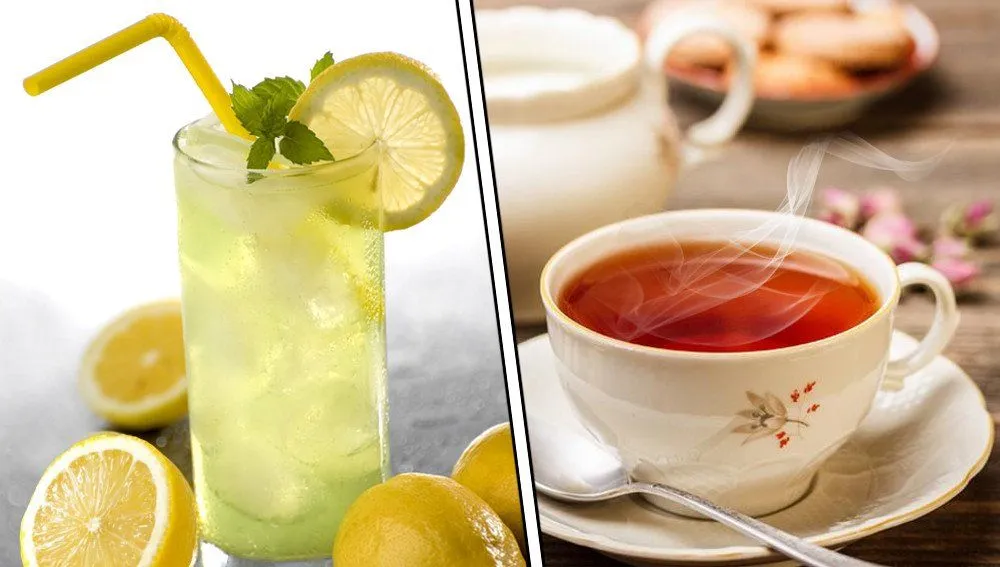
Heat always flows from a hotter object to a cooler one (the second law of thermodynamics). Warm room air heats up a cold lemonade, while a hot tea loses its heat to the same room air. Both drinks settle at room temperature, called thermal equilibrium.
After returning from an aggressive workout session at the gym, there’s nothing better than a glass of chilled lemonade. In a similar way, a warm cup of tea feels refreshing while sitting on the porch on a rainy day. However, both of these beloved beverages have a rather annoying, yet interesting trait – the former turns warm, while the latter turns cold if left unattended for a while.
Why does that happen?
Short answer: Because heat always travels from an object at a higher temperature to objects at a lower temperature.
A Little Something About Thermodynamics
While talking about heat and temperature, one term that invariably pops up is ‘thermodynamics’. It might sound a bit nerdy at first, but it’s actually quite basic. Thermodynamics is simply the name given to the branch of physics that deals with the energy and work of a system (a ‘system’ can be anything, from a cup of tea to the entire universe). One noteworthy thing about thermodynamics is that it primarily deals with the macroscopic responses of a system, i.e. the ones that can be observed and measured in physical experiments.
Just like the three laws of motion (postulated by Isaac Newton), there are four laws of thermodynamics, which describe how certain physical quantities, including energy, temperature and entropy, behave under given conditions. For the scope of this article, we only need to consider the second law of thermodynamics.
However, before heading into that, you need to understand a very important aspect of the second law…
Entropy
The second law is based on a variable state called ‘entropy’. You likely learned about it in your high school Science classes; it’s a concept that entails many interpretations, but for now, all you need to know is the most popular definition – a measurement of the ‘disorder’ of a macroscopic system.
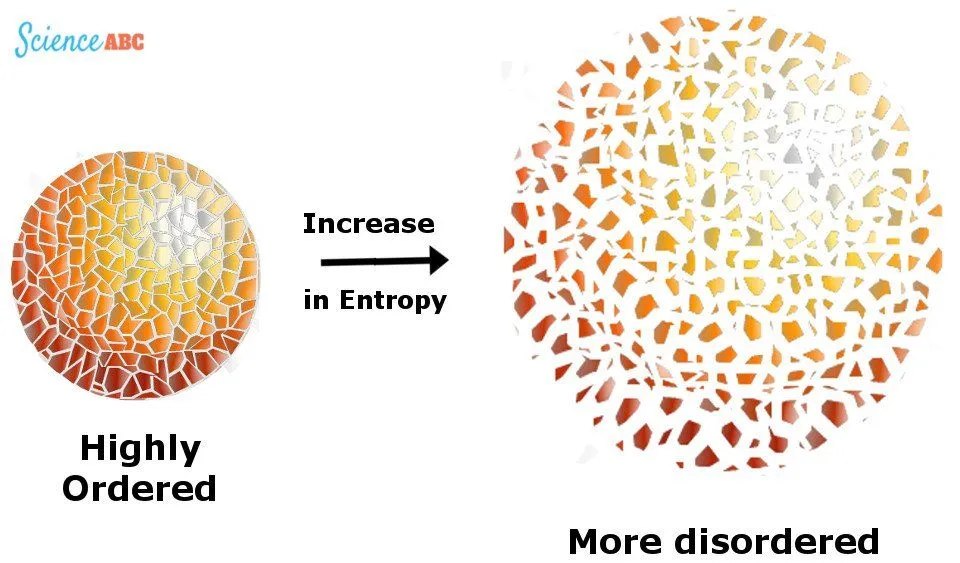
To put it in perspective, consider this: suppose you have a box full of chocolates. When you shake the box vigorously, every piece of chocolate is dislocated from its original position and lands somewhere else within the box. Since the number of positions where a particular piece of chocolate can be is pretty large, we would say that any piece of chocolate in the box has high entropy.
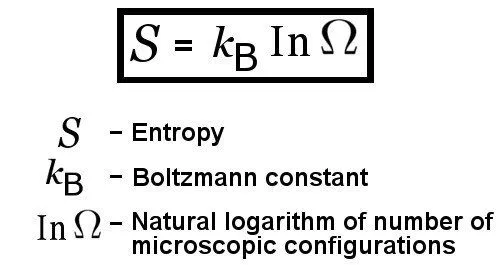
Technically speaking, entropy is a measure of how many different microscopic states a system can be in, given that the system in question has a particular fixed composition, energy, pressure, volume and temperature. Entropy is usually represented by ‘S’.
Second Law Of Thermodynamics
First, let me tell you what the second law of thermodynamics actually says. It states that the total entropy of an isolated system (a system that does not interact with other systems and therefore remains unaffected by its surroundings) always increases over time, or remains constant in ideal scenarios, where the system is undergoing a reversible process or exists in a stable state.
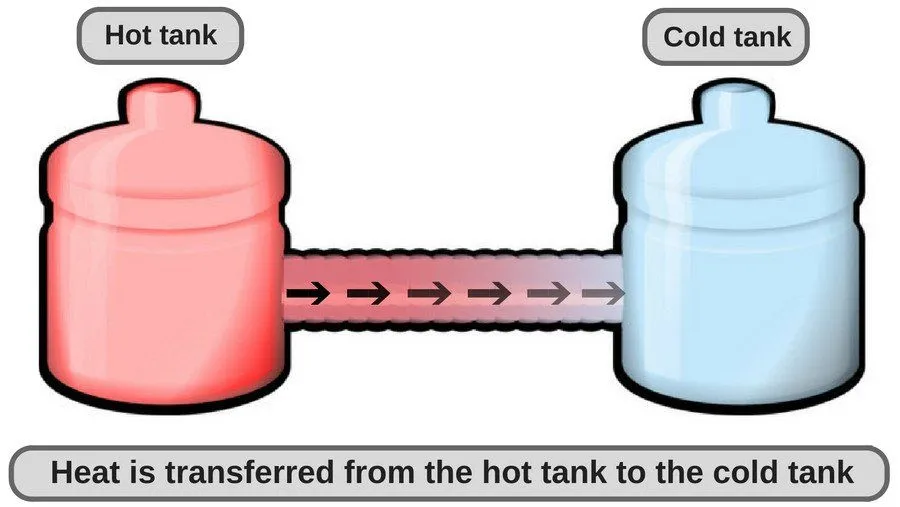
In simple terms, this means that if a physical process is irreversible, its entropy must increase. An important corollary from that transfer of thermal energy, or in simple terms, transfer of heat energy from/to a body, takes place in such a way that the body and the surroundings reach thermal equilibrium, i.e., a state where there is no difference between their temperatures.
This is the basic principle that dictates all forms of heat transfer, and also accounts for the question posed in the title of this post.
Why Does Lemonade Become Warm And Hot Tea Becomes Cold After A Few Minutes?
Any object’s temperature tends to head towards room temperature or ambient temperature to reach thermal equilibrium.
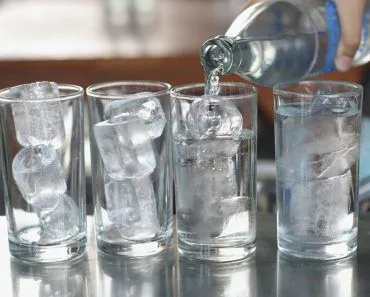
A chilled glass of lemonade is at a lower temperature than the air that surrounds it in a room (i.e., room temperature). Since the transfer of heat (in normal conditions, when no external work is being done) occurs from high concentrations to lower concentrations, a chilled glass of lemonade becomes warmer. Similarly, a cup of tea becomes cold after a few minutes because heat travels from the cup to the surrounding air until thermal equilibrium is attained.
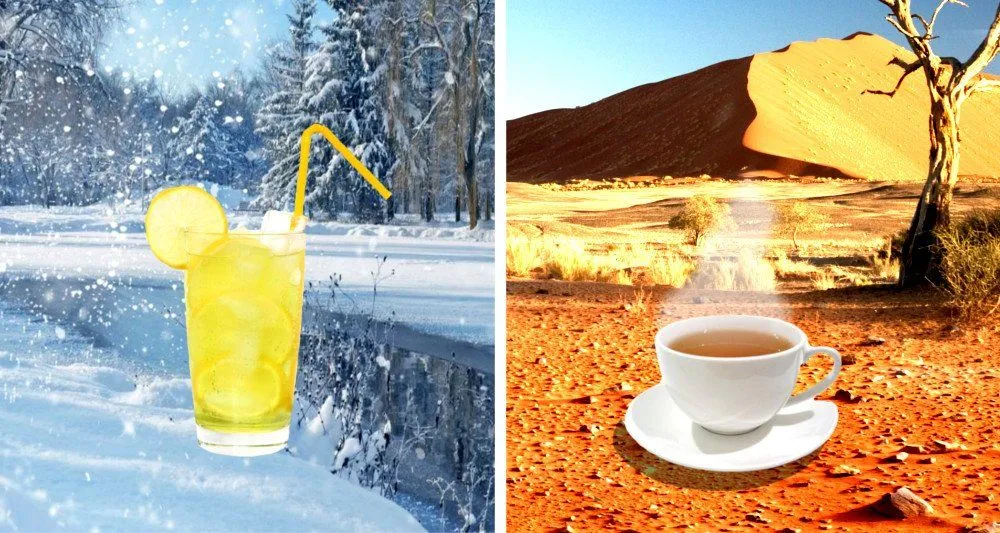
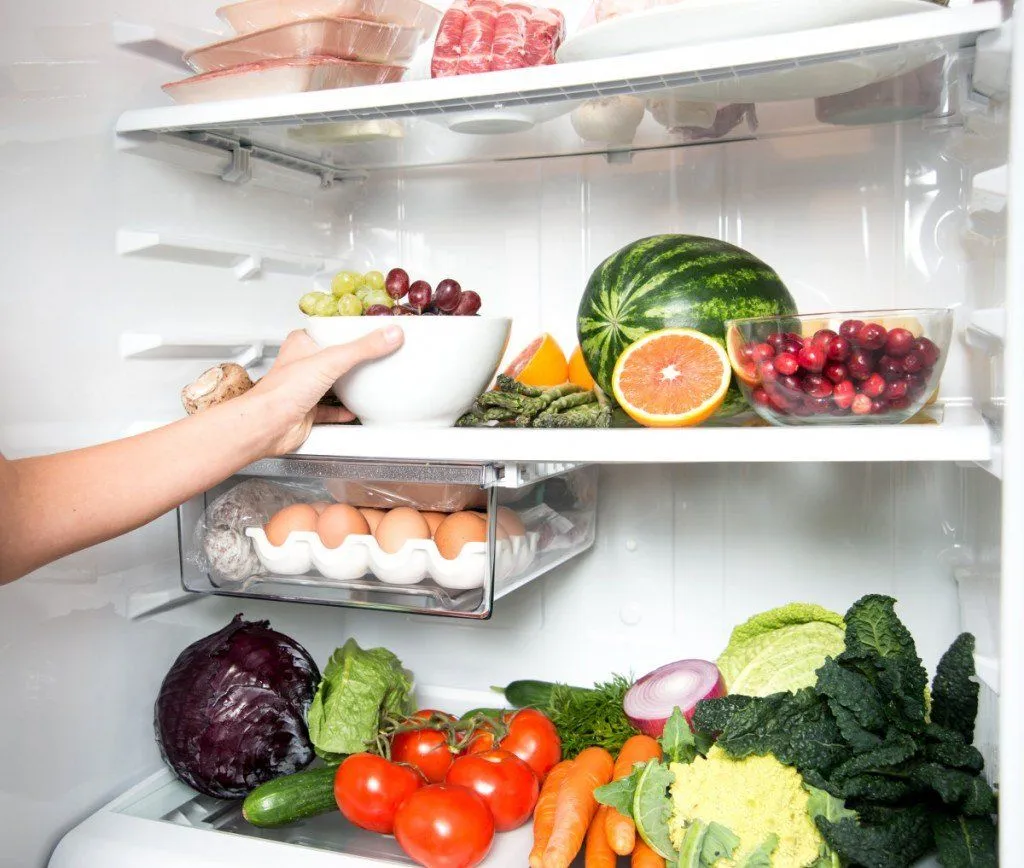
Note that heat never travels in the opposite direction (under normal conditions), i.e. from a cold object to a warm one, unless there is work being done. This is the basic working principle behind refrigerators and heat pumps. In these appliances, electricity does the work that is required to actively reverse the direction of heat transfer.
So, if you want to ensure that your chilled glass of water always stays cold and guarantee that your tea doesn’t turn cold so fast, regardless of how long you leave them unattended, you should consider relocating to someplace new where the ambient temperature is more in your favor – an extremely cold spot (for lemonade) or a very hot place (for tea), respectively.
In my opinion, however, that’s a pretty big commitment just to get your lemonade or tea fix!
Why Does Food Get Cold But Drinks Get Warm?
Here is the version of the question most people actually type into a search bar: why does my dinner go cold, yet my cold drink goes warm, in the very same room? It feels like a contradiction, but it is the exact same rule working in two directions. The deciding factor is simply whether the object starts out hotter or cooler than the air around it.
A plate of hot food sits well above room temperature, so heat flows out of the food and into the cooler air, and the food cools down. A chilled drink sits well below room temperature, so heat flows the other way, from the warmer air into the drink, and the drink warms up. Nothing is choosing to behave differently. In both cases heat is doing the only thing the second law lets it do: moving from the hotter side to the cooler side until everything sits at the same temperature, i.e., thermal equilibrium. Hot food and cold drink simply start on opposite sides of room temperature, so they drift toward it from opposite directions. The same one-way flow of heat is what decides whether a hot cup stays warmer on the table or in your hands. If you served that same plate of food in a freezer and the same drink in a sauna, the arrows would flip and the food would warm while the drink cooled.
How Does The Heat Actually Travel?
So heat moves from hot to cold, but how does it physically get from the air to your lemonade, or from your tea out to the room? Physicists describe three modes of heat transfer, and your forgotten drink uses all three at once.

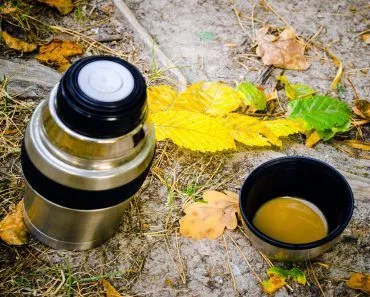
Conduction is heat transfer through stationary matter by direct contact. Fast-jiggling molecules bump into their slower neighbors and pass energy along, which is how warmth creeps through the glass wall between the room air and your drink, and how a metal spoon left in hot tea soon feels hot at the handle. Convection is heat carried by the bulk movement of a fluid (a liquid or a gas). Air warmed near a hot cup of tea rises and is replaced by cooler air, setting up a slow circulation that constantly carries heat away. Radiation is heat transfer by electromagnetic waves, mostly infrared, and it is the only one that needs no material at all, which is exactly how the Sun warms a glass of lemonade left out in the yard. Because all three are working together, a thin glass on a warm, breezy counter trades heat with the room much faster than the same drink sealed inside a vacuum flask, which is built specifically to block conduction, convection and radiation.
Does "Cold" Transfer, And Why Does The Glass Sweat?
It is tempting to picture coldness creeping out of an iced drink into the warm air, but that is not what happens, and it is a classic exam trap. Cold is not a substance and nothing "cold" gets transferred. Cold is simply the absence of heat. A drink only warms up because heat energy flows into it, and the air only cools slightly because it has handed some of that energy over. So when ice cools your lemonade, heat is moving from the lemonade to the ice, not "cold" moving from the ice to the lemonade.

This also explains the puddle under a glass of iced tea. The water beading on the outside is not leaking through the glass; it is condensation. Warm air can hold more invisible water vapor than cold air can. When room air touches the cold glass and is chilled below its dew point, it can no longer hold all that vapor, so the excess condenses into liquid droplets right on the surface, the same process that fogs your glasses when you walk indoors on a humid day. The more humid the room, the more your drink appears to "sweat".
References (click to expand)
- Second law of thermodynamics - Wikipedia. Wikipedia
- Second Law of Thermodynamics and Entropy. NASA Glenn Research Center
- Heat Transfer - Hyperphysics. Georgia State University
- Second Law of Thermodynamics - Hyperphysics. Georgia State University
- Heat Transfer Methods: Conduction, Convection and Radiation. Douglas College Physics / BCcampus OpenEd
- Heat, Temperature, and Conduction. American Chemical Society
- Condensation and the Water Cycle. U.S. Geological Survey