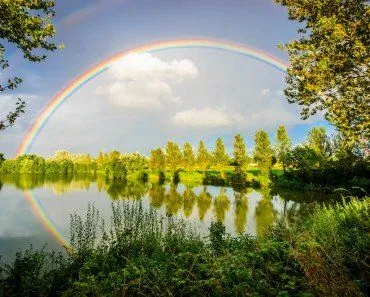
The appearance of patches of different colors on roads on a rainy day is due to a combination of oil, water and light rays. When it rains, the oil on the road comes in contact with water, and the light rays bounce off the surface of the oil and water to create a spectrum of colors.
I remember being told by my curious and ‘uninitiated’ friends during my childhood days that the color ‘rainbow’ spots that appear on roads after a fresh downpour is the rainbow itself, disintegrated into innumerable tiny parts by a powerful lightning strike that slashed through the rainbow itself!
I don’t know if I entirely believed that hypothesis then, but I must admit that it sounded rather dramatic and exciting. I also don’t know how many people out there still associate those tiny patches with a lightning bolt’s action against a rainbow, but I think it’s time to dispel the rumors.
Once and for all, let’s see what causes those ‘rainbow spots’ on roads after it rains.
Optics At Work
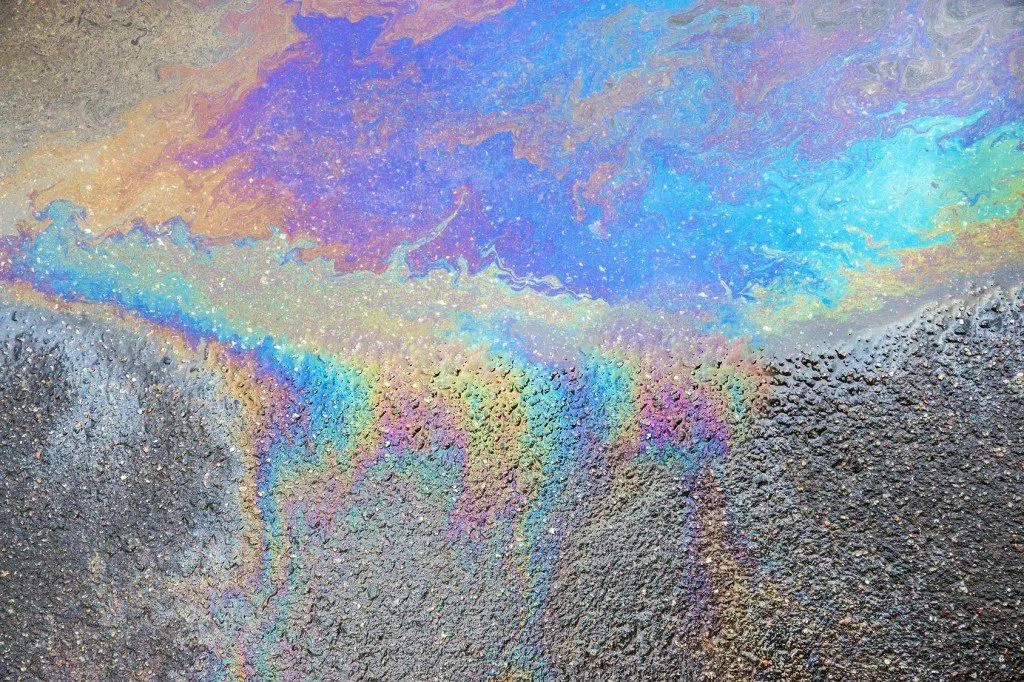
The appearance of patches of different colors on roads on a rainy day is no omen or magic per se; it’s just a spectacular combination of oil, water and light rays. That being said, before we go into further detail, we should understand a few basic things about light rays’ propagation through a medium.
Reflection Vs. Refraction
The reflection of light is a very basic and extremely common phenomenon; when a light ray bounces off after hitting a surface, we say that a reflection of light has occurred, or simply, the surface reflected that light. There are a few parameters that any surface must fulfill to reflect light (or to become reflective). However, what if a surface does not reflect light, but instead lets it pass through?
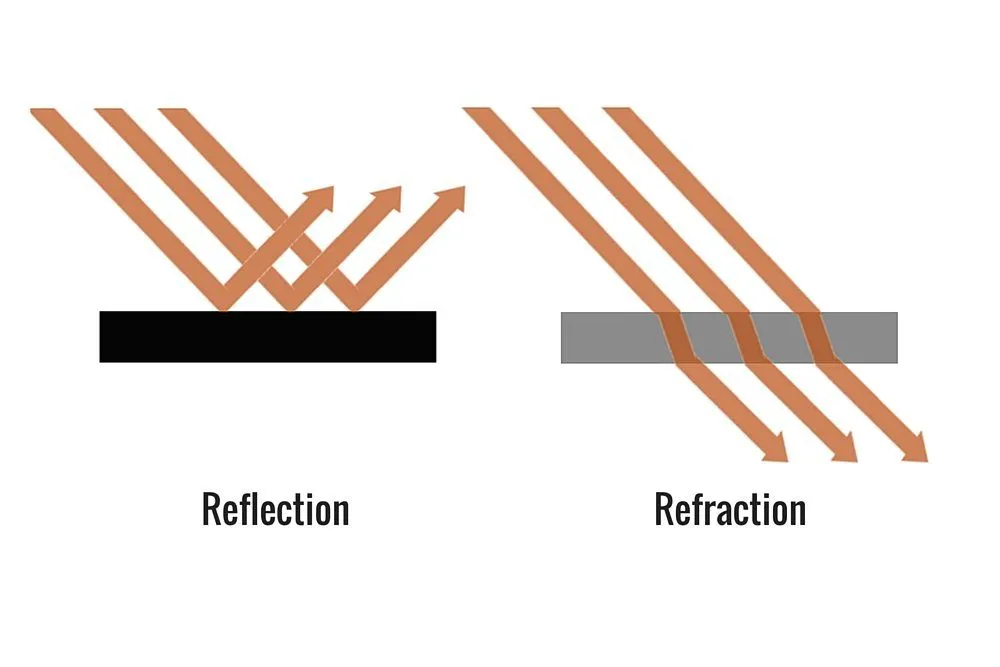
At that point, refraction occurs. Refraction is a phenomenon that involves a change in the direction of light rays as they pass through a medium. It’s due to refraction that stars appear to twinkle at night. (For more information, check out: Why Do Stars Twinkle, But The Sun Doesn’t?).
When you see small patches of rainbow colors on a road on a sunny day, you are actually witnessing a striking display of reflection and refraction at the same time!
Rainbow On The Road
Small quantities of oil are almost always present on roads (usually lubricating oil from cars, bikes and trucks), yet you only see those colorful patterns on a rainy day, right? Why is that?
This phenomenon occurs because when it rains, this oil comes (on the road) in contact with water. As you’ve surely heard in the past, oil and water do not mix, because the density of oil is less than that of water. The thickness of the oil layer also varies, from being as thin as a single molecule to extremely thick. Therefore, an oil layer of varying thickness floats atop the layer of water covering the road.
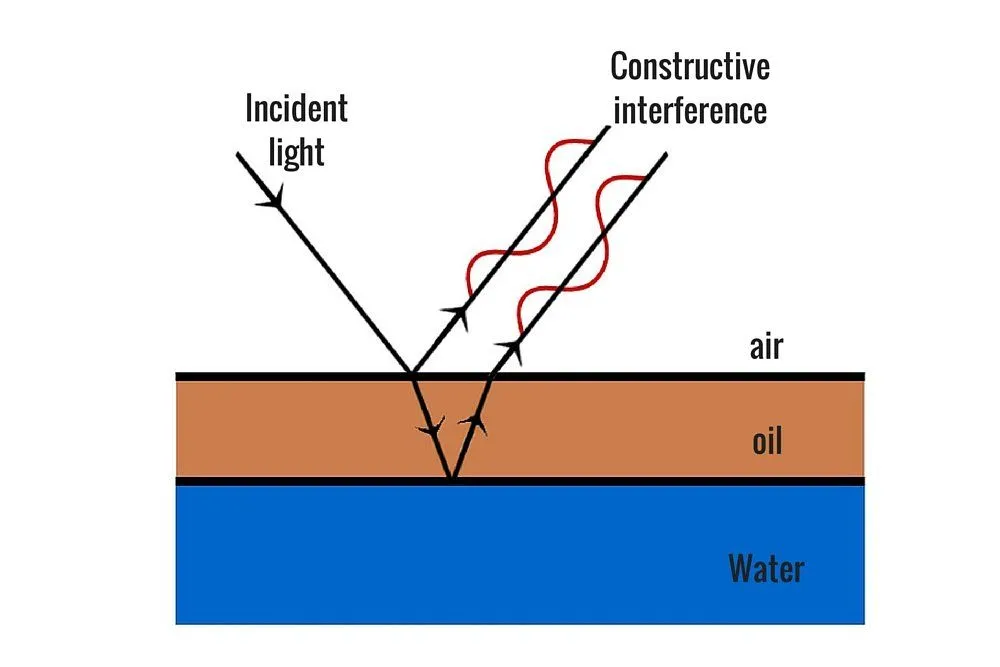
Effectively, there are three media that light rays come in contact with; air, oil and water.
Constructive And Destructive Interference
When light rays strike the top surface of the oil film, some of them are reflected immediately, while others are refracted (i.e., they travel through the layer of oil and are subsequently reflected by the bottom surface of the oil film). In other words, some of the light rays traveled less of a distance than others to reach your (the observer’s eyes), so there is a difference in the length of the path.
If the difference in the length of the paths traveled by the light is an integral multiple of the wavelength of light, then rays reflected from the two spots reinforce each other and cause constructive interference, whereas if the rays cancel each other out, then destructive interference takes place.
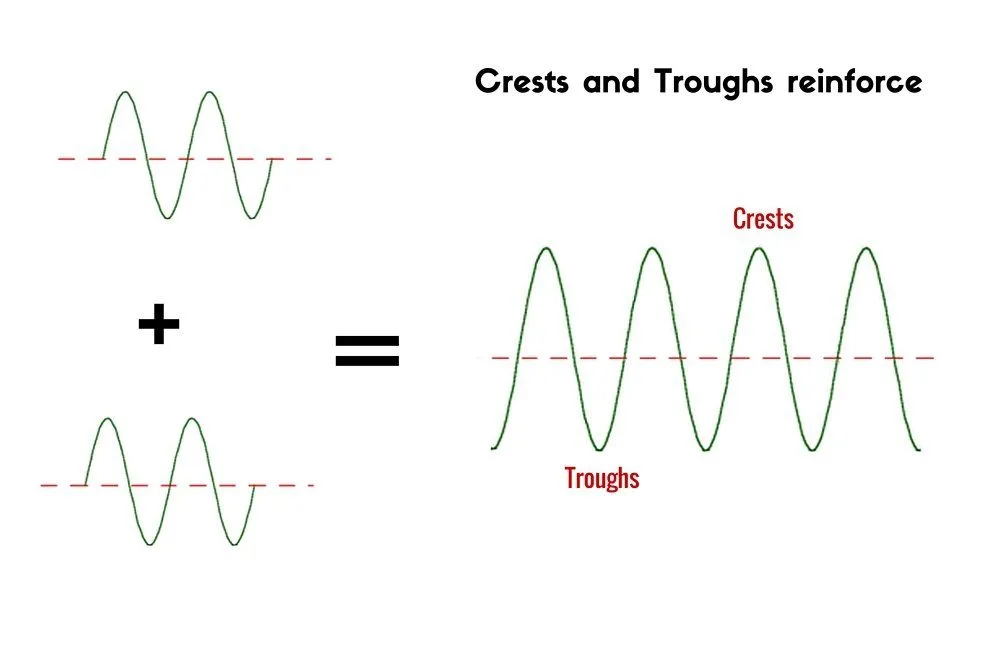
In simple, non-technical words, due to the difference in the thickness of the oil film, light rays have to travel different distances, and they then mix together after reflecting to produce a spectrum of colors. Physicists call this effect thin-film interference – the same phenomenon that gives soap bubbles and butterfly wings their iridescent colors.
Therefore, the appearance of colorful patterns on the road due to an oil film is a basic, yet mesmerizing application of the principles of optics in everyday life. Despite how cool the idea of oil slicks being miniature rainbows that have been disintegrated into countless tiny patches on the road… that’s simply not the case!
What Is This Rainbow Effect Called?
If you have ever tried to look up the name of this effect, you have probably run into a few different terms, and they all describe the same scene from slightly different angles. The physical process at the heart of it is called thin-film interference: light reflecting off the top and bottom of a very thin layer (here, the oil film) and the two reflected waves combining. It is the same mechanism behind the colors of soap bubbles and the wing scales of a Morpho butterfly.

The shimmering, color-shifting look that thin-film interference produces has its own word: iridescence. So when a soap bubble or an oil slick seems to glow with shifting blues, greens and golds, a scientist would call it iridescent. Crucially, those colors are not pigments in the oil at all. They come purely from the way the film reflects white light, which is exactly why the pattern slides and changes as you tilt your head or walk around it.
The patch of oil itself has names too. A thin layer of oil floating on water is an oil slick, and the filmy, colored surface it creates is called a sheen. That is not just casual slang: the U.S. Environmental Protection Agency formally defines a sheen as an iridescent appearance on the surface of water, and under its “sheen rule” that telltale rainbow film alone is enough to flag a petroleum discharge, no matter how little oil is actually present.
Is That Rainbow Puddle Under Your Car A Leak?
Here is where curiosity often shades into worry. You walk back to your parked car after a light shower and notice a swirling, rainbow-colored puddle right underneath it. Is that harmless road grime, or is your car quietly leaking something?

Most of the time the answer is reassuring. Roads and parking spaces collect tiny traces of lubricating oil and fuel from every vehicle that rolls over them, and a light rain simply spreads that residue into a thin film, which is the exact recipe for a sheen. A rainbow patch smeared across a whole stretch of pavement is almost always this kind of leftover residue rather than a fault with your own car.
A fresh, well-defined puddle sitting directly under a parked vehicle is worth a closer look, though, and the one to rule out first is gasoline. According to the U.S. Agency for Toxic Substances and Disease Registry, gasoline is flammable at temperatures above −46 °C (−51 °F), its vapors are heavier than air, and those vapors can travel to a source of ignition and flash back. You can usually spot a fuel leak by its sharp, unmistakable odor; if you smell that under your car, treat it as a genuine safety issue and have a mechanic look at it rather than driving on. Other fluids leave their own clues: engine oil is brown to black and slick to the touch, automatic transmission fluid tends to be red or pink, and engine coolant is often bright green, orange or pink with a sweet smell. And as the EPA points out, not every sheen even comes from petroleum, because harmless bacteria reacting with iron in groundwater can produce a very similar-looking film on still water.
References (click to expand)
- 5.2 Constructive and Destructive Interference - UConn Physics. The University of Connecticut
- Why do beautiful bands of color appear in the tiny oil slicks .... Scientific American
- 27.7 Thin Film Interference. College Physics, Lumen Learning
- Overview of the Discharge of Oil Regulation (Sheen Rule). U.S. Environmental Protection Agency
- Medical Management Guidelines for Gasoline. ATSDR, CDC