Table of Contents (click to expand)
A snake is not killed by its own venom because the venom is stored in glands sealed off from the bloodstream, and it only does damage when injected into tissue. Swallowed venom is harmless, as stomach acid and digestive enzymes break the toxic proteins down. Many venomous snakes also carry genetic mutations that make their own nerve receptors resistant to their venom.
If you’ve ever watched a nature program, or gone on a perilous trek of your own somewhere in the wilds of the world, then you’re probably familiar with (and a bit wary of!) snakes. There are nearly 4,000 different species of snakes in the world, and roughly 15% of them are venomous. Of those, only a small portion (about 200 species) are actually dangerous to humans.
Even so, the fear of being bitten by a venomous snake still runs rampant through global cultures, because we have heard about or seen the terrible and fast-moving effects that snake venom can have on a body (Hollywood has made sure we’re aware of the power of snake venom!)
That being said, if snake venom is so powerful and deadly, why doesn’t it poison the snake? After all, the snake is slithering around with a bunch of venom inside, right?
The Science Of Snake Venom
What Is Snake Venom?
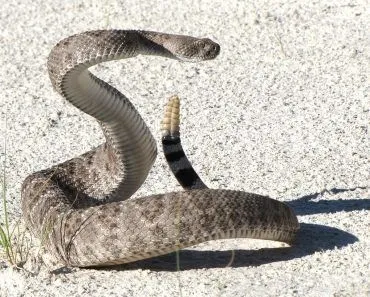
Snake venom is a specialized form of saliva that contains a range of zootoxins, and it is stored in venom glands behind the eyes, modified versions of the salivary glands we have ourselves. Crucially, those glands are walled off from the rest of the body, so the venom stays sealed away from the snake’s own bloodstream and tissues. It sits in these specially protected glands until the snake bites, at which point muscles squeeze the venom down through narrow ducts and the hollow fangs, and into the prey.

How Does Snake Venom Work?
This is a common question for those fascinated by the mysteries of Nature, as well as those who are deathly afraid of snakes. To understand this fully, we should first understand a bit about snake venom, as well as the mechanisms snakes have developed over millions of years.
Snake venom is primarily made up of proteins, the vast majority of which are broken down in the stomach, just like the proteins found in meat and beans. In other words, eating a protein-based toxin like venom wouldn’t be very harmful, because it would be neutralized in the stomach. This is exactly the difference between venom and poison: venom has to be injected to do its work, while a poison is something that harms you when you swallow or absorb it. However, if that venom somehow bypassed your stomach or entered your bloodstream in another way (such as through a bite), then the toxins wouldn’t break down and would begin to do real damage to your organ systems, typically in the form of necrosis and hemorrhage. When these toxic proteins are broken down in the stomach, they are separated into their simple, harmless amino acids.
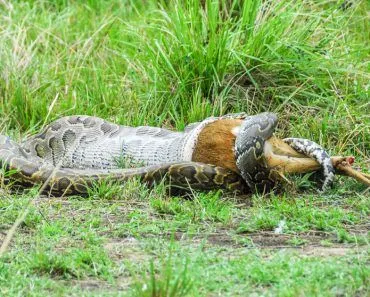
The same thing is therefore true for snakes, in terms of eating their food. These venom proteins are built to debilitate and pre-digest prey, as well as to mount a defense, so snakes do expose themselves to their own venom every time they eat what they have bitten. However, when they devour that small animal (or even another snake), they are able to neutralize their own venom through this protein breakdown process while they digest their food.
Why Doesn’t The Venom Affect The Snake?
Other than breaking it down in their digestive tract, snakes have adapted these glands to seal the venom away from their own tissues, though a small amount of exposure can still slip through (Nature isn’t perfect, after all). To cope with that, many venomous snakes have evolved a more elegant trick. Contrary to popular belief, they do not mount antibodies against their venom the way a vaccine would prime your immune system. Instead, they carry tiny genetic mutations that change the shape or charge of the molecular targets their own venom attacks. Cobra and krait venoms, for example, are loaded with alpha-neurotoxins that latch onto the nicotinic acetylcholine receptors at nerve-muscle junctions, and several snakes have altered those receptors just enough that their own toxins can no longer bind, a built-in resistance that researchers call auto-resistance. Interestingly, snakes of the same species often skip their venomous attacks altogether when fighting over territory or mates. This makes sense, since a rival is likely to be resistant to the same venom anyway, so they conserve it and rely on brute strength to win.
However, this resistance is not a blanket shield against ALL venoms, and there are hundreds of different venomous snake species in the world, each with its own chemical cocktail. A mutation that blocks one snake’s neurotoxins won’t necessarily stop another’s, which is why some venomous snakes can eat non-venomous ones, and even other venomous species, that are very much affected by their toxic bite.
Furthermore, some snakes are susceptible to large concentrations of their own venom, as they’ve only developed tolerance to handle a low level of exposure. Therefore, if certain snakes bite their own tail, mistaking it for prey, and injecting a full dose of venom, the quick-acting venom could damage the musculature or cause low levels of necrosis. There is a relatively low chance of the snake dying, but definitive research is lacking in this field, given the ethical and logistical complications of researching snake fights to the death.
Snakes appear to be expert managers of their internal toxin levels, crafty about who they pick fights with, and reliant on the protein breakdown powers of their stomach, all of which keep them protected from their own venom and the venom of most other snakes.
They’re formidable and fascinating creatures, to say the least. It takes a pretty confident creature to spend its life with deadly sacs of venom stored right behind its eyes!