Glue doesn’t stick inside its bottle because it only sets once it meets air or moisture, and a sealed bottle keeps both away. White (PVA) glue stays liquid until the water in it can evaporate. Super glue (cyanoacrylate) is the opposite: a weak acid holds it in check until surface moisture triggers it to harden. Sealed off from both, the glue simply can’t cure.
Glue normally doesn’t stick to the inside of the bottle because it only sets once it meets air or moisture, and a sealed bottle keeps both away. Some glues set as their solvent evaporates into the air; others harden through a chemical reaction triggered by moisture. Either way, the conditions a glue needs to grip simply aren’t present inside a closed bottle, so it stays liquid until you squeeze it out.
We use glue all the time to stick things together. I just love the basic idea of glue; it mends objects and puts broken stuff back together. However, strangely enough, glue, which has the ability to stick to (most) objects, doesn’t stick to the tube/bottle/container in which it’s packed. Since it adheres to objects so readily, it would make sense for it to stick to the inner lining of the tube, but in reality, we all know that that doesn’t happen.
Why is that?

Different Kinds Of Glue
It’s important to note that glue comes in many kinds; you may be familiar with a few, but not necessarily all of them. The regular white glue that most of us know so well is made of a host of chemicals known as polymers.
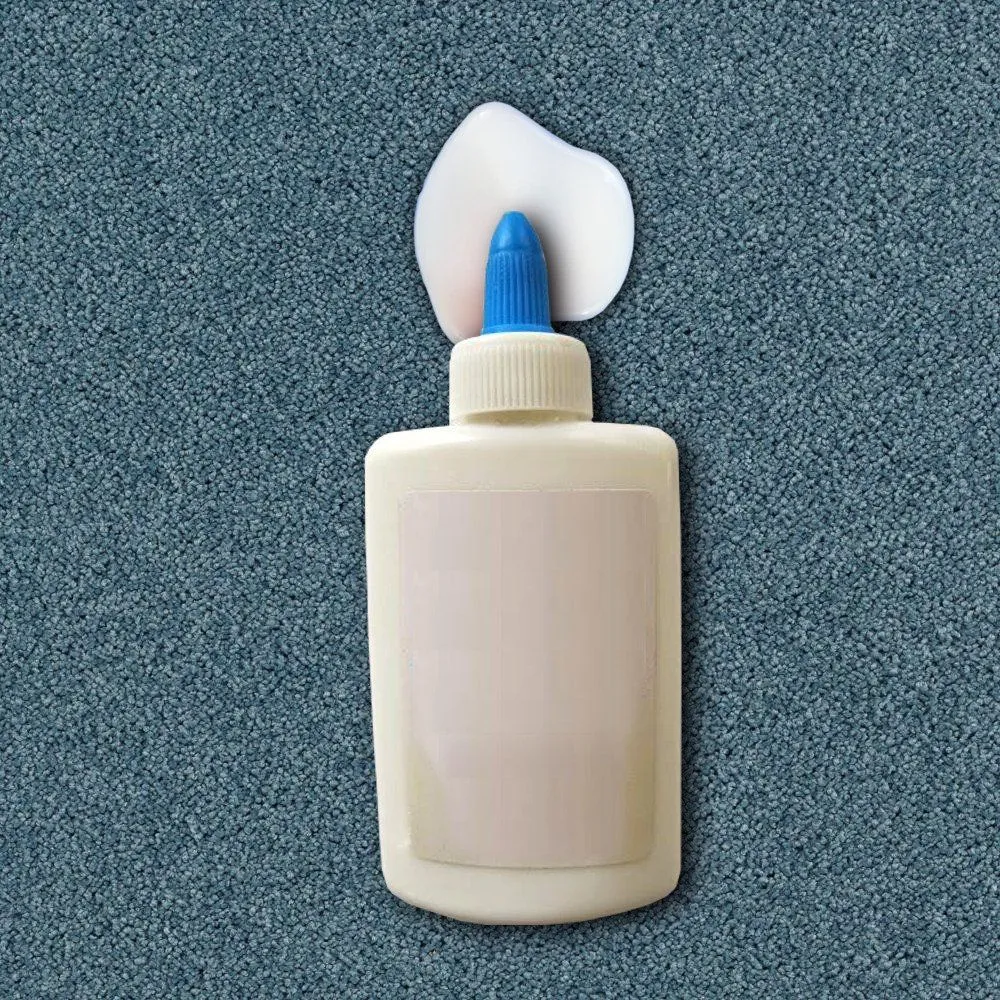
This is the most common type of glue and can be used for many porous and semi-porous materials, such as paper, wood, cardboard, cloth and so on.
Yellow glue, commonly sold under the brand name Titebond, is an aliphatic resin (AR) glue. It’s creamier and thicker than white glue and works very well with both porous and semi-porous materials, especially wooden surfaces.
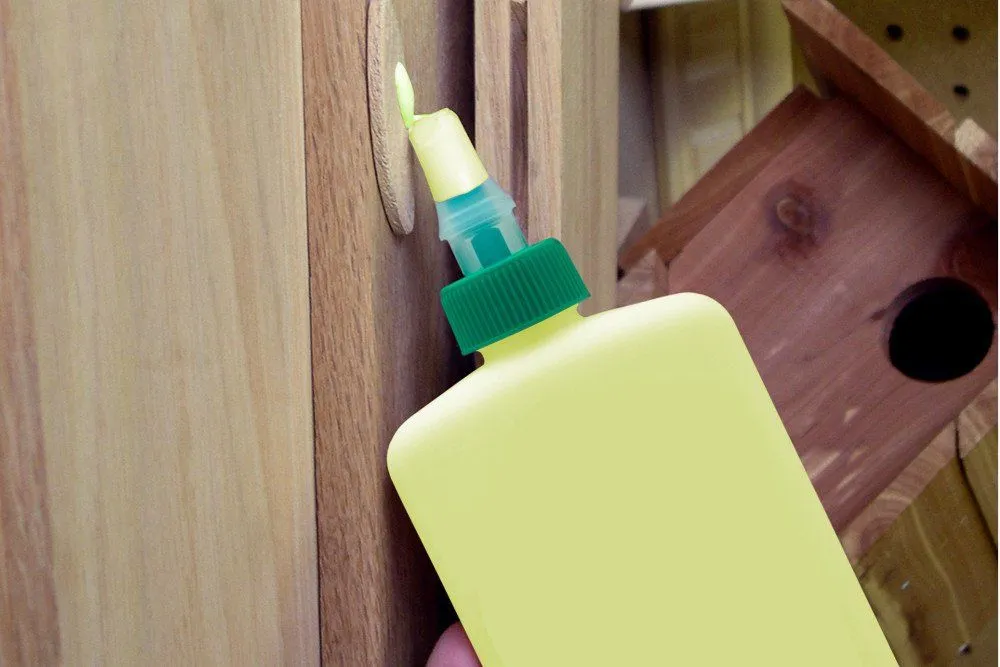
Then there are certain other adhesives too, such as hide glue, polyurethane glue (Gorilla glue), epoxy and cyanoacrylate (super glue). Some of these require air to set, while others go through chemical changes to achieve their tight grip, but none of these glues stick to the inside of their bottles.
Glue Doesn’t Stick To The Bottle It’s In
Glues are obviously designed to work after they leave their container, not before. Different types of glue achieve this in various ways: some adhesives have solvents that keep them in liquid form and non-sticky within the bottle.
Take white glue, for instance. It has water as the solvent, which keeps it in a thick, liquid form. However, when the glue is squeezed out of the tube and applied to a surface, it comes in contact with the surrounding air. As a result, the water in the white glue evaporates, which forces the polymer chains together so that they entangle and form hydrogen bonds, both with each other and with the surface. What you are left with is a tough film of polymers that holds objects together. On porous materials like wood and paper, the glue also seeps into tiny pores before it hardens, locking on through what’s called mechanical adhesion.
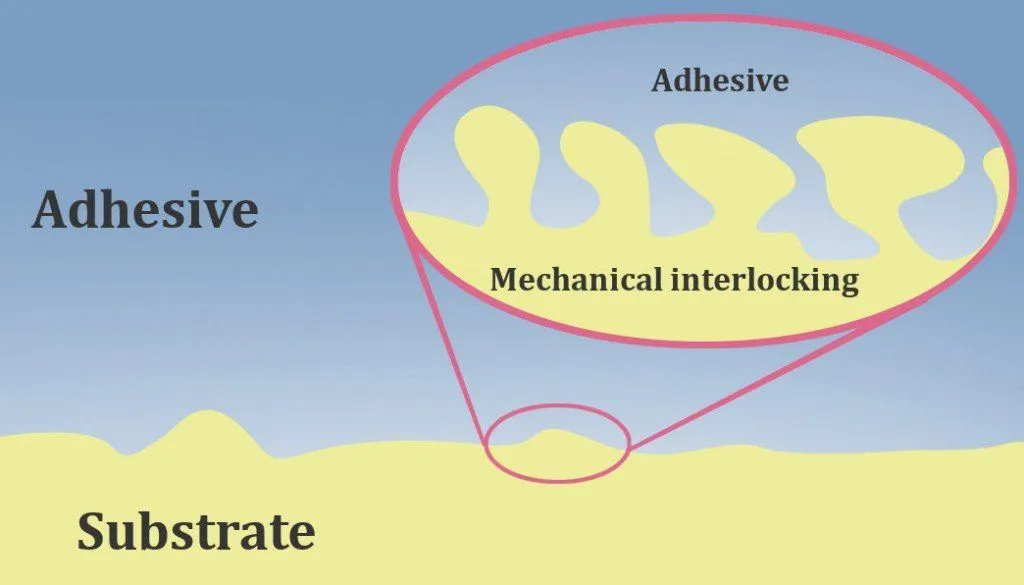
When the glue is sealed inside the bottle, however, there isn’t enough air for any of that to happen. With nowhere for the water to evaporate to, the solvent stays put, so the polymers never coalesce and the glue doesn’t adhere to the inside of the tube. Leave the cap off for a while, though, and the glue can slowly dry out and be rendered useless. The same logic applies to plastic modeling cement, which consists of polystyrene dissolved in a solvent such as acetone that evaporates once the glue is squeezed out of its tube.
Why Do Cyanoacrylate Glues Tend To Dry Up Within The Tube?
Super glue (originally a trade name, now used for the whole category) works a little differently from white glue and most other everyday glues. Instead of being a suspension of ready-made polymers, it starts out as a single small molecule, cyanoacrylate, that only links up into a polymer once it is applied. Cyanoacrylates are a family of strong, fast-acting adhesives with a fairly short working life: an unopened bottle keeps for a year or more, but once it has been opened and exposed to humid air it often thickens and becomes unusable within a few weeks. The cyanoacrylate in most household super glue is ethyl cyanoacrylate (ECA).
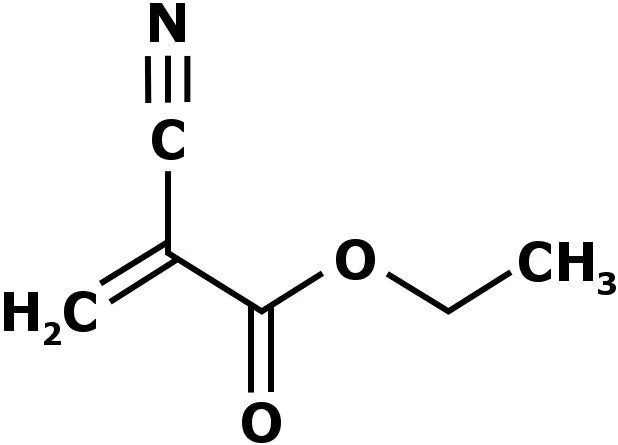
Super glue binds things together when it comes into contact with the thin film of moisture present on almost every surface and in the air (more specifically, the hydroxide ions in that water). Those hydroxide ions kick off a chain reaction called anionic polymerization: one cyanoacrylate molecule after another links up into long, strong chains that set within seconds, providing exceptional adhesion. This is a classic example of chemical adhesion. So why doesn’t this happen inside the tube? Manufacturers add a trace of a weak acid as a stabilizer, which mops up any stray hydroxide ions and keeps the cyanoacrylate liquid. Only when the glue is spread onto a moist surface does that surface moisture overwhelm the stabilizer and let polymerization begin.

That’s why it’s strongly advised to keep super glue tightly capped in a dry, even airtight, container, so that stray moisture doesn’t set it off inside the bottle itself. So we end up with two opposites: white glue, which needs its water to stay liquid in the tube, and super glue, which sets the moment it gets even a little exposure to moisture!
Would Super Glue Even Grip The Bottle If It Set?
There is a second line of defense here that most of us never think about: the bottle itself. Many super glue tubes and squeeze bottles are molded from low surface energy plastics such as polyethylene or polypropylene, and that is no accident. Glue has a genuinely hard time gripping these plastics.

For any adhesive to stick, it first has to wet the surface, spreading into a thin, continuous film that settles into every microscopic dip and bump. On a low surface energy plastic the liquid does the opposite. It pulls itself into rounded beads and refuses to spread, much the way water balls up on a freshly waxed car. This is the same tug-of-war behind surface tension, and no spreading means no grip.
Cyanoacrylate is especially bad at bonding to these plastics. A 2016 paper in Nanoscale Research Letters found that the weak bond between super glue and polyethylene “derives from the absence of polar groups on the polymer surface and the weak chemical interaction between the polymer and adhesive.” Polyethylene’s surface energy sits at only about 27 mN/m at 20 °C (68 °F), far too low for the glue to get a real hold. So even in the rare case where a bit of glue does cure inside the tube, it has almost nothing to cling to and tends to peel or pop straight off the slick walls.
How Do You Keep Super Glue From Hardening In The Tube?
The sealed bottle wins while it stays sealed. The trouble starts once you open it. An unopened tube of super glue keeps for roughly 8 to 12 months, but an opened one is usually good for only about six to eight weeks, because a little humid air sneaks in every time you uncap it and slowly thickens what is left. The Adhesive and Sealant Council lays out a few simple habits that stretch that out.

Since surface moisture is exactly what triggers cyanoacrylate to set, the goal is to keep moisture and heat away from it:
- Cap it fast and tight. Wipe the nozzle clean so the lid does not glue itself shut, then close it right after use and keep the tube in its original packaging. Slipping in a silica gel packet, the kind that comes with new shoes or electronics, helps soak up stray humidity.
- Keep it cool. Super glue lasts longest stored between about 10 and 21 °C (50 to 70 °F). Heat speeds up the very reaction you are trying to hold off, so a cool cupboard beats a warm drawer, and some people keep spare tubes in the fridge or freezer to slow the chemistry down further.
- Warm it before opening. There is one catch with cold storage. Let a chilled tube come back to room temperature before you uncap it, otherwise warm, humid air condenses onto the cold glue and that film of moisture can set it off.
White and wood glues are far more forgiving. Just keep the cap on so the water cannot evaporate, and store them somewhere that will not freeze.
References (click to expand)
- Cyanoacrylate (Super Glue) Fuming - English202C - www.personal.psu.edu
- Polyvinyl acetate (PVAc) - Encyclopaedia Britannica
- adhesives-measuring-stickiness : The University of Akron - uakron.edu:80
- Why doesn't Elmer glue stick to its bottle? - UCSB Science Line. The University of California, Santa Barbara
- Improved Bond Strength of Cyanoacrylate Adhesives Through Nanostructured Chromium Adhesion Layers - Nanoscale Research Letters (2016), PMC/NCBI
- Modified Acrylate Pressure-Sensitive Adhesives for Low-Surface-Energy Substrate and Adhesion Mechanism Models - PMC/NCBI
- How End Users Can Extend The Life of Cyanoacrylate Adhesives - The Adhesive and Sealant Council