Table of Contents (click to expand)
Reverse parallel parking is easier than driving straight in because the rear wheels of a car only follow. They do not steer. By backing in, you put the non-steering rear of the car into the slot first, leaving the steerable front wheels free to swing in last. Driving straight in flips that geometry: you would need almost two car-lengths of clear space to swing the unsteerable rear into a tight kerbside gap.
If you own a car, truck or any other four-wheeled vehicle, you are probably intimately aware of this annoying thing that happens almost daily in our lives. Even if you don’t own a vehicle, you have likely seen plenty of other folks backing up instead of driving in head-on to parallel park their vehicle.
Why is this practice of parallel parking cars so common? Why don’t they just turn their vehicles head-on into the empty slot to park, rather than backing up into it, a maneuver that involves a great deal of practice and effort on the driver’s part?
Short answer: Parallel parking is easier when you reverse into the vacant space because the front tires of the car are controlled by the steering wheel, and can therefore be steered in any direction with ease, as opposed to the rear wheels, which only move straight.
However, before we delve deeper into this parking problem, we need to cover a few basics…
What Is Parallel Parking?
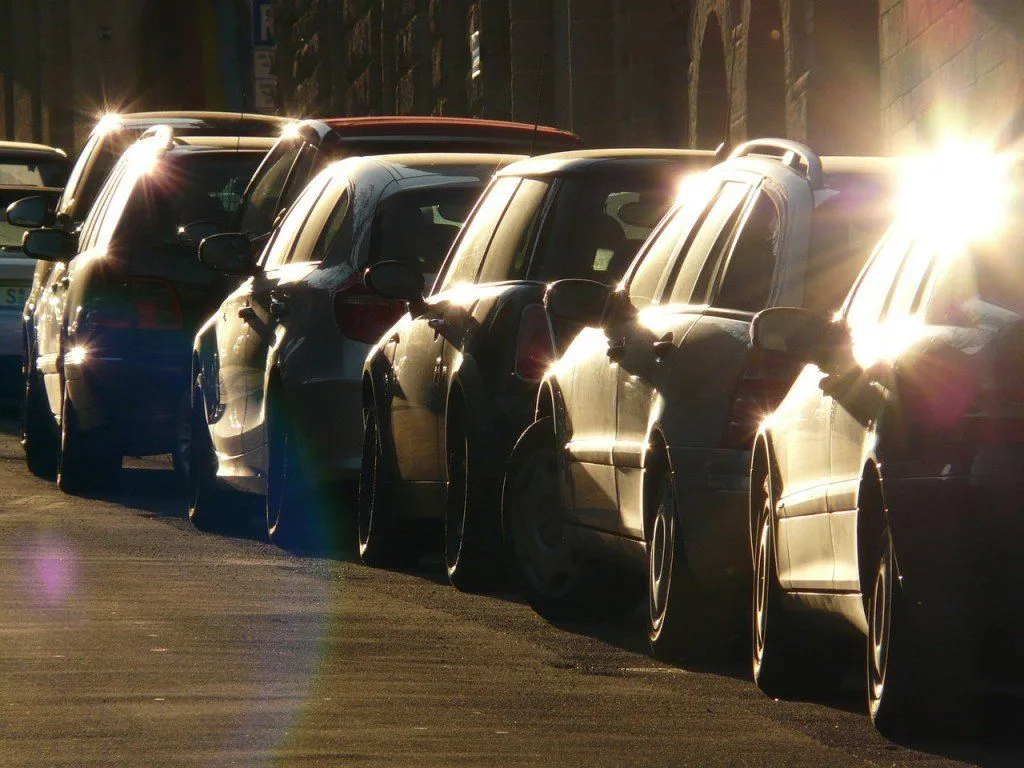
Unless you’ve been living under a rock for most of your life, it’s highly improbable that you haven’t heard of this term or used it yourself, provided that you own or operate a vehicle. Parallel parking is a technique for parking a vehicle parallel to the road (hence the name). The following image might help you visualize this a bit better:
If you drive a vehicle (and aren’t a professional expert), then you already know that parallel parking is no easy task. Maneuvering your vehicle into a tight space between two vehicles requires skills and practice, which is why parallel parking is an integral and important component of driving tests all over the world. It is often considered the most dreaded part of the driving test for amateur drivers.
Why Is Parallel Parking So Difficult?
Let me explain this with the help of an example: suppose one fine morning, you decide to pay a visit to a bakery to get yourself some cheese. Upon reaching the store, the first thing you notice (to your utter dismay) is that there is no space to park! However, there is a series of cars parked back-to-back on the side of a nearby street. After a while, one car pulls out of the line of cars, leaving exactly one vacant slot vacant between two cars.
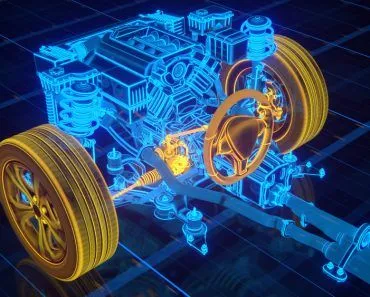
Parking between two cars can be daunting, especially if you’ve had little practice. This is because, in most cars today, only the front tires do the steering for the entire vehicle. This creates a problem or two; for example, cars with only front steering tend to have a larger turning circle (or turning radius), so it requires extra effort on the driver’s part to maneuver the turn.
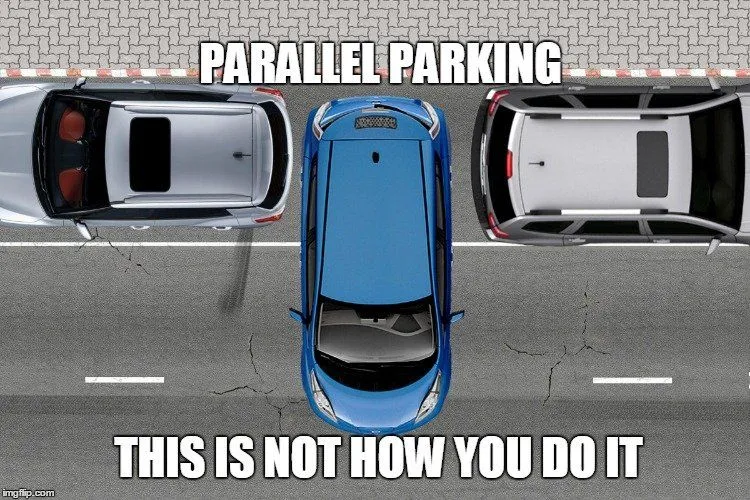
Why Is Backing Into Empty Slots Easier Than Heading Into Them When Parallel Parking?
If you have a vehicle whose steering is entirely dependent on the front tires, it is easier to reverse it into the empty slot while parallel parking.
You see, the steering wheels of a vehicle (i.e. the front wheels, in most cases) facilitate the angular motion of the vehicle and regulate its directional stability, not only while going straight ahead, but also while backing out. What this means is that these wheels should always be at your disposal while making turns.
If you try to parallel park by going head-on into the vacant slot, the rear tires will simply follow the front ones, meaning that you will need almost two cars’ worth of space to park (it could be more or less depending on your expertise in parallel parking). Moreover, if it’s a ‘tight’ space that you’re trying to park in, going head-on into the space would be very, very challenging – it wouldn’t be an exaggeration to say that it’s next to impossible to execute a parallel park going head-on into the slot.
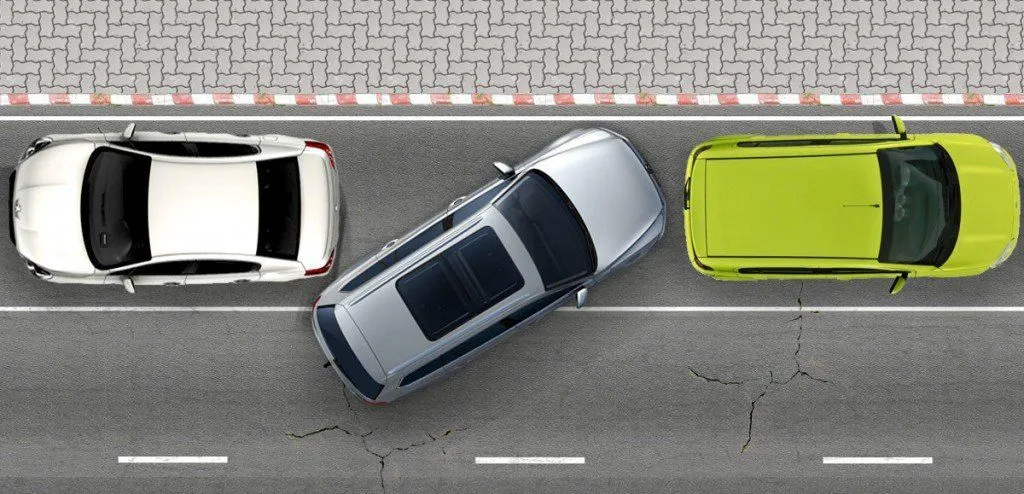
Even if you somehow manage to cram your car between two vehicles going in head-on, it’s highly unlikely that it would be a ‘neat’ park job. Also, it’s bound to be incredibly time-consuming. And don’t forget, there are vehicles behind you who are waiting for you to finish whatever it is you think you’re trying to achieve.
Reversing helps while parking parallel because it’s the rear tires (as opposed to the front tires, as in the former case), which play no role at all in steering the vehicle, that go into the slot first. By going in reverse, you put the rear tires in the correct position and then move the front tires in. This helps to fit the section of the car (the rear) that cannot be maneuvered as sharply, and subsequently take a couple sharp turns to fit the front section in perfectly to the available parking space between two other cars. The ideal scenario looks like this:
The next time you’re trying to parallel park your car in a tight space, just keep in mind that the rear tires should go in the slot first, followed by the front ones. Or you can call someone from Red Bull to do it for you in style!
How Do You Actually Parallel Park, Step By Step?
Understanding the geometry is one thing; pulling it off at a busy kerb is another. Here is the sequence that most driving handbooks, including the California DMV, recommend for reverse parallel parking.

First, hunt for a gap that is at least about a metre (roughly three feet) longer than your car. Signal, then pull up alongside the vehicle in front of the empty space, leaving around 60 centimetres (about two feet) between the two cars. Stop when your rear bumper is roughly level with the rear bumper of the car beside you.
Check your mirrors and blind spots for traffic and pedestrians, then begin reversing slowly while turning the steering wheel hard toward the kerb, aiming to swing the back of your car into the gap at about a 45-degree angle. Once your rear wheel is within roughly 45 centimetres (about 18 inches) of the kerb, turn the steering wheel away from the kerb and keep reversing until the car sits parallel to the road.
Finally, turn the wheel away from the kerb and edge forward to centre the car in the space. Do not be discouraged if you need a couple of forward-and-back shuffles to line things up neatly; even experienced drivers rarely nail it in a single smooth arc. A tidy finish leaves you parallel to the kerb and within about 45 centimetres (18 inches) of it.
Can You Ever Parallel Park By Driving Forward?
So can you ever just drive straight into a kerbside space nose-first? In practice, yes, but only when the space is generous. Because the rear wheels cannot be steered, a head-on entry needs the gap to be far longer than the car, on the order of two car lengths, whereas reversing lets you tuck into a much tighter space. If a long stretch of kerb is empty, or a departing car has left a large gap, driving in forward is perfectly workable and often quicker.
The one situation where forward entry is genuinely easy is a pull-through space that is open at both ends, common in car parks where two bays line up nose to nose. There you never have to reverse the unsteerable rear of the car into a tight pocket at all; you simply roll straight through. For an ordinary tight kerbside slot, though, the geometry is stacked against you, which is exactly why the reverse method became the technique taught to learners. And if you would rather not judge any of this yourself, the self-parking systems built into many modern cars can now steer into a space for you.
Do You Still Have To Parallel Park On The Driving Test?
Parallel parking is a classic driving-test task, but whether you will actually be graded on it depends heavily on where you sit the test.
In the United Kingdom, it is still on the syllabus. The DVSA examiner picks one of three reversing exercises during the practical test (parallel parking, a parking-bay manoeuvre, or pulling up on the right and reversing), so there is roughly a one-in-three chance you will be asked to parallel park.
In the United States, the picture is patchier. Several states have quietly dropped the manoeuvre. Nevada removed parallel parking from its road test in January 2020 to save examiner time, and by then around 17 states no longer included it at all. California stops short of a formal parallel park but still checks that you can reverse in a straight line for about three car lengths while staying within roughly a metre (three feet) of the kerb. So while the skill is well worth learning for real-world kerbside parking, it is no longer a guaranteed part of every road test.
References (click to expand)
- Parallel parking - Wikipedia. Wikipedia
- Turning radius - Wikipedia. Wikipedia
- Simon R. Blackburn - The Geometry Of Perfect Parking - CiteSeerX
- http://web.archive.org/web/20220808203314/https://roads-waterways.transport.nsw.gov.au/geared/your_driving_skills/driving_skills/reverse_the_stereotype.html
- An Approach to Parallel Parking and Zero Turning Radius in .... Academia.edu
- Navigating the Roads - California Driver's Handbook. California DMV
- Driving test: cars: What happens during the test. GOV.UK
- Parallel Parking Taken Off Driving Test In Nevada. CBS News