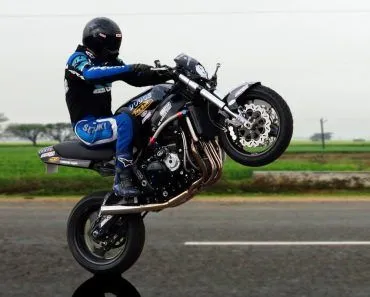
To turn without falling, a cyclist briefly steers the handlebar away from the turn. This pushes the wheels out from under the bike, so it leans into the corner, and the rider then steers into the turn. Gravity balances the outward pull of cornering, keeping the bike upright. This trick is called counter steering.
If I were to tell you that you start a left turn by going right and a right turn by going left, you’d probably write me off as crazy. It sounds impractical, but it is actually a law of physics that we cannot defy, no matter how hard we try.
Surprisingly, this “law” has been ingrained within us, even as we were growing up as children… while learning how to ride a bike!
What Is Counter Steering?
“Counter steer to steer” is a concept applicable to all kinds of single-track vehicles, namely bicycles and motorcycles. Many people assume you simply point the handlebar where you want to go, but at anything above a crawl, that is not how it works. Once you are rolling at any real speed, counter steering is the main way to start a turn. (On a light bicycle you can also nudge a lean by shifting your body weight, but that alone gives you very little control, so even then your hands quietly do most of the steering.)
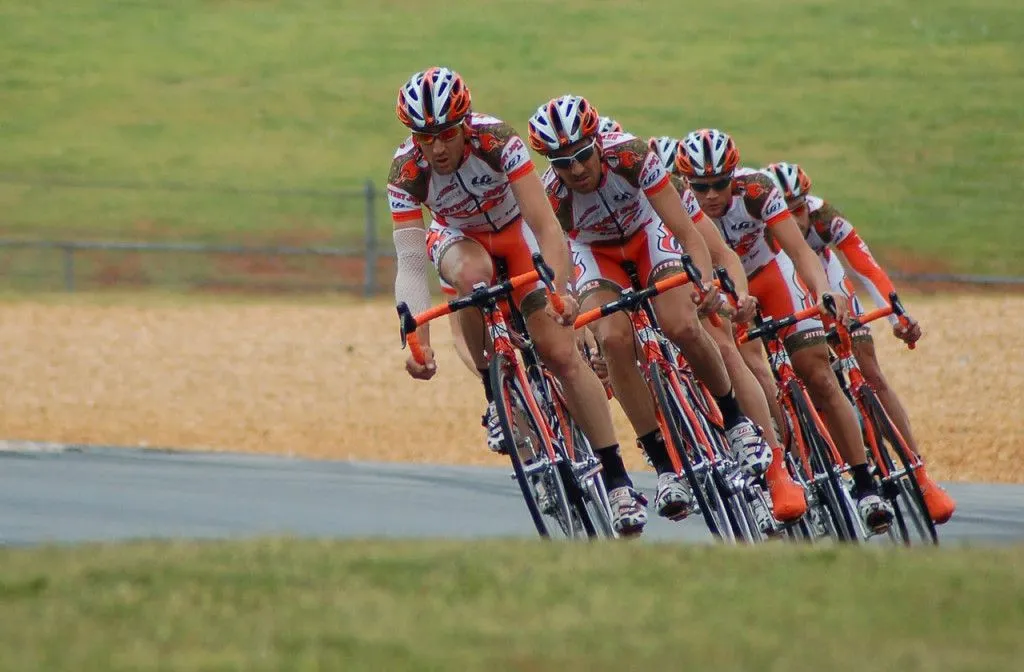
A moving bike is the most stable when going in a straight line. In order to turn, this balance must be disturbed, so that the bike can move into the turn. This upset is achieved by turning the bike momentarily in the direction opposite to where one desires to go. This is known as counter steering. To understand this clearly, let’s breakdown the various steps involved in counter steering.
Steps Involved In Counter Steering
Counter steering can be broken down into a series of steps:
Pushing:
Counter steering gets its name from the act of pushing the handlebar away from the rider, in the direction that is opposed to the desired route of travel. A rider intending to go left will push the handle bar to the left. This initiates a turn to the right. Similarly, a rider who wishes to go right will push the right side of the handle bar away from him, causing the bike to turn left.
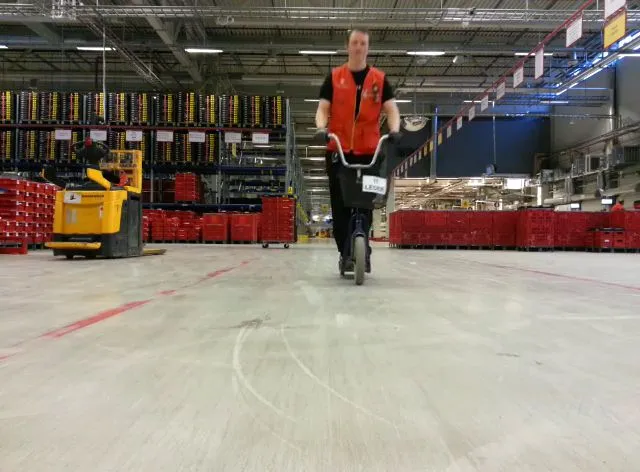
Pointing And Leaning
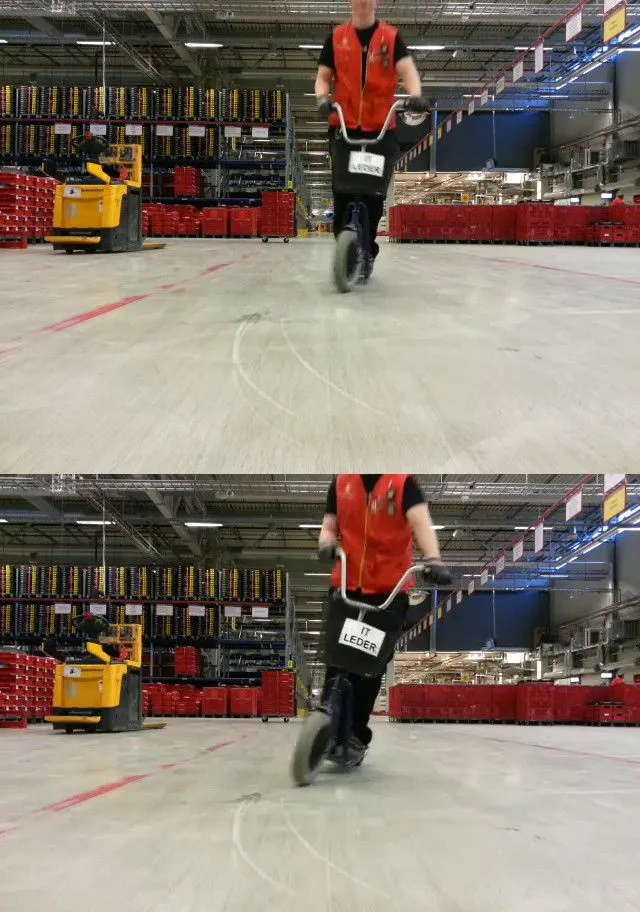
Pushing the handlebar destabilizes the bike momentarily, and in order to compensate for the loss of balance, the bike now steers in the direction that was originally intended by the rider. A bike that turned left upon counter steering will now point to the right. Conversely, a bike counter steered to the right will now point to the left.
Apart from course correction, the bike also tilts inwards at this step, making an angle with the road. This tilt is also known as leaning, and is essential to execute the turn successfully.
Turning:
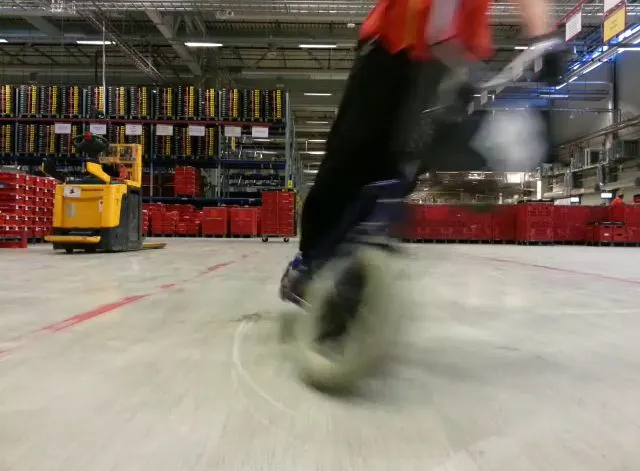
As the bike is now pointing in the intended direction, the process of steering into the turn is complete. At this stage, the rider is poised to make the turn and straighten the bike back out, thereby executing the turn successfully.
Dynamics Of A Turn/corner
A bike in motion is acted upon by several forces that balance each other out to keep it stable on the road.
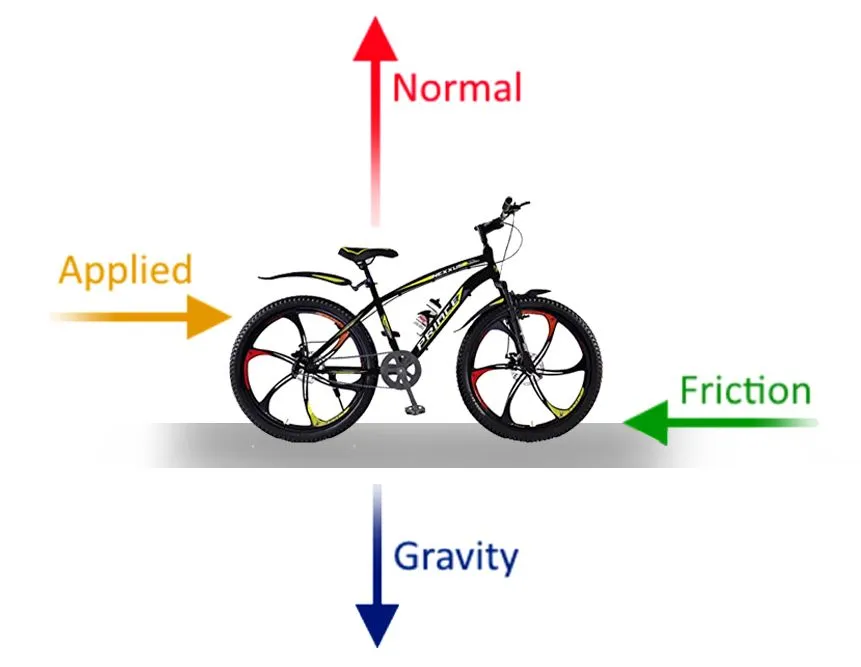
When going straight, the following forces act on the bike:
- The weight of the bike and the rider acting downwards on the ground, perpendicular to its surface.
- The reaction force of the ground, in response to the weight of the bike. This force arises from the firmness of the road and prevents the bike from sinking into the ground.
- The frictional force acting on the wheels of the bike. Rolling friction acts opposite to the direction of travel, so for a bike going forwards, this force acts backwards and is overcome by the rider pedaling.
Upon initiating a turn, the tires grip the road and push the bike sideways toward the center of the turn. If the bike were to stay bolt upright, this sideways force would act down at road level while the rider's mass sits high above it, creating a twisting effect (a torque) that would topple the bike outwards, away from the turn.
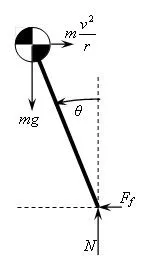
In practice, bikes keel towards the imaginary center of the turn. In doing so, the reaction force from the ground now gets split into two components. One of these components counters the weight of the bike, while the other generates a force that pulls the bike inwards.
This force, also known as centripetal force, counters the previously unbalanced frictional force, making the system completely stable. This enables us to take turns while leaning into the corner without falling over. The higher the speed, the greater the lean angle required to execute the turn successfully.
Why Does A Cyclist Lean Into A Turn?
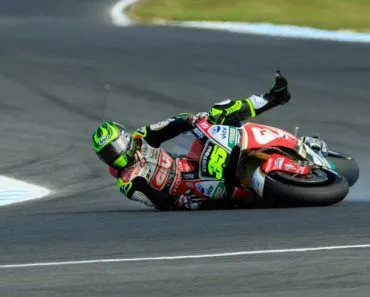
Watch any bike race and you will see the riders dip their machines toward the inside of every bend, sometimes alarmingly far. This is not for show. Rolling in a straight line, gravity pulls you straight down and the ground pushes straight back up, so the forces cancel out neatly. The instant you turn, though, the road has to shove the tires sideways toward the center of the curve to bend your path. That sideways push acts low down at road level, while your weight sits high above it. Stay bolt upright and those two forces twist you straight over the outside of the turn.

Leaning is the cure. By tilting inwards, you line your body and bike up with the combined pull of gravity and the centripetal force needed to corner, so the ground's reaction once again points straight up through your frame and nothing is left over to topple you.
How far should you lean? Physics gives a tidy answer. For a turn of radius r taken at speed v, the ideal lean angle θ measured from the vertical satisfies tan θ = v2/(rg), where g is the acceleration due to gravity, roughly 9.81 m/s2. Notice that the rider's weight has dropped out of the equation entirely, so the angle is the same whether you are a featherweight or a heavyweight.
Put some numbers in. A cyclist rounding a 10 m bend at 5 m/s (18 km/h, about 11 mph) needs tan θ = 25 ÷ (10 × 9.81) = 0.25, which works out to a lean of about 14° from vertical. Double the pace to 10 m/s (36 km/h) and, because speed is squared in the formula, the required lean leaps to roughly 46°. That is exactly why racers carving high-speed corners lean so dramatically, while you barely tilt cruising around your block.
How Does Counter Steering Work?
For most speeds encountered on a daily basis, it is nearly impossible to see counter steering in action. This has led many casual observers to believe that counter steering does not exist, or is simply a specialized way of taking turns on bikes. However, science argues otherwise.
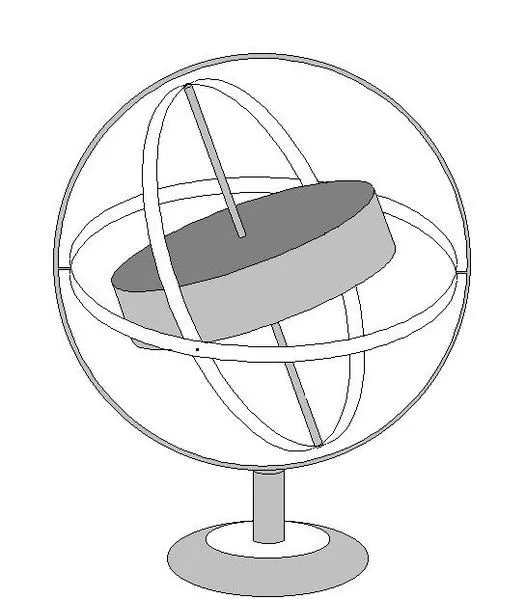
You will often hear that a bike turns because its spinning wheels act like gyroscopes. It is a tidy story, but it is mostly wrong. Physicists who have actually measured the forces find that gyroscopic effects account for only a small slice of what tips the bike over, on the order of one-tenth of the job. A bike with its gyroscopic effect canceled out can still be ridden and turned just fine.
So what really happens? When you push the handlebar away from the turn, the tires steer the contact patches (the small patches where the wheels meet the road) out to the side, away from the line of your center of mass. With nothing holding it up directly underneath anymore, the bike begins to topple, or lean, toward the turn. You then steer the front wheel into the turn, and the bike carves through the corner while gravity and cornering forces balance out. In short, counter steering works by moving the wheels out from under you, not by gyroscopic magic.
Why Doesn't A Moving Bicycle Fall Over?
Here is a puzzle that nagged physicists for more than a century. Park a bike and it keels over at once, yet give that same bike a shove and let it roll along riderless, and it will often coast upright on its own for a surprising distance. With nobody aboard to balance it, what keeps it from falling?

The secret is steering. Whenever a rolling bike begins to tip to one side, the front wheel quietly swivels toward that same side. This tucks the wheels back underneath the falling center of mass, much as you would slide your hand under a balancing broom to stop it dropping. The bike catches its own fall, lean after tiny lean, several times a second. A rider does some of this on purpose, but a well-built bike does plenty of it for you, which is why you can ride for a stretch with no hands on the bars at all.
For decades the favorite explanation was that the spinning wheels act like gyroscopes, or that the small “trail” of the front wheel keeps it pointing straight the way a caster wheel trails behind a shopping cart. In 2011 a team led by J.D.G. Kooijman put this to the test. They built a bicycle fitted with extra counter-rotating wheels to cancel any gyroscopic effect, and with negative trail, and it still balanced itself. Their verdict was that neither gyroscopic action nor trail is necessary; what really matters is the subtler interplay between the mass distribution of the front end and the tilt of the steering axis, which together make the bike steer into a lean and right itself.
There is a catch, though. This self-balancing only works within a band of speeds. For one well-studied benchmark bicycle, the self-stable range runs from about 5.3 to 8 m/s (roughly 12 to 18 mph). Go too slowly and it simply topples; go too fast and it begins a slow capsize, which is why a moving bike never balances entirely on its own without the occasional nudge from its rider.
Application Of Counter Steering
As we stated earlier, counter steering is an unconscious effort. If we were to attempt a turn by forcing our hand against the natural movement of counter steering, we would either end up going straight, or end up falling. This is easily seen in motorcycling races where riders take turns at very high speeds and precarious lean angles without falling to the ground.
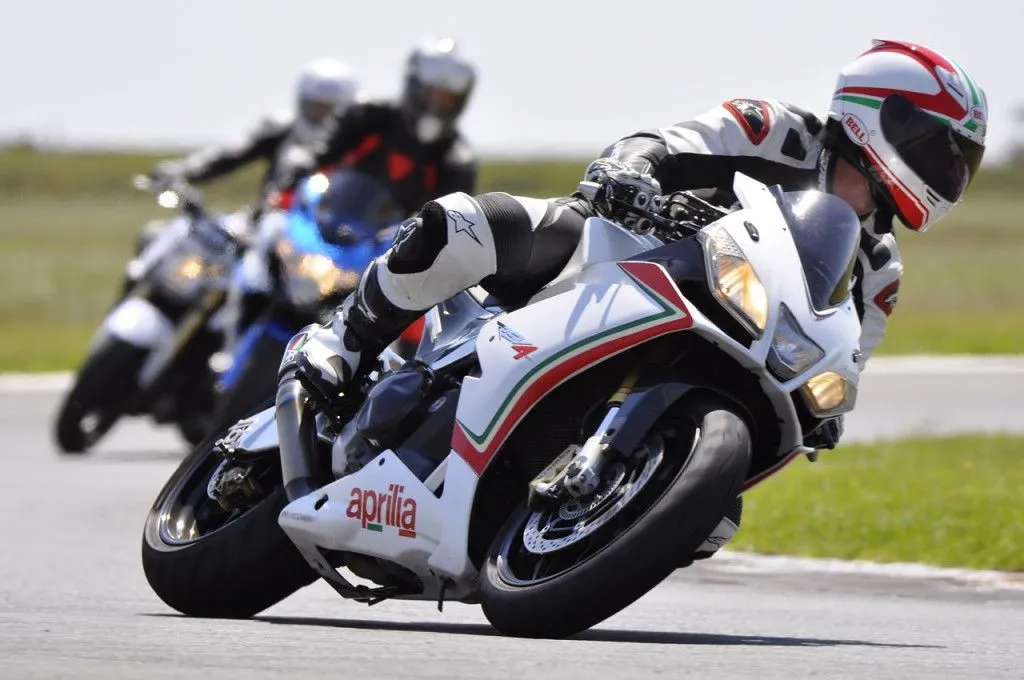
Counter steering, when combined with proper weight transfer in the direction of the turn, helps make quick and accurate turns while ensuring maximum control over the bike. Thus, counter steering is essential for defensive motorcycling, making it a very important skill for every rider.
References (click to expand)
- Kooijman J. D. G., et al. (2011). A Bicycle Can Be Self-Stable Without Gyroscopic or Caster Effects. Science. PubMed (NIH).
- Countersteering. Wikipedia.
- Bicycle and Motorcycle Dynamics. Wikipedia.
- Code K. (1997). Twist of the Wrist: The Motorcycle Roadracers Handbook. California Superbike School.
- Centripetal Force (banking angle, tan θ = v²/rg). College Physics 2e. OpenStax, Rice University.