Table of Contents (click to expand)
Torque steer is the tendency of a front-wheel-drive car to tug at the steering and pull to one side during hard acceleration. It happens because the unequal-length drive shafts feeding the front wheels deliver uneven torque. Easing off the throttle from a standstill, keeping tires and suspension well serviced, and a firm grip on the wheel keep it in check.
It is almost never a good idea to give control of the steering to someone else while you are in the driver’s seat, least of all to the wheels of your very own car!
However, chances are that your car has tried wrenching control from you even without you noticing! Or perhaps you did notice, but wrote it off as the car reacting to a rough patch of road. But is that really the reason?
Science has an explanation!
Torque
Torque, evidenced by our limited understanding of it, remains the most unappreciated aspect of most vehicles. We all know torque as a moment of force acting about a point, as well as the physics/mathematics jargon associated with it, but what good does it do for us in the real world? What is torque when one starts the car?
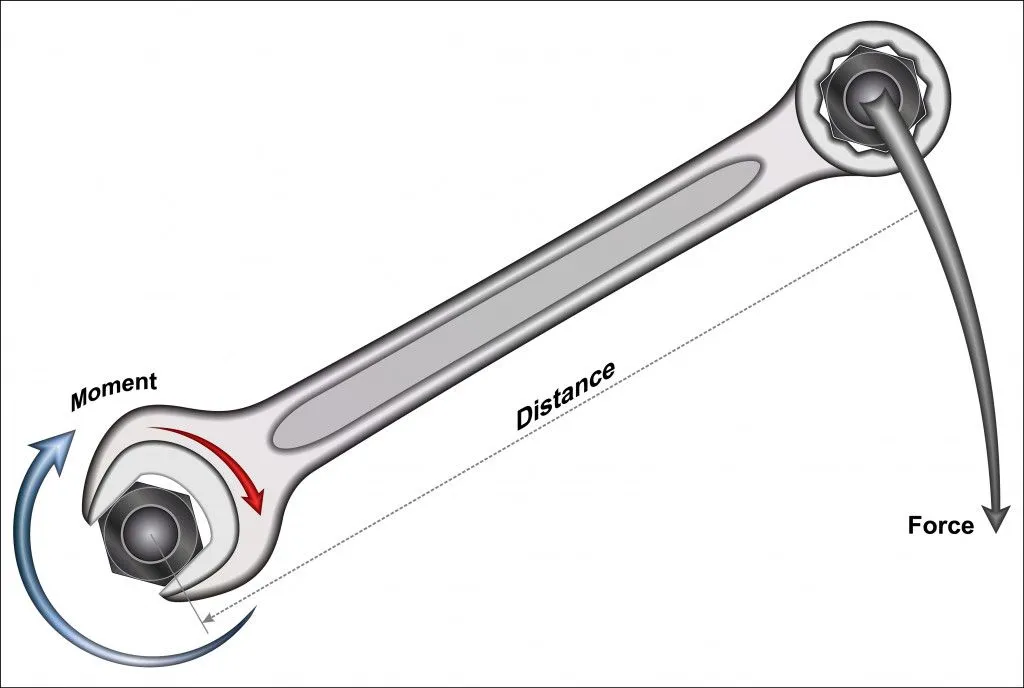
Torque is the rotational force exerted by the engine on the wheels. If power is how fast your car can go, torque is how quick you can go that fast. Torque does all the heavy lifting. It pulls you from a red light and gets you rolling again. It engages the wheels and wills them to move forward when you’re battling your way uphill. It is also the reason a big truck can haul heavy loads, and a sports car can physically distance itself from you in a matter of seconds.
When torque is lower, the vehicle naturally feels wanting, but when torque exceeds the capability of other components, it can result in catastrophic failures, such as shredded tires and even broken drive shafts. What has all this got to do with wheels driving the steering? Let’s find out.
Torque Steer
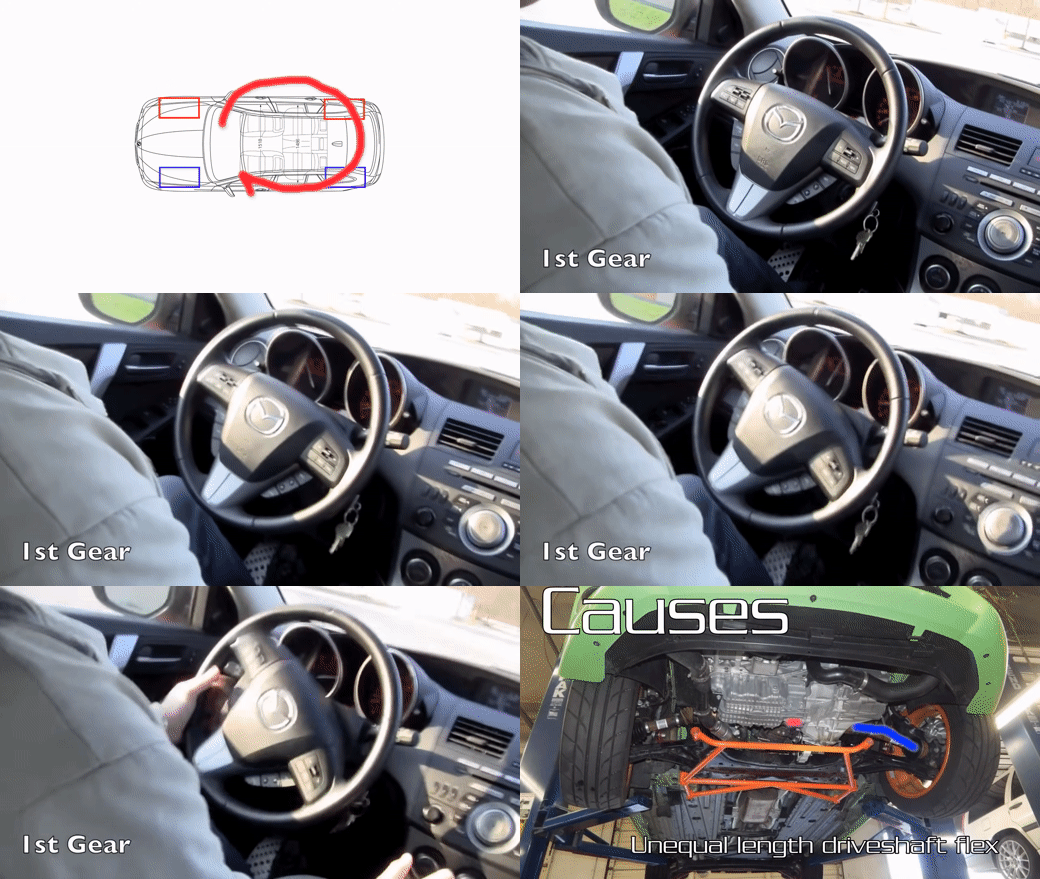
When there is unequal torque acting on two ends of a shaft, it can cause the shaft to rotate towards the side experiencing more torque. Let’s extrapolate this to vehicles. This phenomenon is usually experienced in front-wheel drive vehicles during very hard acceleration.
Front-wheel drive cars, by design, mount the engine sideways (transversely), with the transmission and differential pushed off to one side rather than sitting on the car’s centerline. Since this arrangement is not symmetrical, the two drive shafts (or half-shafts) that send power to the front wheels end up being of unequal length. The shorter shaft is stiffer and tends to deliver its torque to the wheel a little sooner and harder than the longer one. So when you accelerate hard in such a setup, you can feel a tug at the steering wheel; in some cases, the car may even veer off course.
Thus, the variance in torque at the drive wheels resulting in the vehicle veering off course is known as torque steer. However, the causes of torque steer cannot only be restricted to unequal torque distribution. Let’s look at a few other reasons that may compound the problem.
1. Suspension Geometry
Amongst all the variables that affect torque steer, suspension geometry plays the most significant role. This is because it directly affects the way wheels come in contact with the ground, and consequently, the way they grip it. Suspension geometry changes as the vehicle accelerates. This is because the weight of the vehicle shifts to the rear wheels under acceleration, lightening and extending the front suspension, which can nudge the front wheels toward a slight positive camber. Camber refers to the angle a wheel makes with the vertical, and it changes the size and shape of the contact patch the tire makes with the road.
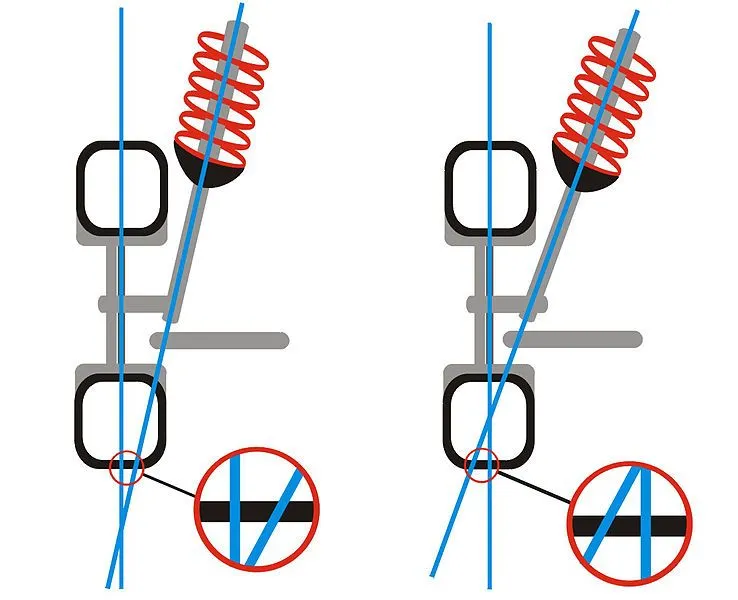
Another crucial aspect of suspension geometry is the scrub radius. Despite its name, it is not an angle but a distance: measured at the road surface, it is the gap between the center of the tire’s contact patch and the point where the steering axis, extended downward, meets the ground. That distance acts as a lever arm, and it is very tricky to dial in. A small or even slightly negative scrub radius is usually favored for front-wheel drive cars, because it shrinks the lever arm that uneven driving torque can push on, taming torque steer (and going easy on the tires in the process). A larger scrub radius can sharpen steering feel in performance and racing setups, but it lets torque steer and bumps talk back through the wheel more loudly.
2. Service Levels Of The Vehicle
The integrity of tires and suspension components, such as control arm bushings, play a significant role in how the car behaves under hard acceleration. Weak tire walls, unequal air pressure and worn out bushings often add to the problem of torque steer.
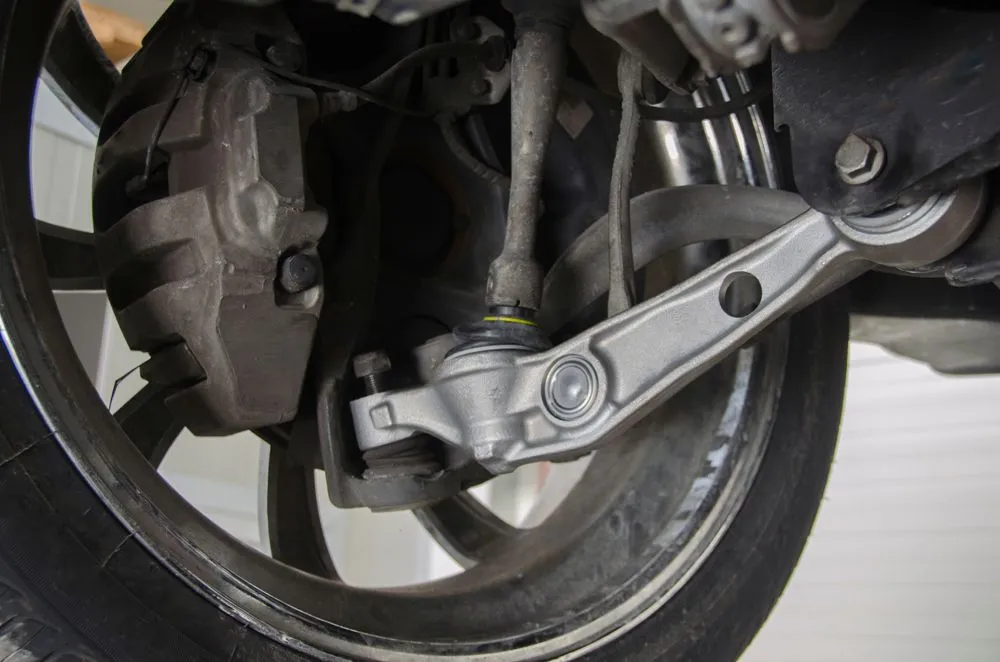
These are moving parts and face a lot of duress owing to their exposure to different road conditions. Thus, it is important to ensure regular service and replacement schedules of mechanical parts.
3. Split Friction On The Road
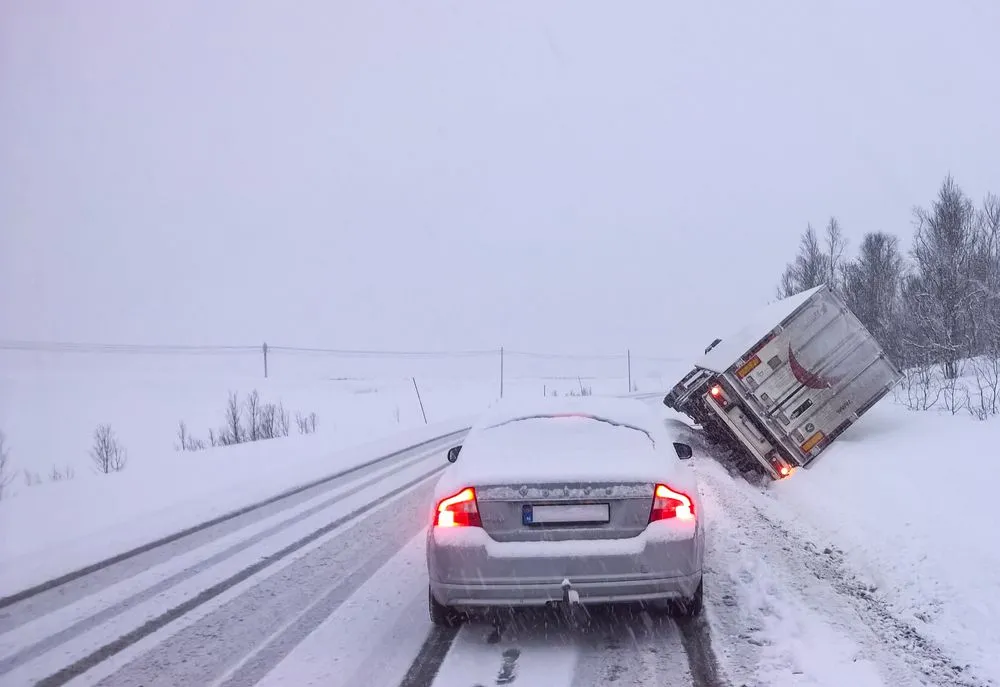
The problem of torque steer can be exacerbated if the road has varying levels of friction between the two wheels. In such an event, the vehicle will tend to keel towards the wheel with the highest grip levels. Unless road conditions are extremely bad, as in the case of an oil spill, torque steer can usually be corrected by gently but firmly steering the car back on course.
Do Other Driving Formats Have Torque Steer Too?
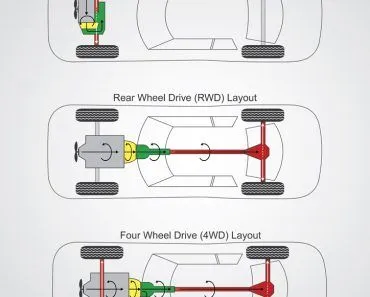
Torque steer is rarely a problem in rear-wheel and all-wheel drive vehicles, and the main reason is simple: the wheels that put power down are no longer the only wheels doing the steering. In a rear-wheel drive car, the rear wheels do the driving while the front wheels do the steering, so any uneven driving force at the back never travels up the steering column to fight your hands. These layouts also tend to mount the engine front-to-back (longitudinally), which lets the drive shafts be more symmetrical. All-wheel drive goes a step further by splitting the engine’s torque between the front and rear axles, so less of it lands on the front wheels to begin with.
Can Torque Steer Be Fixed?
Torque steer isn’t a major problem for the most part. It is barely noticeable if the driver doesn’t accelerate hard right from a standstill. However, it can be unsettling to the uninitiated, so it helps to know how to compensate for it. To begin with, the onus of starting gently and keeping the vehicle’s components well serviced lies with the driver. Since split friction and suspension geometry are beyond the driver’s control, modern cars lean on electric power steering, which can sense the unwanted tug and quietly apply a counter-effort to cancel it out.
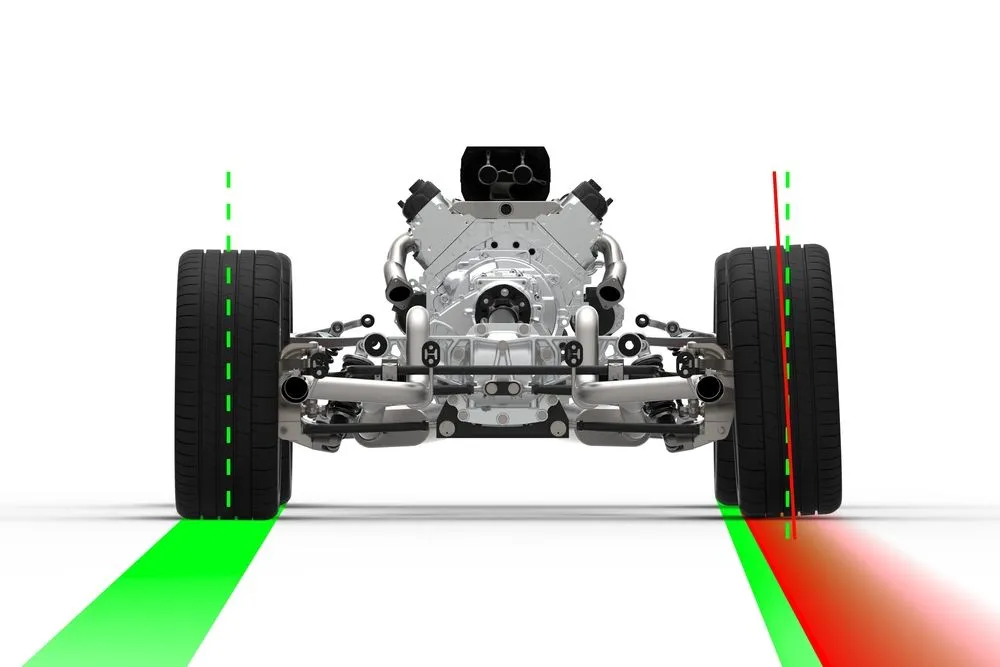
This reduces the force required by the driver to correct the vehicle course in the event of torque steer, giving them a sense of greater control. Car manufacturers also play around with engine placement and shaft geometry to ensure equal torque reaches both the driven wheels.
Should I Be Worried?
Automobile engineering has come a long way in terms of how power is delivered from the engine to the wheels. While most of the torque steer in modern cars is taken care of by electronic and mechanical systems, there is also something we can do as drivers to prevent it.
Amongst the foremost is to upskill ourselves, and not get startled when torque steer occurs. At the same time, by going easy on the accelerator when starting from a standstill, the issue can almost entirely be avoided!
References (click to expand)
- Dornhege, J., Nolden, S., & Mayer, M. (2017, March 28). Steering Torque Disturbance Rejection. SAE International Journal of Vehicle Dynamics, Stability, and NVH. SAE International.
- Bonera, E., Gadola, M., Chindamo, D., Morbioli, S., & Magri, P. (2020). On the Influence of Suspension Geometry on Steering Feedback. Applied Sciences, 10(12), 4297. MDPI.