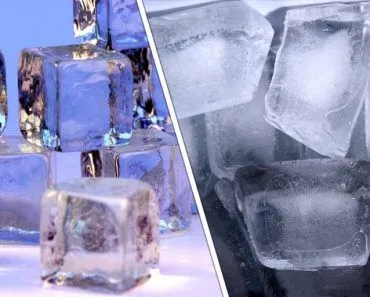
For healthy adults, drinking cold water is not bad for you. It can trigger a brief headache (a "cold-stimulus headache") in roughly 7-8% of people, slightly slow how fast the stomach empties, and is more likely to set off a migraine in active migraine sufferers. For most people, though, these effects are mild and short-lived. During exercise in the heat, cold water actually helps.
After walking for even a few minutes under the hot, sweltering sun, the first thing many people want to do is gulp down a glass of chilled water. To feel the cold water travel down our throat, leaving a cool feeling in its wake, seems to be absolute bliss. However, many people have often cautioned me not to do so. Is drinking cold water really unhealthy? What does science have to say about it? Let’s find out.
Cold Water Impacts Digestion
Cold water has a small, short-lived effect on digestion, but nothing close to the dramatic claims you’ll find on the internet. Studies that have measured gastric emptying do show that an icy drink (around 4 °C, or 39 °F) leaves the stomach a touch more slowly at first than one served at body temperature. The catch is that the stomach quickly warms the fluid back up: the intragastric temperature returns to the body’s normal 37 °C (98.6 °F) within roughly 20 to 30 minutes of swallowing it.
What this means in practice is that, for a healthy person, cold water does not derail digestion. The body does spend a little metabolic energy warming the water, and a transient pulse-and-blood-pressure shift can be measured in the lab, but neither effect is large enough to matter for the rest of your day.
What about the popular claim that cold water "solidifies" the fats in a meal and creates a kind of intestinal sludge? That one is a myth. Body temperature is about 37 °C (98.6 °F), and even a glass of ice water is no match for it. The stomach warms whatever you drink to that temperature long before any meaningful absorption of fat happens, and fat digestion is driven by bile salts and the enzyme lipase, not by the temperature of the water you sipped with lunch.

A popular analogy compares the digestive system to a hot wok and asks what would happen if you threw cold water into it. It’s a vivid image, but it doesn’t really hold up: your stomach isn’t a frying pan, and your core temperature does the equalising long before any "shock" can occur. The honest takeaway is more modest. If you happen to have a sensitive gut, like with IBS or functional dyspepsia, very cold drinks may feel uncomfortable, and a glass at room temperature is the gentler choice. For everyone else, cold or room-temperature water with a meal is essentially a matter of preference.
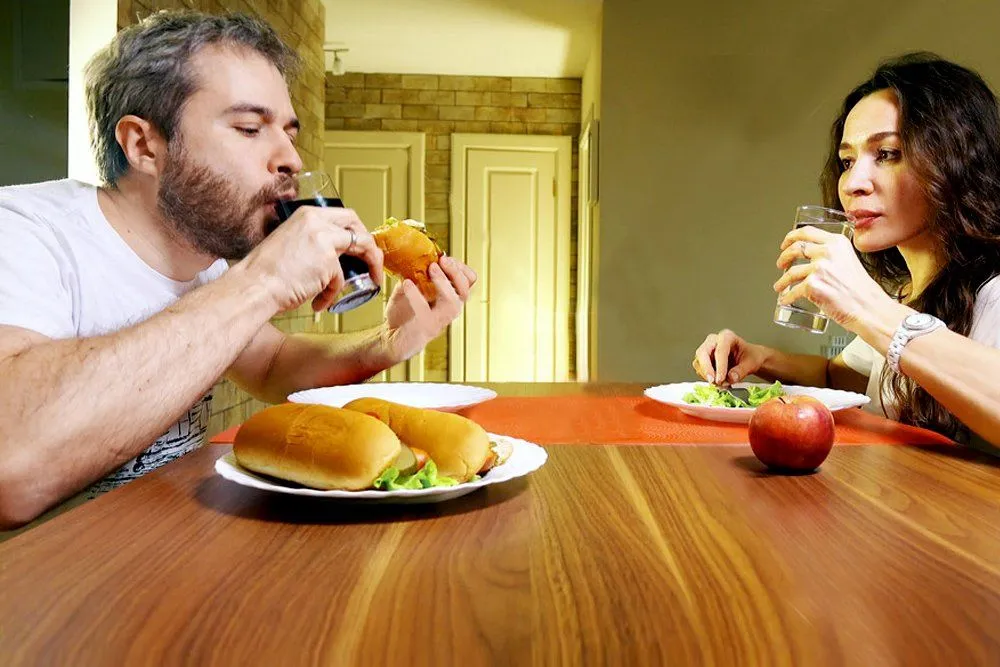
Cold Water Aggravates Migraines
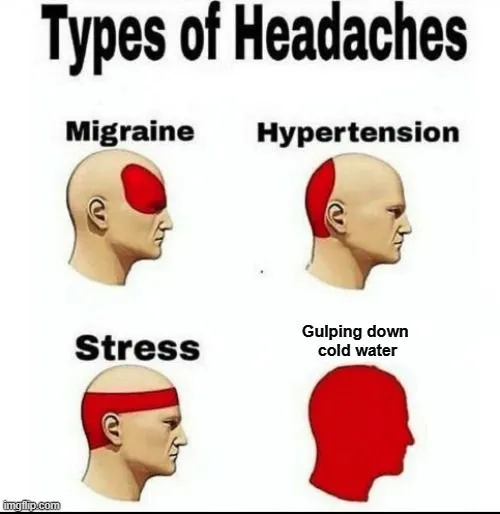
This is the one effect where the science is genuinely solid. Drinking ice-cold water can trigger what doctors call a "cold-stimulus headache" (you might know it as brain freeze). In a well-known 2001 study by Peter Mattsson at the Department of Neuroscience at Uppsala University Hospital in Sweden, 51 of 669 women (about 7.6%) developed a headache after sipping just 150 ml of ice-cold water through a straw. Crucially, women who had had a migraine attack in the previous year were roughly twice as likely to get one as women without a history of migraine.
Dr. Ivan Garza, a neurologist at the Mayo Clinic College of Medicine, describes the same phenomenon in his clinical review of cold-stimulus headache on UpToDate. The pain typically begins within seconds of the cold hitting the back of the throat, peaks within about a minute, and usually fades within five. It’s most often felt in the forehead but can spread to the temples or the back of the head. So if you’re prone to migraines, that ice-cold glass on a hot day may be worth diluting a little.
Does Cold Water Cause A Sore Throat?
Most of us have been told by an elder at some point that gulping cold water will earn us a sore throat. The idea goes that cold liquid causes the respiratory mucosa (the protective lining of the airway) to constrict and thicken, leaving the throat more vulnerable to viruses and irritation. It’s an intuitive story, but the actual clinical evidence for it is thin. Sore throats are overwhelmingly caused by viral infections, allergens, and dry air, not by the temperature of the water you sipped at lunch.
What can be true is short-term irritation: if you already have an inflamed throat, an ice-cold drink can briefly hurt because the cold causes blood vessels in the lining to constrict. Interestingly, the same cold sensation can also feel soothing to many people, which is why ice chips and cold drinks are routinely offered to patients after tonsil surgery. So if you have a healthy throat, cold water is fine. If your throat is already irritated, just go by what feels comfortable.
Cold Water And Heart Rate
You may have read that cold water "slows the heart" by activating the vagus nerve. There is a real reflex at work here, but it’s mostly worth knowing what it actually does. The dramatic version, called the mammalian diving reflex, is triggered by cold water hitting the face (especially the forehead, around the eyes, and the nose). Sensors there signal the brain via the trigeminal nerve, which then engages the vagus nerve to slow the heart and conserve oxygen, as if you had plunged into a lake.
Drinking a glass of cold water produces a much milder version of this. Studies have measured a small, short-lived dip in heart rate and a slight rise in blood pressure in the minutes after ingestion, more pronounced in older adults than in younger ones. For a healthy heart, these changes are transient and clinically meaningless. People with certain autonomic or cardiovascular conditions may want to be more cautious, but for most of us, the body simply absorbs the cold water and moves on.
Cold Water And Exercise
So far we’ve been talking about the supposed downsides. Here is the flip side: during exercise, especially in hot conditions, cold water is genuinely useful.
If you have ever done any form of workout, you will know that the first rule is to never skip the warm-up. Warming up before any exercise or physical activity is necessary, as it increases blood flow to our muscles, thus providing us with flexibility and more energy to spend.
However, what happens when we start exercising?
Our body starts heating up and we start sweating. The part we need to focus on here is that our core temperature begins to rise. In people sensitive to heat, or living with multiple sclerosis, that rise can be a limiting factor. During workouts they often experience fatigue, blurred vision, and other symptoms of overheating, a phenomenon sometimes called Uhthoff’s phenomenon. A 2018 study by Chaseling and colleagues in Medicine & Science in Sports & Exercise found that sipping cold water (around 1.5 °C, or 35 °F) during a cycling test extended the time heat-sensitive people with MS could exercise by roughly 30% compared with thermoneutral water at 37 °C (98.6 °F). Interestingly, cold water did not actually lower their core or skin temperature, suggesting the benefit comes from cold receptors in the mouth and abdomen sending a "things just got cooler" signal to the brain.
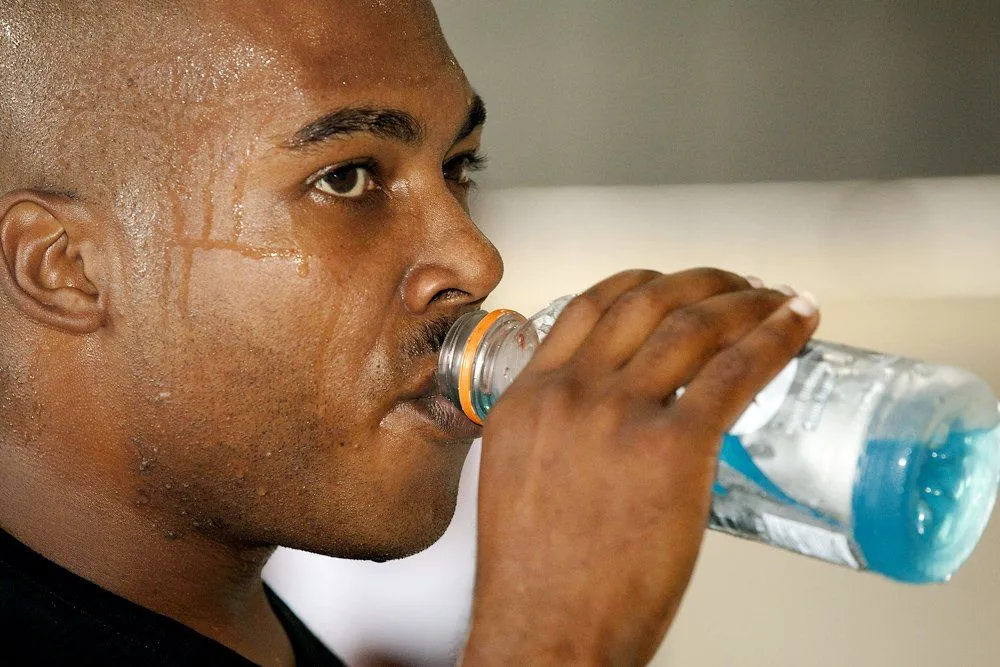
To pull it all together: for a healthy adult, drinking cold water is essentially fine. It can briefly trigger a brain-freeze headache (a bigger deal if you are migraine-prone), it leaves the stomach a touch more slowly at first, and it nudges your blood pressure and heart rate for a few minutes. Those are real effects, but they’re small and short-lived, and the body equalises the temperature within half an hour.
Traditional Chinese and Ayurvedic medicine have long preferred warm water, and that is a perfectly reasonable cultural preference. The modern evidence, though, does not support sweeping warnings about cold water "shocking" your system, congealing fats, or wrecking your immune system. If anything, during a hot day or a sweaty workout, that glass of ice water might be doing you a small favor.
References (click to expand)
- Mattsson, P. (2001). Headache caused by drinking cold water is common and related to active migraine. Cephalalgia. PubMed.
- Garza I, Schwedt TJ. Cold stimulus headache. UpToDate.
- Chaseling GK, Filingeri D, Barnett M, et al. (2018). Cold Water Ingestion Improves Exercise Tolerance of Heat-Sensitive People with MS. Medicine & Science in Sports & Exercise. PubMed.
- Is cold water bad for you? Risks and benefits. Medical News Today.
- The Pressor Response to the Drinking of Cold Water and Cold Carbonated Water in Healthy Younger and Older Adults. Frontiers in Neurology. PMC.