Table of Contents (click to expand)
To fake a piece of art, forgers fabricate its provenance (a fake ownership history), source period-correct materials like old canvas, paper, and hand-ground pigments, then artificially age the work with techniques that mimic cracking (craquelure), foxing, and varnish fluorescence. The goal is to fool experts and the chemical tests used to spot anachronistic materials.
In 2011, the world-renowned Knoedler & Company art gallery in New York shut its doors forever, locking away almost 165 years of art and history. What compelled it to take such a drastic step was a massive forgery scandal: the gallery was accused of selling roughly $60 million worth of fake paintings passed off as the work of Abstract Expressionists like Mark Rothko and Jackson Pollock, a scandal that shook the art market and artists around the world. The global art market is worth around $60 billion a year (the 2025 Art Basel and UBS report put it at $59.6 billion), and fakes have always shadowed that trade.
Forgery is an unholy amalgamation of art and science. The forgers and the law enforcement agencies investigating them both depend on aspects of science as a tool. The former uses it to create a ruse, while the latter uses it to expose the deception. Onscreen characters like Neal Caffery (White Collar) or Harry Donovan (Incognito) might have given us a sneak peek into the complexities of art forgery, but in real life, it’s even more tedious. To make the art look real, the forger must perfectly embody the artist and his style. It’s like method acting of the painting world.
With that exciting premise in mind, let’s uncover the secrets and science behind art forgery!
The Provenance
Most forgers don’t attempt to copy an existing painting. They instead try to create work from the artist that never existed, but could have existed. The first step needed to fool the art dealer or the gallery is fabricating provenance. Provenance consists of documents that give information about the art’s chain of ownership. Forgers invent stories about dead relatives, forgotten heirlooms, or secret war loot finally discovered after decades or centuries.
Wolfgang Beltracchi, a German forger (arrested in 2010) and his wife Helene shook the art world with their fake Jägers collection, a fictitious trove supposedly inherited from Helene’s grandfather Werner Jägers. He used old cameras and pre-war photo paper from the 1930s to fake the provenance. Helene posed as her grandmother in period clothing, with the forgeries hanging in the background. The pictures were made to look old and blurred enough to fool art experts.
The Raw Materials
The next step involves procuring the raw materials for the painting, which includes: the stretcher/board, the surface, and the painting materials.
The Stretcher/Wood Board
The most common trick forgers use is buying old furniture and paintings from the original artist’s era. They use the old wood to make the stretcher. Or they use the Masonite board from an old cheaper painting that already has an old art dealer stamp. This not only makes the support look old and authentic, but sometimes helps them cheat the carbon dating test.
Iron nails are often used to attach the canvas to the stretcher. To make the nails rusty, forgers often use salt water to speed up the oxidation process of the nails to make them look old.
The Surface
Paper and canvas are the two favorite choices amongst forgers. Over the years, they have cracked the key to beat visual scrutiny, and sometimes even chemical analysis!
Paper: To fake older artists and beat the carbon dating test, the forgers must find paper that fits the era. They scavenge bookstores in search of old books. Since olden times, books have had one or two empty pages in the front or back. The forgers tear this papers and use them for drawing. Other forgers let the paper select the master. Whichever artist’s style fits the dimension of the paper gets used in that particular forgery.
Using paper from books does come with certain problems, one of them being bookworm holes (no, not human bookworms, actual bookworms). An old painting might develop wormholes with time, but the paint would already be dry when that happens, which means no paint beyond the edges.
However, if a forger paints over paper with wormholes, the ink/paint would seep through the hole to the back, which would immediately alarm an expert authenticating it. Master forger Eric Hebborn came up with a clever solution to keep the paint out of such wormholes.
He would patch the hole with some chewed paper, and trim the edges of the paper plug to perfectly fit the hole. He would then remove the plug after the paint was dry.
In his book “The Art Forger’s Handbook”, he also suggested using benzine (not benzene) to remove grease spots from paper, as well as using sliced potato or ammonia solution to prep the greasy surface of the paper before painting.
Forgers who work on mimicking artists closer to their times only have to make the paper look a few decades old. They come up with ingenious paper-aging techniques. Some use a permanganate solution to give the paper a yellowish tint or apply tea/ coffee to give it a light brownish tint.
Tom Keating, a fraudster who created many fake watercolor paintings, had a very theatrical technique of creating rusty-looking spots (foxing) on the paper. Before his painting went completely dry, he would flick a little bit of coffee powder into the air. As the dust fell, it would magically create rust spots on the paper.
A 16th-century author, Giorgio Vasari, in his book Lives of the Artists, writes about Michelangelo smoking and tinting paper to give it the appearance of age, then copying old masters so faithfully that he could swap his aged fakes for the originals. Yes, we’re talking about the “Michelangelo”, who dabbled in forgery at the beginning of his career!
Even David Stein, who was arrested in 1969 for forging Picasso and Chagall, soaked his paper in tea to taint them.
For canvas, forgers buy old paintings of less famous artists. They scrape off the paint using a paint stripper or undiluted acetone. If using newer canvases, they bleach the canvas to make it look more worn out and stain them with tea/chicory to achieve the desired rustic color.
The Painting Materials
Many old masters (European artists who worked before the 1800s) used ink for painting. Eric Hebborn used old apothecary (medieval pharmacies) recipes to make their inks to match the chemical composition using ingredients like cuttlefish ink, chimney soot, flakes of rust, vinegar, and rainwater.
He would use already diluted ink in his paintings to create the old faded effect. Shaun Greenhalgh, a British fraudster convicted in 2007, says that one of the first things people look for in an old master painting is corrosion from oak gall ink.
One of the major components of the ink is sulfuric acid. To emulate the corrosive effect, Hebborn suggests depositing extra acid with the help of a very sharp quill at places of highest ink concentration.
Now, coming to the most challenging ones, the oil paints. The pigments must be chemically era-appropriate. Many commercially available white paints contain titanium dioxide (even if the tube says zinc white), which only reached artists’ palettes in the early twentieth century, around the 1920s. A single tell-tale fleck can sink a fake: it was titanium white turning up in a supposed 1914 painting that finally exposed Beltracchi. To stay period-correct for older works, forgers grind their own whites, such as zinc oxide (zinc white) or the lead-based white that old masters actually used.
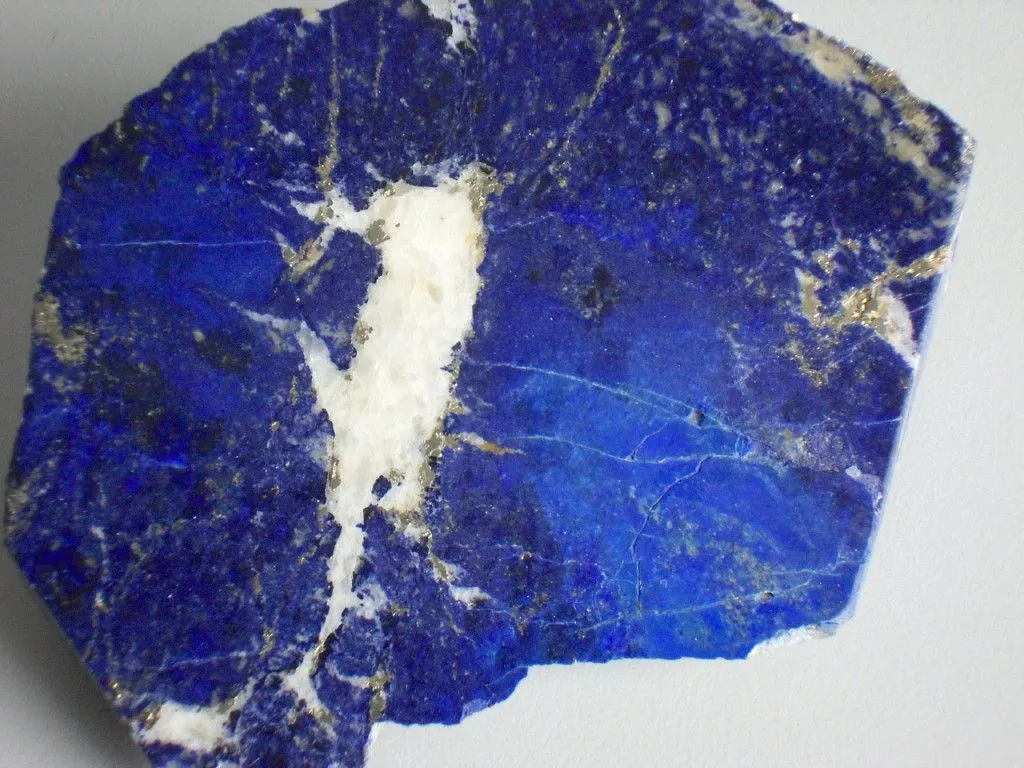
Dutch painter Han van Meegeren, one of the most notorious forgers of the 1900s, even fooled the Nazis with his Jan Vermeer forgeries. He knew that the cheap blues on any modern shelf would betray him: synthetic ultramarine wasn’t invented until the 1820s, and Prussian blue not until the early 1700s, both long after Vermeer’s time. So he ground lapis lazuli to make natural ultramarine by hand, exactly as a 17th-century master would have. Ironically, it was a different anachronistic blue that exposed him: traces of cobalt blue, a pigment discovered around 1800, were later found in his fakes.
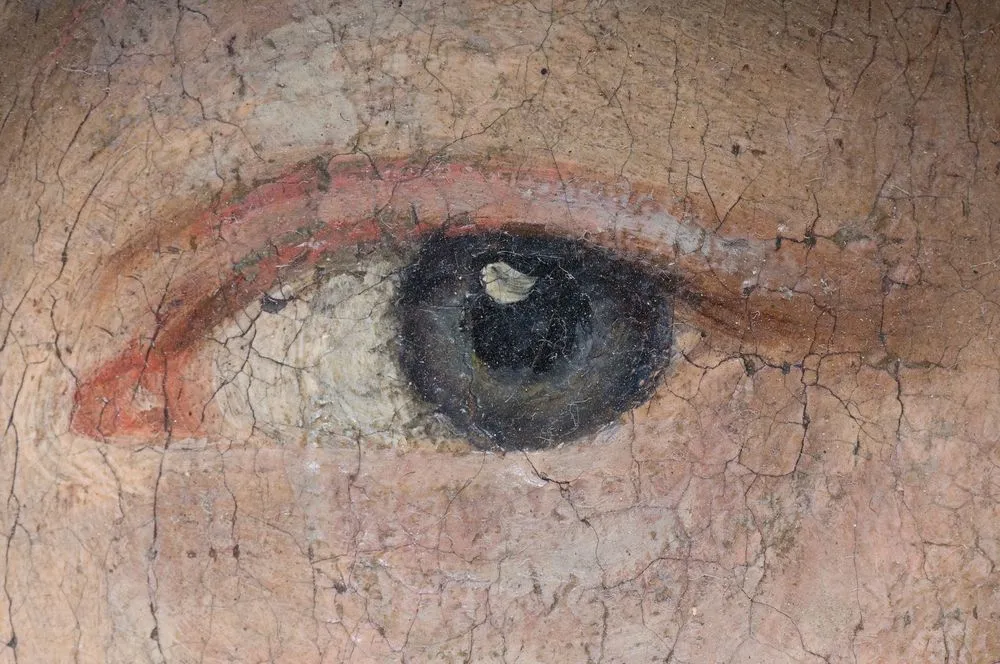
Old paintings harden and shrink over time to form a network of cracks known as craquelure. Van Meegeren really paid attention to science, mixing bakelite (a phenol-formaldehyde resin) into his paint so it would harden quickly when baked, and become resistant to the alcohol swab testers used to spot fresh paint.
He baked his paintings under controlled temperature to dry and ran the canvas over a pipe to create cracks. He later lined the cracks with black ink to make them prominent. Some forgers also add eggs to paint for faster drying.
Ken Perenyi, a 20th century forger, mentions his techniques in his book “Caveat Emptor”. Since he was also an art restorer, he worked closely with real paintings, and knew what experts and scientists looked for to spot a fake.
He would use a thin layer of catalyzed lacquer over his paintings to make them acetone resistant. The cracks of old paintings formed in a web-like pattern, and rolling over a pipe created unidirectional cracks. He would use a soft rubber ball to apply slight pressure on the canvas to replicate the web-like cracks.
He discovered that old varnishes contained sugar and would attract flies, which would leave specks that would turn black over time. Perenyi mastered the art of recreating the effect. He would use epoxy glue/thick linseed oil and pigment to create tiny bumps in the painting.
Art dealers started using UV lights to check for fluorescence in old paintings. The varnish used over the painting consists of organic compounds that over time show fluorescence (shines green like radium paint) under a UV light.
Perenyi would swab out old varnish from the paintings he restored with a cleaning solvent, then mix it with new varnish and spray it over his forgeries. Lo and behold! They would shine bright green under the UV light.

Finally, to make the painting look recently discovered, he would dust the forgery with rotten stone powder. And leave it out to dry in the sun so the paint smell would wear off.
Conclusion
Forgers try to live in the minds of art and forensic experts to avoid getting caught. They try to envision and emulate the tell-tale signs of what would make the fakes look real. However, no matter how hard they try, quoting the movie- The Best Offer, “There is always something authentic concealed in every forgery”. And that’s how forensic science gets them!
References (click to expand)
- How to forge a masterpiece | BBC Science Focus Magazine. BBC Science Focus
- How to forge a masterpiece - BBC Culture. BBC Online
- A veneer of Vermeer. Chemistry World (Royal Society of Chemistry)
- Han van Meegeren | Dutch painter and forger. Encyclopaedia Britannica
- Wolfgang Beltracchi | German art forger. Encyclopaedia Britannica
- The Global Market. The Art Basel & UBS Art Market Report 2025, Arts Economics
- Lopez J. (2008). The Man who Made Vermeers: Unvarnishing the Legend of Master Forger Han Van Meegeren. Harcourt
- Perenyi K. (2012). Caveat Emptor: The Secret Life of an American Art Forger. Open Road Media