Table of Contents (click to expand)
Synesthesia is a harmless neurological trait in which one sense automatically triggers another, so a person might hear colors, see sounds, or taste words. It affects an estimated 4% of people, often runs in families, and is thought to stem from extra cross-talk between sensory regions of the brain.
Our senses are the windows to the world, and all of our experiences can be distilled into the sum of different sensations. To be clear, a sensation occurs due to the stimulation of a sensory organ.
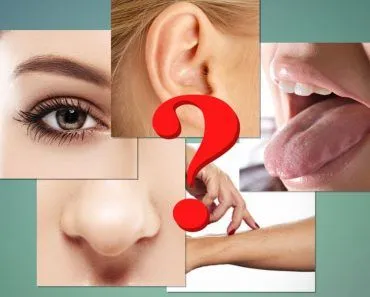
We know that we have 5 sensory organs: vision, hearing, touch, smell and taste. Sensory perception occurs when an external stimulus triggers a sense organ; that stimulation is then carried to the brain, where it gets processed and helps in forming a perception. Let’s start by considering vision. When we see color, it is because light from a source hits that object and is reflected into our eyes. Our retina catches the information and sends it to the brain, where it is processed, forming the perception of the color we see.
However, not everyone is wired in this way. Some people claim to not only see colors, but also hear them! This phenomenon of crisscrossed senses is synesthesia. It is a perceptual phenomenon in which the stimulation of one sensory or cognitive pathway leads to an involuntary experience in another sensory or cognitive pathway. It is far more common than you might think. The largest unbiased study to date, which tested random participants rather than self-described synesthetes, found that at least 4.4% of people experience some form of it, so you very likely know a synesthete or two.
Various Types Of Synesthesia
All types of synesthesia can be broadly categorized into two forms. One of them is better understood than the others: projective synesthesia. This variation describes people who actually see colors, forms or shapes when an unrelated sensory organ is stimulated. Another form is associative synesthesia, when people feel a connection between a stimulus and its trigger. Let’s take a closer look at the various types of this condition we know about.
Grapheme-color Synesthesia
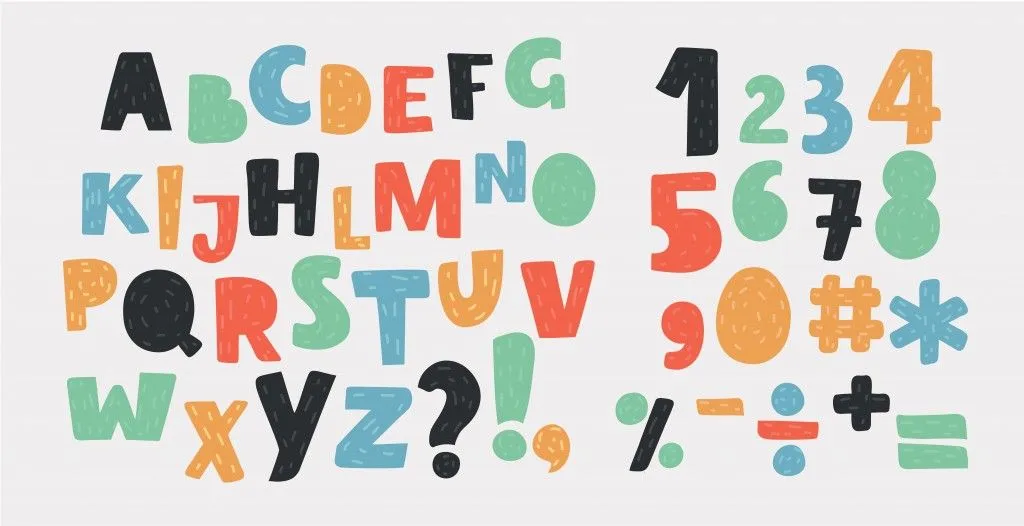
This is one of the most common forms of synesthesia. Individual letters of alphabets and numbers are perceived as being shaded or tinged in color. A letter carries a corresponding color that gets attributed to it and is seen whenever that letter appears.
Ordinal Linguistic Personification
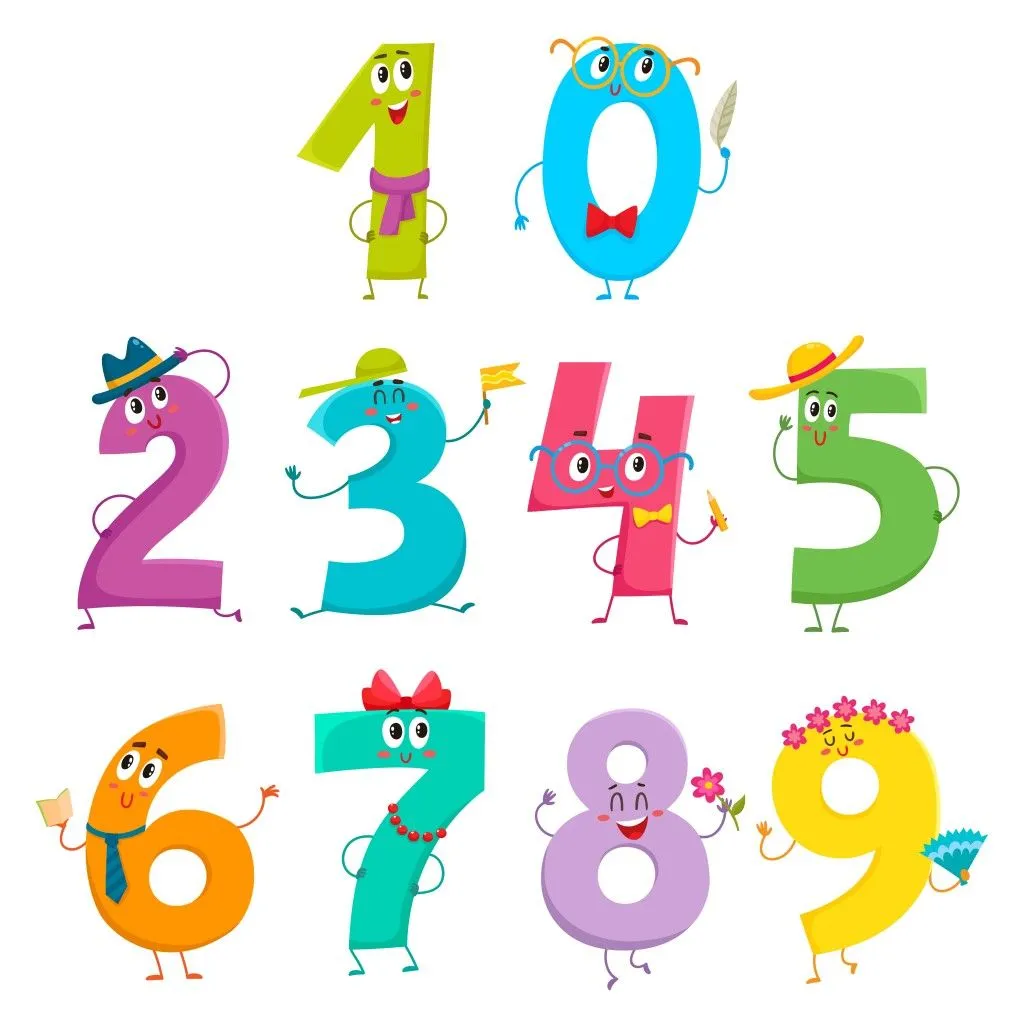
Do you think that the number 7 looks like a cunning man conspiring against someone, or does the number 8 remind you of your obese aunt who always gets you presents? If you have this sort of reaction or sensation, you probably have ordinal linguistic personification. People assign genders to individual numbers in this way, even to the point of giving them complete personalities and character traits.
Spatial Sequence Synesthesia
This type may be the least believable on the list. People diagnosed with this type of synesthesia tend to see numerical sequences as points in space. Accounts have been recorded where people detail a clock that they associate in their physical space. This is similar to how we count which months have 30 or 31 days on our knuckles, but in a much bigger way!

Chromesthesia
In this type of synesthesia, people associate sound or music with different colors. This could be the opening of a door, the barking of a dog or Beethoven’s Moonlight Sonata; all of those sounds would be associated with a different color. This could range from specific music notes, like B Flat being orange, to entire songs generated by a particular color.

Lexical-gustatory Synesthesia
The memory of tastes are invoked when a specific word is said in this type of synesthesia. The person also feels other experiences in the mouth, such as pressure and temperature in response to certain or all linguistic triggers. For example, the word “Jail” could make the person taste cold, hard bacon. These tastes are caused by an inducer/concurrent complex. The inducer (“Jail”) is the stimulus that activates the sensation, while the taste (cold, hard bacon) is the concurrent.
Misophonia
Strictly speaking, misophonia is not a type of synesthesia, but it is so often discussed alongside it that it is worth including here. In misophonia, people experience strong negative emotions, such as anger, disgust or anxiety, when they hear specific everyday sounds, often chewing, sniffing or tapping. Like synesthesia, it is thought to involve atypical wiring between brain regions (here, the ones that link sound to emotion), but it is classified as a distinct neurological condition rather than a synesthetic one. The closest familiar comparison is that uncomfortable feeling when someone scratches their fingernails down a chalkboard.

Mirror-touch Synesthesia
This is one of the rarer types, found in roughly 1.6–2% of people. A person with it literally feels the same touch they see another person receive. For example, if they watch someone’s head being stroked, they feel the same sensation on their own head. This type is linked to mirror neurons, the brain cells (first described in monkeys by Giacomo Rizzolatti and colleagues) that fire both when we act and when we watch someone else act. Some studies tie mirror-touch synesthesia to heightened empathy, though the evidence here is mixed.
Auditory-tactile Synesthesia
Certain sounds can induce sensations in parts of the body when a person is diagnosed with this type. Hearing specific words can produce feelings of touch on specific parts of the body that are not actually being touched. This is similar to when you get goosebumps after that epic beat drop in your favorite song.

Other Forms
Researchers have documented more than 60 different forms of synesthesia, and many people with it go undiagnosed their entire lives. It is sometimes framed as a medical or neurological condition, but clinicians no longer treat it as a disease or disorder, and most people who have it experience it as a quirk rather than an illness, sometimes even a gift. It remains a fascinating neurological phenomenon, and one about which surprisingly little is concretely understood. Even so, let’s look at some scientific explanations for it.
Why Does Synesthesia Occur?
There is no concrete neurological theory that is universally accepted for the origins of synesthesia. However, there are theories that manage to give some insight into the inner workings of the brain that could bring about a synesthetic experience.
Cross-Activation Theory
Proposed by neuroscientists V.S. Ramachandran and Edward Hubbard in 2001, this theory argues, as the name suggests, that synesthesia occurs when neural connections between two sensory modalities are increased. This occurs when the areas where two senses are processed are in close proximity in the brain, resulting in an overlap. The neurons from the receiving sense get excited and are passed over to the other sense, causing the dual perceptions. The theory hypothesizes that the synesthete’s (the person with synesthesia) brain is anatomically different from a non-synesthete’s brain as a result of these hyper-connections.
Disinhibited Feedback Theory
This is the opposite of the cross-activation theory. Whereas the cross-activation theory suggests that the synesthete’s brain is anatomically different from a non-synesthete’s brain, this theory states that there is nothing wrong with the anatomy of the brain; instead, synesthetic sensations arise due to disinhibited feedback. Usually, inputs from multiple regions are processed together in a central processing area so that the information binds together. An error in the central processing center could lead to unwanted feedback being sent to the area where the input was not initiated.
Genetics
A familial trend has long been observed in synesthesia. Victorian scientist Francis Galton first noted in the 1880s that it seemed to run in families, and modern surveys back him up: more than 40% of synesthetes have a close (first-degree) relative who also has it. A person with one form of synesthesia is also likely to have another, since the genes involved are expressed throughout the brain and can affect multiple sensory pathways. There is no single “synesthesia gene,” though. A 2018 study that sequenced families with sound-to-color synesthesia found that different families carried different rare gene variants, several of them linked to how nerve cells grow and wire up during early development.
There isn’t a consensus on the theories outlined above. Advancements in gene mapping, as well as a better understanding of the brain structure and neural pathways in the future, could uncover the origins of synesthesia, one of the most mysterious and intriguing phenomena in our species!
References (click to expand)
- Colizoli, O., Murre, J. M. J., & Rouw, R. (2013). A taste for words and sounds: a case of lexical-gustatory and sound-gustatory synesthesia. Frontiers in Psychology. Frontiers Media SA.
- Neuroscience for Kids - Synesthesia - faculty.washington.edu
- Synesthesia. Cleveland Clinic.
- Carpenter, S. Everyday fantasia: The world of synesthesia [Electronic resource]. American Psychological Association.–2001
- Simner, J., et al. (2006). Synaesthesia: The prevalence of atypical cross-modal experiences. Perception.
- Tilot, A. K., et al. (2018). Rare variants in axonogenesis genes connect three families with sound-color synesthesia. PNAS.