Table of Contents (click to expand)
Almost certainly not. Children learn language by hearing (or seeing) it during a "critical period" that runs from infancy to puberty. Raised by apes with no human language, Tarzan would have missed that window. Real feral children rarely learn to speak after rehabilitation, so an adult Tarzan could not have talked to Jane.
“No, no, no. I am Jane,” Tarzan repeats, after learning Jane’s name in the iconic Disney movie. However, consider this: Tarzan had not been in the company of humans since a very young age. Would he have actually been able to speak to Jane at all?
To determine the answer to this question, we need to deep dive into how humans learn to speak.
How Do We Learn A Language?
Babies learn to talk by listening to adults speak. We do not attend classes to learn how to speak; we pick it up from our environment. Babies begin speaking by stringing together simple, repeated sounds like “ba-ba” and “da-da.” This is called “babbling,” and it typically starts around 6 to 7 months of age in babies who are developing normally.
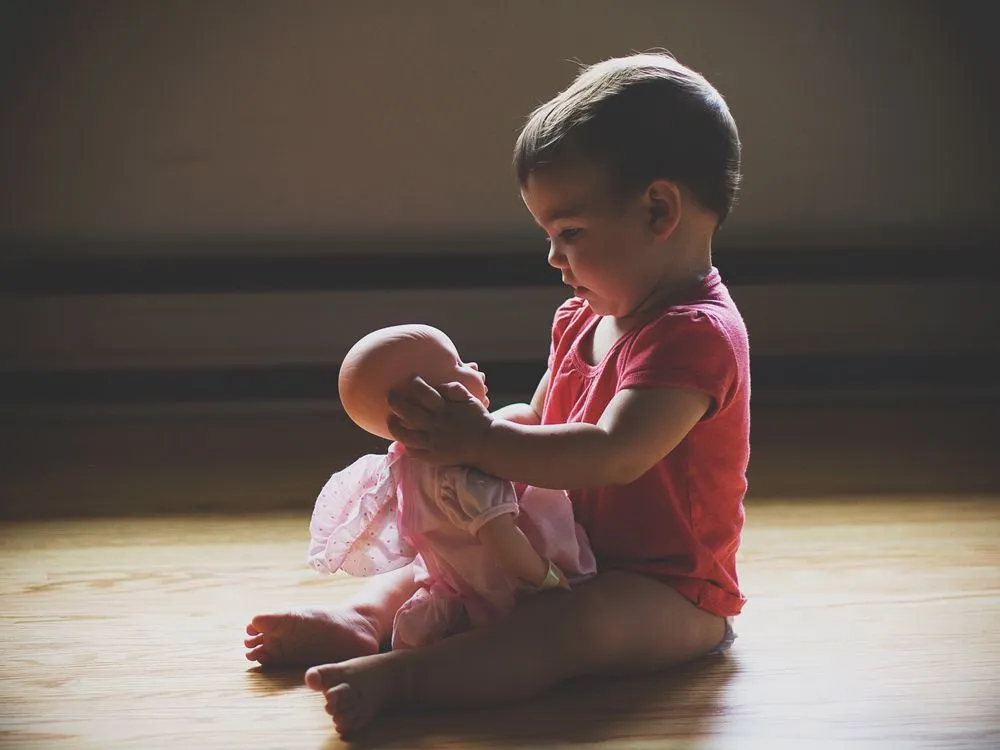
However, there are exceptions to this rule. Deaf children do not start babbling by this age, because they are unable to hear others speak and therefore lack exposure to speech by adults. However, when they are taught sign language, they can “babble” like other infants of the same age, but in sign language!
Thus, deaf babies are perfectly capable of learning language. They’re unable to speak only because they don’t receive speech input through hearing. What this really shows is that babbling is a brain-based milestone that switches on as long as a baby is exposed to some form of language, whether that’s spoken words reaching the ears or signs reaching the eyes. The key ingredient is language input, not hearing specifically, and any issue that cuts off that input can affect language learning.
A Critical Period In Language Learning
Scientists suggest that our ability to soak up language simply by being exposed to it is strongest for the first several years of childhood. This window of time when we can pick up language most easily is called the “critical period.”

The exact age at which this critical period of language learning ends is widely debated. However, many researchers hold that the ability to acquire a first language with full, native-like fluency drops off sharply by puberty. What makes this period “critical”?
During the critical period, the brain is highly “plastic”, meaning that the brain can modify itself and absorb new skills easily, since it’s still developing. The ability to do this falls sharply after puberty because the brain’s development is almost fully complete. This explains why we’re better at learning new languages at a younger age than we are later in adulthood.
You might have noticed that people who manage to learn languages at later ages are seldom able to sound as “native” as those who learn it in childhood. This shows the magic of the “critical period”!
Now, you might ask, didn’t Tarzan miss his chance to learn language during this critical period?
When discovered by the ape Kala, baby Tarzan had no clearly developed language, but is shown to be babbling, which is an appropriate language milestone for his age at that time. Realistically, his language development would have frozen at that point. It’s not possible for a babbling baby to develop further language on its own, without language input from other people.
Feral Children
The role of the “critical period” in language learning came into the limelight after a number of studies conducted on feral children. Tarzan, the protagonist, is the most familiar fictional example of a feral child.

Feral children are those who grow up away from human contact and civilization, in the wild. One of the earliest well-documented cases was a boy of about 12 found near Hanover, Germany, in 1724, who became known as “Peter the Wild Boy.” He was mute, walked on all fours, and showed animal-like mannerisms.
Similar to deaf children, feral children provide an opportunity for scientists to understand how language development progresses when an individual is deprived of speech input. In almost all cases, feral children grow up with little or no language input during their “critical period” of language learning.
This “language deprivation” has a lasting impact on their brains and cognitive development.
Reported cases of feral children show that they’re usually unable to fully learn language even when rehabilitated to live normally with humans. These cases lend strong support to the critical period of language learning: once we pass beyond it, the brain seems far less able to take on a first language, even when the right input is finally available. It’s worth a note of caution, though. Many feral children also endured severe abuse, neglect, or malnutrition, so it can be hard to separate the effect of a missed critical period from the effects of that broader trauma. That’s why scientists treat the critical period as a strongly supported idea rather than a settled, ironclad law.
In contrast to these reported cases, Tarzan is shown to be speaking to Jane when he first finds her in the movies. Based on the evidence from reports, we now know that this is almost impossible. Feral children found around 12-13 years of age are unable to learn speech after exposure. A full-grown adult like Tarzan, whose brain has crossed the critical period even further, will not be able to learn to speak from Jane.
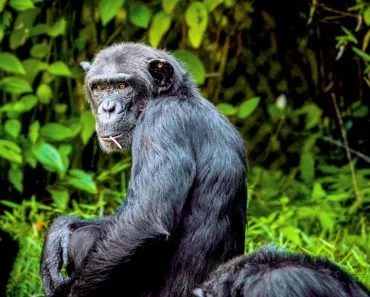
However, feral children are reported to be capable of producing non-speech sounds, such as mimicking animals, a skill they pick up from their environment. This could mean that they communicate effectively with their animal companions, as Tarzan is seen to do with gorillas in the movie.
A Final Word
It is best to take stories like this with a pinch of salt, or perhaps a whole shaker!
Fictional works like Tarzan show human babies raised in isolation being able to speak language although in a limited capacity. However, real-world examples of such feral children show that this is almost impossible. Children deprived of human speech input, such as the hearing impaired or feral children, grow up to have little or no language ability. These situations allowed scientists to understand the importance of exposure to language input in learning to speak.
We are capable of picking up language purely from our environment, without any explicit teaching, but this ability is limited to the early years of our childhood up until puberty, called the “critical period” of language learning. Feral and deaf children lack language input during this critical period, thereby ending up with limited language capability.
In the light of these findings, it’s safe to say that Tarzan would not be able to speak to Jane; he would have been essentially mute, like real-world feral children!
References (click to expand)
- The Development of Language: A Critical Period in Humans. The National Center for Biotechnology Information
- Penfield, W., & Roberts, L. (1981). Speech and Brain Mechanisms. Princeton University Press.
- Hartshorne, J. K., Tenenbaum, J. B., & Pinker, S. (2018, August). A critical period for second language acquisition: Evidence from 2/3 million English speakers. Cognition. Elsevier BV.
- Loffstadt, H., Nichol, R. J., & De Klerk, B. (2006). A feral family on our doorstep. African Journal of Psychiatry, 9(4), 231-234.
- Feral children. Encyclopaedia Britannica.