Table of Contents (click to expand)
Anesthesia uses drugs to block pain during surgery. Local anesthetics block sodium channels in nearby neurons, so pain signals never reach the brain while you stay awake. General anesthetics act on the whole central nervous system, mainly through GABA-A and NMDA receptors, switching off sensation, memory, and awareness entirely.
Sit in on any doctor-patient conversation before a surgery, and you will almost certainly hear the word ‘anesthesia’ quite a bit. Also, if you’ve ever been operated on, you already know about its effects on the body. The numbness it induces in the body is what makes it one of the most critical pre-requisites of any surgical procedure.
Now, let’s take a look at what anesthesia really is and how it achieves its task within the body.
What Is Anesthesia?
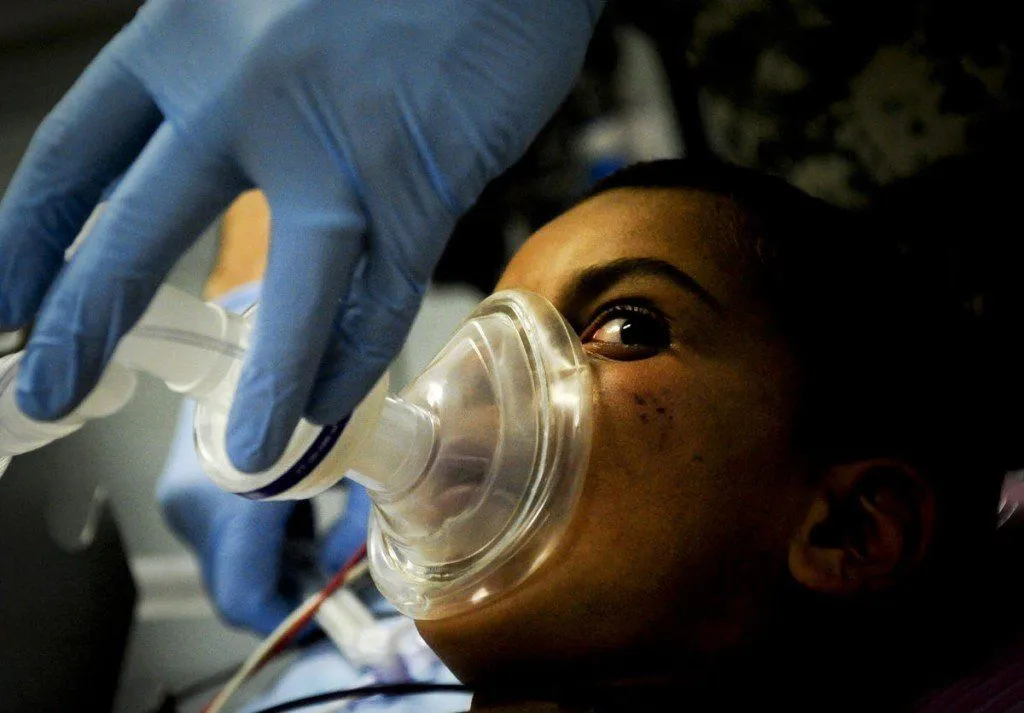
Anesthesia (also spelled ‘anaesthesia’) is an artificially-induced temporary state where a subject does not feel pain, cannot form memories, experiences muscle relaxation and basically slips into an unconscious state. Someone under the influence of anesthetic drugs is said to be anesthetized. Quite predictably, anesthetic drugs are mostly used before medical operations where the patient has to undergo a surgical procedure, so the patient is spared the pain and discomfort of the entire procedure.
Types Of Anesthesia
Anesthesia can be sorted into two broad categories, depending on how much of you it switches off. (You may also hear about ‘sedation’, or twilight sleep, which simply dials your awareness down a notch rather than out completely, but it sits on the same spectrum.)
Local And Regional Anesthesia

Local and regional anesthesia involves using an anesthetic that acts on a specific part of the body and desensitizes it to pain (usually). Local anesthetics (for example, a cream or an injection) simply numb the ‘target’ region of the body without influencing the consciousness of the patient, which means that the patient will remain awake, but will be impervious to sensations in the affected region.
What local anesthetics do is provide a temporary blockade of nerve transmission, which means that they prevent sensory neurons from sending pain signals to the brain. Under normal conditions, any sensation in a body part (including, but not limited to, pain signals) is transmitted to the brain through the movement of sodium ions across the nerve membrane, down a carefully maintained electrochemical gradient. However, the anesthetic plugs the voltage-gated sodium channels that those ions normally flow through, so the nerve can’t fire and the brain stays unaware of what’s going on at the affected site. This, for the sake of carrying out medical procedures, is a good thing, even if the numbness hangs around for a bit after the operation.

People often mistakenly use the terms local anesthesia and regional anesthesia interchangeably, but they do differ from each other. The former affects a very small portion of the body, like a tooth or a small area of the skin, whereas regional anesthesia numbs a larger part, like an entire arm or leg.

Cocaine is actually the original local anesthetic. It was first used in this way in 1884 by Carl Koller, an Austrian ophthalmologist, who numbed the surface of the eye with it for painless surgery (Source). Cocaine has since been replaced by safer, more effective drugs like lidocaine. There’s also ‘conduction anesthesia’, which involves a variety of both regional and local anesthetic techniques.
General Anesthesia
This form of anesthesia impacts the entire central nervous system of a subject by temporarily inducing a number of effects, including complete muscle relaxation, amnesia, analgesia, paralysis of the skeletal muscles (in some cases) and unconsciousness. In short, the patient loses all sensation and awareness of their surroundings, but their most important physiological functions (like breathing) are unaffected. Quite predictably, doctors use this medical technique on patients while performing surgical operations that would be intolerably painful otherwise, so they require a temporary ‘slow-down’ of the nervous system.
The most commonly used general anesthetic agents are usually a mixture of gases that can be inhaled by the patient (inhalational anesthetics). Diethyl ether, which was used as a recreational drug in centuries past, was the first general anesthetic to catch on. Its public debut came on October 16, 1846, when Boston dentist William Morton put a patient to sleep with ether at Massachusetts General Hospital while a surgeon removed a neck tumor, a day still remembered as ‘Ether Day’.
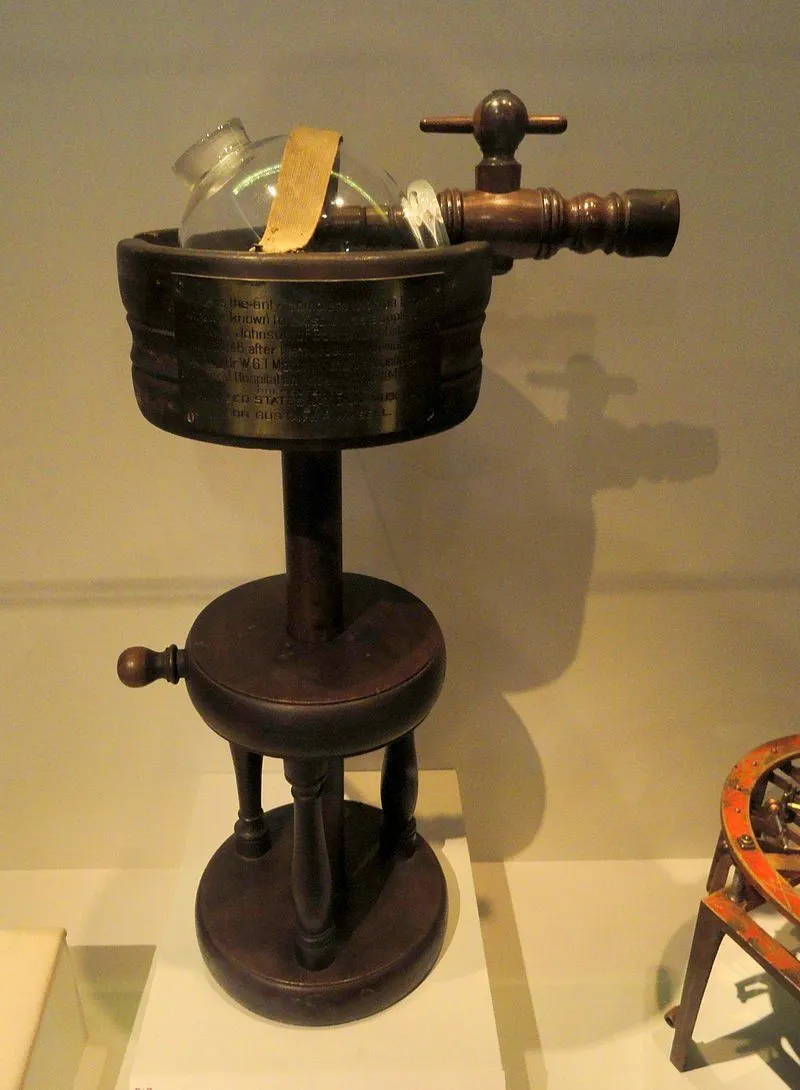
Chloroform was also used as an anesthetic to induce unconsciousness before medical procedures in the 19th century. However, these agents were gradually replaced by more reliable and effective inhalants, such as nitrous oxide (aka laughing gas) and various derivatives of ether, including sevoflurane, isoflurane, and desflurane.
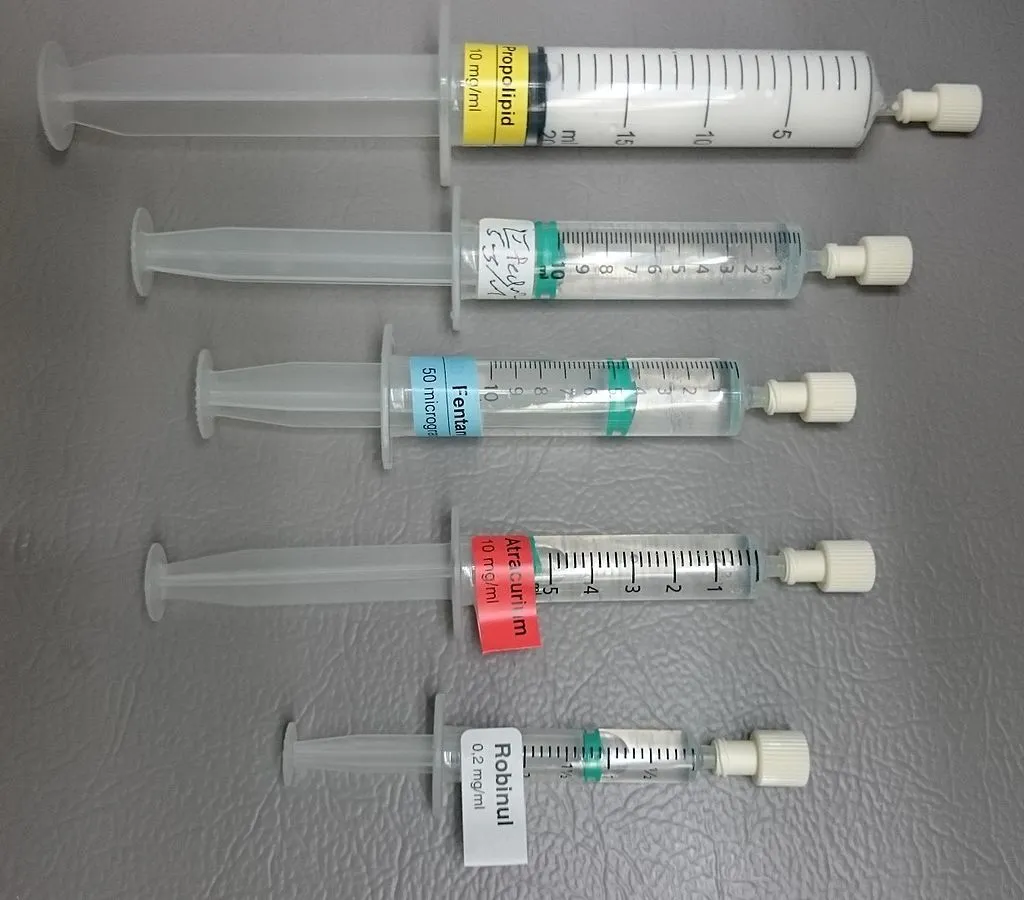
Inhalational anesthesia is usually accompanied by intravenous anesthesia, which involves introducing intravenous agents like opioids (e.g., fentanyl) and sedatives (e.g., propofol) to reduce pain and induce unconsciousness, respectively. Propofol, the milky-white drug you may have seen flowing into an IV line in movies, is the modern workhorse for sending patients off to sleep in the first place; ketamine is another, with the added quirk of being an effective painkiller in its own right.
A rather interesting thing about general anesthetics is that, despite their use for more than 175 years, we still don’t fully understand their mechanism of action, i.e. exactly how they numb the entire nervous system so completely. What we do know is that they work at the synapses, the junctions where one nerve cell passes a signal to the next. The leading idea is that general anesthetics turn up the brain’s main ‘off’ switch (the GABA-A receptor, which calms neurons down) while turning down its main ‘on’ switch (the NMDA receptor, which excites them). Agents like nitrous oxide and ketamine lean heavily on that second route. Other ion channels, including certain potassium and sodium channels, seem to pitch in too, which is part of why no single, tidy explanation has ever quite covered every anesthetic.
One eerie consequence of that uncertainty is a rare phenomenon called anesthesia awareness, where a patient briefly regains some awareness during surgery. It is genuinely uncommon, turning up in roughly 1 to 2 of every 1,000 general anesthetics, and modern brain-activity monitors and careful dosing keep it that way. Most people who experience it recall vague sounds rather than pain.
For a more visual representation of anesthesia and how it works, check out this Ted-Ed video, which beautifully explains the science of anesthesia:
The work of an anesthesiologist is very critical to any medical operation, and requires the utmost care and attention on their part. It also requires a lot more calculation than simply handing the patient a bottle of booze to numb the pain, as was actually done prior to the invention of anesthetics.
References (click to expand)
- Lidocaine. StatPearls. NCBI Bookshelf.
- Inhalational Anesthetic. StatPearls. NCBI Bookshelf.
- Carl Koller. Encyclopaedia Britannica.
- 175th Anniversary of the First Public Demonstration of the Use of Ether. Massachusetts General Hospital.
- Waking Up During Surgery. American Society of Anesthesiologists.
- How Does Anesthesia Work? Scientific American.