Table of Contents (click to expand)
Bilinguals use the same core language regions for both tongues, but a deep structure called the left caudate acts as a switch, detecting which language is in use and steering the brain to the right one each time a word is heard or spoken.
Can you understand more than one language? Can you communicate with people in a language other than your mother tongue? If yes, then you’re a bilingual!
A person who can understand and speak more than one language is considered a bilingual or multilingual individual.
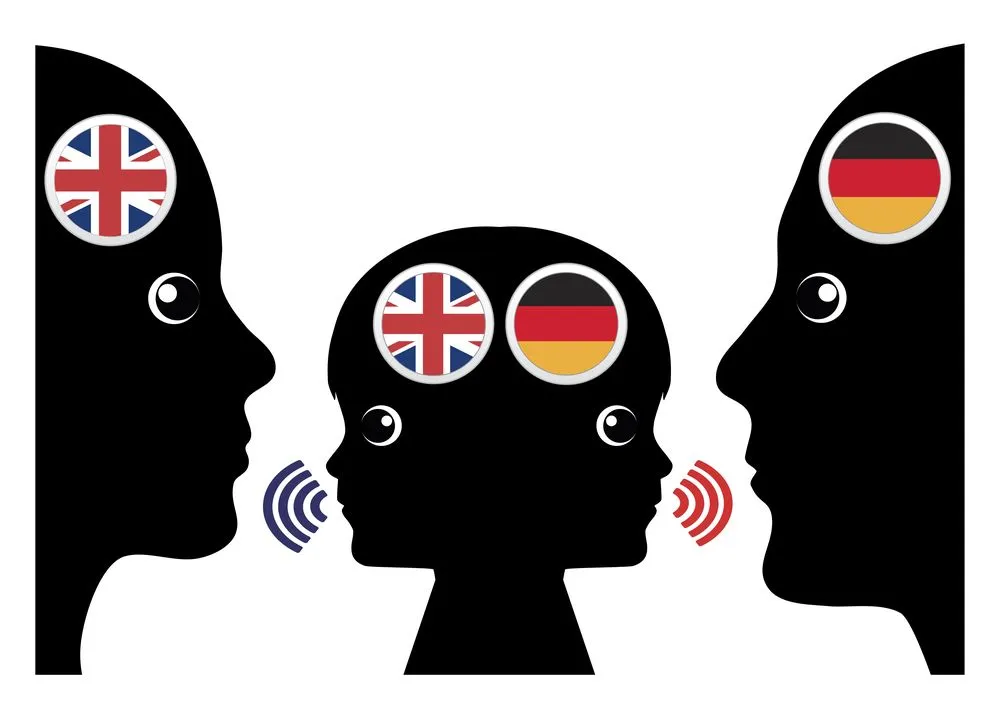
In the brain, one hemisphere usually takes the lead on language, and for most people that is the left hemisphere. This holds true for roughly 95% of right-handers, and it’s tempting to assume left-handers must be the mirror image. They aren’t: most left-handers (around 70-85%) are also left-hemisphere dominant for language, and only a minority process language mainly on the right or across both hemispheres. At this point, many questions might arise in relation to language processing.
Will being bilingual affect the thought process? Will a bilingual brain get confused? Or will that bilingual skill make a person smarter? Above all, how does the brain differentiate between two languages? This article answers all these questions and more!
The Brain: A Map
The human brain stores words across several different regions of the brain. It’s more like a map, and we’re constantly navigating through it to process language. For example, the word “top” is located in two different locations in the brain, namely clothing and numbers.
The brain generally stores words in groups of similar types. Words related to visual experiences are grouped together and those related to social activities are grouped together and so on. Thus, when a word is heard, it is added to similar groups, and the information is therefore processed.
Similarly, when a word is about to be delivered, the brain searches for the information in the related groups and determines the word that needs to be delivered. However, for bilingual individuals, the mapping is quite a bit more complex.
Language Processing In The Brain
Four lobes of the brain play a vital role in understanding and producing language.
- The frontal lobe is involved in planning out what to speak. Within this is the Broca’s area, which is responsible for language production and grammar. This area combines sounds to produce words. The frontal lobe also holds the motor cortex, which sends the commands that actually move the tongue, throat and lips to articulate those words.
- The parietal lobe integrates the sensory feedback (touch and the sense of position) that fine-tunes those movements, so the tongue and lips land where they should as you speak.
- The temporal lobe performs auditory processing. Within this is the Wernicke’s area, which is important for language, semantics, word meaning, comprehension and vocabulary. This region plays a role in understanding a language and speaking in a sensible way.
- The occipital lobe is responsible for visual processing. This region also helps to read people’s lips, gestures and facial cues.
- The cerebellum and brain stem control involuntary processes, such as continuing to breathe while talking!
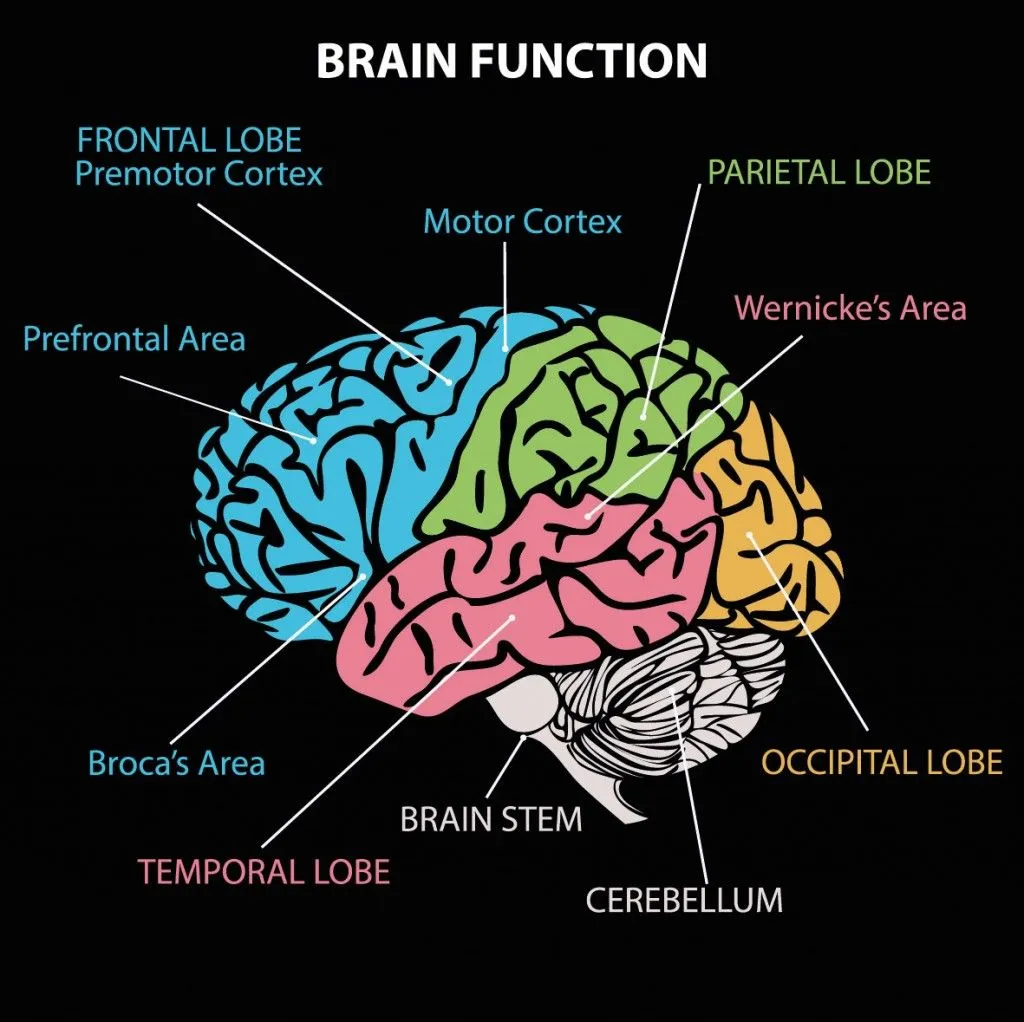
You hear a sound with the help of your ears, and the sound is then transmitted to the temporal lobe via the auditory canal. The signal then reaches the Wernicke’s area. Here the brain searches for the words that match with the received signal.
Once the word is found, the brain has the complete idea behind the received sound signal and begins planning the response in the frontal lobe. (If you were reading rather than listening, the occipital lobe would also pitch in to make sense of the written or visual cues.) The frontal lobe determines what and how to respond with the assistance of Broca’s area, which works out the grammar, while the motor cortex drives the muscles that finally produce the spoken response.
When The Wiring Breaks: Aphasia
The Broca’s and Wernicke’s areas work together to understand and produce language meaningfully. Damage to either one results in a condition called aphasia. If Broca’s area is harmed, speech becomes slow and effortful, with words coming out in a halting trickle. If Wernicke’s area is harmed, speech stays fluent and grammatical-sounding yet drifts into strings of words that carry little real meaning.
Bilingual Brain
Only the human brain has the unique ability to speak and understand multiple languages. The brain functioning for a bilingual person is relatively similar to that of a monolingual person. Bilinguals merely activate the same regions of the brain when they hear or produce a sound, regardless of the language being used.
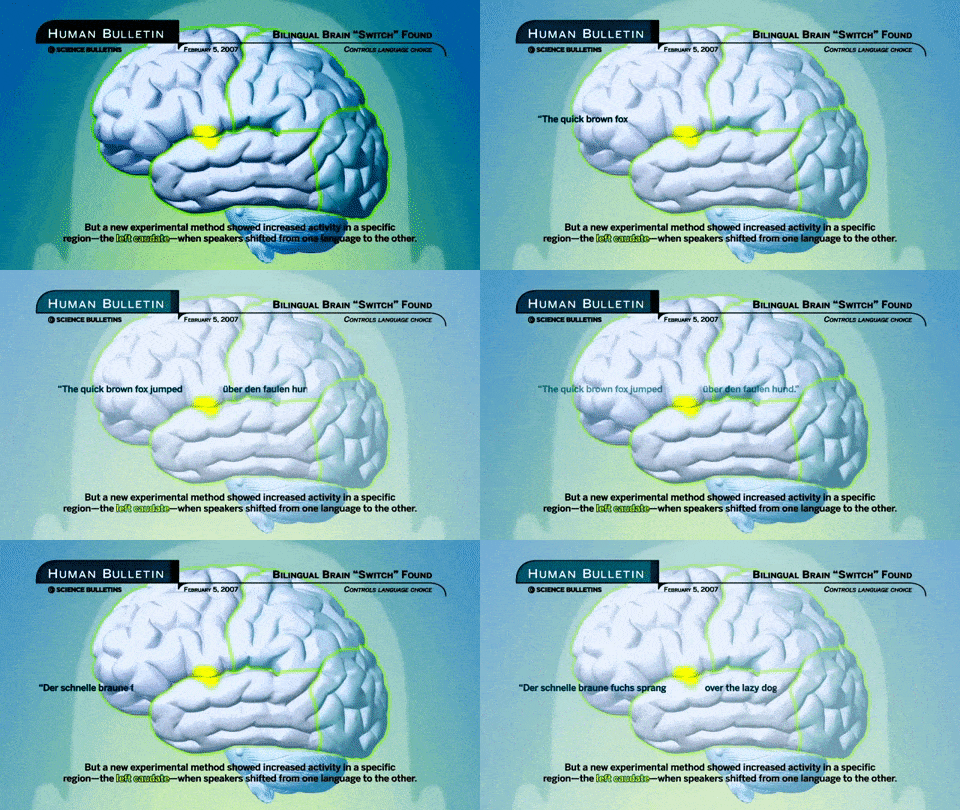
However, an additional activity flares up in the left caudate of the brain in bilinguals when speakers shift from one language to another. Brain-imaging work by Crinion and colleagues, published in Science in 2006, pinned this down: the left caudate responds to a change in language, in effect monitoring which language is in play and keeping the two from bleeding into each other. The caudate is not part of the outer cortex at all. It sits deep inside the brain, within a cluster of structures called the basal ganglia, well placed to act as a control hub.
Another region that helps in language switching is the prefrontal cortex. This region directs attention, switches back and forth between tasks and lets the brain think flexibly. It makes the brain more attentive to the sounds of the languages in which you are most fluent. Together, the caudate and the prefrontal cortex form the core of the switching machinery that bilinguals rely on.
As previously mentioned, the brain stores words in groups of similar types. In bilinguals, the brain first categorizes the language to which the word belongs, and then groups them accordingly.
Effects Of Bilingualism
Being bilingual makes you more attentive to events around you, it gives your brain good exercise, and makes you more open-minded. Bilingualism increases brain activity and promotes cognitive control. It also helps people switch between tasks more easily, since bilinguals are already fluent in switching between languages.
Bilingual children seem to be more empathetic and can see things from different perspectives than their own. They also become accustomed to diversity and different cultures. The level of adaptability in bilingual individuals is comparatively high. Several research studies also suggest that speaking multiple languages can hold back the onset of dementia. In one widely cited study by Bialystok, Craik and Freedman, bilingual patients began showing symptoms of Alzheimer’s-type dementia about four to five years later than monolingual patients with similar education. Bilingualism doesn’t prevent the underlying disease, but the lifelong mental workout of juggling two languages appears to build up a kind of cognitive reserve that delays when the symptoms surface.
References (click to expand)
- Crinion, J., et al. (2006). Language Control in the Bilingual Brain. Science. PubMed, National Library of Medicine.
- Bialystok, E., Craik, F. I. M., & Freedman, M. (2007). Bilingualism as a protection against the onset of symptoms of dementia. Neuropsychologia. PubMed, National Library of Medicine.
- Where Words Are Stored: The Brain's Meaning Map. Scientific American.
- Bialystok, E. (2011, December). Reshaping the mind: The benefits of bilingualism. Canadian Journal of Experimental Psychology / Revue canadienne de psychologie expérimentale. American Psychological Association (APA).