Table of Contents (click to expand)
Three of India's most famous scientists are Satyendra Nath Bose (1894-1974), whose 1924 paper gave Bose-Einstein statistics and the name "boson"; C.V. Raman (1888-1970), who discovered the Raman effect in 1928 and won the 1930 Nobel Prize in Physics, becoming the first Asian science laureate; and Homi J. Bhabha (1909-1966), the theorist behind Bhabha scattering and the founder of India's nuclear program.
Scientists are the superheroes who push the boundaries of human knowledge to new levels. When it comes to Indian scientists, the list of eminent figures is long. Let's take a look at three of the most influential, and how they changed the world as we know it.
Satyendra Nath Bose
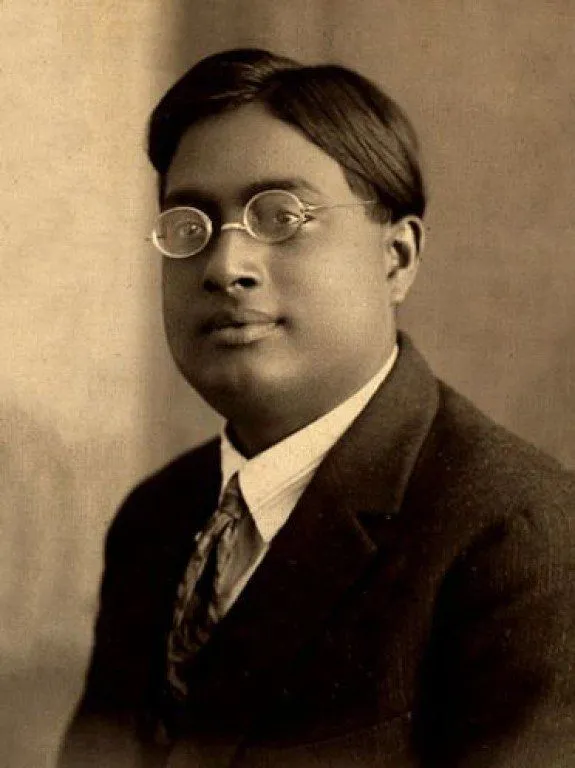
Satyendra Nath Bose was a theoretical physicist from Calcutta (now Kolkata), West Bengal. He was born on January 1, 1894 and died on February 4, 1974. A largely self-taught scholar and polymath, his range of interests included physics, mathematics, chemistry, biology, mineralogy, philosophy, the arts, literature, and music.
While working toward his Bachelor of Science degree, he also took up applied mathematics on the side. He passed his final exams at the top of his class in 1913, and went on to complete a Master of Science in Applied Mathematics in 1915, again taking top honors. The marks he scored in his MSc final examinations are still a record at the University of Calcutta.
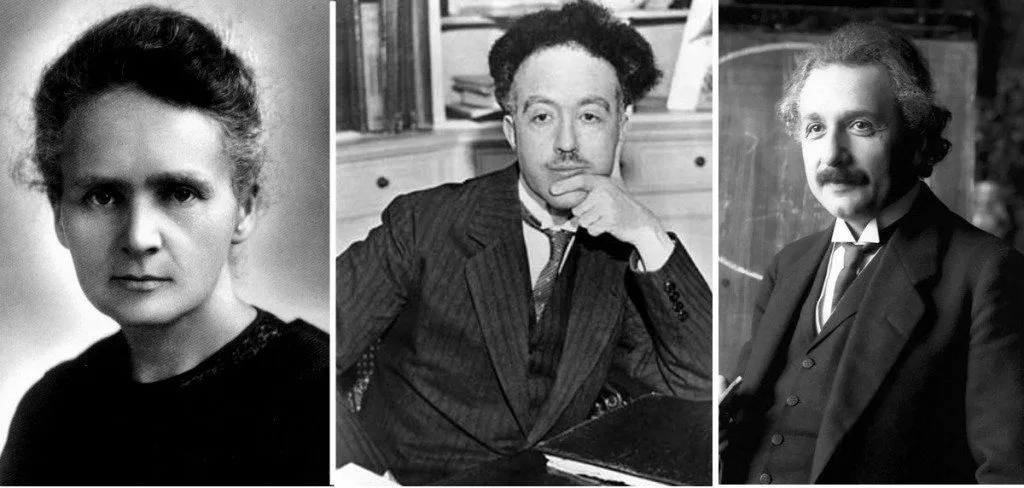
Satyendra Bose presented a plethora of papers starting in 1918 on theoretical physics and pure mathematics. The most consequential of them, written in 1924, derived Planck’s blackbody radiation law from scratch using a novel way of counting photons that treated them as fundamentally indistinguishable. When he first tried to publish the paper, it was rejected. Undaunted, Bose took a leap of faith and mailed it to none other than the scientific giant of the time, Albert Einstein. Einstein immediately recognized the importance of the work, translated it into German himself, and arranged its publication in the leading European journal Zeitschrift für Physik. The recommendation opened doors across Europe, and Bose spent the next two years working in Paris and Berlin. During this time, he met Marie Curie, worked in Louis de Broglie’s X-ray laboratory at the Radium Institute, and later collaborated with Einstein himself. Together, their work seeded what we now call Bose-Einstein statistics, the framework that governs an entire class of particles called bosons in his honor.
Homi Jahangir Bhabha
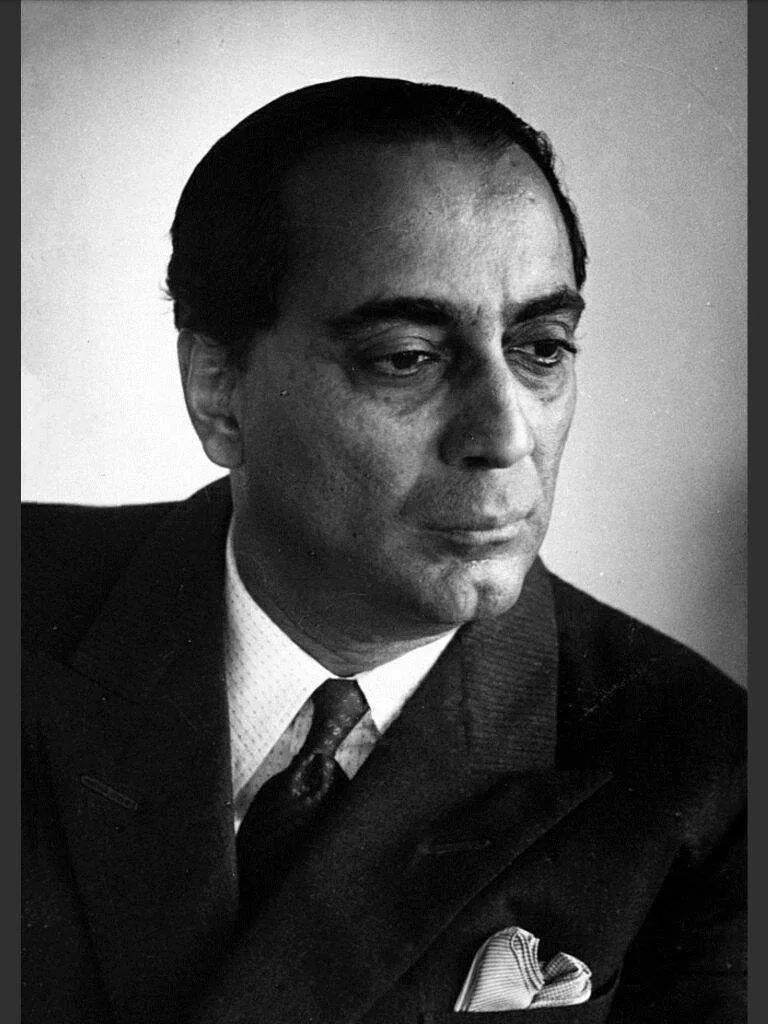
Homi Jehangir Bhabha is most commonly referred to as the Father of the Indian Nuclear Program. He was born on October 30, 1909, to an illustrious family. He was related to the famous industrialist Sir Dorab Tata, his uncle by marriage, who was a crucial figure in helping to expand and grow the Tata Group.
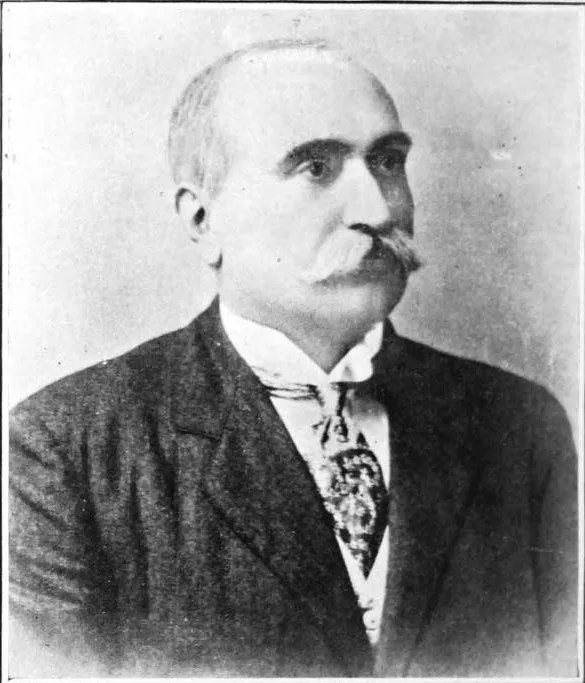
His formative years in education were spent at the Cathedral and John Connon School in Bombay, and then at Elphinstone College from the age of 15, where he completed his Senior Cambridge Examination with honors. He went on to the Royal Institute of Science in Bombay in 1927. However, he was soon pulled out by his father and Sir Dorab Tata to pursue Mechanical Engineering at Gonville and Caius College, Cambridge, England. This was because the family wanted him to eventually join Tata Iron and Steel in Jamshedpur as a metallurgist.
His father understood Homi’s pull toward mathematics, and was willing to finance further study in the subject if Homi could first secure a first-class result in the Mechanical Sciences Tripos. The Tripos is the famous Cambridge examination that qualifies students for a Bachelor’s degree. Bhabha duly delivered, and by the early 1930s the world of theoretical physics, especially quantum mechanics and the brand-new field of nuclear physics, was attracting the greatest minds in science. He switched from Mathematics to theoretical physics, never looking back.
In 1935, he was awarded his PhD at Cambridge for a thesis on cosmic radiation, building on his 1933 paper “The Absorption of Cosmic Radiation” that had won him the prestigious Isaac Newton Studentship. Over the next few years, he split his time between Cambridge, Copenhagen, and Zürich, working alongside Niels Bohr, Wolfgang Pauli, and Enrico Fermi. In 1935 he published the paper that introduced the differential cross-section for electron-positron scattering, a process now known as Bhabha scattering and still used at particle accelerators to measure luminosity. Two years later, working with Walter Heitler, he formulated the cascade theory of cosmic ray showers, which finally explained the soft component of cosmic rays observed by Bruno Rossi and Pierre Auger.
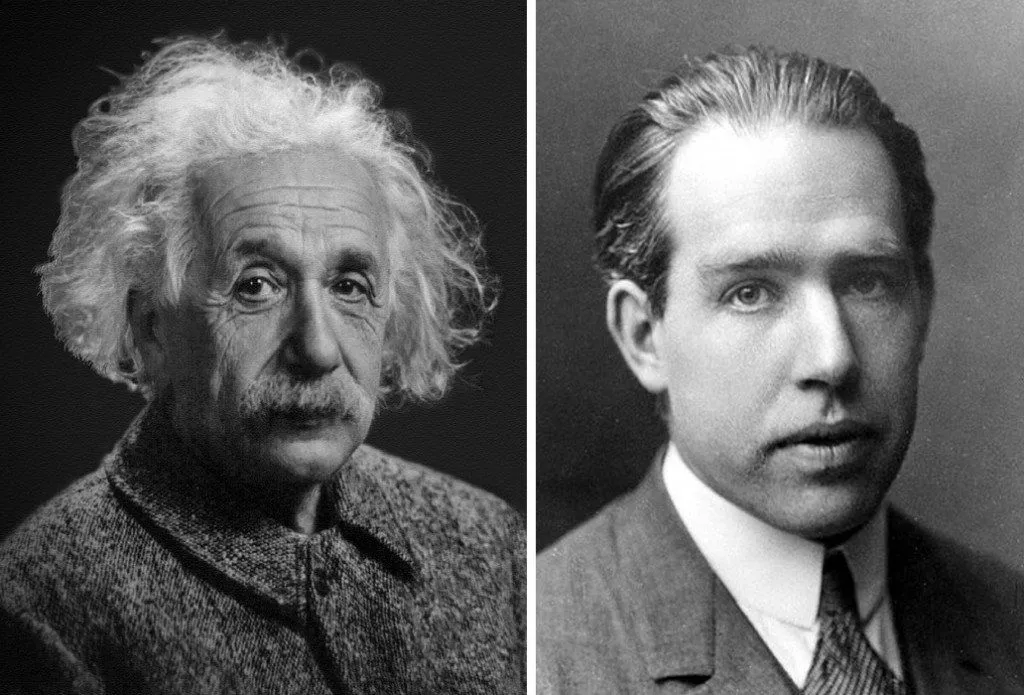
In September 1939, Bhabha was on a brief holiday in India when World War II broke out, and the conflict made an immediate return to England impossible. He took up a role as a Reader in the Physics Department of the Indian Institute of Science in Bangalore, where the Physics Department was then headed by the renowned C.V. Raman. He received an individual research grant from the Sir Dorab Tata Trust, which he used to establish the Cosmic Ray Research Unit at the Institute. Later, on March 20, 1941, Homi was elected a Fellow of the Royal Society, London. With the help of J. R. D. Tata, he played an instrumental role in the establishment of the Tata Institute of Fundamental Research in Mumbai. After his death in an Air India plane crash on January 24, 1966, the Atomic Energy Establishment at Trombay (originally founded on January 3, 1954) was renamed the Bhabha Atomic Research Centre in his honor on January 12, 1967.
C.V. Raman
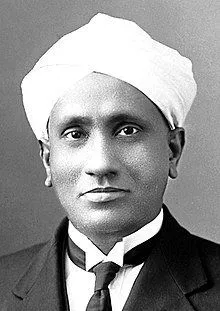
Sir Chandrasekhara Venkata Raman was born on November 7, 1888, in Tiruchirappalli (then called Trichinopoly), in what was then the Madras Presidency of British India and is now part of the state of Tamil Nadu. His father was a lecturer in mathematics and physics at a college in Visakhapatnam, so Raman grew up surrounded by science. He finished higher secondary school at the age of 13. He later went on to obtain a Bachelor of Arts from the University of Madras, where he stood first in his class and won a gold medal in physics. In 1907, he earned a Master of Science degree with the highest distinction from the same university. Following this, he joined the Indian Finance Service as an Assistant Accountant General in Calcutta.
In 1917, Raman resigned his government post and took up the Palit Chair of Physics at the University of Calcutta. Alongside his teaching, he carried out research at the Indian Association for the Cultivation of Science (IACS), where he eventually became Honorary Secretary. He also founded the Indian Journal of Physics and served as its first editor.
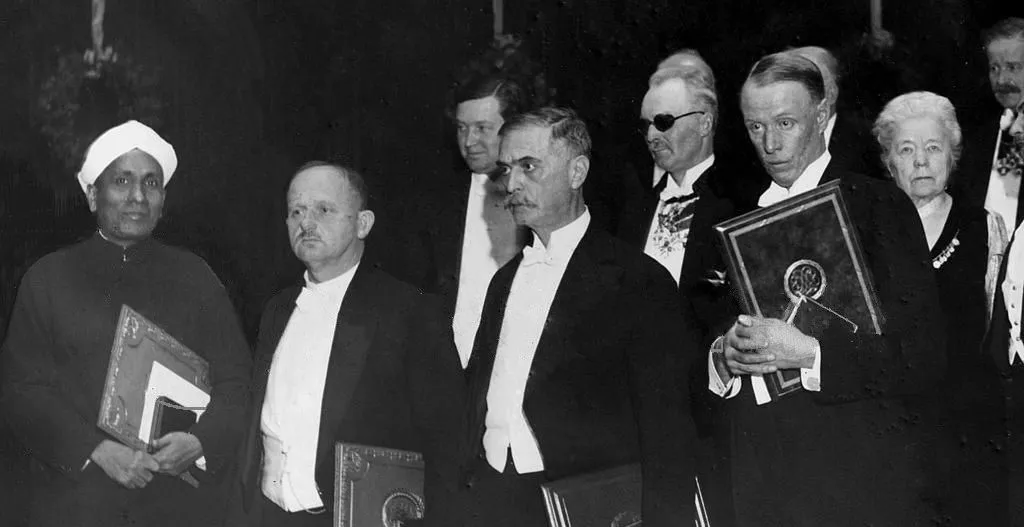
On February 28, 1928, working with his student K.S. Krishnan, Sir C.V. Raman discovered that when monochromatic light passes through a transparent substance, a small fraction of the scattered light comes out at shifted wavelengths, carrying information about the molecules it has interacted with. This inelastic scattering of light became known as the Raman effect, and India still celebrates National Science Day every year on February 28 in its honor. In 1930, Raman was awarded the Nobel Prize in Physics for the discovery, becoming the first Asian and the first non-white scientist to win a Nobel in any of the sciences.
The award was not without controversy. The Russian physicists G.S. Landsberg and L.I. Mandelstam had observed the same effect in quartz crystals almost simultaneously, and their results were published shortly after Raman’s. The Nobel Committee nevertheless gave the prize to Raman alone, citing several reasons:
- Landsberg and Mandelstam’s paper cited Raman’s earlier work, which the Committee read as a lack of fully independent interpretation.
- The Russian observations were limited to crystals, whereas Raman and Krishnan had demonstrated the effect in solids, liquids, and gases, establishing it as a universal property of matter.
- Raman’s method had already been applied to a wide range of problems in molecular physics.
- The effect was proving useful for probing the symmetry properties of molecules and nuclear-spin questions in atomic physics.
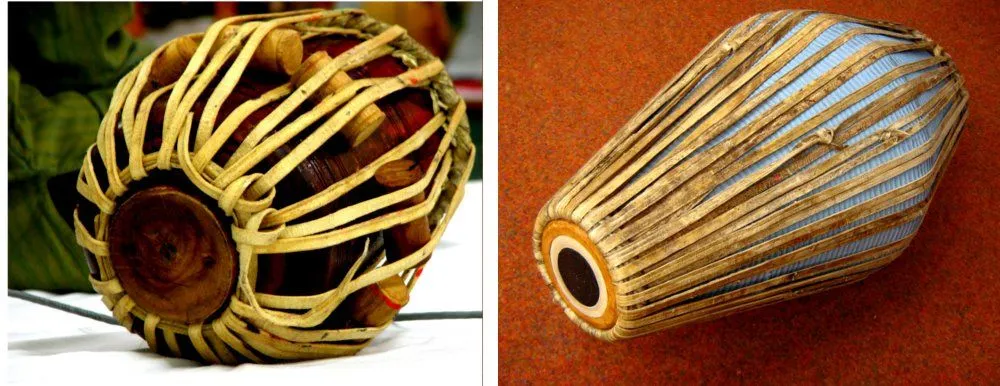
Raman’s work also extended into the acoustics of musical instruments. He was among the first to analyze the harmonics of Indian percussion instruments such as the tabla and the mridangam, showing that, unlike most drums, these produce well-defined musical pitches.
These three are far from the only Indian scientists who deserve a place on a global hall of fame. Three more, in particular, went on to reshape the worlds of mathematics, astrophysics, and molecular biology.
Srinivasa Ramanujan

Srinivasa Ramanujan was born on December 22, 1887, in Erode, in what is now the Indian state of Tamil Nadu. Unlike most of the names on this list, he had almost no formal training in mathematics. As a teenager he came across a worn book of theorems and worked through them on his own, filling a set of notebooks with thousands of results that researchers are still mining today.
In January 1913, Ramanujan posted a letter packed with unproven formulas to the Cambridge mathematician G.H. Hardy. Several other British mathematicians had already brushed him off, but Hardy realized that no one could have invented results so strange and so beautiful unless they were true. He arranged for Ramanujan to sail to England, where the young clerk arrived in April 1914 and began one of the most remarkable partnerships in the history of mathematics.
Ramanujan's work ranged across number theory, infinite series, continued fractions, and the distribution of prime numbers. He earned a Bachelor of Arts by Research in 1916 for a thesis on highly composite numbers, and together with Hardy he found a near-magical formula for the partition function, which counts the number of ways a whole number can be written as a sum. On May 2, 1918, he was elected a Fellow of the Royal Society, one of the youngest in its history, and that October he became the first Indian elected a Fellow of Trinity College, Cambridge.
One famous story captures his gift. When Hardy visited him in a London hospital and remarked that his taxi number, 1729, seemed a rather dull one, Ramanujan instantly replied that it was the smallest number expressible as the sum of two cubes in two different ways: 13 + 123 and 93 + 103. Worn down by illness, he returned to India and died on April 26, 1920, at just 32. His "lost notebook," rediscovered in 1976, and his enigmatic mock theta functions are still feeding modern research. His story reached a wide audience through Robert Kanigel's biography The Man Who Knew Infinity and the 2015 film of the same name.
Subrahmanyam Chandrasekhar

Subrahmanyam Chandrasekhar, a nephew of C.V. Raman, was born on October 19, 1910, in Lahore, then part of British India. In 1930, while still only 19 and sailing to England to begin his studies at Cambridge, he worked out a result that would unsettle astronomy. By combining Einstein's relativity with the new quantum mechanics, he calculated that a white dwarf, the dense ember left behind when a Sun-like star dies, cannot weigh more than about 1.4 times the mass of the Sun.
This ceiling is now called the Chandrasekhar limit. Below it, a white dwarf is held up indefinitely by the pressure of its tightly packed electrons. Above it, gravity wins, and the star collapses into something far denser, a neutron star or a black hole. The idea was so far ahead of its time that the most famous astrophysicist of the day, Arthur Eddington, publicly ridiculed it at a 1935 meeting of the Royal Astronomical Society. Chandrasekhar turned out to be right, and Eddington wrong.
In 1937, Chandrasekhar moved to the University of Chicago, where he spent the rest of his career and edited The Astrophysical Journal from 1952 to 1971. In 1983 he shared the Nobel Prize in Physics with William A. Fowler for his theoretical studies of the structure and evolution of the stars. When NASA launched one of its great space telescopes in 1999, it named the Chandra X-ray Observatory in his honor, a fitting tribute to a man who spent his life decoding how stars live and die.
Har Gobind Khorana

Har Gobind Khorana was born on January 9, 1922, in Raipur, a small village in the Punjab region of British India, now part of Pakistan. Born into a poor family, he won scholarships that carried him from India to England, and on to a research career in North America that would help crack one of biology's deepest puzzles: the genetic code.
Every living thing stores its instructions in DNA, written in a four-letter chemical alphabet. Working at the University of Wisconsin-Madison, Khorana built synthetic strands of DNA and RNA with precisely chosen sequences, then used them to reveal which combinations of letters specify which amino acids, the building blocks of proteins. This painstaking chemistry helped confirm that the code is read in three-letter "words" called codons. For interpreting the genetic code and its function in protein synthesis, he shared the 1968 Nobel Prize in Physiology or Medicine with Robert W. Holley and Marshall W. Nirenberg.
Khorana did not stop there. In 1970, his team announced the first complete chemical synthesis of a gene, assembling a functional stretch of DNA from scratch in the laboratory. The achievement helped lay the groundwork for modern genetic engineering and biotechnology. He spent the later part of his career at the Massachusetts Institute of Technology and died on November 9, 2011, at the age of 89.
Even this expanded list barely scratches the surface. Other honorable mentions include the 5th-century astronomer Aryabhata, who proposed that the Earth rotates on its own axis, and Dr. A.P.J. Abdul Kalam, the aerospace engineer who later served as President of India.
References (click to expand)
- Satyendra Nath Bose | Biography & Facts. Encyclopaedia Britannica.
- Satyendra Nath Bose. Wikipedia.
- Homi Bhabha | Physicist, Biography & Facts. Encyclopaedia Britannica.
- Homi J. Bhabha. Wikipedia.
- Sir Venkata Raman - Biographical. The Nobel Prize in Physics 1930. NobelPrize.org.
- C.V. Raman | Life, Career, Nobel Prize, Biography & Facts. Encyclopaedia Britannica.
- Srinivasa Ramanujan - Biography. MacTutor History of Mathematics, University of St Andrews.
- Srinivasa Ramanujan. Wikipedia.
- The Nobel Prize in Physics 1983 - Subrahmanyan Chandrasekhar. NobelPrize.org.
- Subrahmanyan Chandrasekhar. Wikipedia.
- The Nobel Prize in Physiology or Medicine 1968 - Har Gobind Khorana. NobelPrize.org.
- Unraveling the Genetic Code: The Legacy of Har Gobind Khorana. PMC, National Center for Biotechnology Information.