Table of Contents (click to expand)
Pupils dilate to let more light into the eye in dim conditions, and also widen in response to arousal, fear, pain, or mental effort. The widening is driven by the iris dilator muscle, which is controlled by the sympathetic ‘fight or flight’ nervous system acting through the neurotransmitter norepinephrine. The opposite muscle, the iris sphincter, constricts the pupil under parasympathetic control via acetylcholine.
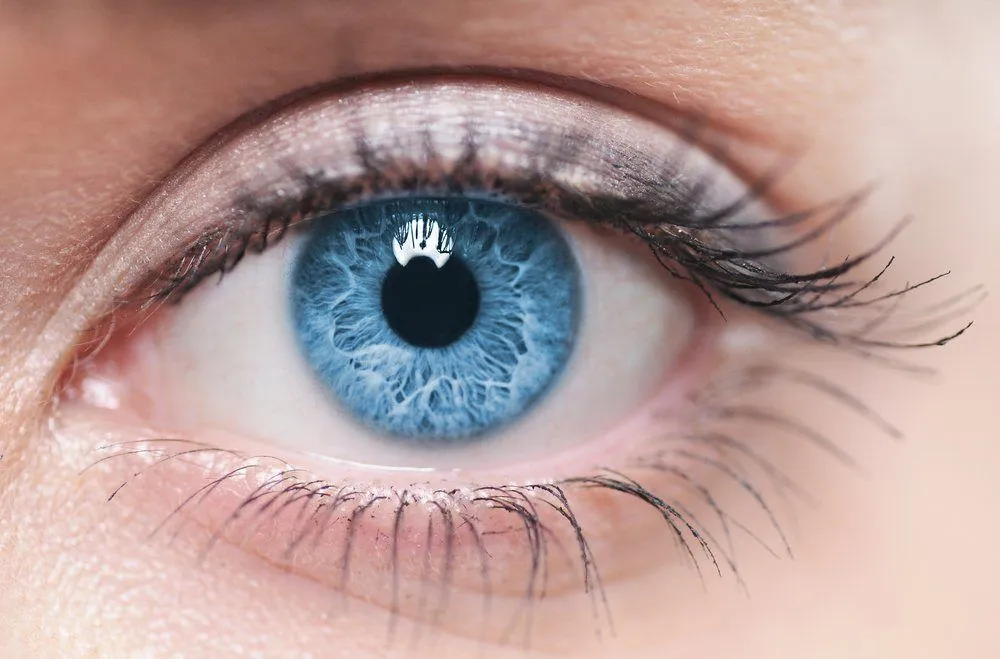
Our eyes appear to hold a miniature Universe. One can witness in them a collection of the most peculiar and fascinating phenomena we find in the dark, vast expanse of the cosmos. The pale white substrate, known as the sclera, is reminiscent of the alternating white stripes on the surface of Jupiter. The bulge in the middle, known as the iris, when scrutinized, appears to encapsulate a dense, muddled cloud of glinting smoke, like debris surrounding a raging nebula. Finally, the pitch-black dot in the center, known as the pupil, mimics the tiniest of black holes, denying any light or color from escaping its sinister pull.
Mydriasis And Miosis
Intermittently, the horizon of this black hole widens or shrinks, as some physiological processes cause the pupil to dilate or contract, phenomena medically called Mydriasis and Miosis, respectively. As the centuries-old saying goes, the eyes are the window to your soul, and modern neuroscience couldn’t agree more. If not revealing something ambiguous as the soul, the eyes surely offer a window to your brain, and the pupil’s dilation speaks volumes about our cognitive and emotional affairs.
Eye-Opener
The evolution of the eye was set in motion to essentially achieve a single objective – vision. Subsequently, gradual modifications have led to richer features, such as color, resolution and depth, indispensable features without which identifying prey and predator, comprehensive mapping of our environment, and differentiating between its aspects would have been impossible.
The human eye, as evolutionary biologist Richard Dawkins repeatedly insists, is one of the most exquisite and constructive tools that nature has ever developed. It is nothing less than a technological marvel. Of course, it has its flaws, but the product, considering the capital at nature’s disposal, is remarkable. Nature has given thought, albeit not extensively, to every mechanism necessary to actuate a viewing device. It is a fine example of the compromise between the parsimoniousness and meticulousness that nature so regularly achieves in each of its spectacles.

Consider one of these mechanisms carried out by the pupil. Its primary job is to regulate how much light reaches the lens. That expansion or contraction is an involuntary reflex, known as the pupillary light reflex. You might have noticed how the black dot shrinks when seen in broad daylight and enlarges on dim evenings. A large pupil allows the eye to welcome a larger volume of light and attain higher clarity in the absence of suitable illumination. On the other hand, the pupil becomes smaller when subjected to a glut of light, as excess exposure could have deleterious effects on the eye’s lens and retina.
The two functions are performed by two distinct muscles on the iris. The sphincter muscles contract the pupil like a drawstring, whereas another set of muscles, appropriately termed dilator muscles, open the pupil like a conical Chinese hand fan with spokes radiating outward from the center of the iris. As I’ve mentioned, these changes are involuntary or reflexive and correspond to changes in environmental conditions. However, mechanically sliding the curtains is not its only purpose; there is more to it than meets the eye.
A Window Into Your Mind
Darren Aronofsky’s Requiem for a Dream is one the most popular and lucid films on the psychology of a drug addict and the fatal effects of the lifestyle that leads to his or her undoing. However, Aronofsky, known for his unusual cinematography, doesn’t show drug abuse explicitly. We see the needle and the coiled note, but we rarely see them in action. What he prefers to project are clips that convey the administration of a drug implicitly. One of them is a vivid close-up of his character’s gleaming eyes.

The single-second clip shows the immediate expansion or contraction of their pupils as a response to the drug’s surge in their blood. When the character abuses a stimulant or an “upper”, the pupils dilate, whereas, when he abuses a depressant or a “downer”, the pupils become “pinned” or shrunk. Drugs offer an expedient way to deceive the brain into thinking that it is, say, stimulated. Of course, the stimulation is artificial, but the physiological responses they inspire give us insight into our behavior under normal settings.
For instance, dilated pupils of a cocaine user tell us that the change in their diameter is a function of stimulation. For instance, it has been repeatedly shown that pupils dilate when people are sexually aroused. This is because the dilatory muscles are innervated by the sympathetic nervous system, a module responsible for the ‘fight or flight’ response. It contains what are called adrenergic receptors, which, as the name suggests, pertains to the impulsiveness of an adrenaline rush. These receptors are stimulated by norepinephrine, a chemical that stimulants such as cocaine and amphetamines flood the synapse with (cocaine by blocking its reuptake, amphetamines by forcing its release). Overactivity of these receptors causes a user to remain in a state where he constantly looks for potential threats or perils; put more simply, they become paranoid.
The sympathetic nervous system is responsible for all the symptoms associated with arousal, including an elevated heart rate and perspiration. It is the activation of this system that renders our pupils severely dilated. While it is the cortex that executes the complex, secondary tasks of the visual system, the sympathetic system, a highly primitive module, governs what suits it best. This pupil dilation isn’t exclusive to arousal, but also relates to primary emotions situated on the other extreme of the spectrum, such as disgust and pain. However, the nervous system eventually develops a tolerance, and pupils revert to their original size once they have grown accustomed to the odious scene in front of them, something the artificial, unceasing simulation of drugs denies.
On the other hand, the sphincter muscle is innervated by the parasympathetic nervous system, which acts through acetylcholine rather than norepinephrine. Opioids such as heroin and morphine famously produce pinpoint pupils, but not by relaxing anything. They latch onto mu-opioid receptors in a small midbrain region called the Edinger-Westphal nucleus, which in turn cranks up the parasympathetic signal traveling down the oculomotor nerve to the iris. The sphincter actively clamps the pupil shut. It seems, however, that the changes in pupil size are byproducts of the nervous system processing vital information.
Mental Strain
Pupil size is also sensitive to mental activity. For instance, subjects in a study tested with difficult math problems demonstrate a slightly more enlarged pupil than subjects who are tested with easier problems. It seems that the mental effort entailed by accessing memory and maintaining attention is positively correlated with pupil size – more work means a larger pupil. Unsurprisingly, intelligent people (designated by a standard aptitude test) showed less dilation due to their more efficient use of brainpower.
Some go so far as to claim that these correlations can aid us in predicting human behavior. For instance, in a study where participants were asked to press a button in a ten-second window, the researchers could roughly predict the exact second as the pupils of a subject would begin to dilate a second or two before their thumb plunged down to hit the button. The pupils would remain dilated for a few seconds after the subjects had made their move.

Furthermore, the sympathetic nerve that drives pupil dilation takes a surprisingly prolonged route before reaching the iris. It begins in the hypothalamus, descends the brainstem and cervical spinal cord, exits at the upper chest, arcs over the apex of the lung, and synapses in the superior cervical ganglion at the base of the neck. From there, the final leg climbs back up alongside the internal carotid artery, threads through the cavernous sinus inside the skull, and joins the ophthalmic nerve to reach the iris dilator. Any disruption along this cross-country highway can produce a tell-tale set of signs called Horner syndrome: a small pupil, a drooping eyelid, and reduced sweating on one side of the face. Problems concerning the brainstem, the neck, or the apex of the lung can therefore be hinted at by any unusual changes in the pupils.
Lastly, because enlarged pupils are associated with arousal, magazines often advise men or women on dates to make a move when the pupils of their companion are expanded. However, neuroscientists recommend that before launching into a moment of cringing embarrassment, you might want to check the lighting.
References (click to expand)
- Akova U, Yoo H, Launico MV. Neuroanatomy, Pupillary Light Reflexes and Pathway. StatPearls. NCBI Bookshelf.
- Horner Syndrome. StatPearls. NCBI Bookshelf.
- Mechanisms Underlying Opioid Side Effects. Tulane University School of Medicine PharmWiki.
- Daniel Kahneman – Biographical. NobelPrize.org.
- Einhäuser W, Koch C, Carter OL. (2010). Pupil dilation betrays the timing of decisions. Frontiers in Human Neuroscience.
- Ahern S, Beatty J. (1979). Pupillary Responses During Information Processing Vary with Scholastic Aptitude Test Scores. Science. PubMed.