Table of Contents (click to expand)
Mostly no. A gasoline car will not blow up and launch itself into the air after a collision the way it does in the movies, because liquid gasoline is hard to ignite and the fuel tank cannot build up enough pressure to detonate. A burning car may produce small secondary "pops" from tires, struts and airbag inflators, but not a Hollywood fireball. The main real exception is an electric vehicle, where lithium-ion battery thermal runaway can produce a very violent and hard-to-extinguish fire.
One of the most overused, yet entertaining tropes in Hollywood movies is a car chase. Viewers love a fast, nerve-wracking, and intense car chase where all the cars (other than that of the protagonist) explode and crash all over the place.
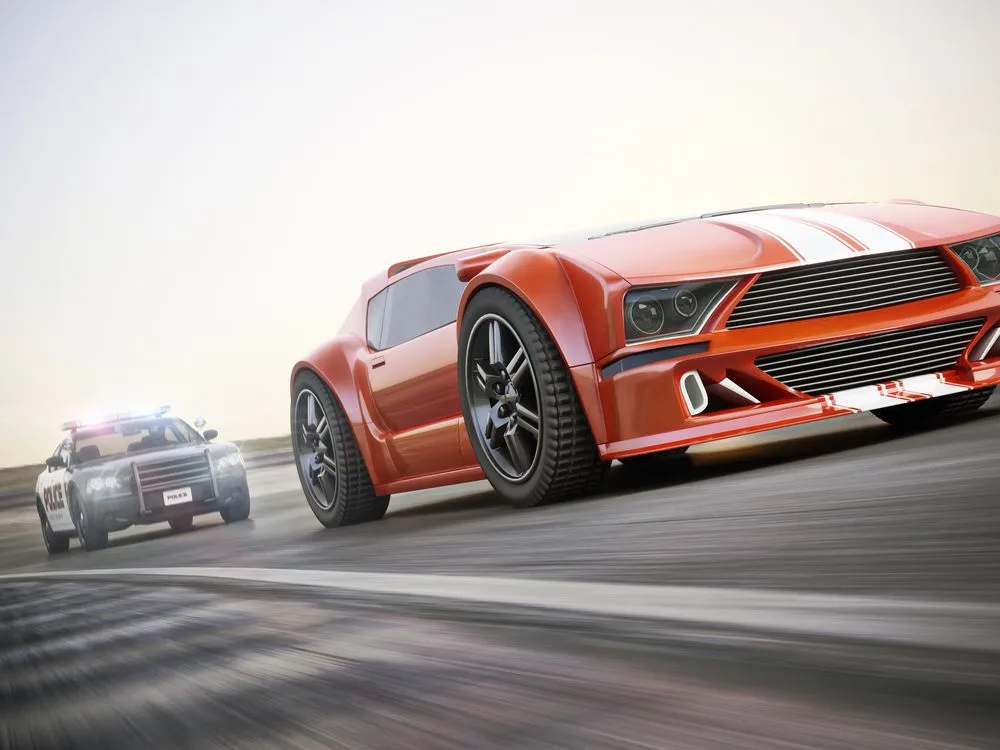
From a character lighting a gasoline leak that eventually explodes the car to a hero throwing a grenade towards a car as he walks in the opposite direction, things don’t always end well for cars in Hollywood.
But how much of that is real? Can cars really blow upwards into the air after exploding? Can cars even explode after such collisions? Let’s find out!
Ingredients Of A Car Explosion
To understand if cars can explode and fly into the air upon impact, we first need to properly understand an explosion itself.

All the processes that surround us in daily life can be explained by thermodynamics, a branch of physics that deals with changes in the heat and energy of a system.
In thermodynamics, we mainly study the properties of a system, such as pressure, volume, and temperature, and we understand how these properties change as energy and work (the ability of a system to do something).
All the processes we see around us, from the cooling of food in refrigerator to the flow of water from a water tank, come down to the changes in the quantities mentioned above (and a bit of entropy, which is the property of the universe to prefer chaos).
Looking at it from a thermodynamics point of view, an explosion is a very rapid expansion of volume, along with the release of a high amount of energy.
For an explosion to take place, we need gases that are flammable. These gases must be present in a confined place where they can be subjected to very high pressure.
However, as we already know, in order for something to burn, it needs an ample amount of oxygen. And ultimately, we would need a spark to set the flammable gases on fire.
So… Can A Car Explode?
Before we determine whether there could be a huge explosions inside a car’s tank or engine, remember that there are already many small explosions inside a car that actually help the vehicle run.
So, if there are small explosions inside a car, could there be big ones too?
The 4-stroke Engine
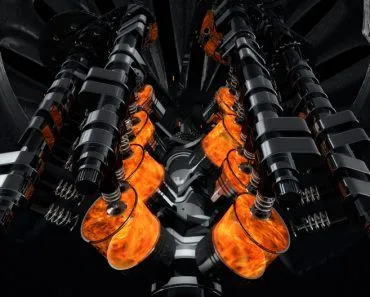
A typical car engine works according to the laws of thermodynamics and can be thought of as a repeating process of 4 steps, hence being known as the 4-stroke engine.
The shaft is moved using pistons that go up and down.
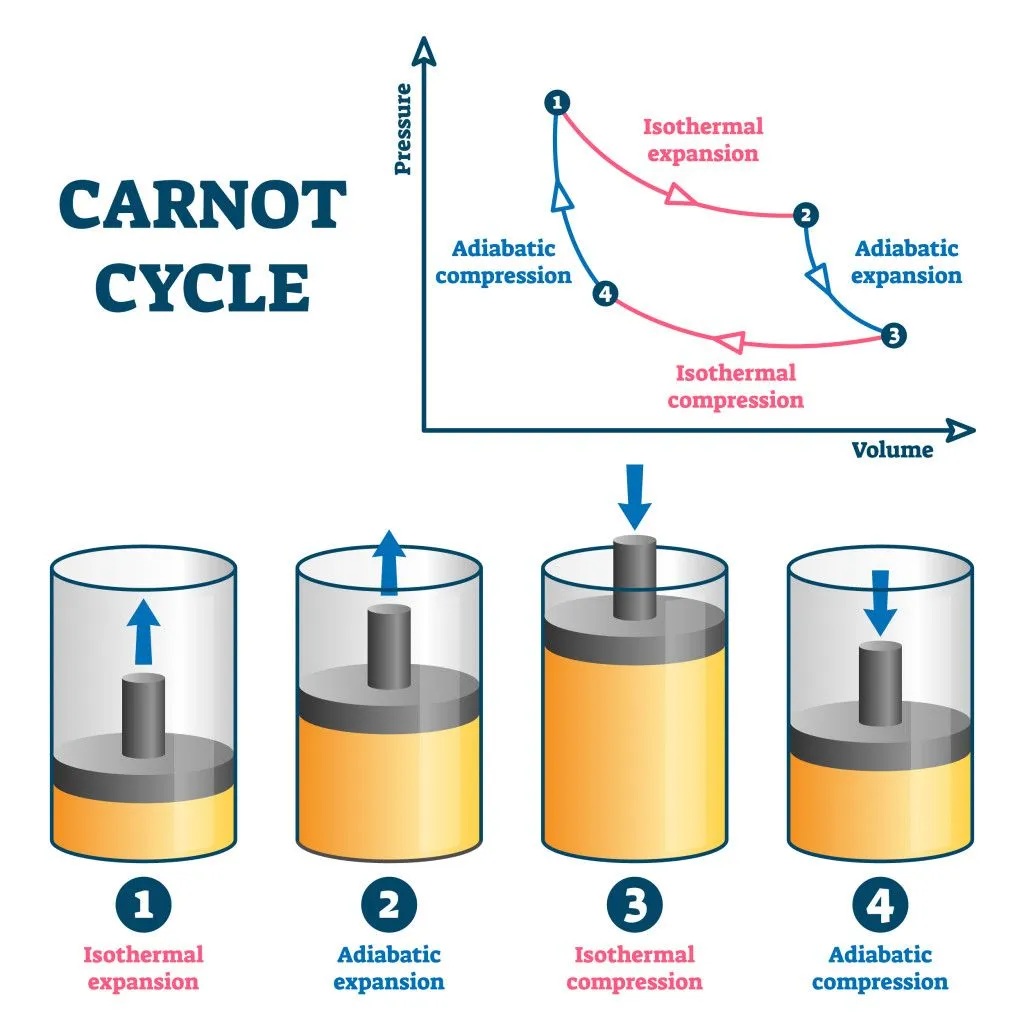
1. Intake: the piston moves down with the intake valve open, sucking an air/fuel mixture into the cylinder.
2. Compression: both valves close and the piston moves up, compressing the mixture into a small volume at the top of the cylinder.
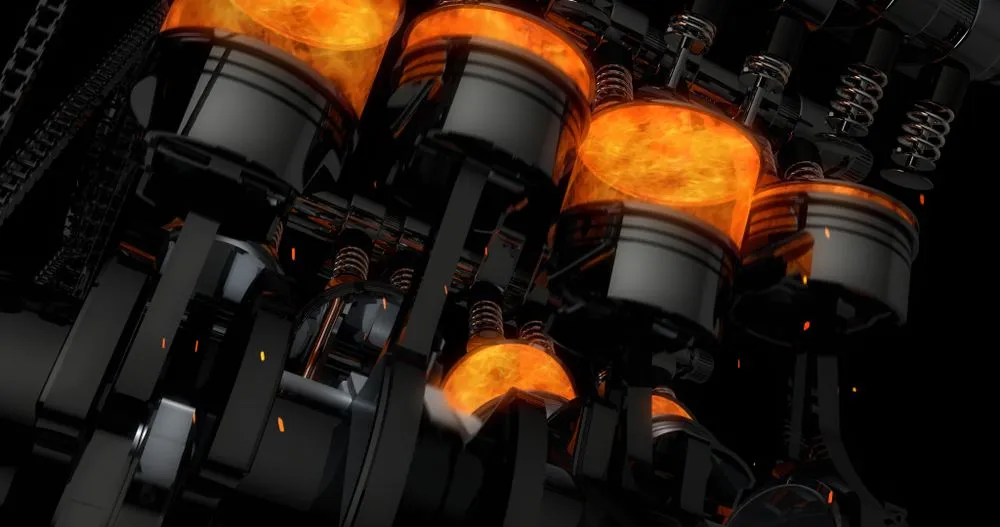
3. Power: the spark plug fires, igniting the compressed mixture (compressed gas + spark + oxygen = controlled explosion). The expanding burned gases shove the piston down hard, which is the stroke that actually does useful work.
4. Exhaust: the exhaust valve opens and the piston moves back up, pushing the spent burned gases out of the cylinder.
These four strokes happen in rapid succession (about 30 to 50 times a second at highway speeds for a typical four-cylinder engine), and the resulting torque on the crankshaft is what moves the car forward.
If There Are Small Explosions, Can There Be Big Ones Too?
Given all that we just learned, there are certainly things in the car that are flammable and perhaps even explosive, so are the big-time explosions in movies correct?
The simple answer is… no.
A car contains gasoline, which is a very flammable liquid, but there are two things to note about it. Liquid gasoline itself is hard to detonate. It burns at the surface and needs to be heated or atomised first. The actually explosive thing is gasoline vapour mixed with air in the right proportions (roughly 1.4 to 7.6 percent vapour by volume). Modern fuel systems are designed to keep that vapour contained inside the tank and away from any ignition source, which is precisely why a car does not turn into a bomb when it crashes.
Gasoline is let into the engine in small amounts as a mixture with air, but there is not enough to cause a big explosion (only very small ones that are used to push the pistons, as shown above).
Another important factor is the spark, and collisions shown in movies do not create such a spark, especially inside the fuel tank.
A fuel tank is made to contain fuel, not to create pressure, so there isn’t enough pressure in the fuel tank to cause an explosion.
Do Cars Explode When They Catch Fire?
This is the version of the question most people actually search for: forget the collision for a moment, what if the car is simply on fire? Does a burning car eventually go off like a bomb?

For an ordinary gasoline car, the honest answer is still no. A car fire is a fire, not a detonation, and that distinction is the whole story. A detonation needs flammable vapor trapped in a confined space at roughly the right concentration, so that the pressure can spike all at once. A car sitting on the shoulder of a road is the exact opposite situation, because everything is open to the air. Fuel that leaks or is heated out of the tank simply burns at its surface as a pool of flame, and the vapor that escapes burns off about as fast as it is released instead of building up to a blast. That is why a real car fire looks like a growing column of orange flame and black smoke that develops over several minutes, rather than a single flash.
It also helps to know where car fires tend to begin. According to the US Fire Administration, more than half of highway vehicle fires start in the engine, running gear or wheel area, and fewer than one in five start in the passenger compartment. In other words, most car fires kick off nowhere near the fuel tank in the first place. The flames have to spread, burning through wiring, plastics, the tires and the firewall, before they ever reach a large volume of fuel, and by the time they get there the fuel is venting and burning rather than waiting to explode. (If you have ever wondered how easily liquid fuel catches in the first place, we looked at whether a cigarette can ignite a puddle of gasoline.)
So a burning car will gut itself, melt, and collapse into a blackened shell, but it does not launch skyward. The mid-air fireball stays a special effect.
How Often Do Cars Catch Fire, And Why?
If car fires are this undramatic, you might assume they are rare. They are not. In the United States alone, fire departments respond to roughly 171,500 highway vehicle fires every year, fires that cause on the order of 345 deaths and well over a thousand injuries annually, with more recent National Fire Protection Association tallies putting the count of vehicle fires near 178,500. Cars catch fire constantly. They just almost never explode.

The bigger surprise is the cause. Hollywood trains us to expect a crash to be the trigger, but collisions are responsible for only about one in five vehicle fires. The single leading factor is mundane mechanical failure or malfunction (close to 45 percent of cases), followed by electrical failures such as a short circuit (around 21 percent) and the misuse of flammable materials. A leaking fuel line dripping onto a hot exhaust manifold, or a chafed wiring harness, starts far more car fires than any movie-style impact ever does. The same logic applies to battery-powered vehicles, which is why electric scooters and EVs can catch fire from a damaged or short-circuited cell rather than from a spectacular collision.
There is one sobering wrinkle. While crashes cause only a minority of vehicle fires, they account for the majority of vehicle-fire deaths, because a serious collision can injure or trap the people inside while fuel and hot surfaces do the rest. So the real hazard of a car fire is not a Hollywood blast at all. It is an ordinary fire that can spread faster than someone hurt in a wreck is able to get clear of it.
Conclusion
Contrary to popular belief (as set by movies), cars are not very prone to explosions, and even a car that is on fire is very unlikely to explode. The necessary conditions for an explosion to take place are not met after a car experiences a major impact.
Cars wouldn’t fly all over the place after a collision unless there was an explosion, and given that an explosion is not a likely outcome, airborne cars are also quite unlikely.
Setting a gasoline car on fire usually does not blow it up; it just burns so long as there is fuel and oxygen. You will occasionally get small secondary events as the fire spreads: a tyre can BLEVE (boiling-liquid expanding-vapour explosion), an airbag inflator can deploy, a charged gas strut can fail, but none of these will launch the car into the air. The MythBusters team tested this several times (Episode 15, "Scuba Diver, Car Capers") and confirmed that a gasoline car only blows up cinematically when a pyrotechnic charge has been pre-rigged for the camera.
The one real exception is the electric vehicle. The lithium-ion packs that power modern EVs can suffer thermal runaway if the cells are damaged or short-circuited, and once a cell runs away it cascades to neighbouring cells in a chain reaction that pours out heat, flammable gases, and torchlike jets of flame. EV fires reignite hours or days after the initial fire is put out (the US National Transportation Safety Board documented several such incidents) and can be hard for fire crews to extinguish even with thousands of gallons of water. So as EVs cross 20 percent of new-car sales worldwide, the answer to "can cars really explode?" is increasingly: well, not your grandfather's V8, but the battery pack underneath a Tesla or a Bolt is a different story.
For the Hollywood-style fireball, though, the answer is still no!
References (click to expand)
- Kinney, G. F., & Graham, K. J. (1985). Thermodynamics of Explosions. Explosive Shocks in Air. Springer Berlin Heidelberg.
- Thermodynamics - an overview | ScienceDirect Topics. ScienceDirect
- Internal Combustion Engine Basics. US Department of Energy
- Safety Risks to Emergency Responders from Lithium-Ion Battery Fires in Electric Vehicles. National Transportation Safety Board
- Global EV Outlook 2025. International Energy Agency
- MythBusters Episode 15: Scuba Diver, Car Capers
- Highway Vehicle Fires (2014-2016). Topical Fire Report Series. US Fire Administration / FEMA
- Vehicle Fires Report. NFPA Research. National Fire Protection Association