In the movies, Captain America survives frozen in Arctic ice from 1945 until 2011 (about 66 years, often rounded to 70) thanks to the super-soldier serum, which lets him enter a state of suspended animation. Here's the real science behind cold, cryonics, and suspended animation.
In the movie Captain America: The First Avenger, towards the end, Captain America crashes the airplane into the Arctic with himself still inside it. He does this because he cannot land the aircraft without detonating the weapons. After a long wait of 70 years, he is finally found and discovered to be alive. The scene then cuts to the present day, where Cap wakes up in a 1940s-style hospital room without a single scratch or bruise on his body!
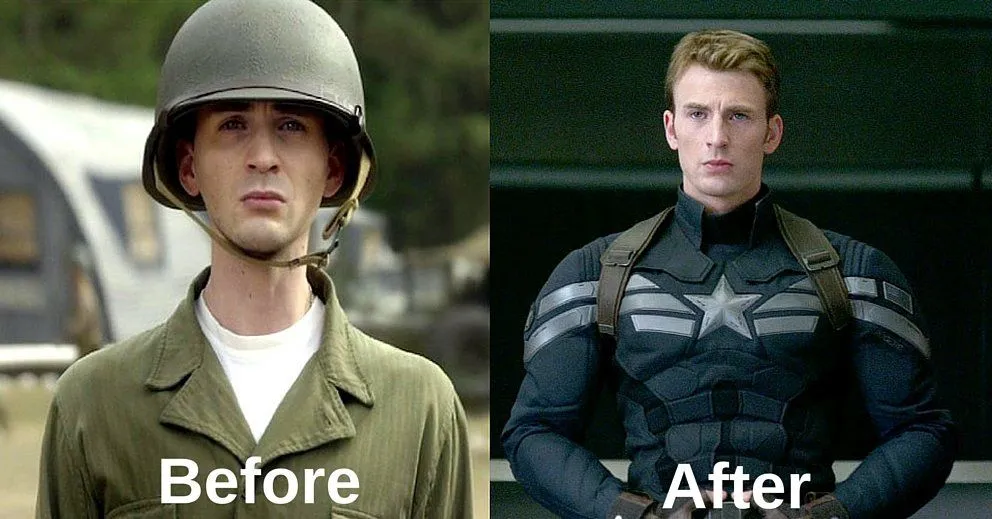
Suppose you follow Captain America in any way, either through movies or comics. In that case, you know that unlike other Marvel superheroes (e.g., Thor, Spiderman, and Wolverine), he has no supernatural powers. Cap is a ‘regular’ human with heightened agility, strength, and endurance. However, how Steve Rogers, a rather sickly, scrawny youngster, transformed into Captain America is a different story altogether. But the question is, how could he possibly survive being frozen for no less than seventy years?
Your instinctive response may be, ‘Well, that’s because he’s a superhero, right?’
That wouldn’t be incorrect, but is there a scientific reason behind Cap’s miraculous escape after being buried in snow for 70 years?
How Did Captain America Survive?
Well, much of his survival has to do with the super-serum that had been injected into his bloodstream as part of Operation: Rebirth, which occurred at the beginning of the movie.
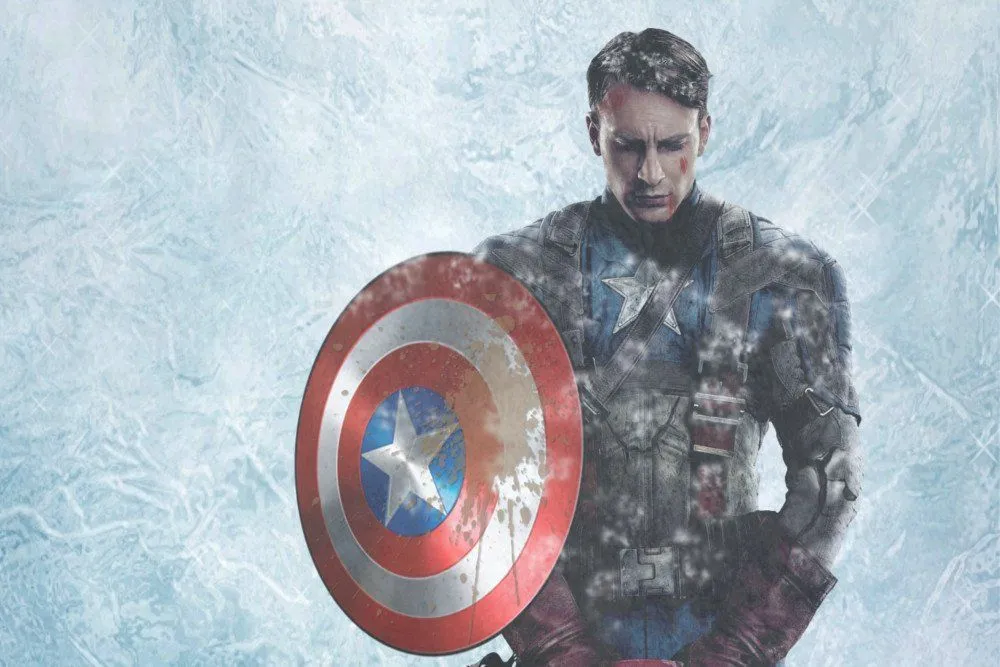
While the constituents and formula for making the serum were never revealed, its effects on Cap’s body were visible. The serum gave him unmatched physical and mental strength, preventing his blood from freezing in the subzero conditions of the Arctic.
The super-soldier serum and the freezing temperature allowed him to enter a state of suspended animation, so Cap remained alive and well for seventy years.
The creators of Captain America explained that this state of suspended animation was why he survived on the ice for so long. This explanation was good enough for Cap’s fans who wanted to see more of him in action.
But what is suspended animation? Is it a natural phenomenon or just a fantastical term from science fiction?
What Exactly Is Suspended Animation?
Suspended animation is a real phenomenon where certain life processes are slowed down or stopped without causing the death of the person. Although involuntary bodily processes such as heartbeat and breathing may still occur, they can only be detected artificially.
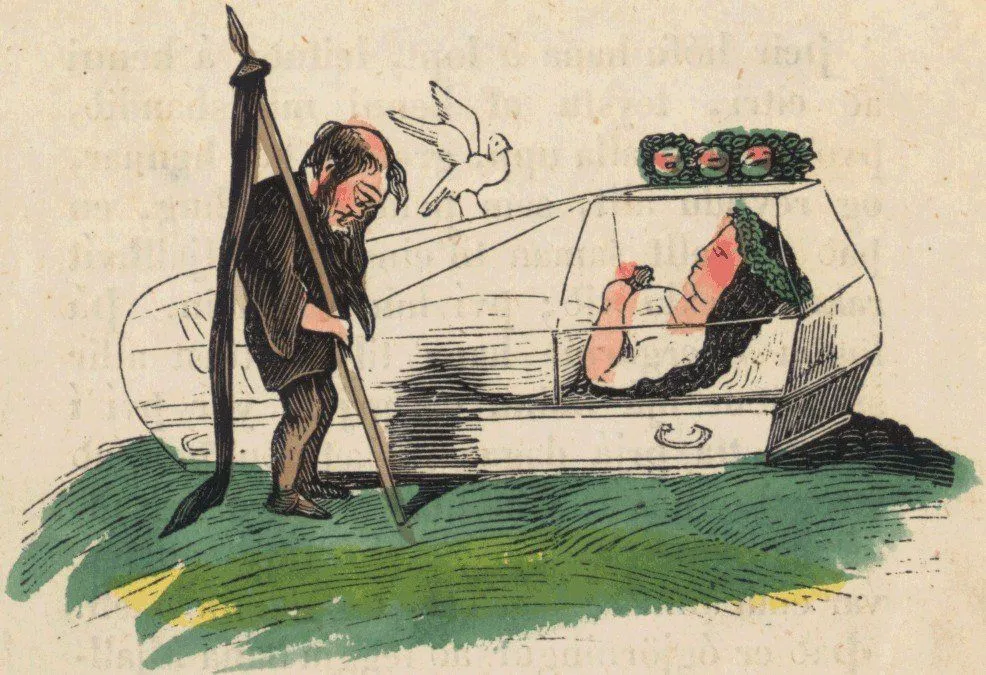
This preservation method already works on a small scale: human embryos are routinely held in a frozen, suspended state for years. The longest case on record is an embryo that spent more than 27 years in storage before being thawed in 2020 and growing into a healthy baby girl.
Different methods, such as temperature alterations and chemical changes, are used to induce this state. Lowering the temperature of a substance reduces its “chemical activities,” which include metabolism, a vital chemical process in the human body.
How Close/far From Reality Is It?
Suspended animation, as depicted in Captain America, is far less complex than in reality. In actuality, a human body cannot survive for long periods, even in a state of suspended animation, while being exposed to freezing temperatures.
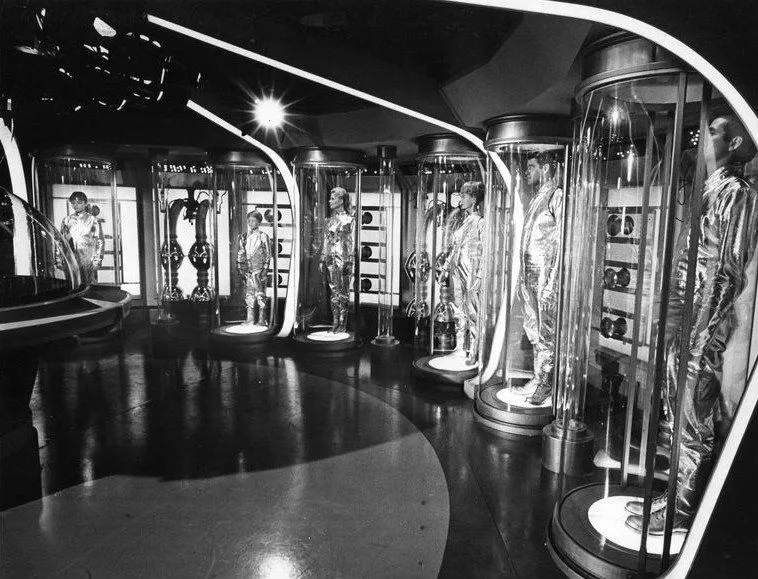
Many pitfalls are involved, including damage from ice formation and the loss of cellular viability. Additionally, freezing someone in such inhospitable conditions would raise ethical concerns. Unfortunately, limited experiments have been conducted in this area, which limits our understanding of the process.
To recreate something close to the super-heroic survival of Captain America, we need to be better equipped to understand the process and technological know-how. While it is possible to survive for extended periods in extremely cold temperatures, obtaining super-soldier serum and vita rays is impossible in reality!
How Long Was Captain America Frozen, And Who Found Him?
Here is the detail that trips most fans up. We all say Cap was on ice for "70 years," but the on-screen math does not quite land there. Steve Rogers crashes the Valkyrie into the Arctic Ocean at the end of Captain America: The First Avenger, set in 1945, near the close of the Second World War. He is not pulled out of the ice until 2011, when the secretive agency S.H.I.E.L.D. locates the wreck and his shield in the frozen north and thaws him out. That is a gap of 66 years, not 70. The rounder "70 years" simply became the catchier shorthand that stuck in the marketing and the comics.
The scene where Cap wakes up in that staged 1940s-style hospital room and then bolts out into a modern Times Square happens right at the start of The Avengers. So the crash and the awakening sit in two different films. Born on the Fourth of July in 1918 and roughly 27 years old when the plane went down, Steve effectively skipped the entire back half of the 20th century, which is exactly why he spends so much of his later screen time catching up on everything from the moon landing to the Internet.
Does Captain America Age?
If Cap was born in 1918 and is still throwing punches in films set in the 2010s and 2020s, why does he not look like a man well past 100? The answer comes in two parts: the years he skipped, and the serum.
First, the frozen years effectively do not count. While his body sat near-frozen in the Arctic, his metabolism, the sum of the chemical reactions that age a body, was crawling along at a fraction of its normal rate. He aged barely at all between 1945 and 2011, so a man who is chronologically over a century old is biologically only around 39. This is the same logic as the suspended-animation idea above, just stretched across decades.
Second, the super-soldier serum keeps his cells running at peak efficiency even when he is awake. In the original comics, the serum is described as halting Steve's aging almost entirely, which is why a 1940s soldier can stand shoulder to shoulder with heroes generations younger. The films are a little more grounded: Avengers: Endgame ends with an elderly Steve who chose to live a normal life and aged the rest of the way naturally, a quiet hint that the movie serum slows aging rather than freezing it forever. Either way, there is no real-world drug that does this, which is the whole point of calling it a super-serum.
Could A Real Human Survive Being Frozen Like That?
For 66 years? No. But the underlying idea, that deep cold can keep a body alive long after it should have died, is surprisingly real, and the natural world got there first.

Take the humble wood frog. Each winter it freezes nearly solid: its heart stops, its blood stops flowing, and ice forms throughout its tissues. To keep that ice from shredding its cells, the frog floods its body with glucose as a natural antifreeze, hitting concentrations dozens of times higher than normal. Come spring, it thaws out and hops away. A few hardy tardigrades pull off something even more extreme, surviving for years in a freeze-dried, suspended state.
Humans are not built for that, but cold still buys time. When the body cools, every chemical reaction slows, so tissues need far less oxygen to stay alive. In 1999, Swedish radiologist Anna Bagenholm was trapped under river ice for roughly 80 minutes. Her heart stopped and her core temperature fell to 13.7 °C (56.7 °F), the lowest body temperature any human is known to have survived. Doctors warmed her blood with a heart-lung bypass machine, her heart restarted, and she eventually returned to work. Her case, published in The Lancet, helped push hospitals toward deliberately cooling some cardiac-arrest patients to protect the brain.
The catch is the very thing that makes ice so dangerous over decades. Water expands by about 9% as it freezes, and the sharp crystals rupture cell membranes from the inside. This is why cryonics labs do not simply freeze tissue. They flush it with cryoprotectant chemicals and chill it into a glass-like state called vitrification, dodging ice crystals entirely. Even then, no one has revived a whole human. Cap's painless, scratch-free 66-year nap remains firmly in the realm of comic-book science, fun to imagine, but a long way from anything our biology can actually do.
Last Updated By: Ashish Tiwari
References (click to expand)
- Stratmann, H. G. (2015, September 15). Suspended Animation: Putting Characters on Ice. Science and Fiction. Springer International Publishing.
- Bellamy, Ronald, et al. "Suspended animation for delayed resuscitation." Critical care medicine 24.2 (1996): 24S-47S.
- Mitchell, R. (2011, January). Suspended Animation, Slow Time, and the Poetics of Trance. PMLA/Publications of the Modern Language Association of America. Modern Language Association (MLA).
- SUSPENDED ANIMATION AND THE HISTORY OF ....
- Suspended Animation – The Strange Science of Captain ....
- Gilbert, M., et al. (2000). Resuscitation from accidental hypothermia of 13.7°C with circulatory arrest. The Lancet, 355(9201), 375–376. PubMed (NCBI).
- The role of MEF2 transcription factors in dehydration and anoxia survival in Rana sylvatica (wood frog) skeletal muscle. PMC, NCBI.
- Technologies for Vitrification Based Cryopreservation. Bioengineering (Basel). 2023. PMC, NCBI.
- What was the fate of human embryos following long-term cryopreservation (≥12 years) and frozen embryo transfer? Human Reproduction, 34(1), 52–60 (2019).
- This Baby Was Born From a 27-Year-Old Frozen Embryo. Boston IVF.