The Iron Man 3 airplane rescue scene is only partly accurate. The free fall itself is real (people do fall at different speeds and reach a belly-to-earth terminal velocity near 53 m/s, or 120 mph), but blown out at 30,000 to 45,000 feet, the 13 passengers would lose useful consciousness within seconds, freeze in roughly -55 °C (-67 °F) air, and never hear Iron Man over the roaring wind.
Although I have watched Iron Man 3 a couple times now, I’m still in awe of the scene where Iron Man rescues a bunch of passengers blown out of an airplane following an explosion. And what’s better, he does it all in midair!
I can’t help but watch the entire scene over and over again. However, as incredibly real as that sequence appears to be on the big screen, there are some aspects of it that aren’t necessarily portrayed as they would happen in real life. So, it’s important to know what’s real (and can happen in real life) and what’s not.
The Airplane Rescue Scene Of Iron Man 3
People who have watched the movie know all about the scene already, but here’s a short description for people who haven’t: a bad guy blows a hole in Air Force One, which is carrying 13 passengers, along with Iron Man, a.k.a. Tony Stark (although later in the sequence, we learn that he’s not actually there… at least physically). Everyone is blown out and is falling freely towards the ground. Iron Man, who is well-known for conjuring out-of-the-box ideas, performs an “only-he-could-do-it” maneuver wherein he essentially chains every plummeting passenger to another by electrifying their arms and then drops them off gently into a water body off the coast of Miami.
Deconstructing The Scenario
Since it’s Air Force One (the official aircraft of the US President) where the catastrophe takes place, it’s safe to assume that Iron Man and the passengers are cruising at an altitude of 30,000 to 45,000 feet (which is the standard altitude at which most commercial airplanes cruise) before the explosion tears apart an entire section of the plane. Quite predictably, massive pressure difference develops between the inside and outside of the plane, and its passengers are thrown out into the sky almost immediately after the explosion.
Lack Of Oxygen
Given the high altitude they’re flying at, the 13 falling victims would lose useful consciousness within seconds of being blown out of the airplane for want of breathable oxygen. At 30,000 to 45,000 feet, your “time of useful consciousness” (how long you can still think and act clearly before hypoxia takes over) is only about 15 to 30 seconds, and a violent, explosive decompression like this one can roughly halve even that. You didn’t think that the oxygen masks provided in commercial airplanes (which are designed to automatically drop in front of you in the event of decompression) are there for no reason, did you?
It’s the same reason military HALO (High Altitude, Low Opening) parachutists, who can leap from as high as 35,000 feet, strap on oxygen masks and “pre-breathe” pure oxygen for a while before they ever exit the aircraft. Iron Man’s passengers have none of that, so for most of the way down they’d be limp and unresponsive rather than calmly grabbing one another in midair.

Extreme Cold
Another major problem of ejecting at high altitudes is cold…. extreme cold. Passengers blown out of the airplane would immediately feel the chill of around -55 °C (-67 °F), and throughout their fall, they would feel the chill of the wind passing by them at incredibly high speeds. This could potentially cause freezing of the eyes, skin and other living tissue. In the scene, however, the passengers seem perfectly fine in that regard. Perhaps we are meant to assume that all of them are wearing thermal clothing underneath those formal outfits.
Different Rates Of Falling
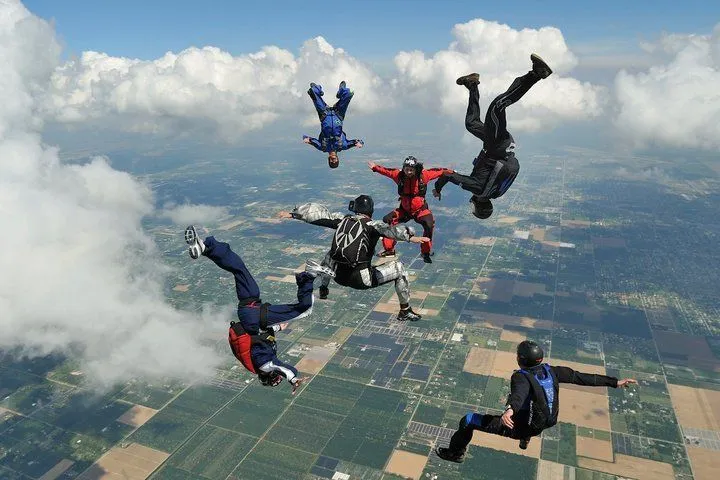
After being blown out of the airplane, different passengers are shown falling at different speeds (so Iron Man has to accelerate and decelerate accordingly to catch every passenger). This is absolutely correct, as the speed with which a person falls through air depends on their mass and orientation. A typical skydiver in the spread-eagle, belly-to-earth position levels off at a terminal velocity of about 53 m/s (190 km/h, or 120 mph), but tuck your arms and legs in and you can punch through 90 m/s (320 km/h). It takes roughly 12 seconds and about 450 meters (1,500 feet) of falling to reach that terminal speed, so by the time Iron Man is weaving between them, the passengers really would be dropping at noticeably different rates.
Debris Of The Downed Airplane
The airplane explodes seconds after everyone is blown out; but amazingly enough, the debris from the flight is nowhere to be seen. In reality, the free-falling passengers should have been darting their way around the damaged parts of the airplane, which would be falling through the air alongside them. However, since passengers have fallen a considerable distance already when the airplane explodes, let’s just assume that the broken pieces of the airplane are above them and haven’t made it into the frame yet.
Communication During Free Fall
After exiting the damaged airplane, Iron Man heads to catch the first person he sees, a Ms. Heather, and gives her quick instructions about what she is supposed to do. Subsequently, he asks other passengers to grab other free-falling passengers. The passengers hear him and comply.
Did you notice what’s wrong there?
Ask anyone who has ever been sky-diving, and they will tell you that it’s next to impossible to talk/listen to people during free fall, as the high-speed wind rushing past you drowns everything else out.

Even during an assisted sky-dive (tandem skydiving), the instructor has to yell things in the student’s ear at the top of his lungs to make the latter hear anything. Iron Man, however, is only talking to others in an urgent tone, so his suit must have some external speakers or a sound amplification system to make others hear his instructions above the whooshing wind.
Vision During Free Fall
It’s hard enough to keep your eyes open (without goggles or a helmet) on a motorcycle that’s clocking 160 km/h (100 mph), so it’s fair to assume that folks falling at around 190 km/h (120 mph) would need some protective eyewear to see and be able to grab others, which they don’t have in the movie.
Electrifying Arms
This is my favorite and arguably the most interesting aspect of the entire sequence; Iron Man electrifies the arms of the falling people so that they can’t open their hands, ensuring that the human chain of 13 people wouldn’t give away under the combined weight.
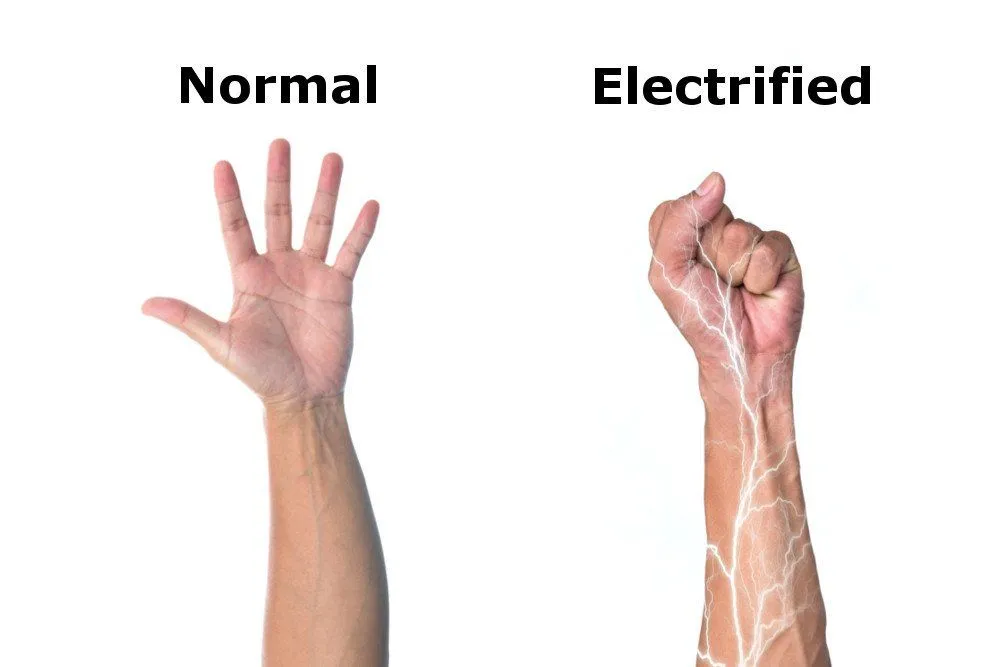
While it IS true that passing an electrical current through one’s arm can temporarily seize up their muscles (Source), causing their fist to clench, we don’t know for sure how this would hold up, as the effects of electricity are different between males and females. Furthermore, too much current can lead to burns, organ damage, and even cardiac arrest.
Final Climb And Drop
Just before the human chain of 13 people is about to plunge into water, Iron Man fires his thrusters and makes a last-minute ascent to gain some altitude before dropping the people into the water from a safe height. This action is required, because if he hadn’t done that, the people would have smashed into the water anyway and the whole human chain maneuver would have been pointless.

However, there’s a little glitch here. Since he fires up his thrusters at the last instant, it would exert a huge force on the chain, causing it to break, and possibly causing lethal injuries to everyone involved. The same thing happened with Gwen Stacy when Spiderman caught her in his webbing just before she hit the ground. However, seeing that Iron Man had no time left to slow the chain down after the last man was caught, pulling up at the last instant was the only practical thing he could have done.
Whether or not it’s iron-clad in terms of scientific accuracy, I must admit that the scene feels remarkably genuine on the big screen; the breathtaking shots coupled with Stark’s novel technique of saving 13 lives in one go make it one of the most talked-about rescue scenes in action history.
References (click to expand)
- Iron Man 3 - Wikipedia. Wikipedia
- Free-Fall | Department of Physics and Astronomy | Appalachian State University - physics.appstate.edu:80
- The Science of Iron Man 3's Free-Fall - Popular Mechanics. Popular Mechanics
- Time of Useful Consciousness - SKYbrary Aviation Safety
- Falling Object with Air Resistance - Glenn Research Center, NASA