Dan Brown’s Angels and Demons gets the basics right: antimatter and CERN are real, and a gram annihilating with matter really would release roughly 43 kilotons of energy (about three Hiroshima bombs). The fallacy is the quantity. CERN has made only a few nanograms ever, and producing a single gram would take far longer than the age of the universe.
Dan Brown sent our minds spinning at top speed in May of 2000 when he published ‘Angels and Demons’, like the literary genius he is. While Tom Hanks did more than justice as the primary protagonist of the movie, something else gripped readers and movie enthusiasts to the point where they were inspired to begin researching a key plot aspect on the Internet.
“Anti-matter” was a term otherwise unknown to the lay audience, but it was also one of the most searched topics that year. The exact intricacies of anti-matter are still uncharted, but let’s take a deep dive into how factually accurate his portrayal of anti-matter really was!
What Is Anti-matter?
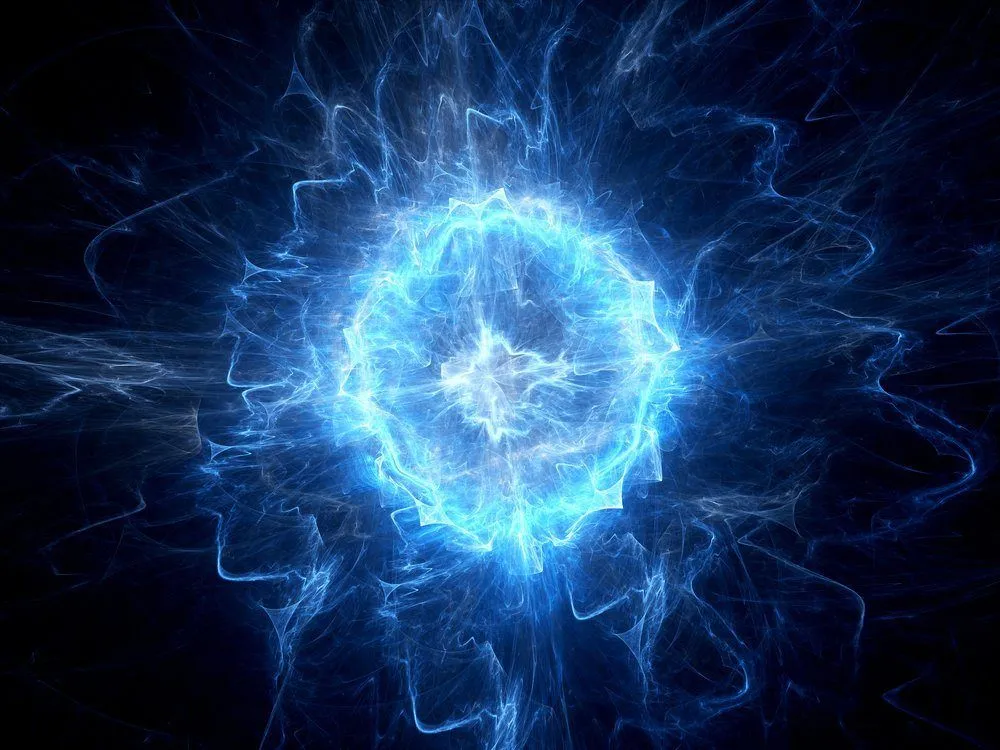
As the name suggests, anti-matter is primarily made up of anti-particles or the opposites of particles that constitute ‘ordinary’ matter. Theoretically, there would be anti-protons, anti-electrons (called positrons) and anti-neutrons, which would bind to make anti-atoms. The simplest of these, antihydrogen, is just an antiproton orbited by a positron, and CERN first trapped a handful of antihydrogen atoms in 2010.
However, because matter and antimatter destroy each other on contact, generating and keeping anti-matter is just one notch above impossible. To date, only a few nanograms of anti-matter have ever been produced. This production comes from particle accelerators, the collision of cosmic rays, and emissions given out by certain types of radioactive decay.
The underlying characteristic features of a particle and its anti-particle are the same. They only differ in the fact that their charges would be different and their quantum alignment would be opposite. Think of it this way, if one of these is the hero of a movie, then the other is a villain, both trying to put the other down for their own reasons. In reality, anti-matter is not necessarily an evil thing.
Pound for pound, anti-matter packs more energy than any other fuel we know of, so harnessing even a tiny amount could, in principle, release a mammoth amount of energy. Chemical and even nuclear reactions release only a sliver of the energy locked in their fuel, but matter-antimatter annihilation converts essentially 100% of the combined mass into energy, following Einstein’s E = mc2. The theoretical trick is simply letting matter and anti-matter meet. By that math, annihilating one gram of anti-matter with one gram of ordinary matter releases about 1.8 × 10¹⁴ joules, roughly 43 kilotons of TNT (around three times the Hiroshima bomb).
A More Practical Look At Anti-matter
Simple Pros And Cons
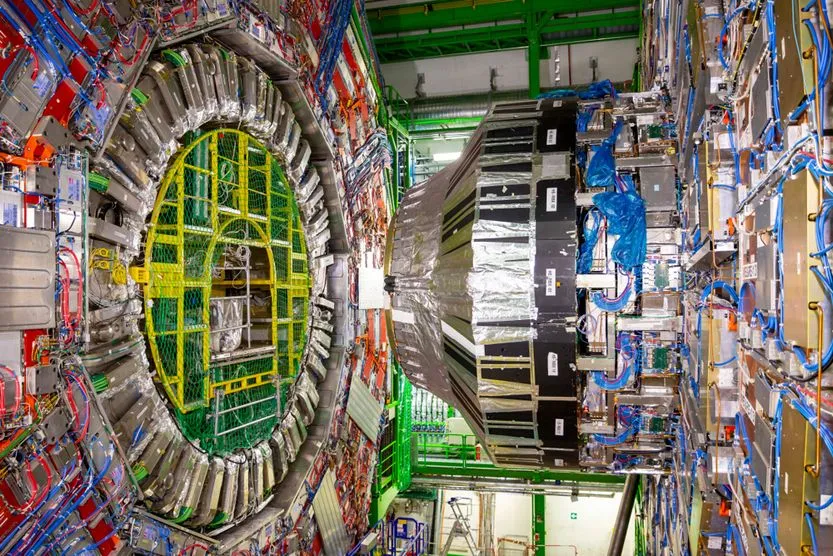
While anti-matter looks like the ultimate source of energy, making it actually costs far more energy than it ever returns, so as a fuel it behaves more like an energy sink. Its mass-to-energy ratio is unbeatable, but the catch is production. Particle accelerators churn out antiprotons by the millions, yet the yield is staggeringly tiny: CERN’s Antimatter Factory, running flat out for an entire year, would gather only about 30 million antihydrogen atoms, roughly 3 × 10-20 kilograms. As soon as that anti-matter touches ‘ordinary’ matter, both vanish in a burst of energy. Because of this, the next step after generating anti-matter is the real puzzle: how do you protect it from ever meeting ordinary matter?
Storage
The answer is to keep the anti-matter from ever touching anything. Since charged antiparticles cannot be held in an ordinary container (the walls are made of matter), physicists trap them inside a vacuum using powerful magnetic and electric fields, the approach CERN’s ALPHA experiment uses to hold antihydrogen for up to 100 hours or more. The danger is a failure of that trap: if the vacuum or the field gives way and the anti-matter meets the chamber walls, it annihilates instantly. With enough of it, the result would be devastating. A leak of even a fraction of a gram could level a city, which is exactly the nightmare scenario the novel runs with. It’s a very risky business indeed.
A Thing Of The Future
The prospect of using anti-matter is more than enticing, but at our current stage of development, it remains essentially impossible. The numbers are humbling: at CERN’s present rate, producing a single gram of anti-matter would take far longer than the entire age of the universe (about 14 billion years), and the lab has spent hundreds of millions to make only a nanogram-scale total so far. The production itself is dangerous and nowhere near cost-effective, and that is before you even reach the problem of storage.
Another aspect that seems rather distant, but is of critical importance, is the global scenario. The geopolitical and global stakeholder situation prevailing in the world right now is very volatile, and can be spiked by the smallest of affairs. Anti-matter, which has the capability to take over nuclear fuel in terms of impact, will only contribute to this endless cycle of conflict and monopoly.
Angels And Demons – Accuracy Or Fallacy?
Having taken inspiration from the literal location in which the story is set, Dan Brown did a rather amazing job while writing about anti-matter in depth. He somehow picked a subject as authentic and vividly eye-catching as the Illuminati!
- At the most basic level, the novel seems factually correct. Anti-matter and the CERN facility in Switzerland do exist.
- The second concept, and the heart of the plot, is how much energy anti-matter can release. Here the physics actually holds up: the canister in the story holds about a quarter of a gram of anti-matter, and a gram-scale annihilation really would unleash tens of kilotons of energy, comparable to a small nuclear bomb. The genuine fallacy is the quantity. As a fuel, anti-matter can never give a net gain of energy because making it costs far more than annihilation returns, and CERN’s entire history of production amounts to only a few nanograms. Stealing a visible, city-destroying canister of the stuff is the part that belongs firmly in fiction.
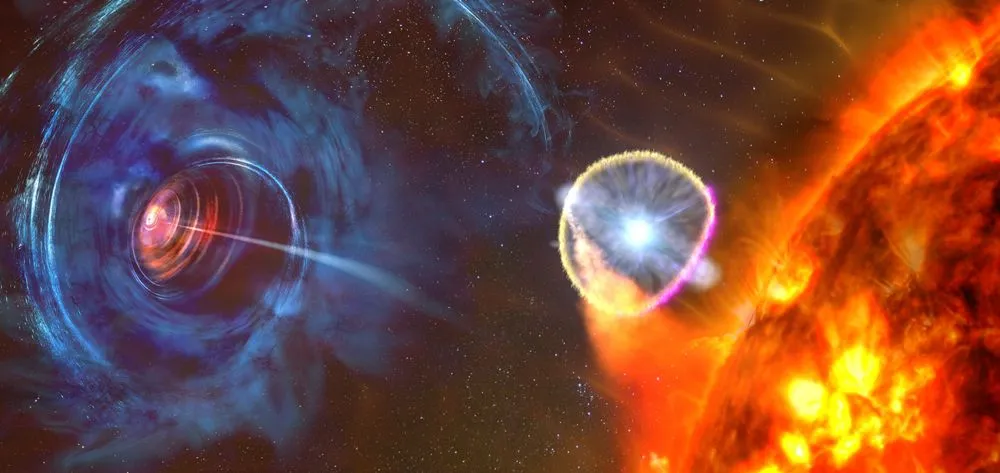
- The third scientific loophole is the description of the aftermath. While the novel leans on a blinding flash of light, the reality would be far nastier. The annihilation would release a torrent of gamma rays (and secondary X-rays), flooding the surroundings with ionizing radiation and intense heat. The closest real-world comparison is the blast dropped on Hiroshima, which released roughly 15 kilotons; a gram of anti-matter would pack a few times that punch.
The novel primarily focuses on giving readers a fictional masterpiece. The scientific assumptions and conclusions are used to back the main plot and solidify the story further. Therefore, certain scientifically untrue statements can be ignored when an author tries (and succeeds) to deliver a ‘breath of fresh air’ piece of literature.
How Realistic Is The Antimatter Explosion In The Movie?
The film builds to its big set piece by whisking the stolen canister high into the sky above Vatican City, where it goes off in a blinding flash that rattles the ancient rooftops yet somehow leaves the city more or less intact. It is a gorgeous shot, but how much of it survives a second look from a physicist?
Start with the raw numbers. The canister is said to hold about a quarter of a gram of anti-matter, and the movie pegs the yield at 5 kilotons of TNT. The real arithmetic is roughly double that. A quarter-gram of anti-matter annihilating with an equal mass of ordinary matter converts about 4.5 × 10¹³ joules of energy, close to 10 kilotons of TNT and closing in on the roughly 15 kilotons released over Hiroshima. So the on-screen line about the city being "destroyed by light" is, oddly enough, correct: when matter and anti-matter meet, their mass is converted almost entirely into radiation.
Where the scene softens reality is the aftermath. A proton meeting an antiproton does not simply flash and fade; it sprays out a shower of short-lived particles called pions, which decay within moments into high-energy gamma rays and fast-moving muons. These are deeply penetrating, so a burst of this size would flood everything beneath it with a lethal pulse of ionizing radiation, not the survivable glow shown on screen. Setting it off high overhead does not tidy things up either, because so much of the energy escapes as radiation that spreads outward rather than staying neatly contained. In short, Dan Brown nails the idea that a speck of anti-matter carries nuclear-scale energy, but the movie's clean, city-sparing light show is the part that belongs firmly in fiction.
References (click to expand)
- Antimatter. CERN (European Organization for Nuclear Research).
- Antimatter's Advantages (and the Catch). Centauri Dreams.
- Dan Brown's Angels and Demons. Counterbalance.org.
- The Five Greatest Mysteries of Antimatter. New Scientist.
- Physicists Scrutinize Antimatter in Angels & Demons. Phys.org.
- Hot Particles: Could You Blow Up the Vatican with Antimatter? Royal Society of Chemistry (RSC Education).
- Annihilation Detectors. ALPHA Experiment, CERN.