Table of Contents (click to expand)
Cosmic rays are high-energy particles, mostly protons (~90%) and helium nuclei (~9%), that travel through our galaxy, the Milky Way. A few come from the sun, but most originate outside the solar system in events like supernovae. When they strike Earth’s atmosphere, they collide with atmospheric nuclei to produce cascades of secondary particles called ‘air showers’.
When radioactivity was first discovered by Marie Curie and Henri Becquerel, scientists believed that atmospheric ionization (i.e., when electrons are stripped from air molecules) only occurred due to the radiation that was produced by radioactive elements present in ground rocks or radioactive gases in the atmosphere itself. Then, in 1912, another physicist named Victor Hess conducted an experiment using three electrometers strapped to a balloon that was sent rising through the sky.

He observed that the ionization rates at a height of around 5,300 meters (17,400 feet) were a few times greater than at ground level. He argued that such high levels of ionization rates could only be explained by the presence of a powerful source whose radiation bombarded Earth’s atmosphere from above. Thus, cosmic rays were discovered, a find that earned Hess the 1936 Nobel Prize in Physics.
What Are Cosmic Rays?
Cosmic rays are forms of high-energy radiation – consisting of atomic nuclei or high-energy protons – that travel throughout our home galaxy, i.e., the Milky Way. Cosmic rays may be produced by the sun, but most are known to originate outside the solar system and travel all over the galaxy.

Most galactic cosmic rays (~90%) are the nuclei of hydrogen atoms (protons), while alpha particles (helium nuclei) make up around 9% of cosmic rays. The remaining ~1% are the nuclei and electrons of heavier atoms.
When these high-energy particles hit our planet’s atmosphere and interact with atmospheric nuclei, they produce showers of secondary particles, also referred to as an ‘air shower’.
Air Shower
An air shower is simply an extensive cascade of electromagnetic radiation and ionized particles (e.g., electrons, photons and muons) that occurs in the atmosphere (and sometimes reaches the surface) when a cosmic ray interacts with other atmospheric nuclei.
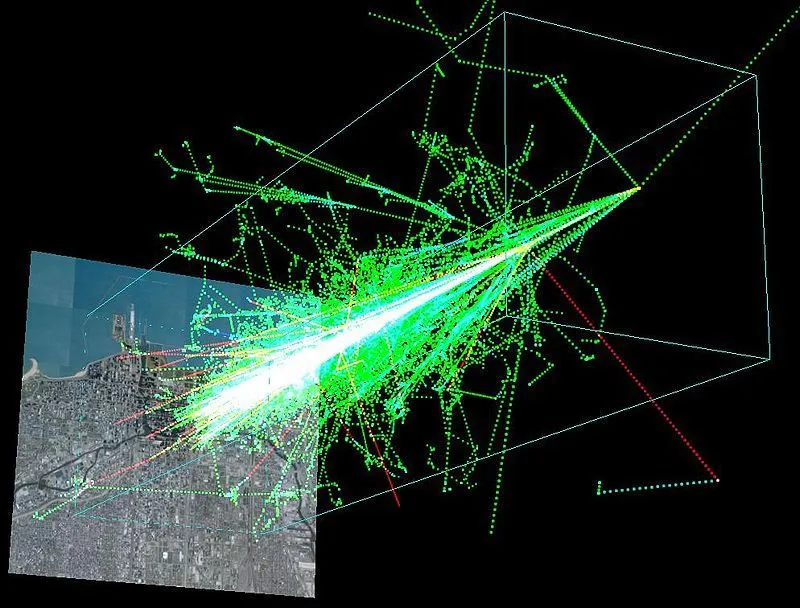
The French physicist Pierre Auger found in 1938 that such extensive air showers occur when cosmic rays collide with particles high up in the atmosphere.
The dose of cosmic radiation is maximal near the North pole or South pole, so airline crews experience more cosmic rays if they routinely work close to these areas (Source).
Prior to the discovery of cosmic rays, physicists believed that they were actually gamma rays being produced as a result of radioactive decay. It was only in the 1930s that a series of experiments proved that cosmic rays were mostly charged particles. Then, in 1954, the first substantial samplings of air showers were collected by the Rossi Cosmic X-Ray Group at the Massachusetts Institute of Technology, Cambridge.
Types Of Cosmic Rays
Scientists classify cosmic rays into four main categories.
Anomalous Cosmic Rays
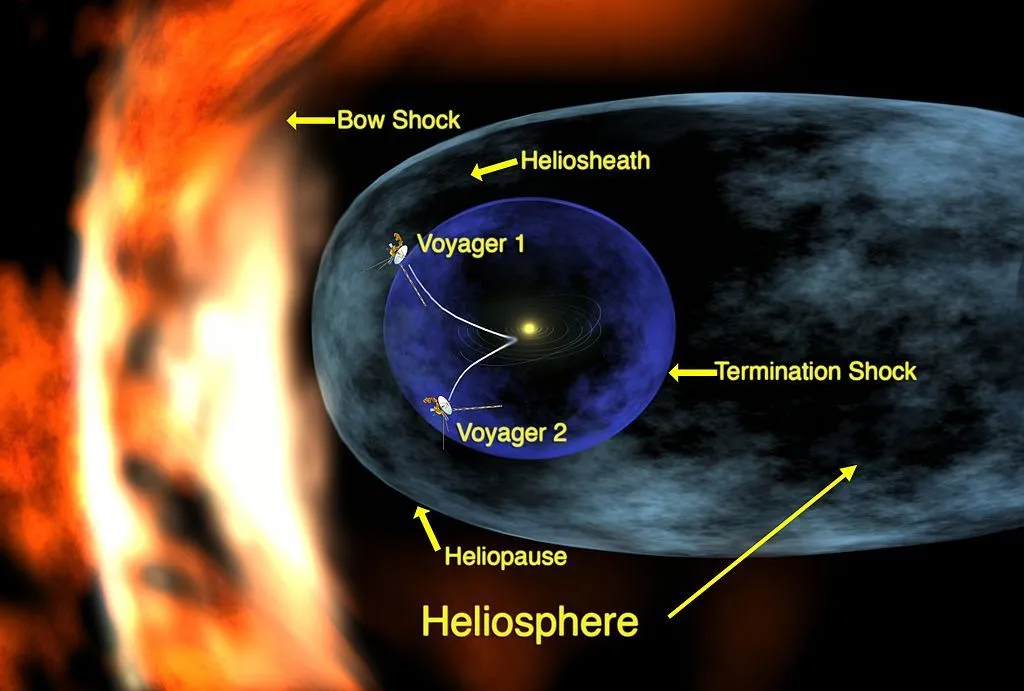
These are low-energy cosmic rays and are believed to originate in the heliosheath (the bubble-like region of space which extends far beyond the orbit of Pluto – in other words, the edge of our solar system) where the solar wind (stream of charged particles released from the atmosphere of the sun) does not have any effect.
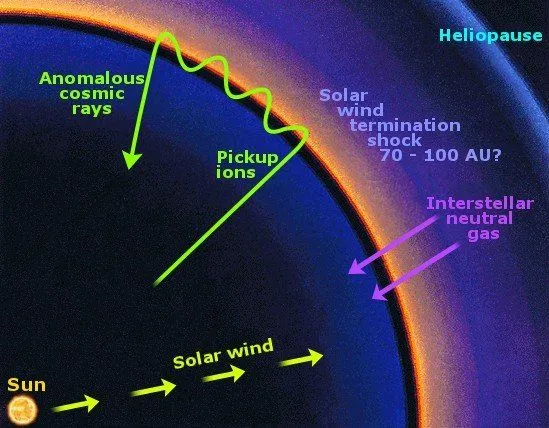
It is believed that anomalous cosmic rays are produced when electrically neutral atoms in the heliosheath are ionized and accelerated. Interestingly, when the Voyager 1 spacecraft crossed the termination shock into the heliosheath in 2004, it did not detect the expected source of this particle acceleration, a surprise that scientists dubbed the “Voyager paradox.”
Galactic Cosmic Rays
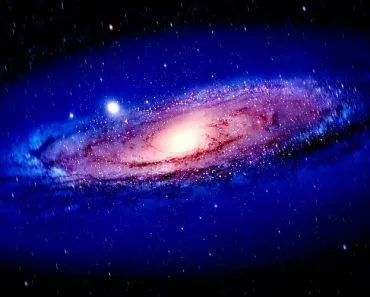
Commonly abbreviated as GCRs, these rays enter our solar system from the outside, but are generally formed within our galaxy. Space scientists believe that these types of cosmic rays are the result of powerful supernovae.
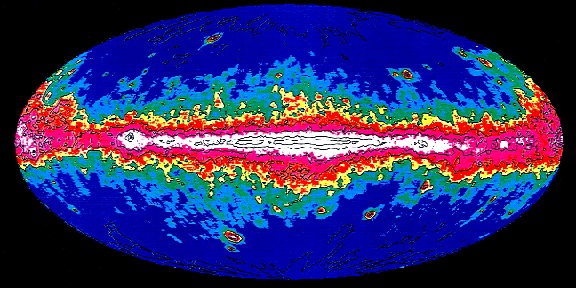
It is proposed that after a supernova explodes, particles bounce repeatedly within the gaseous remnant of the explosion and accelerate into cosmic rays until a point is reached when they escape into the galaxy.
Solar Cosmic Rays
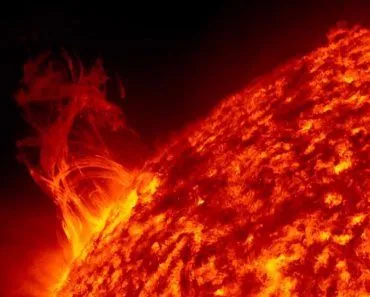
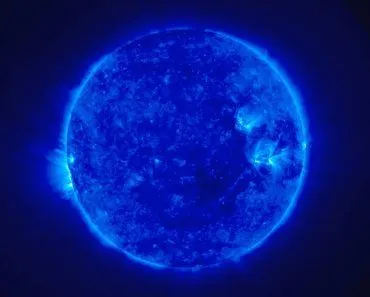
Casually referred to as abundant cosmic rays, these originate from the central star in our solar system – the sun. Most of these rays are just protons at relatively low energies, which get their energy from the intense magnetic fields at the sun’s surface.
Ultra High-energy Cosmic Rays
As the name clearly signifies, these are cosmic ray particles with very, very high kinetic energy. These particles are extremely rare, and their origins are yet to be fully understood by astronomers.
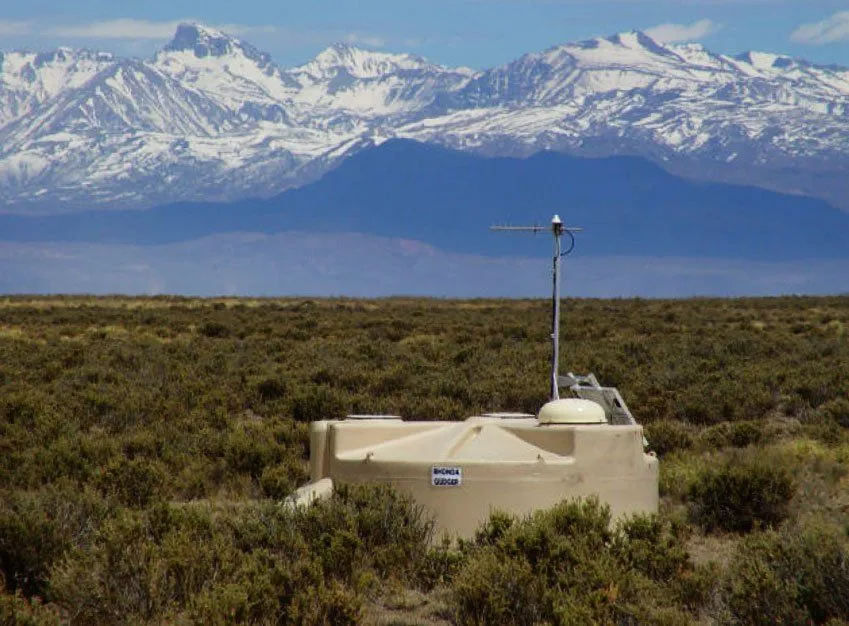
The Pierre Auger Observatory, an international cosmic ray observatory in Argentina, has been established to detect ultra high-energy cosmic rays in a bid to tackle the enigma of their origins and existence!
References (click to expand)
- Cosmic ray - Wikipedia. Wikipedia
- Air shower (physics) - Wikipedia. Wikipedia
- Ultra-high-energy cosmic ray - Wikipedia. Wikipedia
- Anomalous Cosmic Rays. NASA Cosmicopia
- Cosmic Rays. University of Oregon
- Proof: Cosmic Rays Come from Exploding Stars. SLAC National Accelerator Laboratory
- Cosmic Rays - Introduction. NASA Imagine the Universe
- Cosmic ray. Encyclopaedia Britannica
- Victor F. Hess - Facts. NobelPrize.org
- Pierre Auger and colleagues demonstrate extensive air showers. CERN