Yes, by the physics, Jack could have fit on the raft and survived. MythBusters demonstrated in 2012 that lashing Rose’s life jacket under the door would have provided enough extra buoyancy for both of them. And in 2023, James Cameron commissioned a National Geographic hypothermia study using body-matched stunt doubles in ice water, which concluded that with both bodies pulled fully onto the raft, Jack could have survived for hours. The verdict from the scientists: Jack did not have to die. The verdict from Cameron: the script did.
Jack and Rose are floating neck-deep in the bone-chilling water somewhere in the Atlantic. Jack makes Rose promise that she will survive and live a long and happy life, no matter what happens. However, the icy water has sealed both of their fates.
A rescue boat arrives looking for survivors and rouses Rose from her feeble, semi-frozen state. She begs Jack to wake up but realizes that he has passed away, sacrificing his own life to save her.
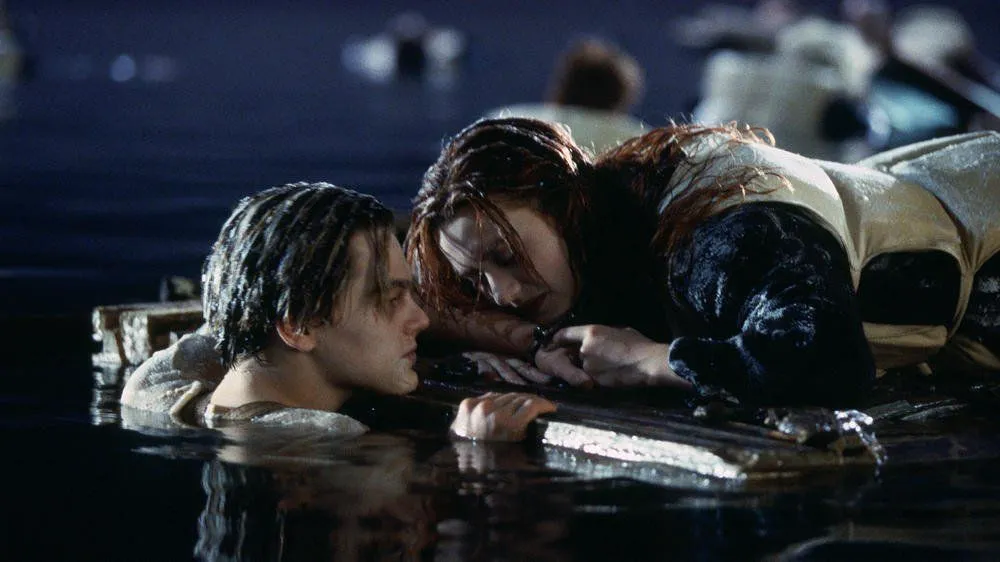
The heartbreakingly poignant scene just before the end of Titanic is familiar to the entire world. As such, it was an unprecedented blockbuster in film history, and the validity of this particular scene has been the center of much debate and scrutiny. People, predominantly Jack’s fans, claim that Jack and Rose could have fit on the floating piece of a broken door and that the movie’s ending didn’t have to be so painful!
However, is it true? Could Jack have survived the Titanic disaster by climbing onto the raft after lifting Rose? Did Jack really have to die?
Was There Enough Space On The Raft To Fit Both Jack And Rose?
In short… yes.
For twenty years, Titanic lovers have been a bit enraged over this particular scene and have offered several explanations as to how there was enough room for both Rose and Jack to fit on the raft.
Possible Positions To Fit Both Jack And Rose On The Same Raft
Movie enthusiasts have suggested several positions that Jack and Rose could have tried to fit on the raft together. The following picture might give you an idea of what was proposed.
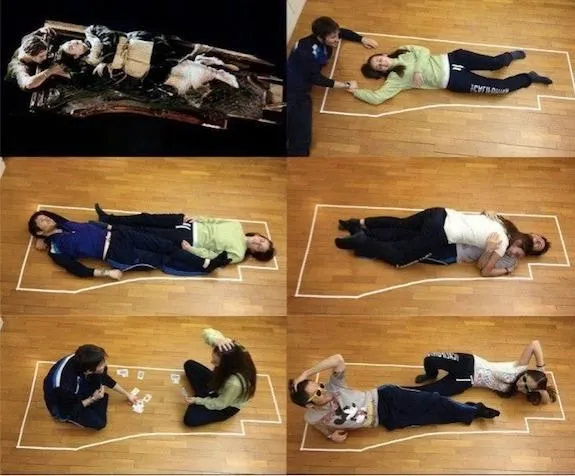
Despite what some people said, there was enough space for them to fit together on the raft.
However, James Cameron, the director of Titanic, never concerned himself with the amount of space available on the raft. He has always maintained that the issue was not the amount of space but rather the buoyancy of the raft.
Buoyancy is the upward force that a fluid (in this case, water) exerts against the weight of an object immersed in it, and this natural force prevents Jack from climbing onto it.
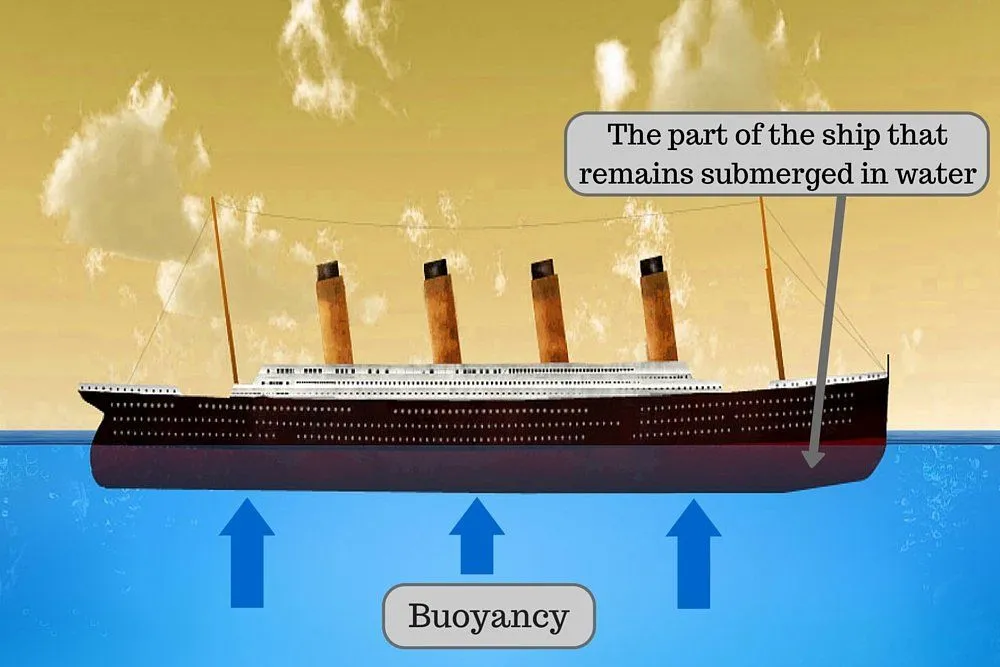
You may have heard about buoyancy in relation to ships and boats, particularly how small nails sink in water, but giant ships stay afloat, and so on.
Cameron suggested that the water did not offer enough buoyancy to the raft to support both of their weights, so Jack could not climb onto it.
Could Jack Have Fit On The Door?
Indeed, the raft shown in the movie Titanic could not have supported both Jack and Rose together. However, increasing the buoyancy of the raft could have prevented Jack’s unfortunate death.
Mythbusters, a popular TV show, presented a solution to this problem. They added more upward thrust to the raft by tying Rose’s life jacket under it. The additional buoyant force would have supported their combined weight and protected them from the icy waters until the rescue boats arrived.
I urge you to watch this short video from Mythbusters to learn more:
It turns out that using Rose’s life-jacket, along with some ‘buoyant’ intelligence, could have saved Jack’s day. When James Cameron, the director of Titanic, saw this, he acknowledged that Jack could have saved himself, but the script required Jack to die.
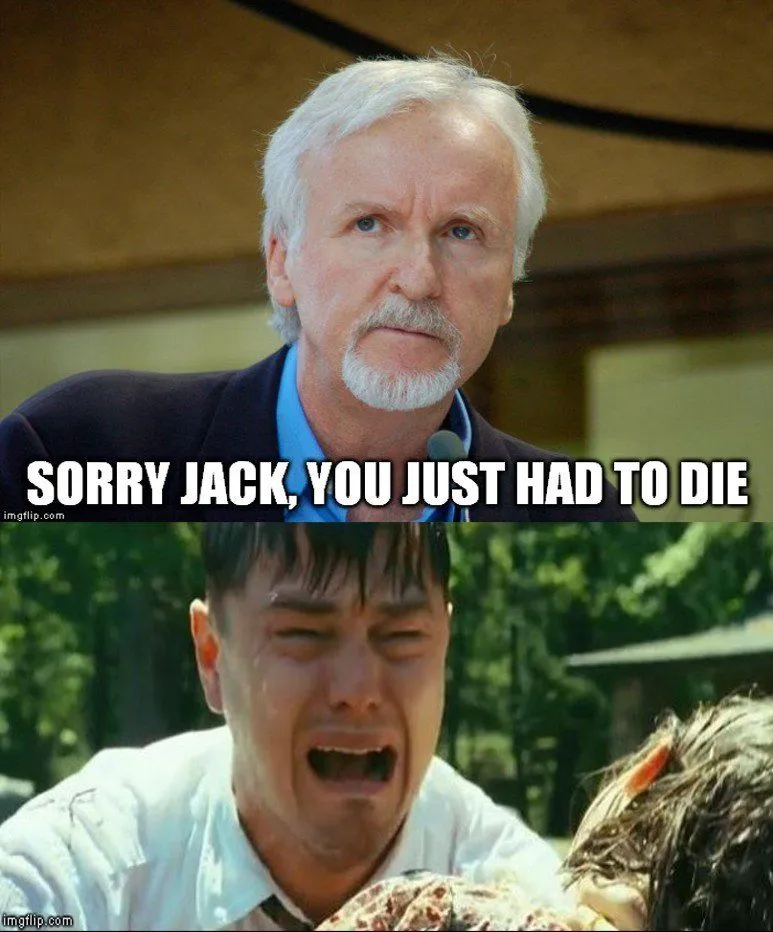
He said, “I think you guys are missing the point here. The script says Jack dies. He has to die. So maybe we screwed up, and the board should have been a little tiny bit smaller, but the dude’s going down.”
Cameron went a step further in 2023. For the National Geographic special Titanic: 25 Years Later with James Cameron, he hired two stunt doubles matched to Kate Winslet and Leonardo DiCaprio’s body mass, wired them with sensors, dropped them into ice water in a New Zealand pool under the supervision of University of Otago hypothermia expert James Cotter, and tested several positions on a replica of the raft. The final verdict: with both bodies pulled high onto the door and only the legs in the water, Jack could have survived for hours, because shivering out of the water generates body heat that the icy ocean would otherwise strip away. Cameron’s on-screen conclusion was that “Jack might have lived,” just with a lot of variables.
Sorry, Jack! Turns out it just wasn’t your day.
What Was Rose Actually Floating On?
Here is the first surprise: it was never a door. Even Cameron has been at pains to point this out. The piece of debris Rose climbs onto is a chunk of carved wood panelling, and the prop department modelled it on a real artifact, the most famous surviving piece of Titanic wreckage. That genuine fragment is believed to be part of the ornate door frame from above the entrance to the first-class lounge, and the original is held at the Maritime Museum of the Atlantic in Halifax, Nova Scotia.

The movie prop itself was a substantial object: roughly 2.4 metres (8 feet) long and just over 1 metre (41 inches) wide, finished with floral, scrolling rococo carving. That is genuinely big enough for two people to lie on, which is exactly why the debate has refused to die for nearly three decades. The catch, as the buoyancy section above explains, is that surface area is not the same thing as flotation. A panel that looks roomy can still only hold so much weight above the waterline before it sinks low enough to stop being any use.
If you want a sense of how prized this debate has become, the screen-used panel went under the hammer at a Heritage Auctions sale in March 2024 and fetched $718,750, more than many original costumes from the film. Not bad for a movie prop the world insists on calling a door.
How Long Could Jack Have Survived In That Freezing Water?
This is the part the film gets brutally right. The North Atlantic on the night of 14–15 April 1912 was about -2 °C (28 °F), slightly below the normal freezing point of fresh water because seawater stays liquid a little colder. Of the roughly 1,500 people who died, most did not drown. According to Encyclopaedia Britannica, the cause of death for the majority of victims was hypothermia, the body losing heat to the water far faster than it can generate it.

Cold-water physiologists describe what happens next with a memorable shorthand, the 1-10-1 principle, developed by Professor Gordon Giesbrecht (nicknamed “Professor Popsicle”). Roughly: you have about 1 minute to get your gasping and breathing under control as cold-shock hits, around 10 minutes of meaningful movement before your hands and arms stop working, and about 1 hour before you slip into unconsciousness from hypothermia. Britannica notes the same window, that death from immersion hypothermia can arrive within an hour. The Carpathia did not reach the scene until nearly two hours after Titanic went down, so anyone left in the water had almost no chance.
This is also why Cameron’s 2023 experiment hinges entirely on body position. Submerged up to the chest, the stunt doubles cooled quickly and both were doomed. But when they hauled their torsos fully onto the panel and left only their legs in the water, the heat loss slowed dramatically, because shivering muscles out of the water keep generating warmth instead of bleeding it straight into the ocean. That single change is what stretched the survival estimate from minutes to hours. The same lesson explains what happens when someone falls overboard from a ship: getting as much of the body out of the water as possible is the difference between life and death.
Last Updated By: Ashish Tiwari
References (click to expand)
- It's Definitive: Rose and Jack Could Both Have Survived in ....
- Stettler, J. W., & Thomas, B. S. (2013, June). Flooding and structural forensic analysis of the sinking of the RMS Titanic. Ships and Offshore Structures. Informa UK Limited.
- Deitz, D. (2012, April 1). How Did the Titanic Sink?. Mechanical Engineering. ASME International.
- How Cold Was the Water When the Titanic Sank? Encyclopaedia Britannica.
- Professor Popsicle’s Physiological Proof. Office for Science and Society, McGill University.
- This controversial “Titanic” prop has spawned decades of debate, and it just sold for $700,000. CBS News.
- James Cameron Settles ‘Door Theory’ Debate Over Controversial ‘Titanic’ Ending. NBC New York.