Table of Contents (click to expand)
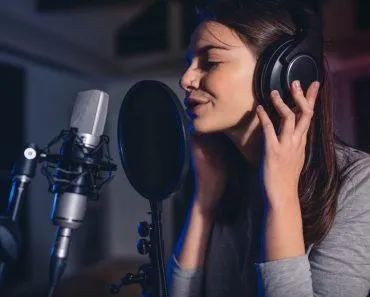
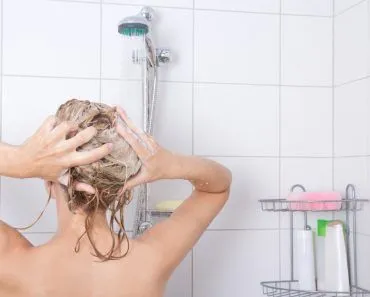
People sing in the shower because it is a private, relaxed moment when the mind is free of inhibitions. The acoustics help too: hard tiled walls reflect sound, so reverberation and resonance make your voice sound fuller and richer. Singers even use bathrooms to practice or record because of this effect.
Whether you’re Chance the Rapper, Madonna, Rihanna, or just an ordinary citizen, when you hit the bathroom, you’ll likely break into song at some point before the end of your shower, especially if you have music playing! Admit it, we all have attempted to recreate the magic of our favorite singers in the perceived privacy of the bathroom. Many of us have been bathroom singers for years!
But why is it that people start singing their hearts out in the shower, even though they wouldn’t do the same thing in front of a big crowd, even if they were paid a hefty sum?
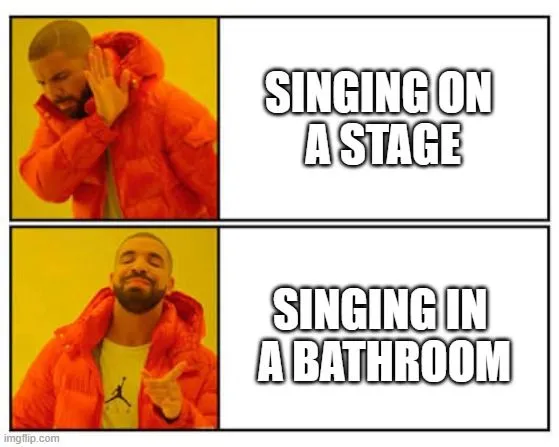
As crazy as it sounds, there are few promising scientific explanations behind this widespread habit of bathroom-staged singing.
Calm And Relaxed
When you think about it, a shower is one of the few times each day when a person is alone, seemingly far from the worries and stress of the materialistic world. For many, it’s the only time when they are completely alone, without another person, or without their phone. This isolated period of time, even though short-lived, can bring out the rockstar in a person.
Singing in a confined, secluded space has a calming and refreshing effect on people in the bathroom. Many experts believe that singing in the bathroom is like an infusion of a perfect tranquilizer with dual benefits: soothing the nerves and elevating the spirits.
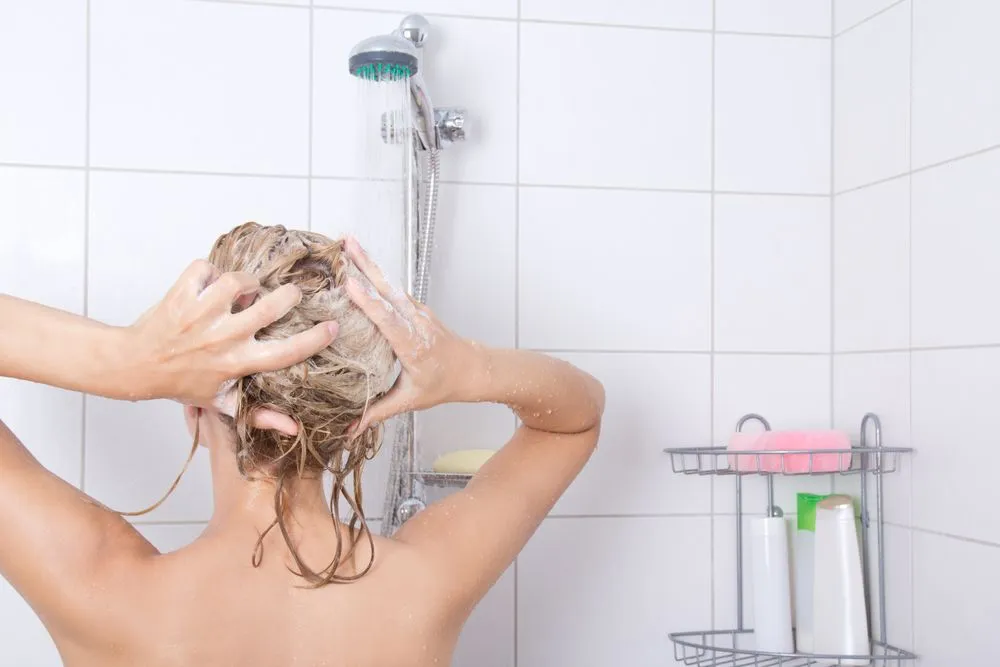
People generally don’t sing when they’re sad (barring a few exceptions), but in the bathroom, they’re enclosed in a small, warm and safe environment. Our mind is free from all the inhibitions that it might be affected by in front of others or in a large room full of people. Therefore, a bathroom naturally becomes the ideal choice for breaking into a melody, as the mind is highly relaxed.
Also, enjoying yourself in this way nudges your brain to release dopamine, the “feel-good” neurotransmitter tied to reward and motivation, which helps get your creative juices flowing, and singing is definitely a creative task!
Better Breathing
When you’re in a mode of total relaxation and water is flowing over your body, your breathing improves. Since you tend to breathe a little deeper than normal in the bathroom, it further improves the oxygen supply in your blood, thereby ‘upping’ your circulation and instilling a good, energized feeling. The benefits of singing in the bathroom are similar to the benefits one gets from meditation.
Never Too Old To Sing In A Bathroom
Another good thing about singing in showers is that you’re never too old to sing. Research has found that singing in one’s old age can improve mental and oral health. A 2014 study conducted by researchers at Tsurumi University on 44 elderly people (60+ years of age) examined the benefits of singing.
To keep the results clean, anyone taking regular medication for respiratory or cardiovascular disease was excluded, so the group was relatively healthy to begin with. Each person sang songs they could perform in full, for an average of just under four minutes. Before and after singing, the researchers collected saliva and blood samples and ran swallowing and oral-function tests, and subjects also filled out a questionnaire.
The results showed that, after singing, the amount of saliva increased and the level of salivary cortisol, a marker of stress, decreased. Subjects felt relaxed, relieved, and comfortable, which was also evident from their answers to the questionnaire. The study concluded that singing offers both physical and psychological benefits for elderly people.

The Sound Effects
Thus far, we have talked about how your body and mind can be rejuvenated when you sing in the bathroom, but we must also look at the physics involved in the bathroom and see how it makes the bathroom such an interesting place to showcase our musical talent!
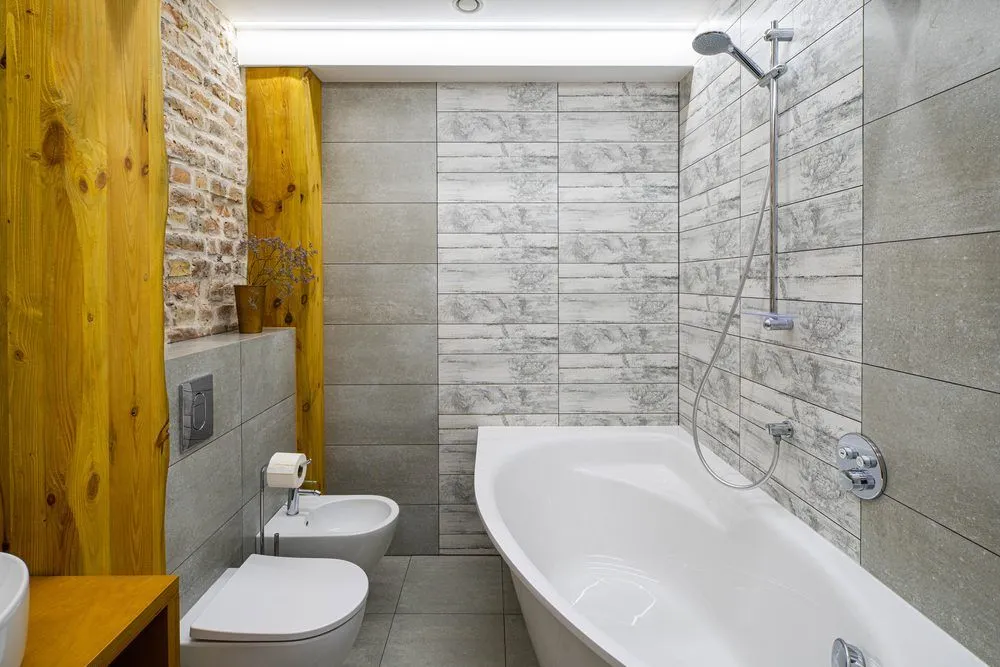
The acoustics in most bathrooms are basically perfect to start a private little concert. For example, most bathrooms have tiles that barely absorb sound. In effect, this means that your voice reflects back and forth when you sing in the bathroom. This reflection also amplifies your voice, but it’s not just about loudness; the magic lies in two more phenomena: reverberation and resonance.
Reverberation
As the walls of the bathroom aren’t equidistant from your mouth; some of the sound waves travel a little farther and take a fraction of a second longer to reflect to your ears. Also, as the walls inside the bathroom are generally made of smooth hard surfaces, sound waves continue to bounce more frequently before fading. So, in a way, your sound persists longer inside the bathroom than it would in your living room. This effect is called reverberation. It gives you the impression that the note you sang lasted longer than you actually held it. Reverberation also tends to smooth the transition between notes.
In fact, many karaoke systems these days are designed to implement this reverberation effect electronically, which can subtly improve your sound while singing!
Resonance
Your shower performance would still sound better than a reverberation technique-powered karaoke system because the bathroom boasts another acoustic property that is much harder to emulate: resonance.
In resonance, sound waves line up in just the right way to amplify the sound. During a shower, this often occurs because the wavelength of the note is just the right fit for the size of the bathroom, in a way that makes the peaks of the reflected waves line up. As a result, many of the notes will not only resonate, but also combine with other reflected sound waves in a way that cancels out some of the sounds. This resonance effect is much more noticeable with deeper bass tones, as they have longer wavelengths, i.e., there is more distance between the crests of the sound waves. Now, this effect of amplified and muted sound isn’t uniform throughout the bathroom. In a few spots in the bathroom, your notes would be a little muted, while in other spots it will sound awesome!
Music Industry Leveraging Bathroom Acoustics
The acoustics of sound in a bathroom is considered so good that singers often try to replicate or use a bathroom as a studio. For example, Jon Anderson, the renowned singer of the band Yes, liked how his voice sounded in a tiled bathroom so much that he had a tiled wall built into the studio while recording the album Tales from Topographic Oceans. Many guitarists also like the sound effects generated in the bathroom setup. Paul Simon, the legendary singer-songwriter, has said he often practiced in the bathroom, sitting in the dark with the tap running because the tiled echo and the sound of flowing water soothed him; that very setting is said to have inspired “The Sound of Silence.” And Alfred Matthew Yankovic, the parody artist better known as “Weird Al,” recorded his first hit, “My Bologna,” in a tiled bathroom across the hall from his college radio station because it made an acoustically perfect studio!
Truly, singing in the bathroom is one of the best habits that you can pick up, for all the reasons explained above and the pure joy that can come from a cathartic musical release. The bathroom offers a nice blend of biochemical, psychological, and acoustic conditions that promote a perfect atmosphere for performing, even if you’re a less-than-perfect singer!
References (click to expand)
- Sakano, K., Ryo, K., Tamaki, Y., Nakayama, R., Hasaka, A., Takahashi, A., … Saito, I. (2014, May 21). Possible benefits of singing to the mental and physical condition of the elderly. BioPsychoSocial Medicine. Springer Science and Business Media LLC.
- Tajadura-Jiménez, A., Larsson, P., Väljamäe, A., Västfjäll, D., & Kleiner, M. (2010, June). When room size matters: Acoustic influences on emotional responses to sounds. Emotion. American Psychological Association (APA).
- Loersch, C., & Arbuckle, N. L. (2013). Unraveling the mystery of music: Music as an evolved group process. Journal of Personality and Social Psychology. American Psychological Association (APA).
- Why do we sing in the shower? | SiOWfa15 - Sites at Penn State. The Pennsylvania State University
- 'How about we record the guitars in the bath?' | Pop and rock. The Guardian
- Horn, S. Singing Changes Your Brain. Chorus America (originally published in TIME).