Table of Contents (click to expand)
Goosebumps from music are called frisson, or 'aesthetic chills'. A moving piece of music, especially an unexpected swell or key change, triggers a surge of dopamine in the brain's reward center (the striatum). That rush activates the sympathetic nervous system, which makes the tiny muscles at the base of your body hair contract, raising goosebumps. Roughly half to two-thirds of people experience it.
A friend of mine told me that whenever she listens to the instrumental music from the movie Titanic, she gets goosebumps. In everyday language, we refer to this as ‘getting the chills’. It’s that shivering, tingling sensation that you get all over your body when you listen to a particularly moving tune that builds gradually to a soulful high note, or see a terrific acting performance on stage, or observe an out-of-this-world piece of art.

People feel ‘the chills’ when they are exposed to particular kinds of music, but why does it happen?
Why Does Listening To A Very Beautiful Voice/song Gives You Goosebumps?
Short answer: Researchers haven’t pinned down the exact reason behind this strange, yet measurable bodily experience, but it’s believed that music, particularly a very melodious piece, can cause dopamine (a neurotransmitter that helps run the brain’s pleasure and reward centers) to flood the part of the brain that’s motivated by reward, motivation and addiction. That sudden rush of the feel-good chemical kicks the sympathetic nervous system into gear, and the result is the ‘chills’: a wave of goosebumps and a tingling that runs down your spine.
While studies suggest that anywhere from roughly half to two-thirds of people experience such sensations, most of us don’t know much, or in fact, anything about it. With that in mind, we’ll first take a brief look at what these ‘chills’ are all about, so let’s start with their name… as in, their real name.

Frisson
As it turns out, the physical sensation that we experience when we listen to an outstanding symphony or see an extraordinary piece of art does have a proper name. It’s called frisson.
Frisson is a sensation not much different from shivering from a purely physiological standpoint, only it occurs due to stimuli other than cold temperatures. Some of the most common stimuli that trigger frisson include certain kinds of music, a piece of art (like a painting or a movie scene) or witnessing something that invokes a particularly strong emotional response (like fear, sadness etc.) in an individual.

The most noticeable effect of frisson is piloerection (goosebumps), along with a strong, overwhelming emotional response. Piloerection itself is an automatic, autonomic reflex: the sympathetic nervous system tells the tiny arrector pili muscles attached to each hair follicle to contract, which tugs the hairs upright and dimples the surrounding skin. Although people respond differently to various kinds of music, shivering, a quickened heartbeat, and dilation of the pupils are among the most commonly observed responses in a ‘frissoner’. (Source)
Frisson does not usually last more than 4-5 seconds, and it is highly pleasurable. It’s also typically involuntary, so you cannot summon it on purpose, no matter how hard you try.

Note that whether a piece of music can trigger frisson in an individual totally depends on the listener, because the way a person associates with such abstract stimuli is shaped by psychological factors, personal preferences and memories that are unique to the person in question.
Personality plays a part too. Of all the traits psychologists have tested, the one that most reliably predicts who gets the chills is openness to experience (the dimension of the Big Five linked to curiosity, imagination and a love of art and beauty). People who score high on openness feel frisson more often and more intensely, partly because they tend to listen more attentively and let the music carry them along. So if a soaring chorus regularly raises the hairs on your arms, it may say as much about how your mind is wired as it does about the song.
What Goes On Inside The Brain When We Get Goosebumps?
It has been experimentally observed that certain music/art pieces trigger a reward pathway in the human brain that results in a release of dopamine in the striatum – a critical part of the brain that regulates numerous aspects of an individual’s cognitive abilities, including reinforcement, motivation, decision-making and reward perception.
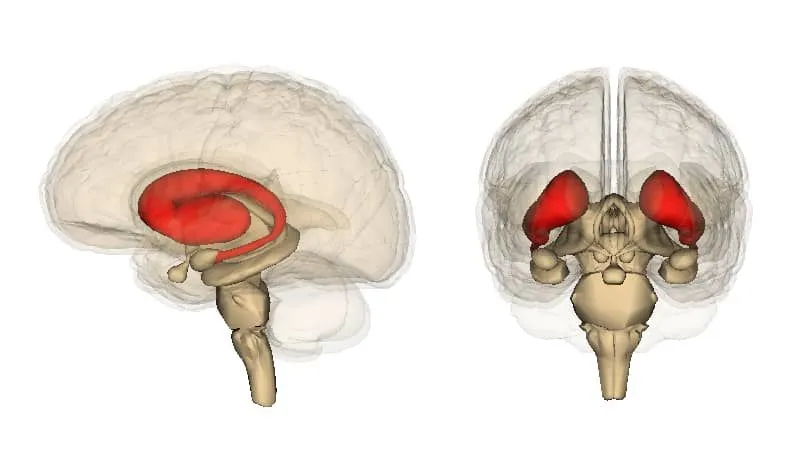
It’s this spike in dopamine levels that invokes that overwhelming, pleasurable sensation when you listen to music.
Interestingly, dopamine levels can start rising a few seconds before the ‘special moment’ of the song, because the brain predicts that the moment is about to come and releases dopamine in response. When you finally hear that special part of the song, the striatum experiences a peak of dopamine levels and voila! You get goosebumps!

Another noteworthy aspect of the ‘chills’ phenomenon is that sad, morose music triggers goosebumps more often than happy, upbeat pieces do.

In fact, according to a study published in 2013, listening to sad songs/music might actually evoke strong positive emotions! “Music that is perceived as sad actually induces romantic emotion as well as sad emotion. And people, regardless of their musical training, experience this ambivalent emotion to listen to the sad music.” said the authors of the study. This may be a reason why people like to hear sad songs when they are sad – because unlike sadness in daily life, sadness experienced through art may actually feel pleasant, possibly because the latter does not pose any threat to our safety.
The striatum isn’t the only brain region in the picture. In a classic 2001 brain-imaging study, neuroscientists Anne Blood and Robert Zatorre scanned people while they listened to music that gave them the chills, and watched a whole network of emotion and reward regions light up, including the ventral striatum, midbrain and the amygdala (the brain’s emotion-processing hub).
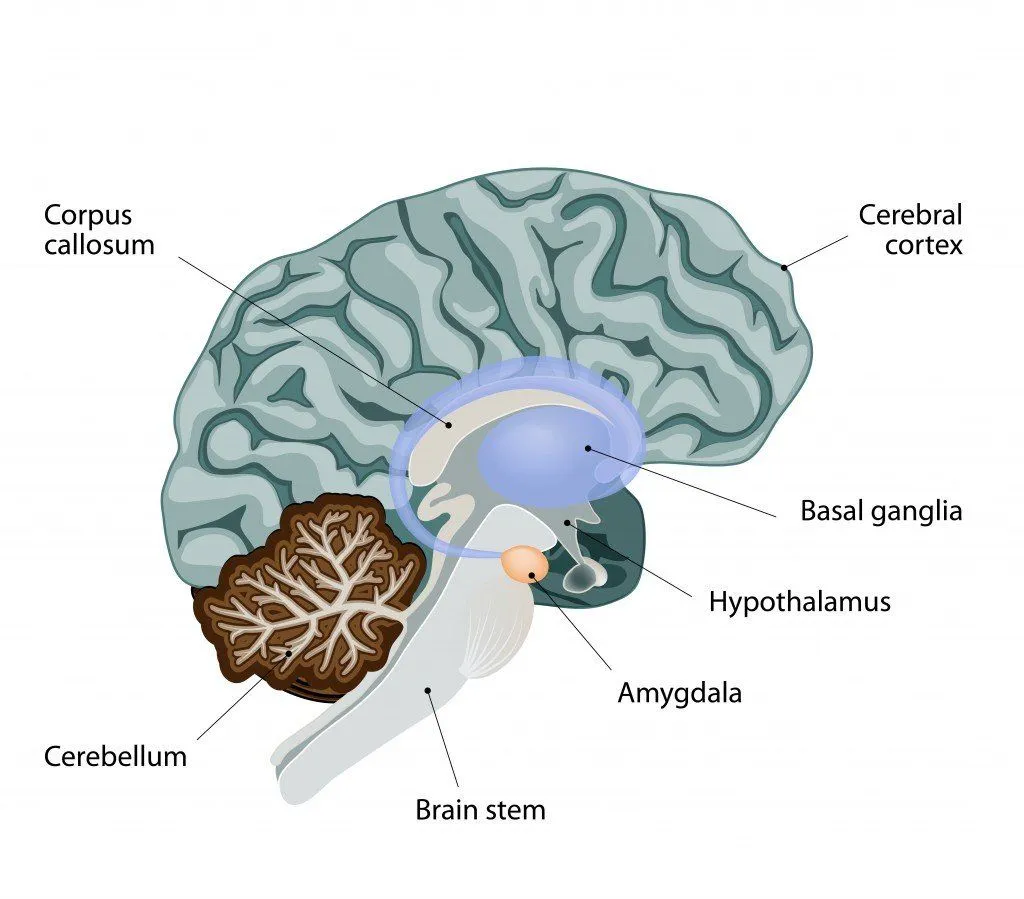
Here’s the twist, though: as the chills grew more intense, activity in the amygdala’s threat-detecting circuits actually went down rather than up. In other words, the music seems to quiet the brain’s alarm system at the same moment it floods the reward circuit, which may be why frisson feels so safe and pleasurable even when the piece is sad or suspenseful. The shivers and the tingling are what’s left over once the reward circuit is firing and the threat circuit has stood down.
References (click to expand)
- Frisson - Wikipedia. Wikipedia
- Striatum - Wikipedia. Wikipedia
- Salimpoor, V. N., Benovoy, M., Larcher, K., Dagher, A., & Zatorre, R. J. (2011, January 9). Anatomically distinct dopamine release during anticipation and experience of peak emotion to music. Nature Neuroscience. Springer Science and Business Media LLC.
- Blood, A. J., & Zatorre, R. J. (2001). Intensely pleasurable responses to music correlate with activity in brain regions implicated in reward and emotion. Proceedings of the National Academy of Sciences (PNAS).
- Kawakami, A., Furukawa, K., Katahira, K., & Okanoya, K. (2013). Sad music induces pleasant emotion. Frontiers in Psychology.
- Colver, M. C., & El-Alayli, A. (2016). Getting aesthetic chills from music: The connection between openness to experience and frisson. Psychology of Music.