Stripes hurt your eyes and can trigger a headache because their high-contrast, mid-spatial-frequency pattern is something the brain almost never has to process in nature. The visual cortex responds by firing large populations of neurons in synchrony, producing strong gamma oscillations (roughly 30 to 80 Hz). The same kind of activity also drives migraine aura and photosensitive seizures, which is why stripes feel so unpleasant for some people.
You wake up one morning, and while trying to pick your outfit for the day, your eyes fall on your favorite striped T-shirt. You spend a few seconds gazing at it as you mull over what to wear, but within a few moments, your eyes hurt and a throbbing sensation is felt in your temples. Does this situation sound familiar to you?
This is probably not new to you, as you might have felt it before while gazing at high-rise buildings with repetitive patterns, or even tile patterns on certain floors. Have you ever wondered why this happens? What goes “wrong” when you look at stripes or similar patterns that you end up with a headache or discomfort in your eyes? Let’s find out!
Differences Between Natural And Man-made Visual Stimuli
Our environment consists of diverse visual stimuli–both natural and man-made. However, the images or objects reported to cause discomfort to the eyes are almost always artificial or man-made in origin. Why is it that natural scenes and objects seldom elicit a similar discomfort in us?
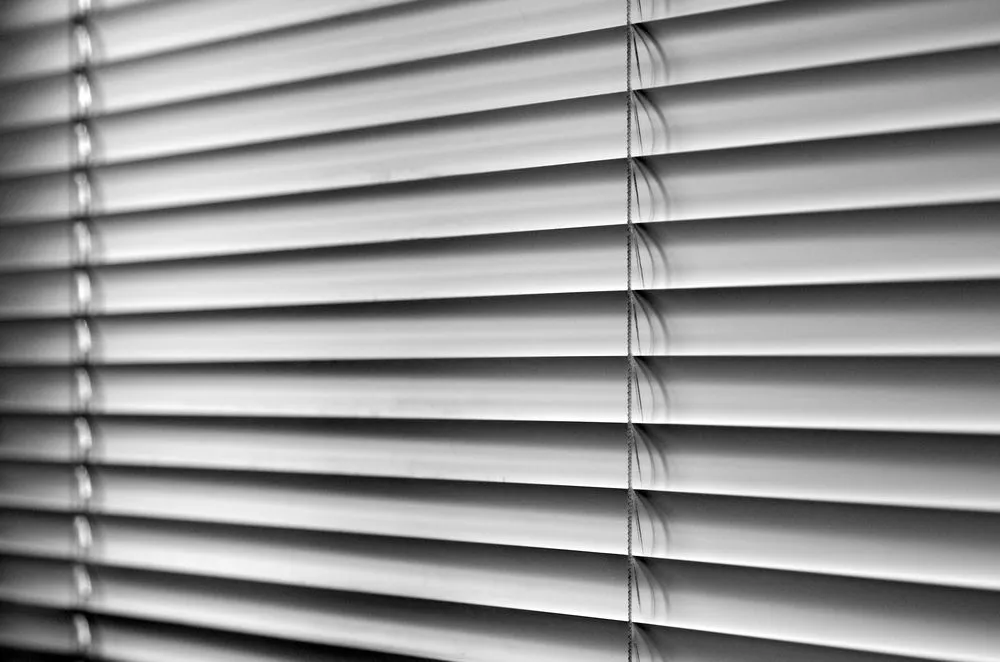
The answer lies in the visual properties of these images/objects. Man-made objects have certain statistical properties that distinguish them from natural scenes and objects. Natural stimuli follow a certain rule in which contrast energy and spatial frequency are inversely related. This means that the visual system is only used to being presented with stimuli with inverse combinations of contrast energy and spatial frequencies, where one is high and the other is low. Man-made stimuli flout this rule, as some have high contrast energy at midrange spatial frequencies; these are the objects/images often reported to cause visual discomfort.
Processing Of Urban Stimuli By The Brain
A study looked at the brain metabolism of oxygen while participants viewed images—both natural and man-made/urban with various statistical properties. The farther an object was in terms of visual statistical properties, as compared to natural stimuli, the higher the rating of discomfort from participants. Furthermore, metabolic activity in the brain was also correlated with the degree of discomfort. Stimuli that caused the most discomfort were seen to cause a higher demand for metabolic activity in the visual areas of the brain.
This made it clear that stripes present statistical properties that are not naturally occurring, and also place a higher metabolic demand on our brain, eliciting discomfort while viewing them.
Why Do Some Urban Stimuli Cause Headaches/migraine?
Scientists studied the human brain’s response to stripes to understand what in the brain is responsible for the discomfort. By using magnetoencephalography (MEG), they studied the brain activity of people while they viewed striped patterns of various frequencies. Interestingly, they found that viewing these patterns in certain frequencies induced gamma oscillations in visual regions of the brain, which coincided with the people reporting discomfort and illusions. The scientists reported that the occurrence of these oscillations may be responsible for the feeling of discomfort, dizziness, or even headaches/migraines in response to seeing stripes.
A recent study confirmed this suspicion, wherein researchers studied visual images and their probability of eliciting reactions in photosensitive epilepsy patients. In this investigation, they found that certain images had a higher probability of eliciting gamma oscillations in certain populations of neurons in the visual region of the brain. These same images also showed a higher risk of eliciting seizures in patients with photosensitive epilepsy.

This proved that the gamma oscillations are responsible for eliciting seizures in patients with epilepsy. These gamma oscillations, when elicited in the brains of neurotypical individuals viewing stripes, can cause headaches/migraines.
Why Do Stripes Make Me Dizzy Or Nauseous?
For some people, stripes do not just hurt the eyes; they bring on a wave of dizziness, unsteadiness, or even nausea. This is a slightly different problem from the headache, and it has its own name: visually induced dizziness, sometimes called visual vertigo or, informally, “supermarket syndrome” after the busy aisles that often set it off.

Your sense of balance does not come from one organ. The brain blends three streams of information: what your eyes see, what the vestibular system in your inner ear detects about head movement, and what your muscles and joints report about body position (proprioception). When you stand still and look at a strongly striped or repetitive pattern, the eyes can register an impression of movement or instability that the inner ear flatly contradicts, because your head has not actually moved. That clash is the same sensory mismatch that drives ordinary motion sickness.
In people who are especially prone, the brain leans too heavily on the visual stream and underweights the inner ear, a tendency researchers call visual dependency. When vision and balance disagree, such a brain tends to trust the eyes and conclude that the body is moving when it is not. The result can be dizziness, light-headedness, disorientation, nausea, and in some cases sweating, often without the spinning sensation of true vertigo. It tends to be more pronounced in people recovering from a vestibular disorder, but high-contrast stripes can briefly provoke the feeling in almost anyone. The usual advice is not to avoid the trigger entirely; gradual, controlled exposure (the basis of vestibular rehabilitation) helps the brain re-learn to weight its balance signals correctly.
Pattern Glare: Why Spacing Matters, And What Helps
Not every striped pattern is equally bad. The discomfort, the visual distortions, and the headaches that stripes can trigger have a specific name in vision science: pattern glare. Decades of work, much of it by the visual scientist Arnold Wilkins, has pinned down exactly which stripes are the worst offenders.
The trouble peaks when the stripes have a spatial frequency of about 3 cycles per degree of visual angle, with the light and dark bars of roughly equal width (a duty cycle near 50 percent) and high contrast. That is a surprisingly narrow target: gratings that are much coarser (around 0.5 cycles per degree) or much finer (12 to 14 cycles per degree) cause far less distress. This is the basis of the clinical Pattern Glare Test, which shows people gratings at 0.5, 3, and roughly 14 cycles per degree and counts the symptoms they report. Looking at the 3 cycles-per-degree plate for only a few seconds can produce illusions of color, bending or blurring of the lines, shimmering, flickering, and faint shadowy shapes between the stripes, along with eyestrain and sometimes nausea. None of these distortions are actually present in the image; they are the same kind of optical illusions the brain manufactures when it struggles to make sense of an unusual stimulus.
Susceptibility varies a lot from person to person. People who get migraines report markedly more of these distortions than those who do not, which fits with the idea that their visual cortex is more easily over-excited. For those most affected, individually chosen colored overlays or precision-tinted lenses can help. An fMRI study published in the journal Cephalalgia in 2011 found that when migraine sufferers wore precision ophthalmic tints, the exaggerated activity their visual cortex produced in response to stressful striped patterns was brought back down toward normal levels. The tint appears to filter out the specific wavelengths that drive the over-excitation, which is why the color usually has to be matched to the individual rather than picked off a shelf.
Conclusion
Certain urban stimuli containing stripes cause headaches or discomfort in viewers. These stimuli possess statistical properties that are distinct from other natural stimuli. These properties often place higher metabolic demands on the brain.
These patterns are known to cause synchronous firing of neurons in visual regions of the brain, giving rise to gamma oscillations. These oscillations are responsible for eliciting seizures in patients with epilepsy and are known to be the reason behind discomfort or headaches reported in response to viewing them. The discomfort in your eyes from viewing stripes is a result of the brain being faced with the problem of processing stimuli that do not naturally occur in our world. In many ways, it is similar to and as simple as your computer lagging in response to running software with which it isn’t compatible.
References (click to expand)
- Fernandez, D., & Wilkins, A. J. (2008, January 1). Uncomfortable Images in Art and Nature. Perception. SAGE Publications.
- Le, A. T. D., Payne, J., Clarke, C., Kelly, M. A., Prudenziati, F., Armsby, E., … Wilkins, A. J. (2017, April). Discomfort from urban scenes: Metabolic consequences. Landscape and Urban Planning. Elsevier BV.
- Adjamian, P., Holliday, I. E., Barnes, G. R., Hillebrand, A., Hadjipapas, A., & Singh, K. D. (2004, July). Induced visual illusions and gamma oscillations in human primary visual cortex. European Journal of Neuroscience. Wiley.
- Hermes, D., Kasteleijn-Nolst Trenité, D. G. A., & Winawer, J. (2017, May). Gamma oscillations and photosensitive epilepsy. Current Biology. Elsevier BV.
- Visually Induced Dizziness (“Supermarket Syndrome”). Vestibular Disorders Association (VeDA).
- Monger, L. J., Wilkins, A. J., & Allen, P. M. (2015). Pattern glare: the effects of contrast and color. Frontiers in Psychology.
- Huang, J., Zong, X., Wilkins, A., Jenkins, B., Bozoki, A., & Cao, Y. (2011). fMRI evidence that precision ophthalmic tints reduce cortical hyperactivation in migraine. Cephalalgia. SAGE Publications.