Table of Contents (click to expand)
Yes. Per mile traveled in 2023, motorcyclists were almost 28 times more likely than passenger car occupants to die in a crash (NHTSA). A motorcycle's open, single-track design has no crumple zones, seat belts or airbags, so the rider absorbs far more of a collision than someone shielded by a car's body.
Ever since I bought my first motorcycle, many friends of mine have expressed an interest in learning how to ride it. On a related note, I found a startlingly common trend: parents refusing motorized two-wheel vehicles to their children, even those who are well into adulthood.
Their reluctance was attributed to a common idea – motorcycles being inherently dangerous, and their kids being better off taking the bus.
Why Do People Use Two Wheelers At All?
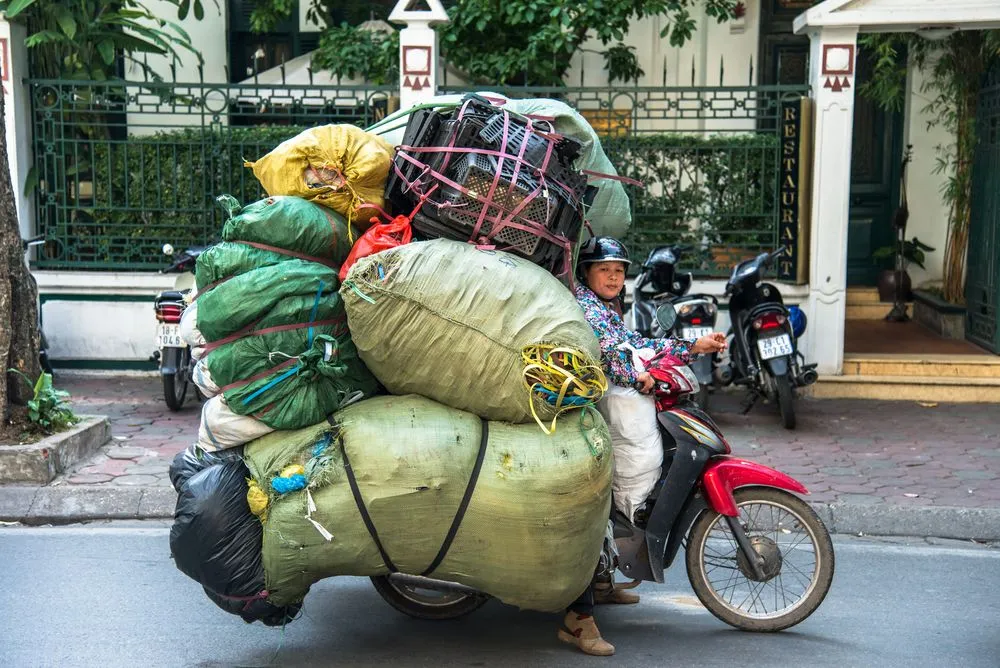
History suggests that the first motorized vehicles were cars, so the genesis of motorcycles probably has an interesting explanation. The horse-drawn carriage was replaced by self-propelled cars, and in a similar fashion, the motorcycle (used interchangeably for all motorized two-wheeled vehicles throughout the article) was the modern replacement for a bicycle.
In the present day, all vehicles have evolved to suit the ever-changing needs of very demanding customers. Motorcycles present many advantages over cars, leading the world to have more vehicles on two wheels than four. They are also much less expensive to buy and run as compared to cars. They take up less space, and can park and maneuver through traffic much more conveniently.
They are generally more fuel efficient than cars and, depending on where you ride, can qualify for reduced or even waived tolls. Along with these tangible benefits, motorcycles are synonymous with a sense of freedom, adventure and leisure.
What Are The Cons Of Having A Motorcycle?
While the advantages of motorcycles are many, they do present certain practical disadvantages, such as a limit to the number of people and amount of luggage they can carry. At the same time, using motorcycles for commuting purposes during rain and inclement weather conditions is quite a challenging task.
However, none of these are significant for why motorcycles are increasingly discouraged as a form of transport. The bad reputation is earned due to their life-threatening vulnerability when sharing space with vehicles that are much bigger in size.
Let’s examine this risk in greater detail.
1. Conservation Of Momentum
Motorcycle accidents are a macabre example of this principle of physics. As per the law, the total momentum of the two vehicles is the same just before and just after they collide. Momentum is the product of mass and velocity, so for two bodies the law can be written as:
(m1.v1 + m2.v2)before = (m1.v1 + m2.v2)after
where m and v are the mass and velocity of the bodies coming into contact. Because total momentum is shared between a heavy vehicle and a much lighter one, the lighter body has to do most of the changing. The car barely slows, while the motorcycle (and its rider) suffers a violent change in velocity, even if the bigger vehicle was moving slowly. That huge, sudden change in speed is what translates into enormous forces on the rider.
This often leads to grievous consequences for the rider and their motorcycle, as compared to the person driving the car.
2. Lack Of Protection
As seen above, most of the momentum gets transferred to the motorcyclist. While cars have a lot of safety features built in, motorcycles do not even have an external frame or a crash structure to protect the rider.
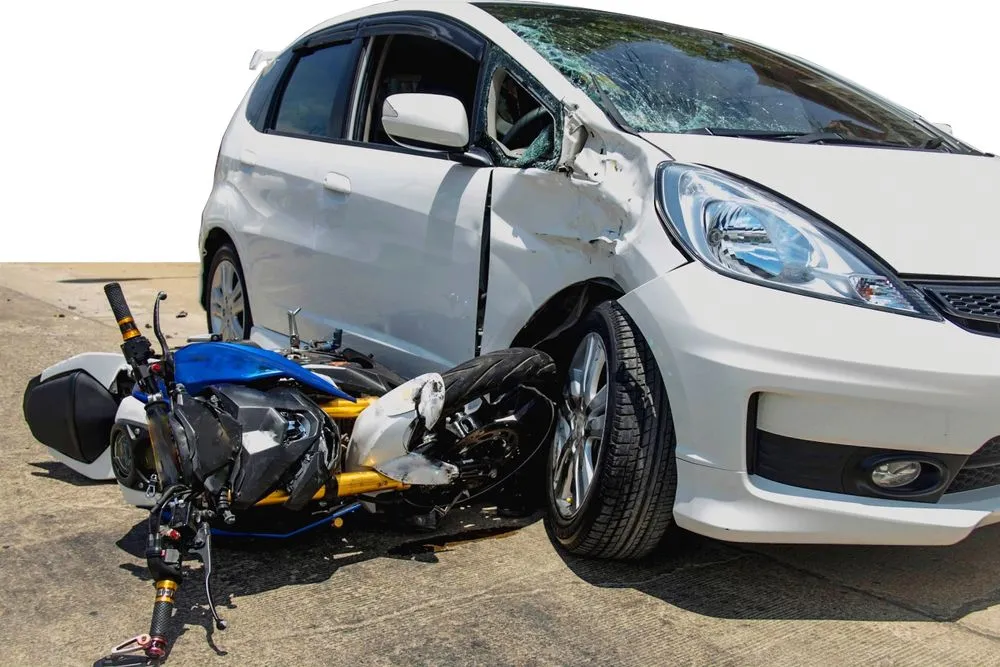
This makes them all the more vulnerable if an accident does occur. Motorcycles don’t have a retention mechanism, like seat belts in cars, so it becomes very difficult to accurately simulate motorcycle crashes.
3. Target Fixation
One of the demands of riding motorcycles is aggressively monitoring both primary and peripheral fields of vision. However, one tends to keep looking forward, oblivious to what is happening around them, leading many motorcyclists to miss crucial visual cues. These visual cues are important to take anticipatory and evasive maneuvers that will move you out of harm’s way.
4. Less Stability During A Skid
While all vehicles are susceptible to skids, single-track vehicles are the most vulnerable, as skids involve the rider falling off, while partially or completely disconnecting from the motorcycle.
Complete disengagement from the motorcycle is desirable, as it enables the rider to come to a stop after the skid, independently of the motorcycle. However, if the rider is only partially disconnected, the distance they skid before coming to a stop is now a function of the motorcycle’s motion, further aggravating their injury and increasing overall risk.
5. Power To Weight Ratio
More expensive motorcycles boast high displacement engines that push their performance figures close to four-wheeled vehicles. When this is coupled with their lighter weight, it translates to very high acceleration figures.
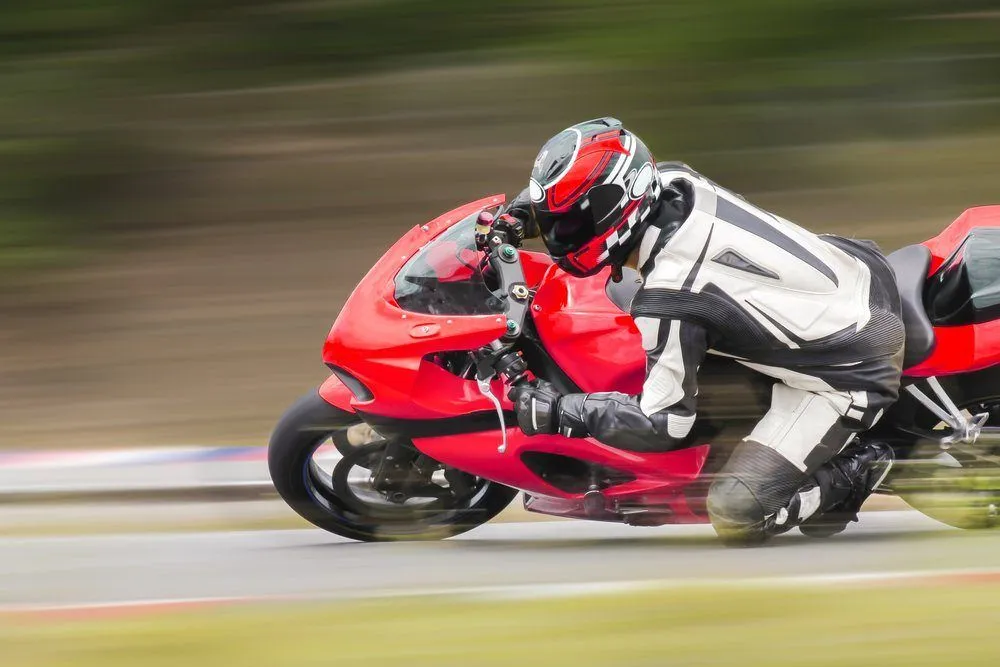
While the safest place to exploit the full potential of such bikes is on the race track, it’s not always possible or practical to do so. Hence, such motorcycles share public roads with other commuters. Owing to their high performance capabilities, it’s important for the rider to be skilled enough to make the journey. However, this is not always the case, and can result in reckless riding, as well as unfortunate accidents.
6. Enforcement Of Stringent Rules
Motorcycling, unlike driving a car, is an inherently dangerous activity, and the gap in training shows up in the data. In 2023 the NHTSA found that 34% of motorcycle riders in fatal crashes were riding without a valid motorcycle license, more than double the 15% rate for passenger vehicle drivers. This problem is worsened by the fact that motorcycles are much more affordable than cars, so there are few barriers to prevent unskilled riders from buying and using them.
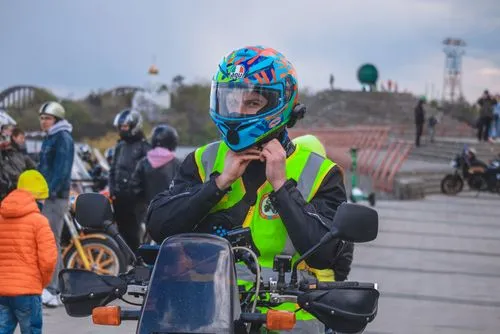
Speeding makes the problem worse still: 36% of motorcycle riders in fatal crashes in 2023 were speeding, compared with 22% of passenger car drivers. That said, the authorities aren’t the only people to blame. Flouting the rules is common and even celebrated in some circles, negating the good done by any form of enforcement.
Are Motorcycles Really Dangerous?
The short answer is yes, and the numbers are stark. Per 100 million miles traveled in 2023, the NHTSA recorded 31.39 motorcyclist deaths versus 1.13 for passenger car occupants, which is almost 28 times the risk per mile. Motorcyclists were also nearly 5 times as likely to be injured. A total of 6,335 motorcyclists were killed that year, the highest figure on record, even though motorcycles make up only about 3% of registered vehicles and account for just 0.6% of all miles driven in the United States.
So how much more dangerous are motorcycles than cars? Mile for mile, dramatically so. But there is far more to motorcycles than their danger, and a good chunk of that risk is within the rider's control. Helmets alone are estimated by the NHTSA to be about 37% effective at preventing rider deaths, yet 35% of motorcyclists killed in 2023 were not wearing one.
In all fairness, no form of commuting is free of risk, but there is a rational way to approach this problem. While the dangers of motorcycling over driving a car are very real, it is possible to make the roads safe for two-wheeled traffic.
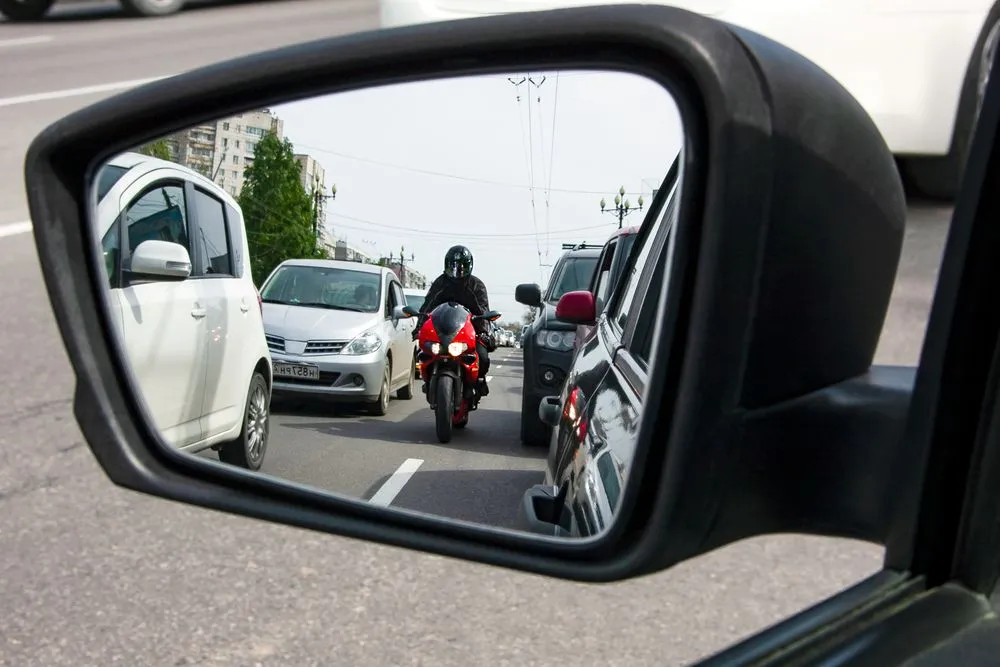
Motorcyclists should constantly upskill themselves, invest in and use protective equipment, such as helmets, gloves and boots, and practice defensive riding. At the same time, cars must be better about watching for fellow motorcyclists and driving considerately!
References (click to expand)
- R TRAINING —. Motorcycle Safety - Transportation Research Board. The Transportation Research Board
- Wells, S., Mullin, B., Norton, R., Langley, J., Connor, J., Jackson, R., & Lay-Yee, R. (2004). Motorcycle rider conspicuity and crash related injury: case-control study. BMJ. PMC, NIH.
- Traffic Safety Facts 2023 Data: Motorcycles. National Center for Statistics and Analysis. NHTSA, U.S. Department of Transportation.