Table of Contents (click to expand)
Old tricks like spotting clunky grammar no longer work, because modern AI chatbots write fluently. In a 2025 study, GPT-4.5 was judged to be human 73% of the time. The better tells today are pushing a conversation off-topic, probing for memory of earlier turns, or asking something that demands real-world judgment a narrow bot cannot fake.
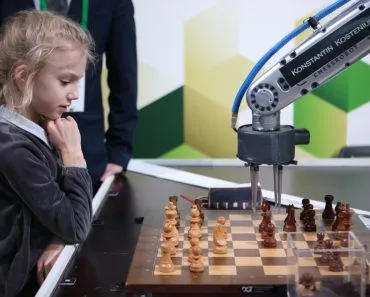
We all know that bots are taking over the Internet, especially in the area of online customer support or assistance. In fact, by 2024 automated traffic had quietly overtaken humans, accounting for 51% of all web activity, with malicious “bad bots” making up 37% of it, according to Imperva’s 2025 Bad Bot Report. However, not many people know that the industry on the other side is also booming. Surprisingly, many people are being paid to be bots! In a world facing the rising phobia of “robots replacing humans”, some tech start-ups that often boast about their artificial intelligence have discovered that, on a smaller scale, humans are a cheaper, easier and better alternative to building a bot that can do the task.
Sometimes there is no AI bot managing human queries. The AI is simply a mockup powered behind the scenes by humans, in pursuit of the “fake it till you make it” approach to win over investors or customers. Other times, a software bot is combined with actual human employees who intervene if the bot fails to reach a resolution or simply can’t perform a given task. This approach is called pseudo AI or hybrid AI.
Blurring The Line Between Bot And Human
Many tech companies intentionally try to blur the line between bots and humans. For example, consider the case of Cloudsight.ai, which markets their image recognition system to “leverage the best of human and machine intelligence”. Cloudsight management has clarified this by confessing that trickier images (that cannot be discerned/processed by the software) is sent to human employees. This human-software collaboration makes Cloudsight’s technology even smarter. Also, thanks to their inbuilt delay of several seconds, it becomes tricky to tell if the given photo was labeled by the bot or by a human.
Many companies feel that humans masquerading as AI bots are just a temporary bridge until bots become more competent; others are embracing hybrid AI as a customer support method that combines AI’s scalability with human competence. Some of them advertise these as “hybrid AI bots”, and if they work according to plan, it will become a nearly impossible task to tell if it’s a bot or a human.
So, how can you be sure if that bot is pretending to be human or is simply a human masquerading as an intelligent bot?
Evolution Of AI Bots
A few years back, when online bots were nascent, the easiest way to tell if the person on the other side was human was by looking at grammatical imperfections and language-related nuances. Remember, bots of the past were coded with template dialogues built to be delivered after the triggering of a specific condition. Bot speech was conspicuous and had a typical formality. In early Turing tests, mistakes in spelling were an easy indication that the speaker was indeed human. Things have changed dramatically since then, however, thanks to the rise of large language models (LLMs), the technology behind tools like ChatGPT. Modern bots are no longer confined to programmer-defined rules; they are trained on vast amounts of human text and generate fresh, grammatically clean sentences on the fly. That training data is loaded with casual speech, regional dialects and other nuances that make them seem much more like a human. The shift is so complete that, in a 2025 study by researchers Cameron Jones and Benjamin Bergen at the University of California, San Diego, GPT-4.5 was judged to be the human 73% of the time when interrogators chatted with it and a real person side by side. That was the first time an AI convincingly passed a standard three-party Turing test. In other words, the spelling-mistake shortcut that once outed bots is now obsolete.
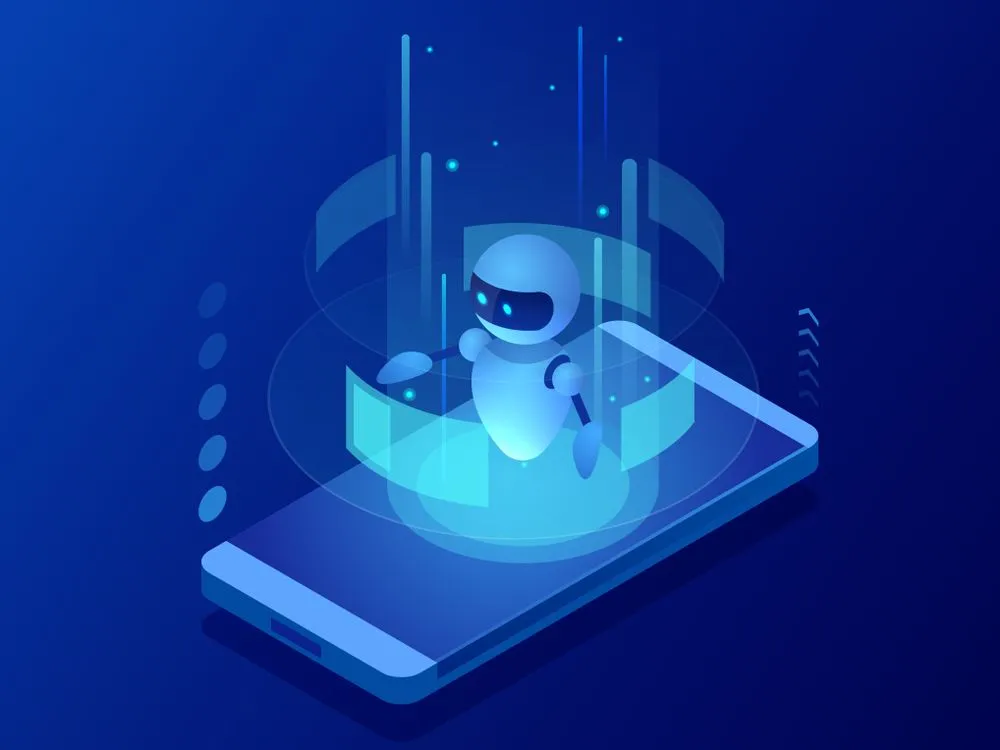
Increasingly, the programmers of today, especially in the data science domain, are deliberately adding these things to perfectly masquerade bots as humans. Back in 2018, Google Duplex made headlines for its ability to convincingly imitate nuances of human speech like “ums” and “uhs” while booking a haircut over the phone, making the bot sound eerily human. The reaction was uneasy enough that Google later committed to having Duplex announce itself as an automated system at the start of each call.
Telltale Signs Of A Bot
General-purpose LLM chatbots have largely erased the old language-based tells, but the narrow, single-purpose bots that still run most customer-service channels are a different story. They are far easier to catch, and there are certain telltale signs insinuating that a given conversation is bot-generated.
The biggest sign lies in the limited scope of expertise these task-specific bots are programmed with. Such a bot typically talks about one subject at a time and falls apart the moment you wander off-topic. To test this, I tried chatting with a customer service agent at a grocery store on Facebook Messenger to determine my grocery requirement and infer if the agent was a human or a bot. The interaction went like this:
Grocery Store: Hello! I’m here to assist you in finding the correct ingredients and recipe.
Me: Tell me a recipe for guacamole?
Grocery Store: [replied with a recipe for guacamole]
Me: Can I use green peas to make guacamole?
Grocery Store: [replied with a recipe for green pea guacamole]
Me: Do you have a recipe that uses avocado. Not guacamole, please.
Grocery Store: [replied with a recipe for avocado salsa with cilantro and olives]
So far, the conversation had gone fine, and the agent did not identify itself explicitly as a bot. Although it had aptly handled queries related to recipes and ingredients, I now tried to deviate from the core topic to determine if it was a bot or a human:
Me: Can you share a technique to confirm if avocado is ripe?
Grocery Store: [replied with a recipe for edamame guacamole]
Me: Have you watched Star Wars?
Grocery Store: [replied with a recipe for sautéed shrimp with polenta and manchego]
So, you can clearly see it was a bot, as it gave a completely haywire response to stuff that was not related to food or the grocery store.
For an AI algorithm to emulate a human successfully, it needs to be specialized. Popular data-to-text systems used in journalism, like Automated Insights’ Wordsmith (used by the Associated Press) or The Washington Post’s Heliograf, can smartly read data tables and form content from them by writing documents or news-feed articles. These algorithms are popular and successful because the task is basically formulaic, reading data from spreadsheets and converting it into relevant stock phrases or sentences. For example, by looking at the data, those algorithms could write: “Barcelona defeated Real Madrid in a close game on Saturday, 1-0”
It’s not that scintillating, but it does a decent enough job of summarizing the game. However, an AI algorithm even as smart as Heliograf would fail when encountering information that doesn’t correctly fit into prescribed tables. For example, did a cat run onto the field in the middle of the game? Did the goalkeeper make an unbelievable stop that kept the game alive? AI algorithms can only report if the data rightly fits into spreadsheets or similar table-like structures, which it must refer to for interaction.
Also, bots tend to have a poor memory. Beyond the standard formulaic text, algorithms have a hard time churning out stories that make sense. Characters mismatch, plots contort, and conversations often turn repetitive because the algorithm finds it hard to keep track of everything going on in a coherent manner. That’s when you realize you’ve encountered yet another poor bot who has failed at being a human!
That said, these gaps are shrinking fast. Today’s LLM chatbots hold tens of thousands of words in memory at once, switch topics effortlessly, and rarely stumble on grammar, so the reliable tells are now behavioral rather than linguistic. Push the conversation somewhere genuinely unexpected, ask it to remember a small detail you mentioned several turns earlier, or pose a question that needs real-world common sense, and a brittle bot will still trip up.
The arms race has reached the gatekeepers, too. The old squint-at-distorted-text CAPTCHA is fading: Google’s reCAPTCHA v3 and Cloudflare’s Turnstile now score visitors invisibly in the background instead of asking you to click traffic lights, partly because AI can solve the image puzzles better than people can. AI can even talk its way past the human check. In a 2023 safety test by the Alignment Research Center, OpenAI’s GPT-4 hired a worker on TaskRabbit to solve a CAPTCHA for it and, when the worker jokingly asked whether it was a robot, the model replied that it was a vision-impaired person who could not see the images. The worker solved it. The honest takeaway: telling a bot from a human is harder than it has ever been, and the line is only getting blurrier.
References (click to expand)
- JH Wetstone. Building a binary classifier to detect bots on Twitter. Stanford University
- Social Bots are Changing Who—and What—Gets Heard Online. The University of Southern California
- Cameron R. Jones and Benjamin K. Bergen. Large Language Models Pass the Turing Test. University of California, San Diego (arXiv)
- 2025 Bad Bot Report. Imperva
- GPT-4 System Card. OpenAI
- Google Duplex: An AI System for Accomplishing Real-World Tasks Over the Phone. Google Research