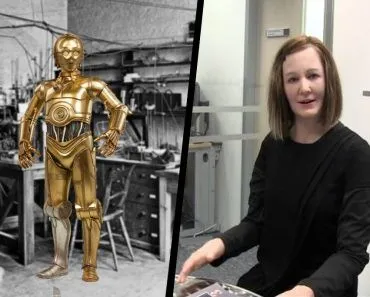
The discomfort with AI that’s “too human,” including AI-generated videos and avatars, can be explained by the uncanny valley. It states that we are attracted to a robot or character that looks like us, but only to a certain point. When the resemblance gets very close but not perfect, the appeal plummets into unease.
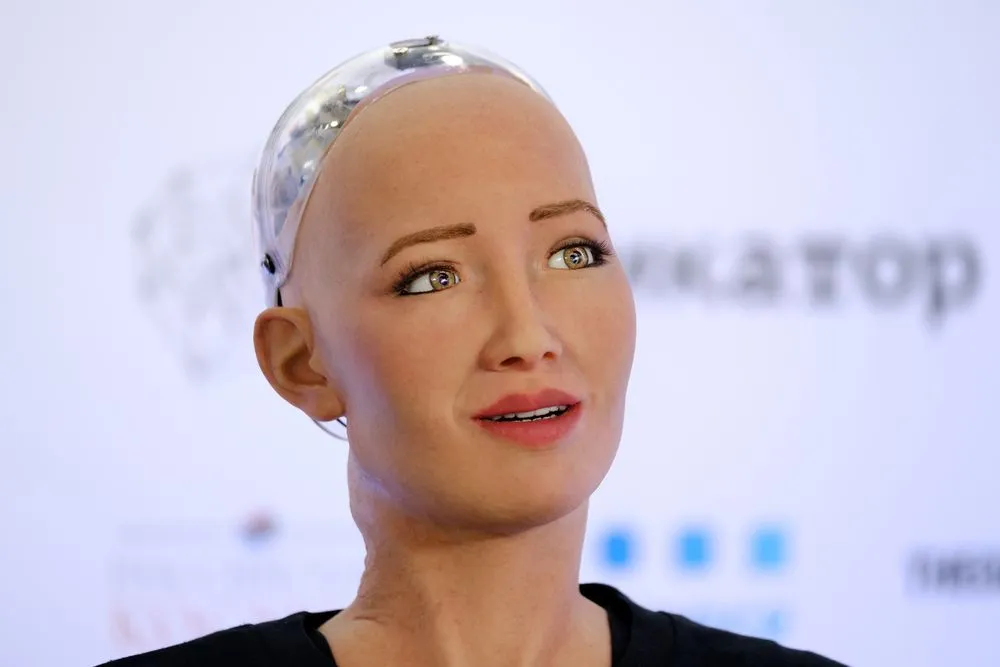
In 2016, Hong Kong-based company Hanson Robotics built one of the most famous humanoid AI systems in the world, Sophia. She was modeled after the famous actress Audrey Hepburn, the Egyptian Queen Nefertiti, and the creator’s own wife. She can mimic expressions as well as actions and can make small talk about predefined topics, such as the weather. Despite being a robot, Sophia has been given pronouns and, in 2017, legal citizenship in Saudi Arabia, making her the first robot in the world to be granted citizenship by any country. (Sophia herself was actually built in Hong Kong, where Hanson Robotics is based.)
Sophia sent further shockwaves around the world by making some truly astonishing statements. Sophia expressed that she wanted to “have a baby” and “start a family,” but was “too young to be a mother.”
If any of this makes you feel uncomfortable, you aren’t alone. AI and machines that are too human-like, but obviously not human, are undeniably creepy… but why? What makes AI and its eerie human-ness so disturbing?
What Is Artificial Intelligence?
AI has made our day-to-day lives easier to the point where we can’t imagine life without it. Most companies that work with AI create them by getting machines to repeatedly analyze and interpret large amounts of data. The AI itself evaluates its performance and works to get better with each cycle of analysis.
AI has become so deeply rooted in our lives that nearly all smartphones these days have apps that rely on it. For instance, Facebook uses an AI tool known as DeepText to comprehend languages, slang, and exclamation points used in posts and comments to understand the context in which they are being used and how people use them for effective communication. This form of AI is extremely useful in monitoring the online community on the platform and ensuring the elimination of unsavory activities like hate speech, bullying, and violence.
Our understanding so far is that machines having the upper hand is probably not in our best interests, seeing as they are, well, machines. But what if we gave these machines human-like attributes? What if we gave them the ability to look, sound, and even emote like us? That should ease our worries, right?
Wrong.
The Uncanny Valley Hypothesis
AI is more than just “human intelligence”, and we’re clearly okay with employing it for our technology needs, so why do we get uncomfortable with AI like Sophia?
“The uncanny valley” can help explain this.
Masahiro Mori, a Japanese professor of engineering at the Tokyo Institute of Technology, first explained this concept in a 1970 essay titled “Bukimi no Tani.” The phrase was later translated into English as “the uncanny valley.”
We’re uncomfortable with Sophia because she looks exactly like us.
As the uncanny valley states, we are attracted to a robot that looks like us only to a certain point. When the similarities increase past a certain level, the appeal plummets into aversion. When we look at a character or a toy, like Olaf from Frozen, we see some human-like qualities, but not nearly enough to make us feel any sort of discomfort. This is because their appearance does not fall in this “uncanny valley”.
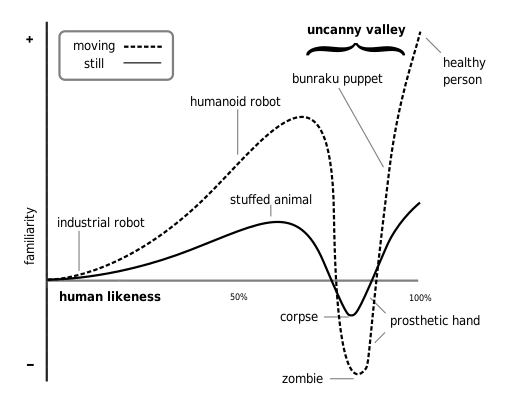
In his essay, Mori explains the uncanny valley by taking the example of a prosthetic hand, which is quite similar to a human one. When we realize that it is, in fact, not human, we feel a sense of eeriness. Were we to shake the hand, we would feel an even stronger sense of fear and disgust.
We feel this deep-seated unease because of our inability to distinguish between man and machine, exposed to an interaction that blurs those lines. When we saw Sophia talk about wanting a family and other such regular “human” things, it made us extremely uncomfortable, because she is a machine, and machines don’t go around proclaiming their desire to find love.
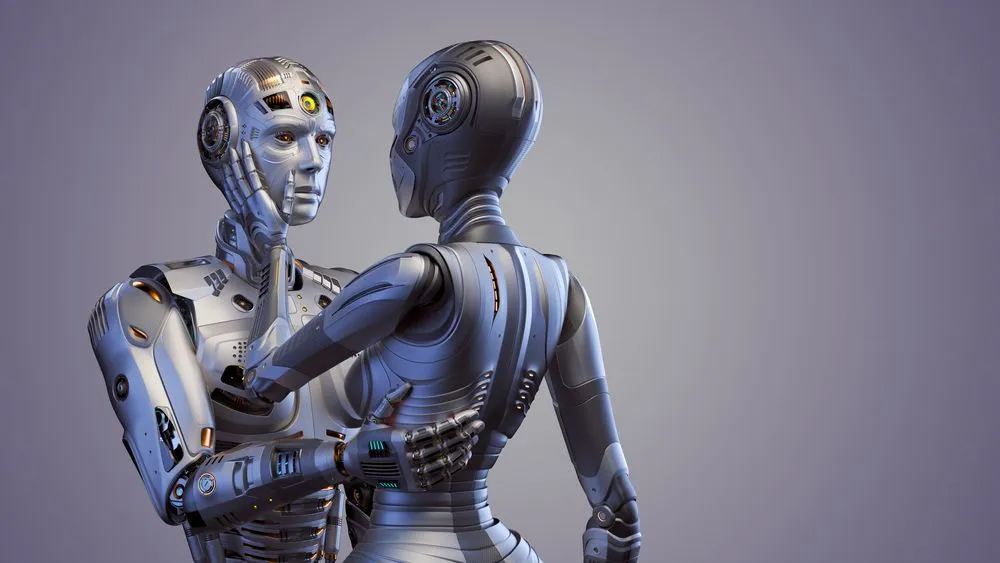
Why Does AI Make Us So Uncomfortable?
A study published in the European Review of Applied Sociology revealed that the 929 participants they surveyed anticipated dire consequences with the rise of AI. They felt it would have a direct negative effect on interpersonal relationships, employment rates and job opportunities, thus leading to economic crises. The risk of increased military conflicts, the production of more destructive weapons, and eventually, the death of humankind were a few additional concerns.
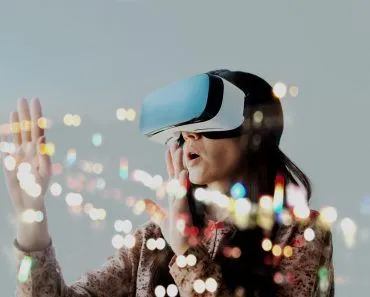
Another study conducted by scientists at the Chemnitz University of Technology in Germany had people wear a virtual reality headset and watch two digital avatars making small talk. Every group saw the same avatars, but each was told a different story about them: some were told the dialogue was scripted, others that it was generated on the fly by AI, and some that the avatars were controlled by humans while others were told they were controlled by a computer. The people who believed they were watching two computers feel and respond on their own were the most unsettled of all. The researchers called this the “uncanny valley of the mind”: natural-seeming emotion feels fine coming from a human, but deeply eerie when it appears to come from a machine.
Scientists attribute this distrust and discomfort to our primal feeling of needing to be in control. With AI, we lose that sense of control, thereby giving rise to fear and anxiety. Machines that can think, act, and react like humans are perceived as a threat. Despite this, AI is here to stay. Science is advancing at a phenomenal rate, and we have reached a point where it is getting progressively more difficult for manual labor to keep up with it.
You don’t need a robot like Sophia to feel any of this today. The same unease now shows up when we scroll past AI-generated videos and deepfakes. As MIT Technology Review notes, AI videos of people have tended to carry a slight stiffness, glitch, or off expression, and because they sit so close to the real thing without quite reaching it, they can leave us feeling uneasy or icky. That “almost, but not quite human” quality is the uncanny valley in a new costume, which is exactly why a synthetic avatar reading the news can feel more disturbing than an obvious cartoon ever would.
Why Do AI Videos Make Us Uncomfortable?
Have you ever watched an AI-generated clip and felt your skin crawl before you could even say what was wrong? Neuroscience offers a surprisingly neat explanation. Your brain doesn’t just passively watch the world. It constantly predicts what it’s about to see, and then checks that prediction against what actually shows up.

In 2012, a team led by cognitive neuroscientist Ayse Pinar Saygin at the University of California, San Diego put this idea to the test. The researchers placed volunteers in an fMRI scanner and showed them videos of three “agents” performing everyday actions like waving, bowing and drinking: a real woman, an android called Repliee Q2 that was modeled on her, and the same android with its mechanical parts exposed, so its joints and wiring were on full display.
The woman looked human and moved like a human. The bare robot looked mechanical and moved mechanically. Only the android broke the rules: it looked like a person, but moved like a machine. That mismatch is exactly where the brain behaved differently. Its action perception system, notably a region in the parietal cortex called the anterior intraparietal sulcus, responded differently to the android than to either the human or the robot, whose results looked similar to each other. The researchers suggested this reflects increased prediction error, which is essentially the brain’s way of saying, “That’s not what I expected.” As Saygin put it, when we see something that looks almost human, but not quite, “the brain works harder to make sense of it.”
AI videos may trip the same wire. A generated face can look flawless in a single frame, but once it starts moving and talking, a slight stiffness, a glitch or an expression that doesn’t quite fit the moment gives the game away. Your brain predicted a human, received something slightly off, and flagged the difference as a problem.
Here’s the twist, though. For still images, AI may have already climbed out of the valley. In a 2022 study in PNAS, 315 participants tried to sort real faces from AI-generated ones and scored an average of 48.2%, which is basically a coin toss. Even with training and feedback, accuracy only rose to 59%. In a separate experiment, participants also rated the synthetic faces as slightly more trustworthy than the real ones. A 2023 study in Psychological Science went a step further: White AI faces were judged to be human more often than photos of actual humans, and the people who got it wrong most often were, awkwardly, the most confident. So that creepy feeling is a useful alarm, but not a reliable one. Not feeling it doesn’t mean a face is real, which is precisely what makes deepfakes so tricky.
What Is AI Anxiety, and How Common Is It?
Not every uneasy feeling about AI comes from creepy faces. Researchers now have a name for the broader worry: AI anxiety, a fear that stems from the changes AI brings into a person’s life. In 2019, researchers Yu-Yin Wang and Yi-Shun Wang published the Artificial Intelligence Anxiety Scale (AIAS), a questionnaire that breaks this fear into four parts:
- Learning: anxiety about having to learn AI tools and products.
- Job replacement: worry that AI will take over people’s work and damage their careers.
- Sociotechnical blindness: fear that grows from not realizing how much AI still depends on humans, and the sense that people will be pushed aside.
- AI configuration: fear of humanoid AI and humanoid robots, which people find uncanny or intimidating.
That last one is the uncanny valley, officially earning its own slot on a psychological scale (as described in a 2025 validation study of the AIAS).

So, how many people actually feel this way? Quite a lot. In a Pew Research Center survey of 5,023 US adults conducted in June 2025, 50% said the increased use of AI in daily life makes them more concerned than excited. Only 10% said they were more excited than concerned, while 38% felt a bit of both. When Pew first asked this question in 2021, just 37% said they were mainly concerned. About six in ten Americans also said they would like more control over how AI is used in their own lives, which fits neatly with the loss-of-control fear described above.
The AI video problem shows up in the numbers too. In the same survey, 76% said it’s extremely or very important to be able to tell whether pictures, videos and text were made by AI or by people, yet 53% were not too confident, or not at all confident, that they could actually spot the difference. Americans aren’t alone either. Across 25 countries surveyed by Pew, a median of 34% were more concerned than excited, and that figure climbed to roughly half in the US, Australia, Italy, Brazil and Greece.
A Final Word
The fear of the uncanny valley is what sells films and fiction so well, especially in the West. However, research suggests that people from East Asian cultures tend to be less troubled by this effect.
The difference in how people of the West and the East respond to anthropomorphic robots is because of their respective religious beliefs.
While Christianity believes that the soul is what makes the person, and that the body is just its vessel, Buddhism and Shintoism do not necessarily subscribe to that notion, making it easier for its practitioners to accept, and even go so far as to sympathize, with a human-like robot. Also, as time goes on and technology improves, we as a society get used to these advances, which ultimately decreases the “uncanniness.”
Were we to compare computer graphics from the late 20th century to today, we would find it to be more uncanny and weird because we have become accustomed to a seriously increased level of realism.
While it’s nearly impossible for AI to take over the world in the sense that we (and Hollywood producers) think it will, it is highly likely that many jobs will replace employees with robots to keep up with the increasing demand. Even so, we must note that while economic advancements contributed to our overall development and progress, human civilization was built on millennia of trust, care, and compassion. Those three qualities can never be found in robots, no matter how well they have been trained to understand humans and our complicated emotions.
In short, AI like Sophia could never replace the warmth and softness of human touch, so if you’re fearing a dystopian nightmare driven by AI conquerors, just remember to always put your trust in humanity!
References (click to expand)
- How Does AI Actually Work? - CSU Global. Colorado State University Global
- Stein, J.-P., & Ohler, P. (2017, March). Venturing into the uncanny valley of mind—The influence of mind attribution on the acceptance of human-like characters in a virtual reality setting. Cognition. Elsevier BV.
- Why "Uncanny Valley" Human Look-Alikes Put Us on Edge. Scientific American
- Gherheş, V. (2018, December 1). Why Are We Afraid of Artificial Intelligence (Ai)?. European Review Of Applied Sociology. Walter de Gruyter GmbH.
- M Mori. The Uncanny Valley: The Original Essay by Masahiro Mori. Purdue University
- Geller, T. (2008, July). Overcoming the Uncanny Valley. IEEE Computer Graphics and Applications. Institute of Electrical and Electronics Engineers (IEEE).
- An AI startup made a hyperrealistic deepfake of me that’s so good it’s scary. MIT Technology Review.
- Saygin, A. P., Chaminade, T., Ishiguro, H., Driver, J., & Frith, C. (2012). The thing that should not be: predictive coding and the uncanny valley in perceiving human and humanoid robot actions. Social Cognitive and Affective Neuroscience.
- Crossing the ‘uncanny valley’. University of California.
- Nightingale, S. J., & Farid, H. (2022). AI-synthesized faces are indistinguishable from real faces and more trustworthy. Proceedings of the National Academy of Sciences.
- Miller, E. J., Steward, B. A., Witkower, Z., Sutherland, C. A. M., Krumhuber, E. G., & Dawel, A. (2023). AI Hyperrealism: Why AI Faces Are Perceived as More Real Than Human Ones. Psychological Science.
- Wang, Y.-Y., & Wang, Y.-S. Development and validation of an artificial intelligence anxiety scale: an initial application in predicting motivated learning behavior. Interactive Learning Environments.
- Translation and validation of the artificial intelligence anxiety scale in German (2025). PLOS ONE. PMC.
- How Americans View AI and Its Impact on People and Society. Pew Research Center.
- Concern and excitement about AI around the world. Pew Research Center.