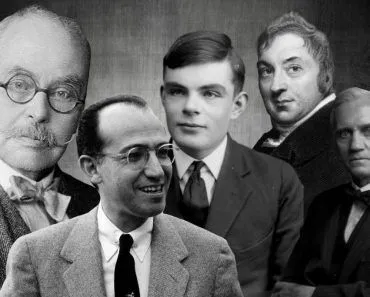
Alan Turing and Gordon Welchman, leading a team of mathematicians and cryptographers at Bletchley Park, broke the Nazi Enigma cipher during World War II. The decisive insight was that the Enigma machine never encrypted a letter as itself, which let Turing's improved Bombe machine — building on earlier Polish work by Marian Rejewski — find the daily settings by ruling out impossible combinations.
At times when you are completely at the end of your wits, a tiny clue often appears, something so conspicuous that it can easily escape the attention of everyone. The key to success is identifying the clue that “changes everything” and use it to your advantage.
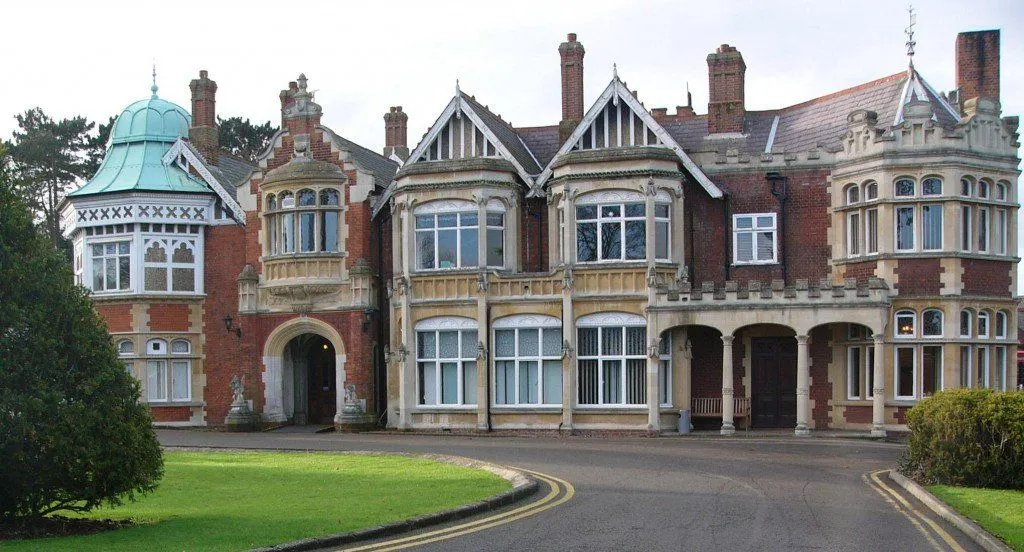
This is precisely what happened during World War II in a place called Bletchley Park in Great Britain, where a team of scientists, mathematicians and cryptographers were attempting to break the Enigma Code.
What Is The Enigma Code?
The Enigma Code is a cipher created by a machine known as the Enigma Machine. During World War II, the Enigma Machine was an essential communication tool for the Nazi forces. It was used to encrypt top-secret messages, which were then transmitted over long distances to the German military troops at the front using Morse code.
How Did The Enigma Machine Work?
In order to understand how to crack the Enigma Code, one must comprehensively understand how the Enigma machine worked. You can read about its important components and function in this article: how did the Enigma machine work?
What’s So Special About The Enigma Code?
The quality of any code is measured in terms of the number of possibilities one has to go through to arrive at the correct answer (this is one quantifiable entity, which is why we’ll only consider this).
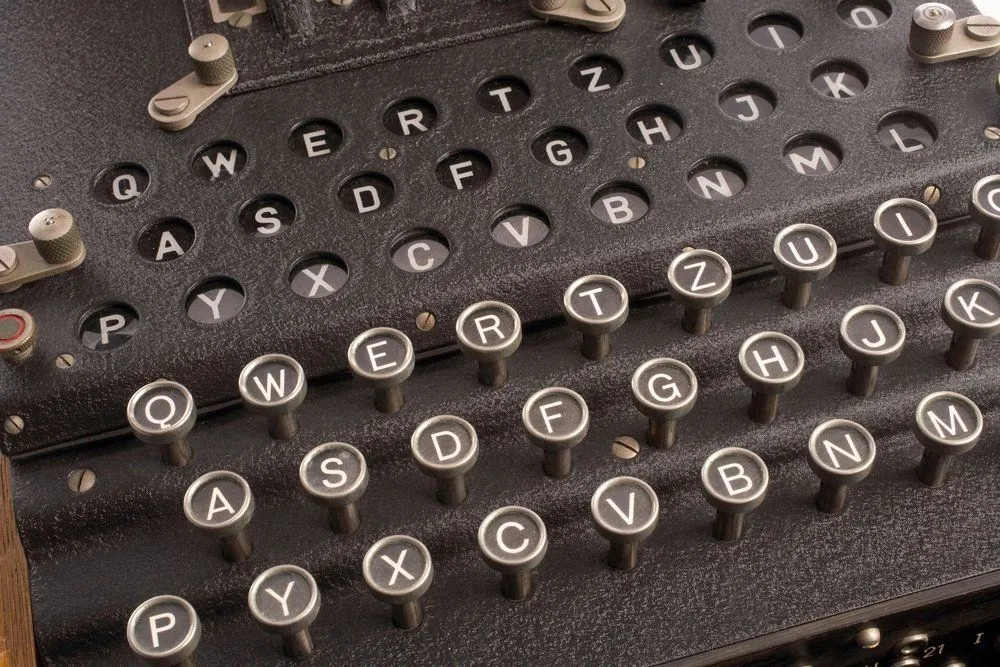
The Enigma Machine was notoriously difficult to crack because it required several settings to be precisely aligned. In fact, there were roughly 158 million million million (about 1.59 × 10²⁰) possible daily settings to decipher, making it seem virtually impossible to break.
How Did Turing’s Team Crack The Enigma Code?
During World War II, a team of scientists, mathematicians, and cryptographers worked to break the Enigma code, a cipher used by the Germans to protect their messages. A brilliant mathematician, Alan Turing led this team alongside his colleague Gordon Welchman. The team developed their version of the Bombe Machine, which the Poles invented initially, but the machine needed to be more efficient.

Although Turing’s version of the Bombe Machine was more advanced than the Polish version, it still took an unacceptably long time to decipher any code, which was bad news for Britain and the other Allied nations. To address this issue, Turing had to develop a new idea enabling the Bombe Machine to crack the code much faster.
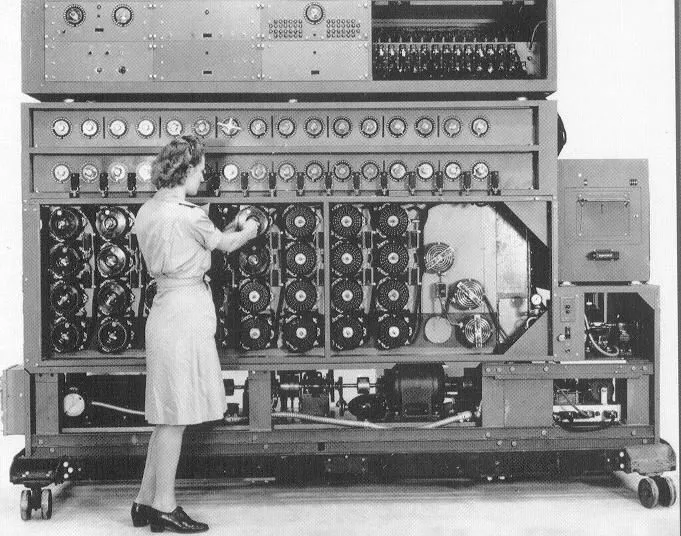
One memorable day, Turing had an epiphany. He identified a weak spot in the Nazi encrypted messages – a chink in that ironclad armor.
This flaw was something that could finally help to decipher every single encrypted Enigma message!
What Was The Flaw In The Enigma Code?
Let’s try to understand this important flaw with an example.
Suppose you wanted to encrypt a message that contained a total of 3 words. The first word of the message was, let’s say, ‘SCIENCE’. Now, the first letter that you would want to encrypt is ‘S’, so when you press the ‘S’ key on the keyboard of the Enigma Machine, an electric signal was generated that traveled through a lot of wires and rotors and ultimately lit up a different letter (say, ‘M’). So the ‘S’ in ‘SCIENCE’ would be encrypted as ‘M’.
Similarly, the other words would be encrypted as different letters than they actually were. On one end of the Enigma Machine, you typed ‘SCIENCE IS AWESOME’, but the encrypted output might have looked something like ‘MKSQER PO QAPEKRQ’, or something entirely different.
Did You Notice Anything About The Above Encryption?
Every letter was encrypted as a letter that was different than itself. Never once did it happen that a letter was encrypted as itself.
Quite simply, when you type ‘S’, it could be encrypted as any one letter of A,B,C….X,Y,Z. Any letter out of the 26 letters could be the, but not S. Therefore, an ‘S’ would never be encrypted as an ‘S’. Now, read the encryption of ‘SCIENCE IS AWESOME’ again and see if that holds true.
This was the single flaw in the Enigma code.
How Did This Flaw Help Crack The Enigma Code?
Now that you know that a letter can be encrypted as any letter other than itself, the total number of possible settings decreased exponentially.
To aid this process, all Turing needed was a word or phrase — a crib — that he was confident the Germans would include in their encrypted messages. The most useful cribs were predictable, formulaic chunks of text: daily weather reports (which routinely contained the word WETTER), standard message headers, and sign-offs like HEIL HITLER. Every such crib was a foothold: Turing could line up the suspected plaintext against the cipher, throw out any alignment in which a letter encrypted to itself, and feed what was left into the Bombe to test. These seemingly small habits of German operators contributed enormously to their eventual defeat.
This is one of the many examples that proves that mathematics is not just a meaningless collection of numbers (which is what math-haters believe!). It’s something far greater… something that can save countless human lives.
This historical event proves another vital thing; perseverance and belief in your ideas eventually leads to success, no matter how insurmountable the problem may initially appear.
Last Updated By: Ashish Tiwari