Table of Contents (click to expand)
Cryogenics is the branch of science that studies materials and processes at very low temperatures, conventionally below about 120 K (-153 °C). It draws on physics, chemistry and engineering and powers technologies as different as MRI scanners, rocket propellants, LNG shipping, IVF embryo banks and quantum computers. Scientists working in the field are called cryogenicists.
Cryogenics is the scientific study of materials and their characteristics observed at a very low temperature. The word has Greek origins, with cryo- meaning “cold” and –genic meaning “producing”. The term is associated with physics, but has applications in a wide range of subjects, including medicines, materials science and electronics. Scientists and experts in this field are called cryogenicists.
Cryogenics Standards
Precisely how cold a material must be to be considered cryogenic is a bit ambiguous among the scientific community. The U.S. National Institute of Standards and Technology (NIST) and the International Institute of Refrigeration generally place the boundary at around 120 K (-153 °C), the threshold adopted by the IIR in 1971. Below this temperature, the so-called permanent gases, like oxygen, nitrogen, hydrogen and helium, can exist as liquids, while common refrigerants such as freon remain gaseous. There is also a specialized field of study by the name ‘high temperature cryogenics’, which deals with temperatures above the boiling point of liquid nitrogen at normal pressure, that is, from -195.8 °C (77.4 K) up to -50 °C (223.2 K).

List Of Cryogenic Fluids
Given below is the list of common fluids used in cryogenic applications:
| Cryogenic fluid | Boiling point | |
| In Kelvin (K) | In Celsius (oC) | |
| Helium-3 | 3.19 | -269.96 |
| Helium-4 | 4.22 | -268.93 |
| Hydrogen | 20.28 | -252.87 |
| Neon | 27.10 | -246.05 |
| Nitrogen | 77.36 | -195.79 |
| Air (mixture, range) | ~78.8 to 81.7 | ~ -194.4 to -191.5 |
| Fluorine | 85.03 | -188.12 |
| Argon | 87.30 | -185.85 |
| Oxygen | 90.18 | -182.97 |
| Methane | 111.70 | -161.45 |
The field of cryogenics made advancements during the second world war when scientists discovered that metals subjected to low temperatures displayed more resistance to wear and tear. Based on this theory of cryogenic hardening, the commercialization of cryogenic processing began in the late 1960s. In 1966, a Detroit businessman named Ed Busch founded a company called CryoTech. Busch had a background in the heat-treating industry, and his original marketing claimed that cryogenic tempering could extend the life of metal tools by 200%-400%. Peer-reviewed studies on deep cryogenic treatment have since confirmed real but more variable gains, depending on the alloy and the application.
How To Deal With Cryogenic Materials?
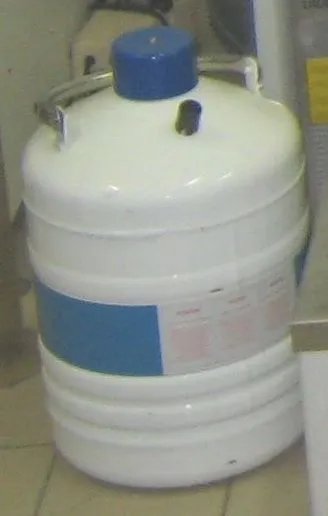
Cryogenic liquids are usually stored in specialized containers called Dewar flasks, named after the Scottish physicist Sir James Dewar, who invented them in 1892 at the Royal Institution in London. These are double-walled containers that have an insulating vacuum between the walls. Dewar flasks were designed for storing even extremely cold liquids, such as liquid helium. These flasks allow gas to escape the container to avoid pressure building up from boiling, which could otherwise lead to an explosion.
Special sensors are needed to measure the temperature of cryogens. Platinum resistance temperature detectors (Pt RTDs) are common down to about 30 K (-243 oC) because of their low cost and stable response, but they lose sensitivity at very low temperatures. Below that, silicon diodes (usable from 1.4 K to 500 K), Cernox ceramic-oxynitride RTDs (0.1 K to 420 K) and germanium sensors (for sub-1 K, zero-field work) take over.
Applications Of Cryogenics
Cryogenics can be applied to several disciplines, including medical, space, technology etc. With that in mind, let’s take a more detailed look into the areas where it can be used.
Cryosurgery
Cryosurgery a medical branch derived from cryogenics that involves destroying abnormal or diseased tissues using cryogenic materials in surgery.
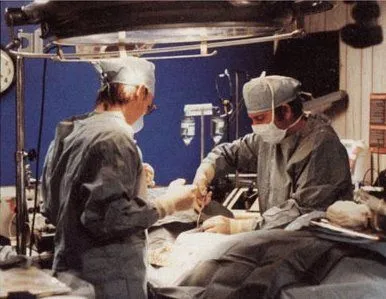
Cryosurgery is a minimally invasive surgery that takes advantage of the destructive force of freezing temperatures on the body’s cells. When the temperature falls below a certain level, ice crystals start forming inside the cell. This decreases the cell density and tears it apart. In this way, cryosurgery is used in the treatment of internal and external tumors, as well as tumors in the bone. A hollow instrument called a cryoprobe is used for treating internal tumors; this device is placed in contact with the tumor. Argon gas or liquid nitrogen is passed through this cryoprobe on the tumorous area. An ultrasound or MRI is usually used to maneuver the cryoprobe and monitor the process of cell freezing. This way, damage to the nearby tissues can be minimized.
Cryoelectronics
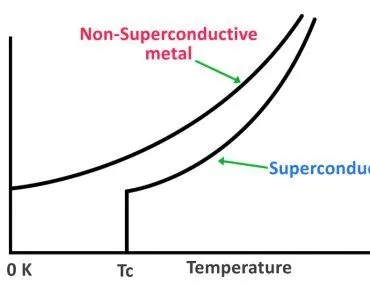
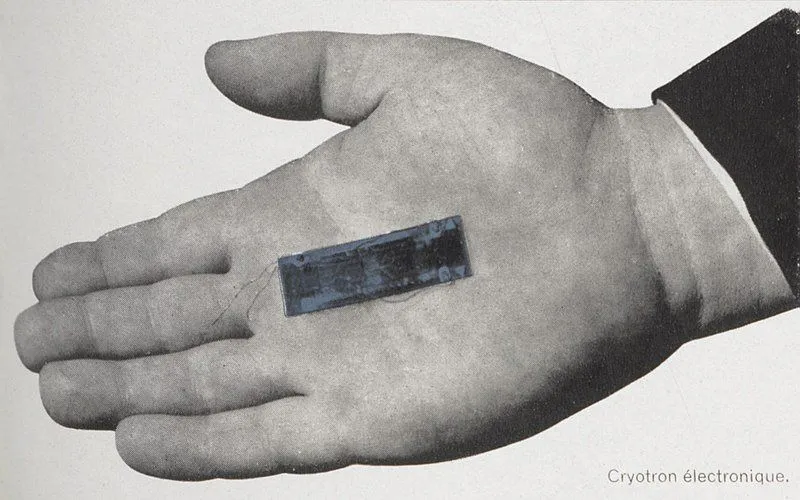
Cryoelectronics or cryotronics is an engineering branch derived from cryogenics that typically involves studying superconductivity under cryogenic conditions. Cryoelectronics is a relatively new field and many studies are still ongoing to come up with revolutionary applications.
A key factor that decides the fate of any new technology is its utility and cost-effectiveness. Appliances and gadgets that make use of cryoelectronics and superconductivity, such as computers, information transmission lines, and magnetocardiography, have great commercial potential. The original cryotron, a niobium-based switch invented at MIT in the 1950s, was overtaken by silicon ICs in the 1960s, but cryogenic computing has come back in modern forms: Josephson-junction logic, Rapid Single Flux Quantum (RSFQ) circuits, and the superconducting qubits inside dilution refrigerators that power today’s quantum computers at IBM, Google and Rigetti.
In large sprawling cities, transmitting electric power using overhead cables is infeasible, so underground cables are used. However, those underground cables get heated by increasing the wire resistance, which causes a wastage of power. Superconductors (conductors with zero internal resistance) are touted to arrest this power wastage by increasing power throughput, which could also be achieved by using cryogenic liquids, such as helium or nitrogen. Several testing and feasibility studies are ongoing to understand how cryogenics can be used to achieve superconductivity for electric power transmission.
Cryoelectronics allows more precise readings and measurements of current, voltage, and power, and may find very exciting applications requiring precise control, such as spacecraft and biomedical instrument.
Other Applications
Besides the fields of medicine and electronics, cryogenics quietly underpins a large slice of modern technology:
- MRI scanners rely on niobium-titanium superconducting magnets bathed in liquid helium at about 4.2 K to generate the steady 1.5-3 tesla fields used in clinical imaging.
- Cryopreservation stores sperm, eggs, embryos and tissue samples in liquid nitrogen at -196 °C; vitrification, an ultra-rapid cooling technique with cryoprotectants, is now standard practice in IVF and is being researched for whole-organ banking.
- Quantum computers from IBM, Google and Rigetti cool their superconducting qubits inside dilution refrigerators to roughly 10-25 millikelvin so that thermal noise no longer drowns out quantum states.
- Particle accelerators like CERN’s Large Hadron Collider use 1.9 K superfluid helium to cool their dipole magnets, allowing the 8.65 T fields that steer protons around the ring.
- Cryogenic rocket fuels such as liquid hydrogen and liquid oxygen (LOX) power vehicles from the Space Shuttle to NASA’s SLS and SpaceX’s Raptor methalox engines.
- LNG shipping liquefies natural gas at about -162 °C (111 K), shrinking its volume by roughly 600× so it can be transported across oceans in insulated tankers.
- The James Webb Space Telescope uses a closed-cycle cryocooler to chill its mid-infrared instrument (MIRI) to about 6.7 K, the temperature at which its detectors can see faint thermal infrared light.
- Food freezing and stage effects still account for plenty of everyday cryogen use: nitrogen tunnels flash-freeze produce for transport, and liquid nitrogen or carbon dioxide makes the chilling white fog you see in nightclubs.
The only limit to applications from this fascinating field is our own imagination!
References (click to expand)
- About Cryogenics - U.S. National Institute of Standards and Technology
- Cryogenic Electronics for Measurements and Standards - NIST
- Introduction to Cryogenic Engineering - SLAC / CERN
- Sir James Dewar - Encyclopaedia Britannica
- Cryogenics: Low Temperatures, High Performance - CERN
- Cryogenic Temperature Sensors - Lake Shore Cryotronics
- The Webb Cryocooler - NASA Science