Table of Contents (click to expand)
The ISS protects itself from space debris with a two-pronged approach. Pieces larger than about 10 cm are tracked from the ground, and if one is projected to enter a 50×50×4 km "pizza box" around the station, the ISS fires its thrusters in a Debris Avoidance Maneuver. Smaller fragments, which are too numerous to track, are absorbed by multi-layer Whipple shields built into the hull. Other satellites use the same playbook of tracked-orbit dodging plus passive shielding.
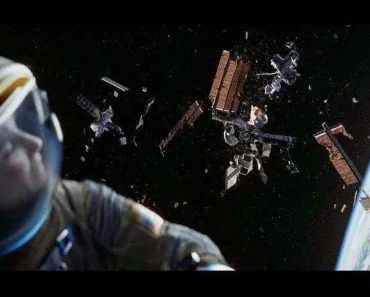
Ever since the first satellite was sent into space, certain unintended consequences have threatened to derail man’s exploration of the cosmos. The most prominent among these is the issue of space debris. New satellites that are launched must factor space debris into their trajectories to prevent any tragic mishaps. These tiny particles move at extremely high speeds, orders of magnitude faster than even the fastest assault rifle bullets!
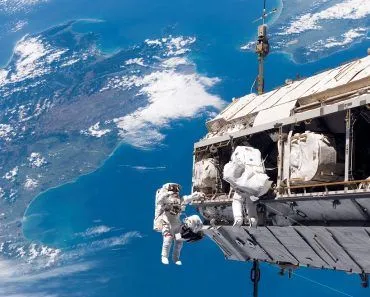
The increasing number of satellites being launched into space translates into a greater amount of space debris each and every year. Long-term missions, like the International Space Station (ISS), must continuously remain on the lookout before any disastrous collisions occur.
Now, let’s delve into the measures that have been implemented on the ISS and other satellites to tackle this serious problem.
Threat From The Space Debris
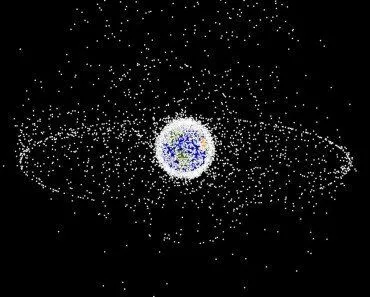
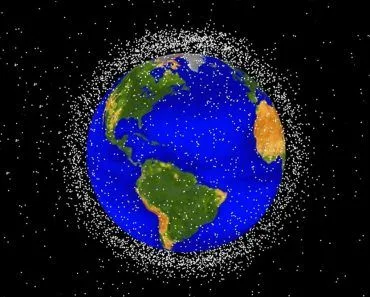
Space debris refers to tiny, solid masses, both man-made and natural, that remain near the Earth in Low Earth Orbit (LEO). They vary in size from a few micrometers to dozens of inches across.
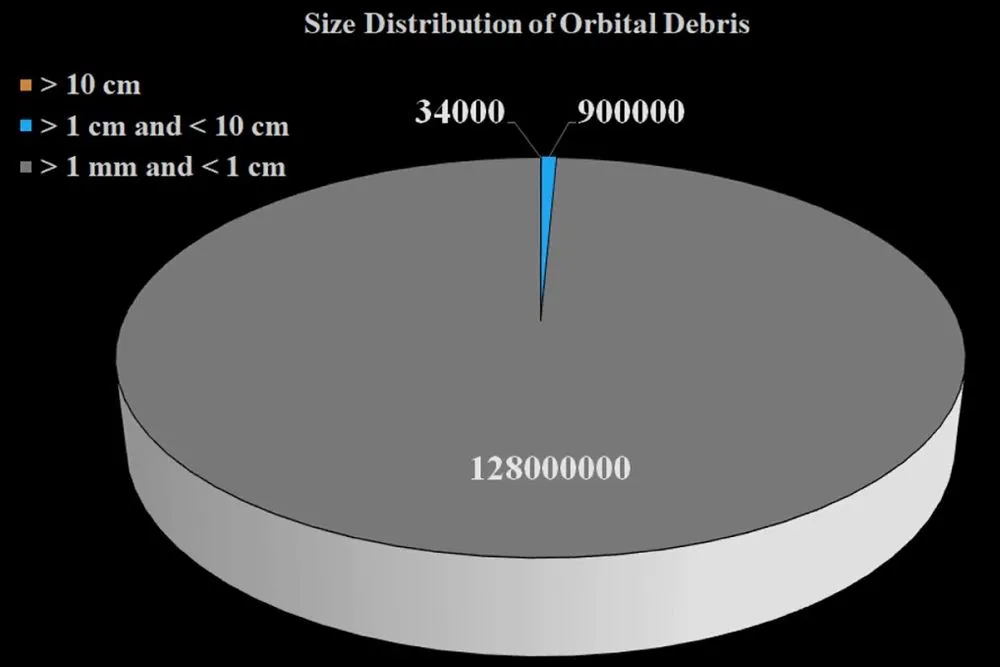
As of 2025, ESA estimates roughly 54,000 objects larger than 10 cm (about the size of a softball), 1.2 million pieces between 1 cm and 10 cm, and around 140 million pieces between 1 mm and 1 cm in Earth orbit. Only objects larger than ~10 cm are routinely catalogued by the US Space Surveillance Network. These pieces orbit at roughly 7-8 km/s (about 25,000-28,800 km/h, or 15,700-17,900 mph). Because two objects can collide head-on, the typical impact speed is closer to 10 km/s (~22,000 mph) and can reach 15 km/s (~34,000 mph). For context, the muzzle velocity of an AK-47 is about 715 m/s (~2,575 km/h, or 1,600 mph), with a bullet diameter of 7.62 mm. Even a fleck of paint moving at orbital speeds carries the kinetic energy of a small handgun round, which is why space debris is treated as an existential threat to satellites and crewed spacecraft alike.
In fact, in 1978, NASA scientists Donald J. Kessler and Burton G. Cour-Palais predicted that beyond a critical threshold of debris concentration in LEO, a single collision would trigger a cascading effect (now known as the Kessler syndrome) in which exponentially more debris would be created, eventually rendering certain orbits unusable for spacecraft. The 2021 Russian anti-satellite test (which destroyed the defunct Cosmos 1408 and added more than 1,500 tracked fragments to LEO), the rapid growth of mega-constellations like Starlink, and the 2022 micrometeoroid strike on the JWST mirror have all renewed urgency around the Kessler scenario.
Space Debris Protection
It is impossible to protect against space debris with 100% efficiency, as there are hundreds of millions of these pieces in space. Most are too small to be tracked. NASA tracks objects that are 10 cm and larger, as their greater size enables their measurement and monitoring.
There are three threat levels, depending on the size and speed of the projectile. The protection measures range from orbital maneuvering for large objects (measuring more than 10 cm in size with a high threat potential) to collision shields that absorb the impact of smaller, less dangerous objects (measuring smaller than 1 cm).
Orbital Maneuvers
Orbital Maneuvering refers to a deliberate change in the trajectory of a satellite in order to avoid a collision. The simplest way of implementing this is to turn off the rocket boosters, if the satellite has them. For the ISS, a roughly 50×50×4 km grid (about 30×30×2.5 mi) is created in space, with the station at the center. Objects that are 10 cm and larger are tracked and their trajectories are mapped. If the object happens to infiltrate the spatial grid of the ISS, a Debris Avoidance Maneuver is initiated.
The probability of a collision is then calculated. If it exceeds 1/100,000 (>0.00001), the ISS enters "yellow" status and flight controllers begin planning a possible Debris Avoidance Maneuver. If the probability exceeds 1/10,000 (>0.0001), the maneuver is executed unless doing so would put the crew at greater risk. The thrusters fire to impart sufficient kinetic energy to the space station to avoid the object in its near-space. Once the object has passed, re-entry maneuvers to the original orbit are initiated.
Whipple Shield
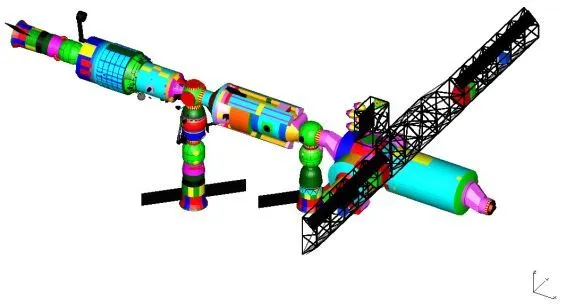
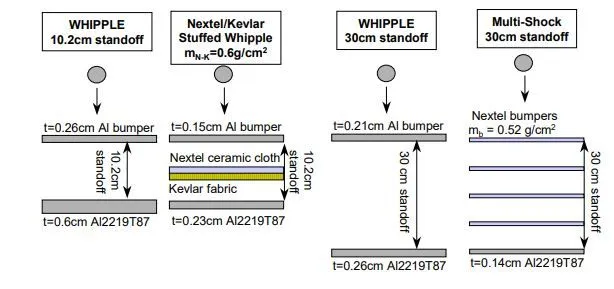
As the name suggests, a Whipple Shield is a physical barrier that protects against debris collisions with an object that is 1 cm or less in size. The shield bears the name of its inventor, Fred Whipple. It’s a two-stage protection system. The first is a bumper shield made of an Aluminum alloy that is 0.26 cm thick and exposed to space. It absorbs the bulk of any collision, which results in the breakage of the object into even smaller pieces.
The second stage is the spacecraft wall itself, which is designed to withstand any collision from the significantly weakened particles. There is also some space between the bumper shield and the spacecraft wall, called the standoff distance, which is 10.2 cm.
Stuffed Whipple Shield
This is a simple upgrade from the previous shield design, where a stuffing layer is introduced between the outermost layer and the innermost spacecraft wall. The outermost bumper is a 0.15 cm thick layer of Aluminum alloy. The standoff distance between the outermost bumper and the stuffing is 5.1 cm.
The stuffing is composed of two layers: A ceramic layer facing the outermost shield, followed by a polymer of suitable tensile properties, such as Kevlar. The stuffing layer is followed by the spacecraft wall, again separated by 5.1 cm. The presence of two layers before the spacecraft wall significantly decreases the risk of contact with the spacecraft itself, which is the ideal scenario.
Mesh Whipple Shield
As the name suggests, the outermost layer of this design consists of Aluminum mesh (very fine crisscrossing fibers of Aluminum), which absorbs the initial impact and breaks the debris into finer particles, which are then stopped by the stuffing layer behind.
A Final Word
Debris protection consists of a multi-stage system designed to cater to objects according to their damage potential. The most suitable course of action for large particles (>10 cm) is orbital maneuvering. For mid-sized particles, the course of action depends on their detectability.
If they are detected sufficiently early, then an orbital maneuver is initiated, depending on the probability of collision and fulfillment of the mission objectives. If they are not detected, then they are too small to cause a fatal threat to the spacecraft, so collision shields of varying structures and designs are employed, depending on the region that they protect and their probability of experiencing a collision in orbit.
References (click to expand)
- ARES | Shield Development | Basic Concepts. The National Aeronautics and Space Administration
- Space Debris and Human Spacecraft - NASA. The National Aeronautics and Space Administration
- Pai, A., Divakaran, R., Anand, S., & Shenoy, S. B. (2021, July 20). Advances in the Whipple Shield Design and Development:. Journal of Dynamic Behavior of Materials. Springer Science and Business Media LLC.
- (2009) Handbook for Designing MMOD Protection. The National Aeronautics and Space Administration