Table of Contents (click to expand)
No. When satellites die, they don’t escape Earth. Low-orbit satellites are deorbited to burn up in the atmosphere or splash into the ocean, while high-orbit ones are nudged into a graveyard orbit about 300 km (190 mi) above their working altitude. Escaping would demand roughly 11.2 km/s (about 25,000 mph), and a dead satellite no longer has the fuel to reach it.
If you are reading this, then you likely know a bit about dying satellites. We have heard about these no-longer-useful satellites being ordered back to land, and have sometimes even witnessed them burning up and disappearing like shooting stars.
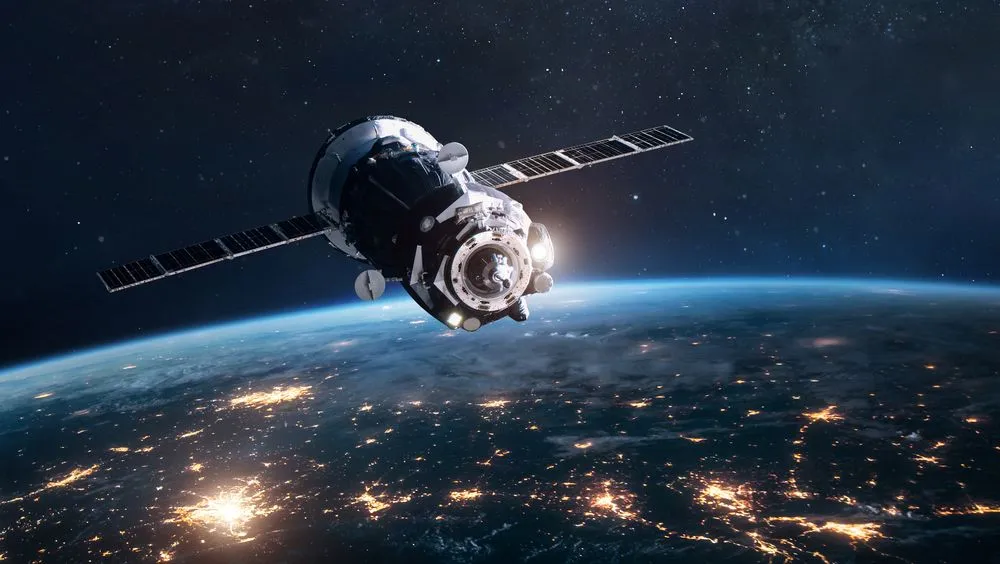
These dying satellites are no longer able to sustain themselves for multiple reasons. They are on their last legs when the decision to perform their final rites is made. If they will soon be out of control of the people down here on the ground, so it’s best to send them off to their graveyard, right?
The question that kept nagging me was – can any of these dead satellites actually leave Earth’s orbit? If so, how?
The Final Rites For Satellites
For a number of reasons, these metal-bodied satellites have an expiration date. Some of them have defied their expected death date, while others have died early. Regardless, when sending off a satellite into Earth’s orbit, scientists are very aware of its inevitable death.
When it is time to say goodbye, many factors are taken into consideration to decide which procedure will be the suitable death ritual. There are even rules about the timing. For years, the international guideline was that a satellite in low orbit should clear out within 25 years of finishing its job. In 2022, the US Federal Communications Commission tightened that to just 5 years for satellites it licenses, because low orbit is getting crowded fast.
Is it small enough and low enough to burn up in the Earth’s atmosphere upon reentry? If so, one of the shooting stars in the sky at that time could be that satellite’s last flash of greatness.
However, if it won’t burn up enough to avoid causing damage on land, there are two other ways it is dealt with.
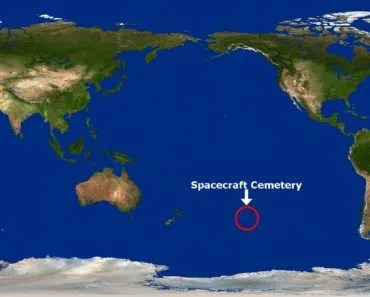
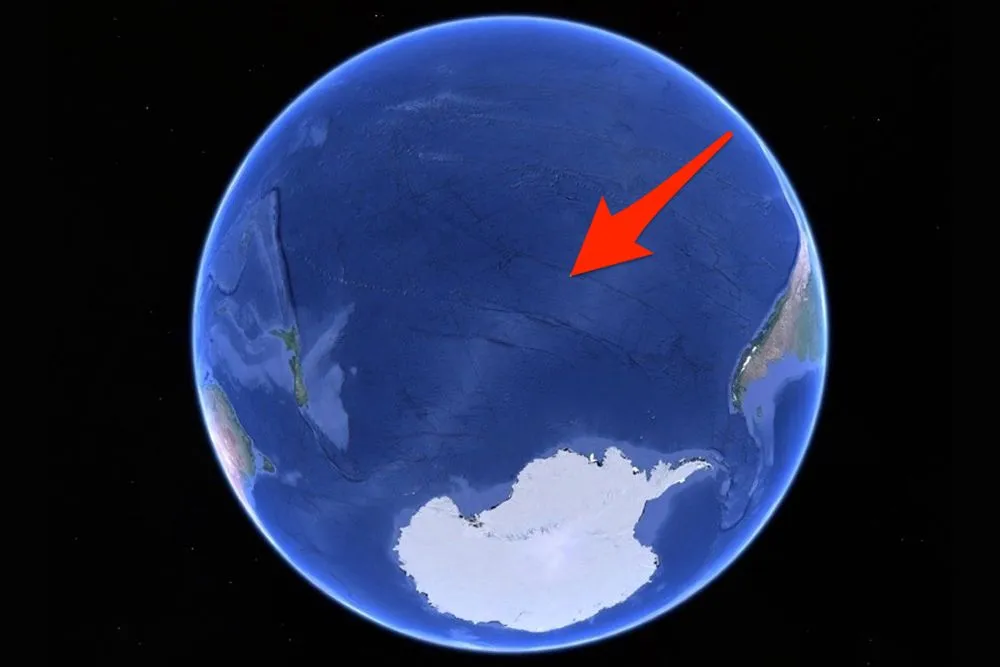
Firstly, they can be ordered back to land, but in a remote area where it won’t cause any damage to human civilization. As a matter of fact, this remote area has already been decided and agreed upon, and also has a name, the Spacecraft Cemetery! It is a region far far away from land and lies in the remotest part of the Pacific Ocean.
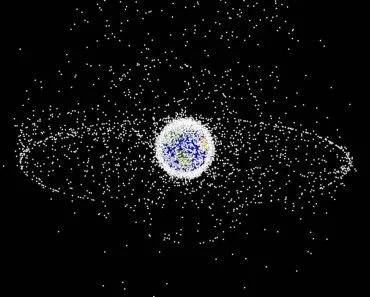
The second method involves sending them farther away from the Earth, but still keeping them under the slight control of its gravity. For the big satellites parked high up over the equator, this means a small boost into a so-called graveyard orbit, roughly 300 km (190 mi) above their working orbit. This way, a dead satellite is not in the way of working ones, but is also still orbiting the Earth. This ensures that the out-of-control and dead satellites won’t cause any trouble for other satellites or act as a hazard in space.
Now, to understand if satellites can actually leave Earth’s orbit, let’s quickly dive into their orbital patterns and what influences them.
Orbits Of Satellites
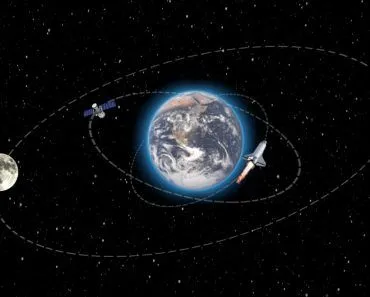
There are three orbit types for these satellites revolving around the Earth – the low Earth, the mid Earth, and the high Earth orbits.
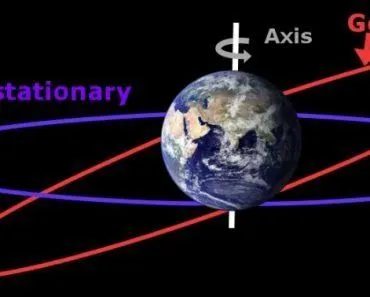
The high Earth orbit, at roughly 35,786 km (22,236 mi) up, is home to the geosynchronous and geostationary satellites. These are the satellites that seem stationary relative to our position on Earth, because they circle the planet in step with its rotation.
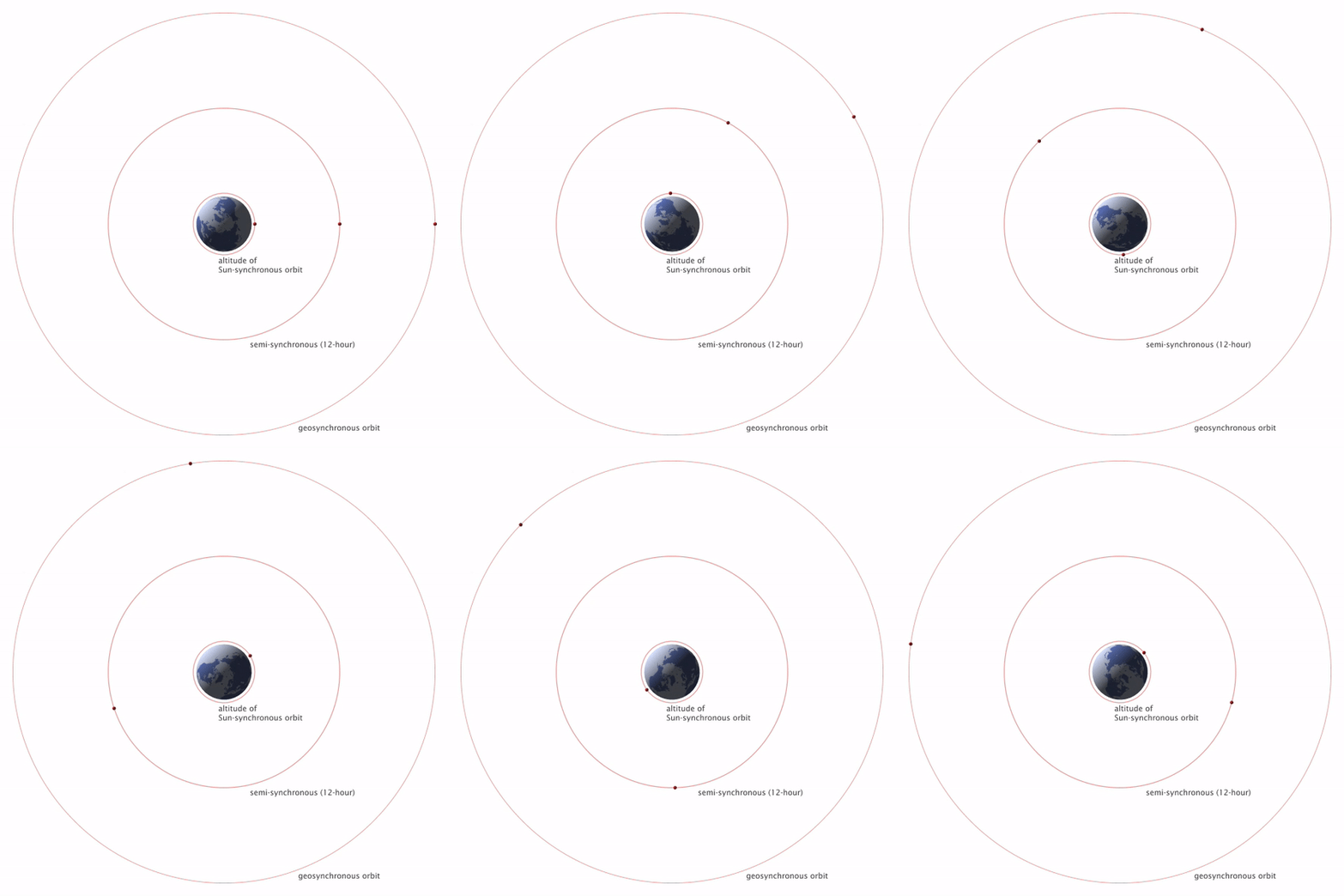
The mid Earth orbit, around 20,200 km (12,550 mi) up, is where we mostly find GPS satellites. These are the satellites that help map the land and update live traffic, location tracking, etc.
Finally, the low Earth orbit sits just a few hundred kilometers up and is the busiest neighborhood of all, packed with imaging, weather, and communications satellites (and the International Space Station). A popular member of this club is the Sun-synchronous orbit, traveled by satellites that loop roughly from pole to pole. They are called sun-synchronous because they pass over a given region at the same local time every day, i.e. their orbit stays fixed relative to the position of the Sun in the sky.
A satellite’s orbit is also characterized by its speed, its eccentricity, inclination, and more. This is to be expected, as the orbit is a closed loop around the Earth. Obviously, for it to leave Earth’s orbit completely, its loop needs to open up. In more scientific terms, its trajectory needs to become a hyperbola instead of an ellipse.
However, what does it require to be set free from Earth’s gravitational clutches?
It needs to hit escape velocity, which near Earth’s surface is about 11.2 km/s (roughly 25,000 mph, or some 33 times the speed of sound). Launching a satellite requires enough thrust to climb above the atmosphere and into an orbit, but deliberately not enough to reach that escape speed and set it free.
While on their deathbeds, the satellites are commanded to either thrust themselves into a lower orbit and enter Earth’s atmosphere or thrust them into a higher orbit in their astral graveyard.
Both of these options require significant fuel consumption.
Once in their orbit at a certain speed, the gravitational force does all the work of keeping it in that place, not the satellites themselves. It is only in cases of changing their positions and their internal functioning that they consume energy.
How Can A Dead Satellite Leave Earth’s Gravity Completely?
Imagine a satellite on its deathbed. It has a very limited energy source and is definitely going to be out of control of the operators on Earth very soon. Imagine the satellite to be humongous, as that’s the only way it will be allowed to enter a higher orbit to die.
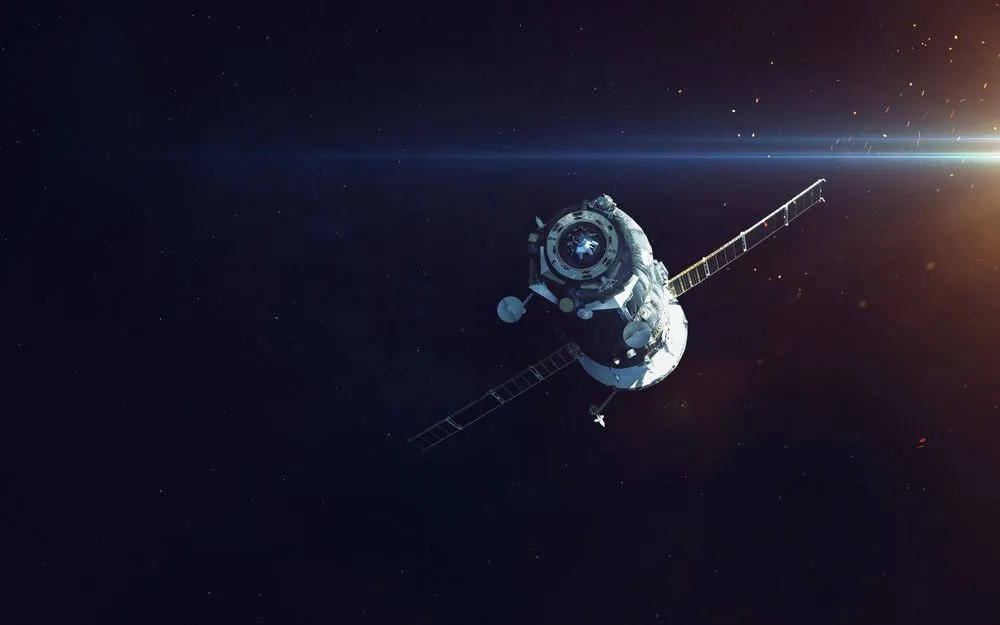
Now, entering this graveyard orbit requires a thrust, i.e., energy. Once it enters the graveyard orbit, it will have lost all its connection to the people on Earth.
Now, here’s the deal, how can it leave that final orbit and say goodbye to Earth completely?
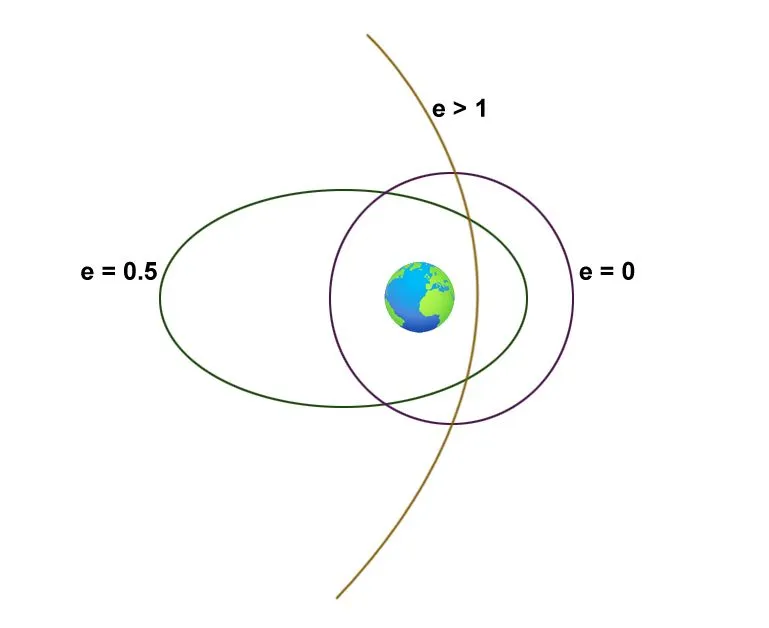
Well, it would need another push to change its trajectory from closed (ellipse) to open (hyperbola). For a satellite that is huge, the required force would be just as massive. If it were a healthy working satellite with enough fuel, it could have done that, but alas, this satellite has used up all its resources. So, unless some external force can push it out, it is still stuck in a relationship to the Earth.
In conclusion, satellites orbiting the Earth die, but remain connected to the Earth in some way. It is ensured that they don’t leave the Earth’s orbit, even in their death and all the years to come. So, the final answer to our original question is… No, the satellites orbiting the Earth will not escape the Earth after their purpose is fulfilled.
References (click to expand)
- Where Do Old Satellites Go When They Die? NASA Space Place
- Catalog of Earth Satellite Orbits. NASA Earth Observatory
- Graveyard Orbits and the Satellite Afterlife. NOAA NESDIS
- Types of orbits. European Space Agency (ESA)
- Mitigating Space Debris Generation. European Space Agency (ESA)
- FCC Adopts New ‘5-Year Rule’ for Deorbiting Satellites. Federal Communications Commission
- Escape velocity. Encyclopaedia Britannica