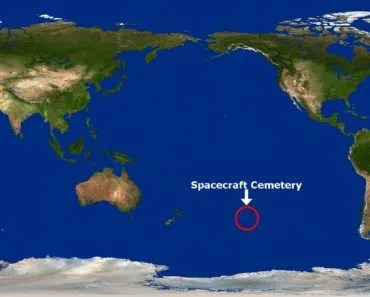
When a satellite dies, engineers dispose of it in one of two ways. Low-orbiting satellites are slowed down so they fall back and burn up in the atmosphere, with surviving debris aimed at a remote Pacific “spacecraft cemetery.” Distant satellites are nudged a few hundred kilometers higher into a disposal ring called the “graveyard orbit.”
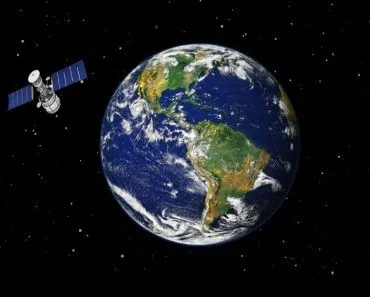
As of now, there are around 14,500 active artificial satellites orbiting the planet at different altitudes (and inclinations) above the ground (a number that has exploded with mega-constellations like SpaceX’s Starlink). However, these are just the operational ones. If you also consider the thousands of defunct satellites and every ‘good-sized’ piece of old satellite circling our planet, the number climbs into the tens of thousands.
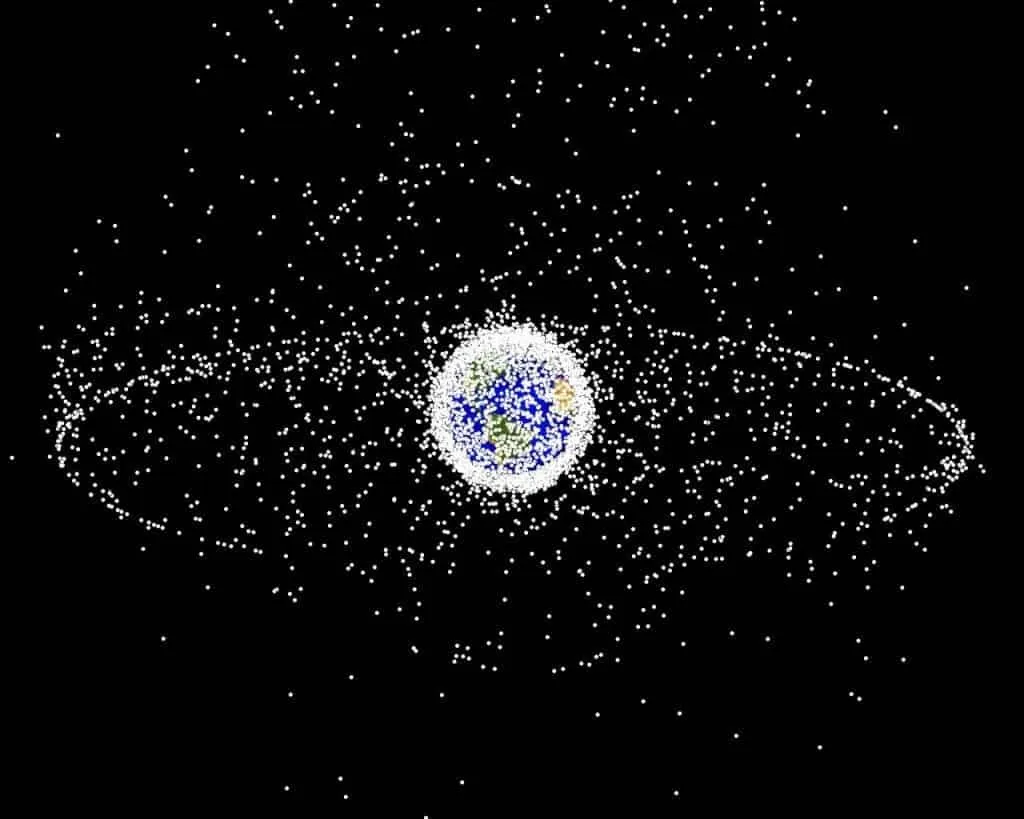
The problem with so much space junk is that it could (and actually does) pose a huge threat to the satellites working or traveling through the orbits. Modern rocket launches are executed after days upon days of research and analysis of many factors, and the problem of space garbage is a critical one among them, as it directly impacts the safety and integrity of the launched rockets and their payload.
In the primitive days of space exploration, scientists and space engineers didn’t think much about the distant future of the satellites they launched. In other words, they did not worry about what would happen to all the rockets and satellites they were putting into space once they became inoperative. These days, however, there is so much space garbage around our planet that even a small-scale collision between two objects can trigger a chain reaction that could potentially end in a catastrophe, much like the one shown in the movie Gravity.

However, just like any other machine, satellites also have a definite life beyond which they are of no use, but unlike a toaster, washing machine or a motorbike, satellites operate in space, which means you cannot dismantle them and sell them for parts or just leave them there. So, how are the ‘bodies’ of such dead satellites disposed of?
What Happens When A Satellite Dies/is No Longer Operational?
Short answer: There are two methods by which we dispose of broken satellites. First, we slow down the defunct satellite in question and let it fall back towards Earth and burn up in the atmosphere during reentry. Second, we push the inoperative satellite into a higher orbit around the planet, where it will keep orbiting the planet for hundreds of years and stay out of the way of functioning satellites.
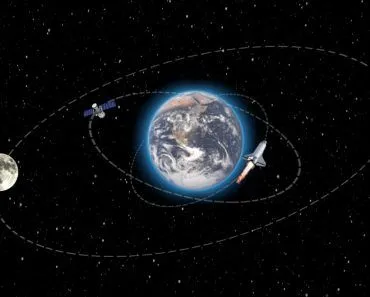
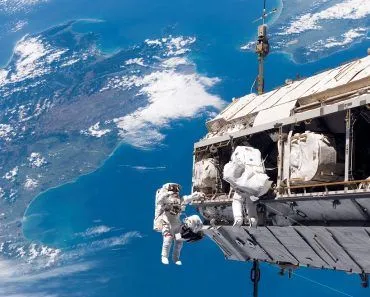
As you might already know, various satellites orbit our planet at different altitudes; some travel very close to it (a few hundred kilometers above the ground, like the ISS), while other satellites revolve tens of thousands of kilometers above Earth (like, geostationary satellites).
The method of disposal of an inoperative satellite relies hugely on how far away it is from our planet. So, let’s consider the first scenario…
The Satellites That Orbit Close To Earth
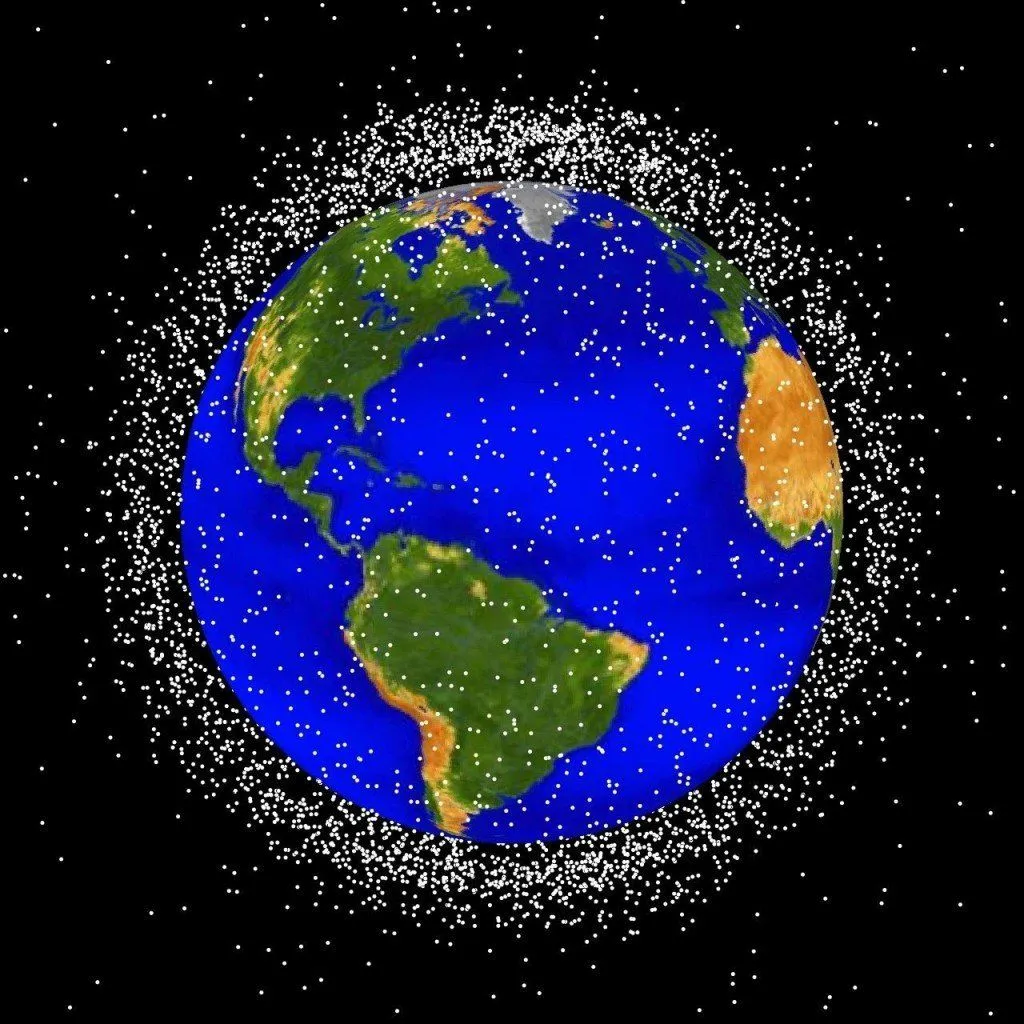
For discarding a satellite that orbits close to Earth, space engineers change its orbit slightly so that it drops into a lower orbit and reenters the atmosphere, burning up on its own after the completion of its mission. For decades, the international guideline allowed up to 25 years for this to happen, the so-called ’25-year rule’. With low orbits now getting crowded, that timeline has been tightened: in 2024 the US Federal Communications Commission (FCC) brought in a stricter ’5-year rule’, requiring newly licensed satellites below 2,000 km (1,243 mi) to come down within five years of finishing their job. The European Space Agency (ESA) has adopted the same five-year limit for its own missions.
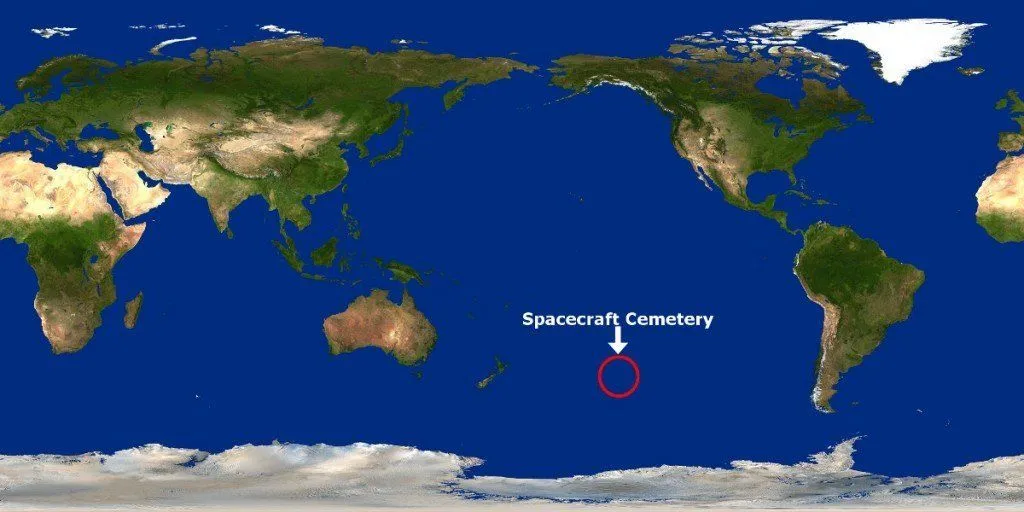
If the satellite in question is too big to be burned up completely during reentry, then the last bit of the satellite’s fuel is used to slow it down and de-orbit it on purpose so that the debris falls over a remote area, hundreds of miles away from any civilization. This remote area is very aptly nicknamed ‘the Spacecraft cemetery’, and sits in the southern Pacific Ocean around a spot called Point Nemo, the place on Earth that is farthest from any land. More than 300 spacecraft already rest on the seafloor there, and the biggest arrival is yet to come: NASA plans to retire the International Space Station around 2030 and use a SpaceX-built deorbit vehicle to steer the 400-plus-ton outpost down to Point Nemo in early 2031.
The Satellites That Orbit Far From Earth
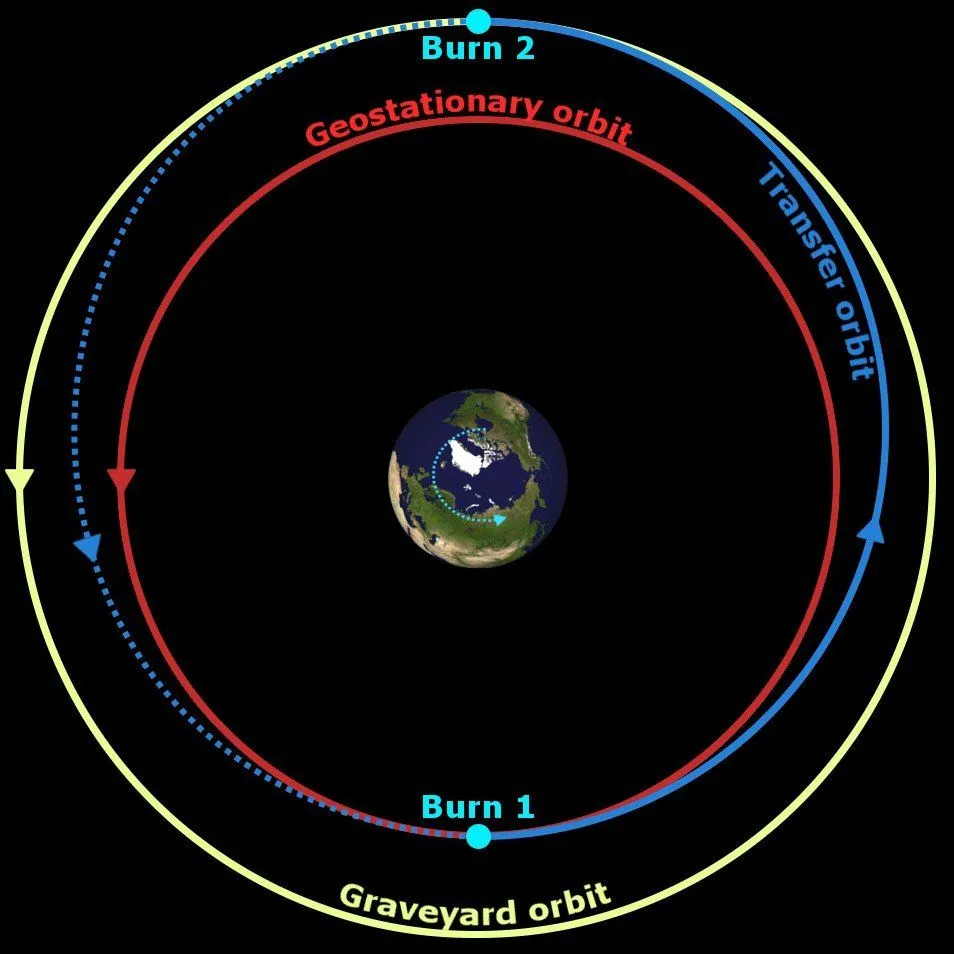
If the satellite in question orbits very high above Earth, then slowing it down and making it de-orbit would require a lot fuel, something that a satellite at the end of its operational life lacks. So, instead of applying brakes to its orbital speed, the satellite is pushed into a higher orbit, known as the ‘graveyard orbit’.
Graveyard Orbit
Also referred to as a junk orbit or disposal orbit, it lies higher than the most commonly used orbits of operational satellites. More specifically, it sits at a staggering 36,000 km (about 22,400 miles) above Earth. Geostationary satellites circle at roughly 35,786 km (22,236 miles), and international guidelines require a dead satellite to be boosted at least 235 km (about 146 miles) above that band, so defunct satellites in the graveyard orbit stay well clear of functioning ones.
Pushing dead satellites into a higher orbit also makes sense from the ‘fuel economy’ standpoint, as pushing an inoperative satellite into the junk orbit requires a delta-v (change in the velocity of the satellite) of only 11 m/s (36 ft/s), whereas de-orbiting requires a change of about 1,500 m/s (4,900 ft/s)!

The benefit of putting dead satellites into the junk orbit is that they stay up there and continue revolving around the planet for hundreds of years before slowly losing altitude. We may not be around to watch them come down, but the cleanup itself is no longer pure science fiction. Space agencies and startups are already building the ‘garbage collector’ spacecraft this article once imagined: missions like the European Space Agency’s ClearSpace-1 and Japan’s Astroscale aim to chase down dead satellites and rocket parts and drag them out of orbit. The era of tidying up the litter we’ve left in space is finally beginning.
References (click to expand)
- Graveyard orbit - Wikipedia. Wikipedia
- Mitigating space debris generation. European Space Agency (ESA)
- Where Do Old Satellites Go When They Die?. The National Aeronautics and Space Administration
- FCC Adopts New ‘5-Year Rule’ for Deorbiting Satellites. Federal Communications Commission (FCC)
- NASA Selects International Space Station US Deorbit Vehicle. The National Aeronautics and Space Administration