Table of Contents (click to expand)
Most artificial satellites can’t be repaired in space, so a faulty one is usually retired. A valuable few have been serviced: astronauts repaired Hubble during Space Shuttle missions, and robotic spacecraft such as Northrop Grumman’s Mission Extension Vehicles now dock with aging satellites in orbit to refuel them or extend their working life.
The Internet, a plethora of TV and radio channels, GPS, air traffic management, weather forecasting… and that’s only the start of the list of advantages of artificial satellites in our daily lives. It wouldn’t be an exaggeration to say that the very fabric of modern, industrialized life owes its flawless functioning to the huge man-made objects orbiting the planet hundreds of kilometers above the planet. Suffice to say, artificial satellites are incredibly important, even if we take them for granted.

Since the launch of Sputnik 1, the first artificial satellite ever made, tens of thousands of artificial satellites have been launched into orbit around the Earth. Roughly 11,000 to 12,000 of them are currently operational, the majority being SpaceX’s Starlink internet satellites. However, what happens when something goes wrong with those satellites? What if a certain part malfunctions that can cripple the entire satellite? Can such damages be repaired? And if so, how is it possibly accomplished?
Satellites Aren’t Designed For Future Repairs
First of all, artificial satellites aren’t usually meant to be repaired, i.e., they are not typically designed in a way that would allow for repairs if something goes wrong up in space. To ensure that they don’t need repairs, the manufacturers consider as many contingencies as possible when designing their satellites. Even after that design process, they are tested in many simulated conditions to verify their strength and resilience in the unforgiving environment of space.

Even after they’ve made the perfect satellite (which is practically impossible), the next and most important step is to launch the satellite into orbit. This step in the process requires an extensive infrastructure, the likes of which only a handful of countries can afford. As you might have guessed already, putting a satellite into orbit is a very expensive operation, so engineers do their best to ensure a smooth transition from Earth into space.
Satellite Failures Do Happen
However, despite undergoing so many tests, checks and counter-measures, satellite failures do occur. The fact that thousands of dead satellites are still up there, destined to orbit the planet for years on end, just goes to show how often things eventually break down in space. In fact, such defunct satellites contribute greatly towards increasing something called “space garbage”, which is a very bad thing.
Every once in a while, some part of a satellite may go bad, but this doesn’t necessarily result in the complete failure of the entire satellite. A satellite is kept in operation as long as possible without the dysfunctional part, until the point when it becomes completely useless. At that time, it’s simply abandoned.
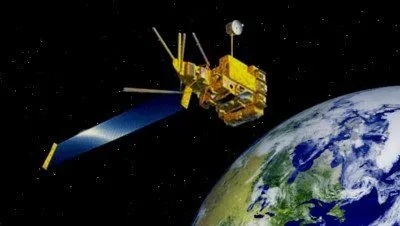
However, this doesn’t mean that every artificial satellite meets the same fate if one of its parts is damaged. Spacecraft like the Hubble Telescope and the International Space Station, which are of great scientific value, get repaired if they become damaged in any manner. Take the ISS, for example; it’s actually a space laboratory that consistently hosts a few astronauts and researchers. In the rare cases of damage to these structures, they can’t simply be abandoned. The Hubble is the classic example of crewed repair: between 1993 and 2009, astronauts flew to it five times aboard NASA’s Space Shuttle, captured it with the shuttle’s robotic arm and swapped out failing instruments, gyroscopes and batteries by hand. The Space Shuttle has since been retired (its final flight was in 2011), so there is currently no crewed vehicle dedicated to flying out and servicing satellites this way.
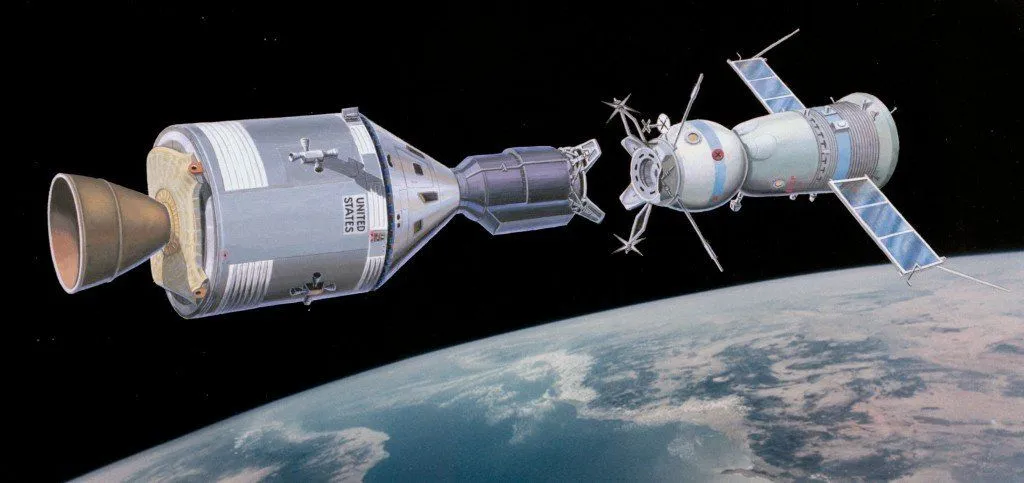
What Does The Future Hold?
If something goes wrong on a satellite, there’s pretty much nothing us Earth-bound people can do without spending a lot of cash. However, repair missions, both manned and robotic, will become more feasible with the use of affordable fuel and reusable orbit-to-orbit transfer vehicles. Fortunately, there are some projects related to repair, refueling and maintenance of satellites that are already underway.
Mission Extension Vehicle
The idea behind the Mission Extension Vehicle (MEV) is simple: instead of fixing a broken part, a small robotic spacecraft docks onto an aging satellite and effectively becomes its new engine, taking over steering and station-keeping so the older satellite can keep working. The concept, first floated by a venture called ViviSat, is now run by SpaceLogistics, a Northrop Grumman company, and it has moved well beyond the drawing board. In February 2020, MEV-1 docked with the Intelsat 901 communications satellite nearly 36,000 km (about 22,000 mi) up in geostationary orbit, the first time two commercial satellites had ever linked up in space. MEV-2 followed in April 2021, docking with Intelsat 10-02. Each vehicle adds about five years of working life. MEV-1 finished its five-year stint and undocked from Intelsat 901 in 2025, leaving the old satellite parked safely in the “graveyard” orbit.
DARPA’s Phoenix Program And Its Successor
Phoenix, an early project run by DARPA (the US military’s research arm), set out to demonstrate new satellite assembly architectures, including the eye-catching goal of harvesting still-useful parts from dead satellites to build new ones in orbit. That original plan proved too ambitious and was wound down, but DARPA didn’t give up on the idea. Its work carried over into the Robotic Servicing of Geosynchronous Satellites (RSGS) program, which focuses on a robotic “mechanic” that can inspect, repair, reposition and upgrade satellites already in orbit. SpaceLogistics is building that spacecraft, the Mission Robotic Vehicle, with launch on a SpaceX Falcon 9 expected in 2026.
Robotic Refueling Mission
The Satellite Servicing Capabilities Office of NASA’s Goddard Space Flight Center has been developing a program called RRM, which has even been tested in the ISS and seen success in its initial stages. In short, RRM is a multi-phase technology demonstration of the ISS that’s currently testing certain technologies and tools to repair and refuel satellites in orbit, especially those that are not meant to be serviced.
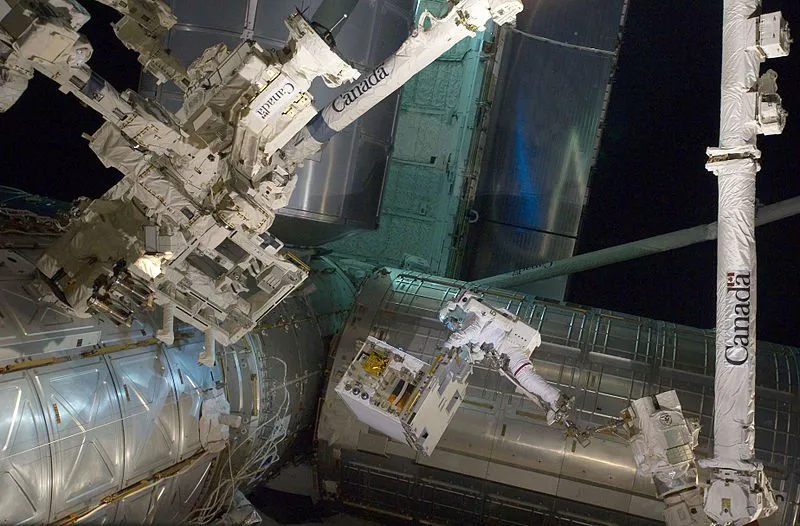
This mission consists of an RRM module (basically a box covered with activity boards) and 4 stowed RRM tools. Dextre, ISS’s twin-armed robot remotely controlled from Earth, acts as a technician that goes out to the RRM module and performs repairs on the damaged satellites using RRM tools. The program ran through several phases, ending with RRM3, which tested transferring and storing super-cold cryogenic fuel in orbit before wrapping up in 2022.
NASA had hoped to take the next step with a full-scale robotic mission called OSAM-1, which would have refueled the aging Landsat 7 satellite, but rising costs and a shrinking pool of interested customers led the agency to cancel it in 2024. For now, the momentum in satellite servicing has shifted to commercial players like Northrop Grumman. These kinds of repair and refueling missions don’t just keep working satellites alive; they also help curb the growing problem of space garbage and make future space flights a lot safer.
References (click to expand)
- Northrop Grumman Achieves First-Ever Undocking Between Two Commercial Spacecraft in Geosynchronous Orbit. Northrop Grumman
- Mission Extension Vehicle - Wikipedia. Wikipedia
- Update on Status of NASA's OSAM-1 Project. The National Aeronautics and Space Administration
- Robotic Refueling Mission 3 Completes Crucial Series of Tests. The National Aeronautics and Space Administration
- Robotic Eyes to Assist Satellite Repairs in Orbit - NASA. The National Aeronautics and Space Administration
- Robotic Servicing of Geosynchronous Satellites (RSGS). Defense Advanced Research Projects Agency