Cool flames — sometimes called “cold fire” — are dim, spherical, faintly blue flames that burn at just 200–500 °C through partial (incomplete) combustion. They were first observed aboard the International Space Station in 2012, where microgravity lets their unusual low-temperature chemistry play out without buoyant convection drowning it in soot and heat.
It’s been thousands of years since our ancestors discovered fire. Even so, we can’t help ourselves but feel mesmerized by the dangerous dancing flames of a campfire. Starting and controlling fire is one of the oldest forms of chemistry practiced by humans, and over the centuries, we have formed a basic understanding of how fire behaves on terra firma. In our endless quest to push boundaries, some people decided to take fire “out of this world” to see how it behaved.
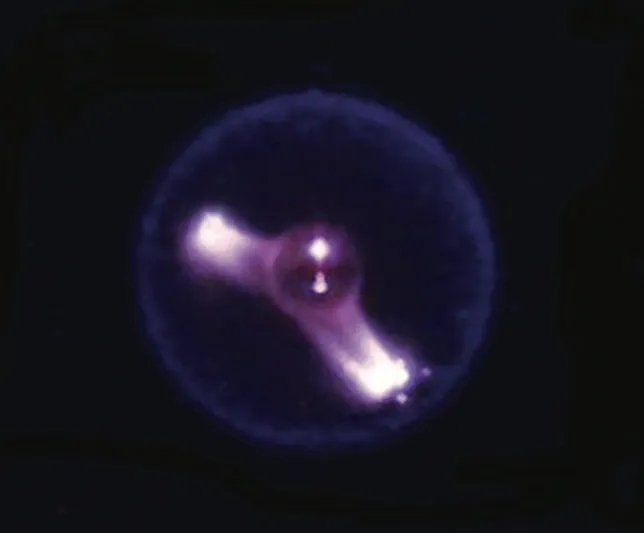
In 2012, the astronauts aboard the International Space Station started a fire. Through the Flame Extinguishing Experiment or FLEX, scientists observed something that had only been a theory until that point. Droplets of n-heptane were ignited in the presence of oxygen and inside the combustion chamber, blue and spherical cool flames formed. But how can a flame be cool? And why did we have to go to space to observe them for the first time? Let’s find out!
Chemistry Of Cold Flames
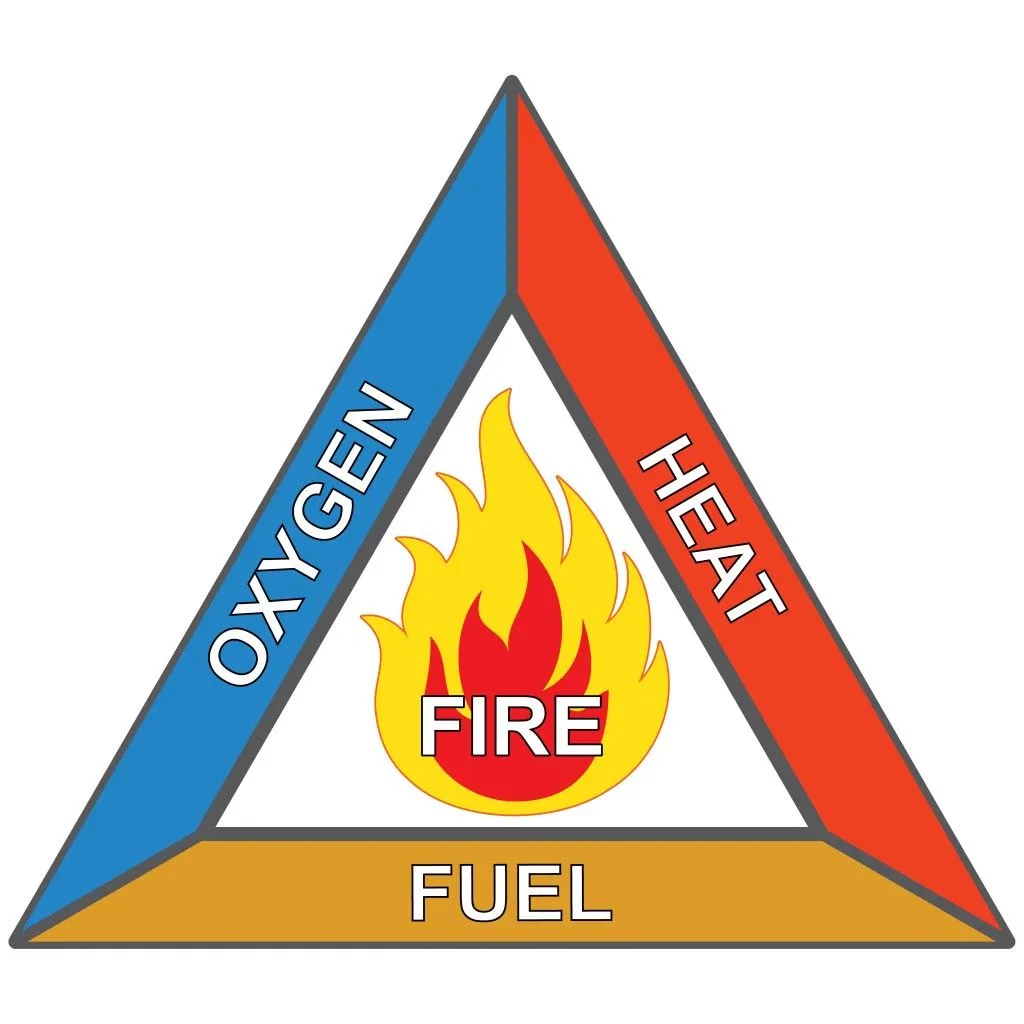
Flames emerge when something is on fire and the gases around it become super-heated and start to glow. The recipe for fire is quite simple, as you only need three ingredients: oxygen, fuel, and heat. This basic relationship is also known as the “fire triangle”.
As earthlings, we don’t have to worry much about the first ingredient, oxygen. At all times, our planet houses approximately 1,200,000 billion metric tons of oxygen gas. Apart from sustaining life, this oxygen-rich environment provides the perfect conditions to start a fire.
Next, we move on to fuel, which is any substance that will burn in the presence of oxygen and release energy in the process. Technically everything around us is fuel and will catch fire if it is allowed to reach high enough temperatures. However, we prefer using materials that are flammable or have low fire points as fuels, including coal, petroleum, or hexane.
The burning of fire involves a simple chemical process known as combustion. During this process, the fuel combines with oxygen to undergo several chemical reactions that emit energy in the form of light and heat. However, fuel can only react with oxygen when it’s above its ignition temperature. The excess energy required to reach this temperature and kickstart the combustion process is provided by an external source of heat. For example, the heat source for lighting a cooktop is an electric spark, whereas for a matchstick, it is the friction of the match head against the textured panel of a matchbox.
Cool flames follow the exact same chemistry, where the hydrocarbons used as fuel start burning when ignited in the presence of oxygen. Also, no, these flames do not freeze things instead of melt them. They are called “cool flames” because the temperature of these flames is quite low. An average natural-gas stovetop produces flames that are around 1,950 ⁰C, whereas the temperature of cool flames typically ranges between 200 to 500 ⁰C — barely hot enough to char paper.
What’s So Unique About Cool Flames?
The cool flames observed on the ISS were spherical in shape, which is almost impossible to recreate on Earth under normal conditions.
Most of us might not realize it, but gravity plays a major role in how fire behaves on our planet. When a fire is lit here, a column of air/gases around it gets heated up. By virtue of convection, the less dense hot gases rise upwards and suck in colder, fresher air to sustain the fire. This push and pull effect between the lighter hot gases and heavier cold air gives rise to the distinct teardrop shape of a flame. In space, there is no gravity to create a density gradient, which explains the spherical flames.
The spherical flames also cannot replenish their oxygen supply. An external regulator, such as a fan, is used to feed the fire. This controlled flow of oxygen gives rise to a faint blue-colored flame where the fuel undergoes only partial (incomplete) combustion — stopping at carbon monoxide, formaldehyde and other partial-oxidation products instead of progressing all the way to CO₂ and water. The reaction never gets hot enough to produce soot. A flame’s properties are slightly different in the case of self-sustained earthbound fires.
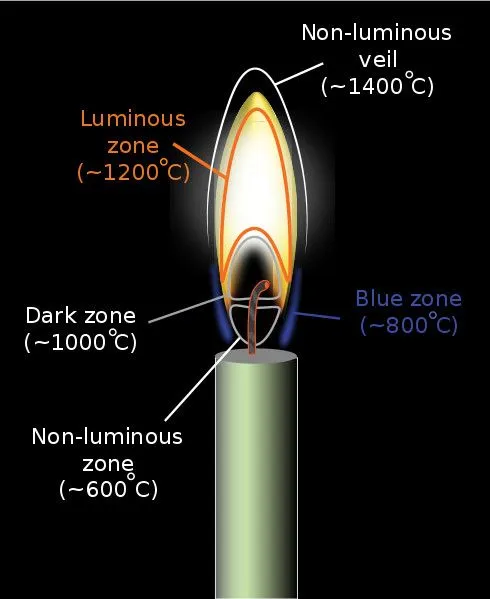
If we observe a candle flame carefully, we can spot two types of flames: the outer blue flame and the inner yellow flame. The reason for this is a difference in oxygen content and temperature. The outer blue region of a flame has the highest concentration of oxygen due to incoming fresh air from its surroundings. This makes it the hottest region of flame where the fuel (most of them carbon-based) burns completely, thus producing only carbon dioxide and water as byproducts.
The yellow region, on the other hand, has a lower temperature and lower levels of oxygen. This leads to the incomplete combustion of fuels and the formation of unburnt carbon particles—called “soot”—along with carbon dioxide and water. These soot particles then get energized by the fire and impart the typical yellow color to the flames.
Though not very common, completely blue flames can be created on earth. All you have to do is direct enough oxygen to the fire. Equipment like Bunsen Burners and Welding torches produce almost entirely blue flames by carefully regulating their oxygen and fuel flow.
What Makes The Space Flames Cool?
Firstly, because they were lit in space. Secondly, due to a slower diffusion combustion process.
In microgravity, the oxygen reaches the flame via diffusion, rather than suction, like on Earth. This slow flow of oxygen considerably reduces the temperature of the flame, which is highly dependent on the amount of fuel and oxygen available to the fire. These flames do not raise the surrounding temperature much, nor do they produce a bright flame, due to the lack of heat-radiating, light-emitting ionized chemical species that are commonly found in hot flames. In fact, cool flames are so dim they’re almost invisible to the naked eye and can only be imaged with sensitive UV cameras.
Having a slow and low-temperature flame might seem like a good sign for spacecraft safety, but it’s quite the opposite. Fire on Earth is a rapid process that requires a constant and rapid flow of oxygen to continue burning. This makes it easier to start and easier to stop. Cut off the oxygen supply for a while and the fire goes out. However, that isn’t the case with cool flames. In the presence of fuel, these flames can sustain themselves for a very long time, even with a limited flow of oxygen.
What Is The Coldest Fire, And What Color Is It?
If you have ever wondered what the coldest fire looks like, the answer is written in its color. The color of a glowing object is a thermometer in disguise. As something heats up, it first radiates only invisible infrared, then begins to glow a faint, dull red. The American chemist John William Draper pinned this threshold down back in 1847: at roughly 525 °C (977 °F), a temperature now called the Draper point, almost any solid starts to give off a visible dull-red glow. Heat it further and the color climbs through orange, yellow, white and finally a bluish-white at the very highest temperatures.

So among everyday flames that shine by this red-hot incandescence, the coolest one you can actually see is a deep, dull red, generally below about 600 °C (1,100 °F). The dim red tip of a dying ember is cooler than the bright yellow heart of a candle, which in turn is cooler than a roaring blue gas jet. We climb this whole ladder in our piece on what determines the color of flames.
Cool flames are the strange exception to the rule. At just 200–500 °C they sit below the temperature where a flame would glow red from heat alone, which is exactly why they are almost impossible to see. Their faint light comes from chemistry, not from being red-hot.
Is Blue Fire Cold? How Hot Is A Blue Flame?
Blue is what we usually call a "cool" color, so it feels natural to assume a blue flame is a cold flame. For ordinary fire, the truth is the exact opposite. Blue is the hottest color a normal flame reaches, because a blue flame signals clean, complete combustion. The tidy blue cone of a gas stove or a Bunsen burner burns well above 1,500 °C (2,700 °F), far hotter than the yellow tip of a candle, and specialized torch flames can climb toward 3,000 °C (5,400 °F).

So why do cool flames also glow blue if blue is supposed to mean scorching hot? Here is the twist: a cool flame's blue light has nothing to do with heat. An ordinary blue flame shines by incandescence, the glow of matter that is genuinely hot. A cool flame instead shines by chemiluminescence: as the fuel undergoes partial oxidation, it produces electronically excited formaldehyde (CH2O*), and these molecules shed their extra energy directly as faint blue and violet light. The flame looks blue while staying barely warm. In short, color alone cannot tell you a flame's temperature. A blazing blue stove burner will scald you instantly, whereas a cool flame's identical-looking blue is only a few hundred degrees.
Can Cold Fire Burn You?
Absolutely. A cool flame is "cool" only compared to a campfire, not compared to your skin. These flames still run at roughly 200–500 °C (390–930 °F), hot enough to char paper. Human skin, by contrast, begins to suffer thermal injury the moment it reaches about 44 °C (111 °F), and above roughly 70 °C (158 °F) the outer layer is destroyed in seconds, as the classic burn-threshold experiments of Moritz and Henriques established back in 1947. A 400 °C flame would burn you just as badly as any other fire at the same temperature.
The real hazard, though, is not the heat but the stealth. Because cool flames give off faint chemiluminescence rather than a bright glow, they can burn almost unseen in a lit room, much like a near-invisible methanol fire. Worse, they refuse to behave like normal fire. Starve an ordinary blaze of oxygen and it dies; a cool flame can quietly sustain itself on a mere trickle of oxygen for a long time, then flare back into a full-blown fire. That combination of invisible and persistent is exactly why NASA treats stray cool flames as a serious spacecraft fire-safety concern, and why the role of oxygen in combustion is so central to controlling them.
Conclusion
Very little is known about the nature of fire at lower temperatures and on places other than Earth. Building on FLEX, NASA’s Advanced Combustion via Microgravity Experiments (ACME) facility — including the Cool Flames Investigation with Gases (CFI-G) — has since burned more than a thousand experimental flames aboard the ISS, in 2024 even producing non-premixed gaseous cool flames without any external heating, ozone or plasma. Unraveling the mysterious chemistry of cool flames will not only make space travel safer, but could also help us develop highly efficient soot-free internal combustion engines, including the homogeneous-charge compression-ignition (HCCI) engines automakers are now eyeing for cleaner mileage.
References (click to expand)
- Cool Flames - NASA. The National Aeronautics and Space Administration
- Cool Flames Created During a First for International Space Station Research - NASA
- Unlocking the Mysteries of Fire ... in Space. The A. James Clark School of Engineering
- Studying flames in microgravity is helping make combustion .... Phys.org
- Draper Point. Wikipedia
- What Color Is the Hottest Flame? Encyclopaedia Britannica
- Chemiluminescence Spectra from Cool and Blue Flames: Electronically Excited Formaldehyde. Combustion and Flame
- Studies of Thermal Injury II: Time and Surface Temperature in the Causation of Cutaneous Burns. American Journal of Pathology (NCBI PMC)
- Cool Flame. Wikipedia