No, oxygen is not flammable. It’s an oxidizer, which means it feeds other things as they burn, but oxygen itself does not catch fire. A spark in a sealed room of pure oxygen with nothing else inside it does nothing. Bring in any fuel (paper, oil, fabric) and that same spark turns into a violent fire.
One of the first things you learn in any fire safety lesson is that oxygen fuels a fire and keeps it burning. Cut the oxygen supply to the fire, and the fire will go out!
You may have also heard that it’s hazardous to bring an oxygen tank (such as the ones you see attached to portable breathing machines) near an open fire, as it can burst into flames.
While oxygen may help set things on fire, is it flammable? Can oxygen itself catch fire?
What Makes Something Flammable?
For a material to be flammable, it needs to have something that is readily oxidized by oxygen (the naturally occurring oxidizing agent we have no shortage of in the air around us). For example, ethanol (an alcohol built on a small hydrocarbon backbone) is flammable because its carbon and hydrogen atoms can be oxidized into carbon dioxide and water.
The other major factor that makes something flammable is volatility. The higher the volatility, the more flammable the material in question. Small organic fuels like butane and ethanol vaporize easily, and once the vapor mixes with air, even a tiny spark is enough to set them off.
Something that gives up atoms or molecules that love to bond to oxygen will generally be a flammable material.
Is Oxygen Inflammable?
No, oxygen is not inherently flammable. It’s an oxidizing agent, which means that it helps other things burn.
Suppose you build a lab that is perfectly isolated from the outside world, meaning that no impurities or gases can enter it. Then, you fill the lab with pure oxygen. If a spark were to enter the lab somehow, what do you think would happen?
Nothing!
If oxygen were a flammable gas, the spark would set the air in the lab on fire, but since oxygen isn’t flammable, it doesn’t catch on fire by itself.
However, if the lab had even so much as a small piece of paper, it would be set ablaze instantly, as the molecules in the piece of paper would rapidly attach to the ambient oxygen (i.e., an oxidizing agent).
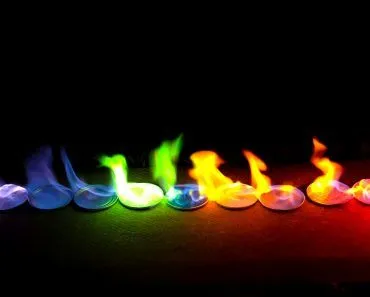
Now, you don’t always need oxygen to light a fire; any strong enough oxidizing agent will do. Fluorine is actually a more aggressive oxidizer than oxygen; chlorine trifluoride, for instance, can set fire to glass, concrete and asbestos without a whiff of oxygen in the room. Chlorine, hydrogen peroxide, sulfuric acid and nitric acid are some of the other oxidizing agents that can set things alight under the right conditions. So yes, things can burn without oxygen. They just need a different oxidizer to play the same role.
Since oxygen is the most common naturally occurring oxidizing agent, it’s generally assumed that everything burns only in the presence of oxygen. In other words, people may assume that oxygen is always required for something to burn.
Another common question related to fire and oxygen is this: how do stars and our sun keep burning if there’s no oxygen in space?
Why Does The Sun Keep Burning Without Oxygen?
The sun keeps burning because it doesn’t require oxygen to keep its ‘fire’ alive; the burning that goes on at the sun’s surface doesn’t represent chemical combustion, but rather nuclear fusion.
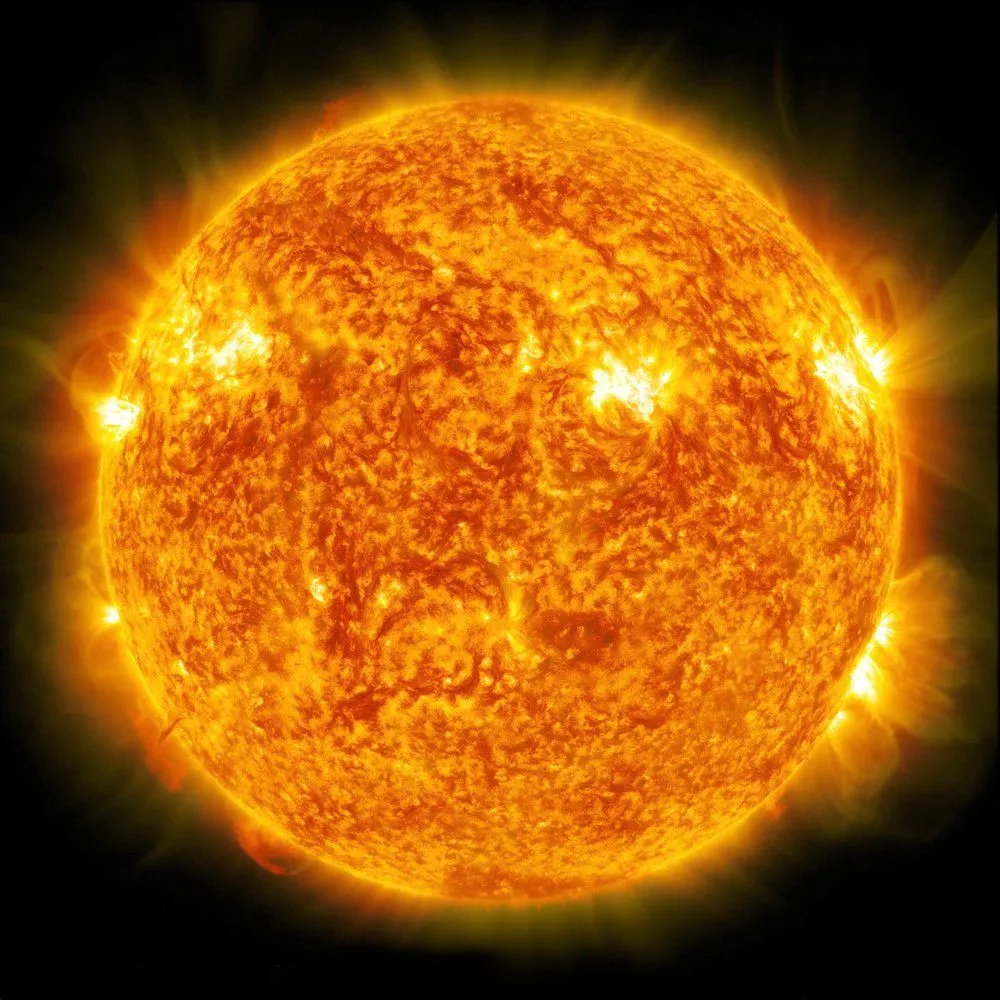
Put simply, nuclear fusion occurs when two or more nuclei join to form a heavier nucleus. Inside the Sun, that happens through the proton–proton chain: four hydrogen nuclei (protons) are stitched together in a sequence of steps to produce a single helium nucleus, with a tiny fraction of the original mass converted into a colossal amount of energy.
You can read more about nuclear fusion (and nuclear fission) here.
This process doesn’t require oxygen. In fact, it doesn’t require any other material at all. All you need are extreme pressure and temperature (roughly 15 million Kelvin and 250 billion atmospheres in the Sun’s core) to squeeze hydrogen nuclei hard enough to overcome their mutual repulsion and fuse into helium. It’s a self-sustaining process, an attribute that often becomes fodder for sci-fi movie plots.
To summarize, oxygen is not flammable by itself, but it can cause other objects to ignite quickly and rapidly (a property that makes oxygen an excellent oxidizing agent) and set things on fire. This is also why, if a fire has an abundant supply of oxygen, it can become massive and sometimes even explosive!
Is Oxygen Explosive?
This is where a lot of the confusion comes from, so let's clear it up. By itself, oxygen is not explosive. An explosion is just combustion happening extremely fast, and combustion still needs a fuel. Fill a tank with nothing but pure oxygen, set off a spark inside it, and you get the same boring result as before: nothing. There's no fuel for the spark to grab onto, so there's nothing to detonate.
What people are really sensing when they call oxygen "explosive" is its talent for making other reactions explosive. The European Industrial Gases Association puts it bluntly: most materials burn fiercely in oxygen, and the reaction can be explosive. Oil and grease are the classic offenders. A smear of grease that would barely smolder in ordinary air can ignite extremely easily in concentrated oxygen and burn with what safety engineers literally describe as explosive violence. So the honest answer is a two-parter: oxygen on its own does not explode, but it is the ingredient that lets a fuel-and-spark combination go from a small flame to a blast.
That distinction matters for anyone handling oxygen cylinders. It isn't the oxygen waiting to blow up. It's the oxygen turning a tiny, normally harmless ignition into a violent fire.
Does Fire Need Oxygen To Burn?
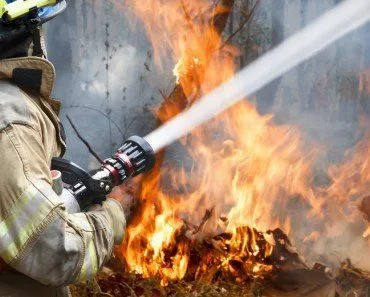
Fire as we know it on Earth needs three things at once, and fire safety trainers draw them as the three sides of the fire triangle: a fuel, enough heat to reach the fuel's ignition temperature, and an oxidizer. Take away any one side and the fire cannot start, and an existing fire goes out. That's exactly why smothering a pan fire with a lid works: you're removing the oxidizer leg.

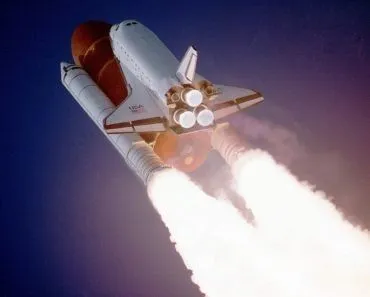
On Earth that oxidizer is almost always the oxygen in our air, which is why it feels like fire simply needs oxygen. Our atmosphere sits at about 21% oxygen by volume, and a flame can't keep going if that level falls far enough. Fire scientists call this floor the limiting oxygen concentration, the point below which combustion stops no matter how much fuel is present. Its exact value depends on the fuel, the temperature and the pressure, which is why there's no single magic number. But as we saw earlier, oxygen is not the only oxidizer that can fill that slot. A strong enough alternative oxidizer (fluorine and chlorine trifluoride are extreme examples) can drive a fire with no oxygen present at all. So the precise statement is that fire needs an oxidizer, and here on Earth oxygen is simply the one that's always on hand. This is also why a rocket has to carry its own oxidizer to burn fuel in the vacuum of space.
Why Is Pure Or Pressurized Oxygen So Dangerous?
If oxygen itself doesn't burn, why are oxygen tanks plastered with fire warnings? Because raising the oxygen concentration around a fire changes how everything else behaves. The technical line is drawn at 23.5% oxygen by volume: above that, you're in an "oxygen-enriched atmosphere," and the rules of thumb you learned in normal air stop applying.

In oxygen-enriched air, materials ignite at lower temperatures, burn hotter, and burn faster. Worse, materials that simply will not catch fire in ordinary air, including some labeled fire-resistant, can burn vigorously in enriched or pure oxygen. Clothing is the everyday example: every fabric burns fiercely once the air is oxygen-rich. Pressurizing the oxygen makes it more dangerous still, because higher pressure further lowers ignition temperatures and speeds up the burning rate. None of this means the compressed oxygen in the cylinder is "flammable" in the chemical sense. It means the gas escaping from it soaks everything nearby and primes it to ignite.
The most infamous demonstration was the Apollo 1 tragedy on 27 January 1967. During a ground rehearsal, NASA's command module was pressurized with pure oxygen at 16.7 psi (about 115 kPa), slightly above normal atmospheric pressure. A small electrical spark, in a cabin that also held more flammable material than allowed, spread into a fatal fire so quickly that astronauts Gus Grissom, Ed White and Roger Chaffee could not escape. Far less dramatic but far more common are home fires involving medical oxygen: one peer-reviewed review found roughly 46 deaths per year in US home oxygen fires in the early 2000s, with smoking by far the leading ignition source. The pattern is always the same. The oxygen never "caught fire" on its own. It just made an ordinary spark unforgiving.
References (click to expand)
- Flammable Materials - Princeton EHS. Princeton University
- Oxidizing and Reducing Agents. Purdue University
- Oxidizing Agents - TigerWeb. Towson
- Fire Hazards of Oxygen and Oxygen-Enriched Atmospheres, Doc 04. European Industrial Gases Association (EIGA)
- The Fire Triangle. University of South Carolina, Environmental Health & Safety
- 55 Years Ago: The Apollo 1 Fire and its Aftermath. NASA
- Home oxygen and domestic fires. PMC, U.S. National Library of Medicine
- Limiting oxygen concentration. Wikipedia