A photocopier relies on the principles of electricity and photoconductivity. There is a light-sensitive photoreceptor inside the machine that first attracts and then transfers toner particles onto plain paper to form a copy of a document.
A photocopier relies on the principles of electricity and photoconductivity to work. There’s a light-sensitive photoreceptor inside the machine that first attracts and then transfers toner particles onto plain paper to form a copy of a document.
Origins Of The Photocopier
In the pre-photocopier days, duplicate copies of a document were usually made at the source, either by using carbon paper or manual duplicating machines. People were happy with how things worked, and no one really thought that a photocopier could ever exist. However, Chester Carlson, the man who invented the photocopier, had different plans for the world.
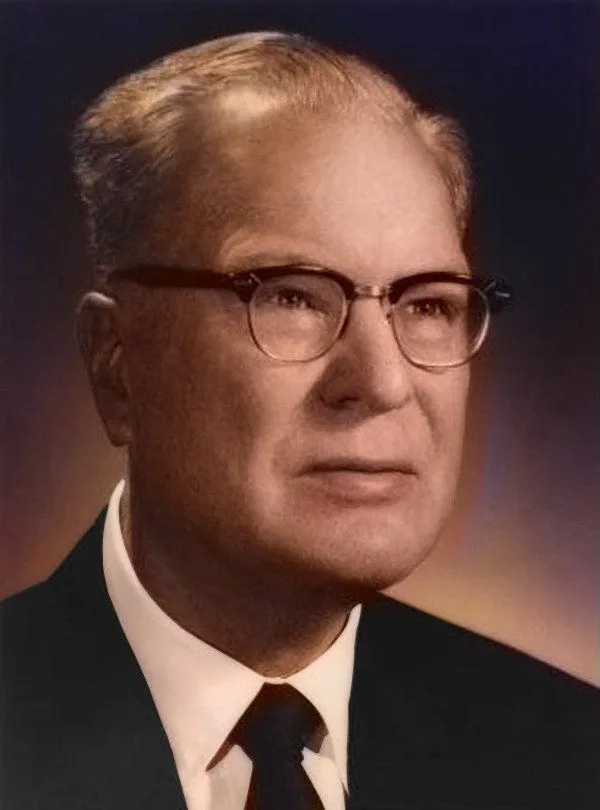
He was actually a patent attorney, and only a part-time inventor. His work at the New York Patent Office required him to make multiple copies of important documents, which he not only found extremely tedious and boring, but also discomforting, as he suffered from arthritis.
He conducted experiments of photoconductivity in his own kitchen, made the first crude design of a copier, and applied for a patent in 1938. He then approached numerous companies, including General Electric and IBM, all of which turned him down, citing that since there were already a few methods available to make duplicate copies of documents, no one would be interested in buying a copier.

However, Carlson contracted with a non-profit organization called the Battelle Memorial Institute to further his research and refine the technology. After some time, a New York-based seller of photographic paper obtained a license to produce and market a copying machine; subsequently, in 1949, the first xerographic copier called the Model A was launched.
Photocopier Working Principle
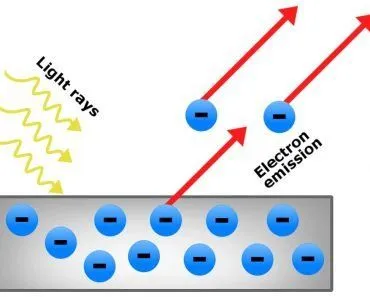
A photocopier works on two fundamental principles: the fact that opposite charges attract and the tendency of certain materials to become more electrically conductive after absorbing electromagnetic radiation, such as UV, infrared, visible light etc. (photoconductivity).
Most modern photocopiers rely on a technology known as xerography, which is essentially a dry photocopying technique. It involves using electrically-charged particles to attract and then deposit toner particles onto a piece of paper.
Parts Of A Photocopier
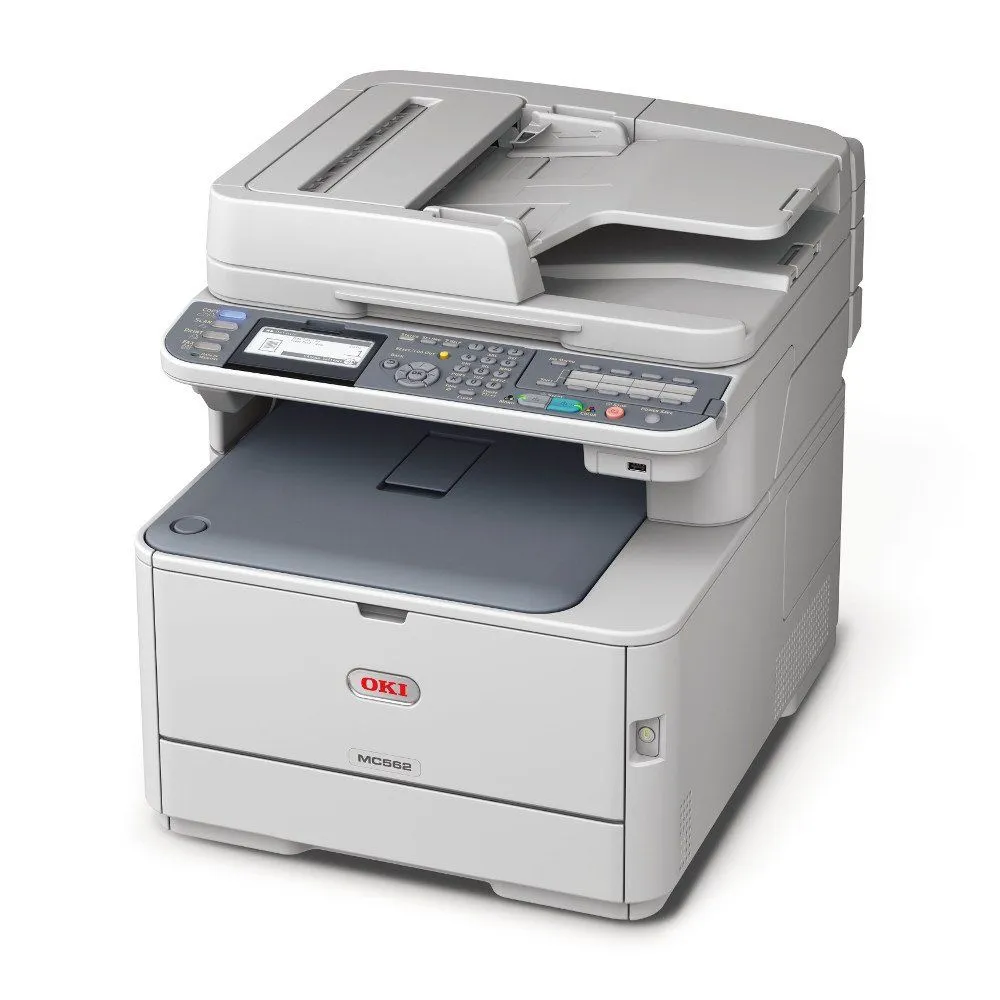
A typical photocopier (also casually known as a ‘xerox machine’) consists of the following components:
A photoreceptor drum (or belt), coated with a photoconductive semiconductor. Early machines used selenium; most modern photocopiers now use organic photoconductor (OPC) coatings, while some high-volume models still use amorphous silicon. This is arguably the most critical part of the machine.
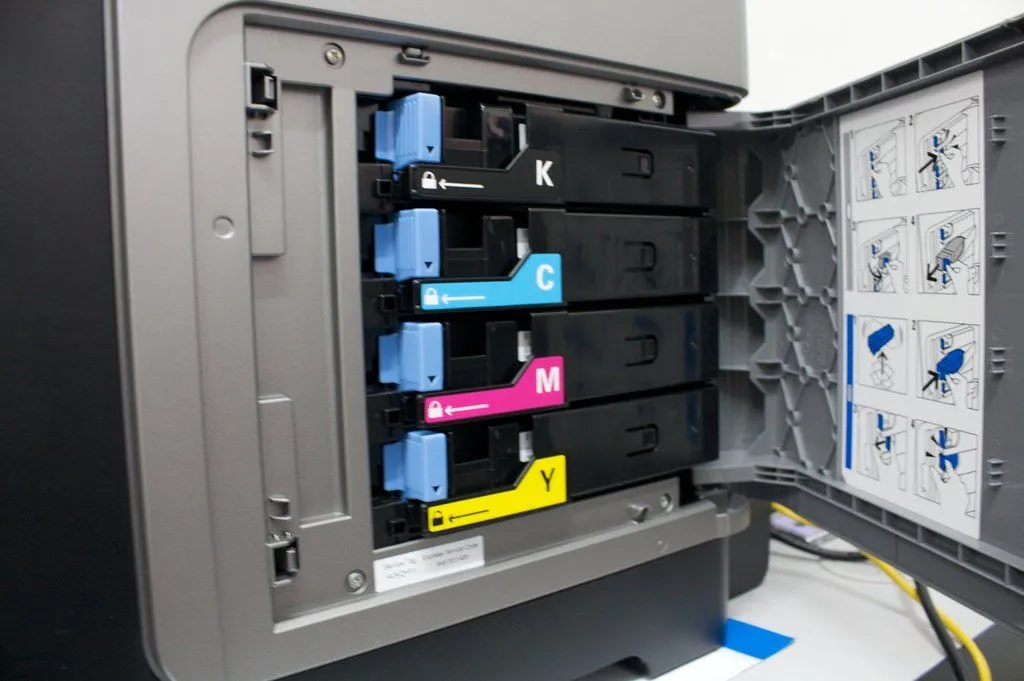
A toner, which, despite often being called ‘dry ink’, contains no liquid at all. It is a fine, free-flowing dry powder of tiny negatively-charged thermoplastic resin particles blended with a pigment (carbon black gives black toner its color) that create the duplicate image on a piece of paper.
Corona wires, which when subjected to a high voltage, transfer a field of positive charge to the surface of the photoreceptor drum and the copy paper.
A light source and a few lenses, which shine a bright beam of light on the original document and focus a copy of the image onto a specific place, respectively.
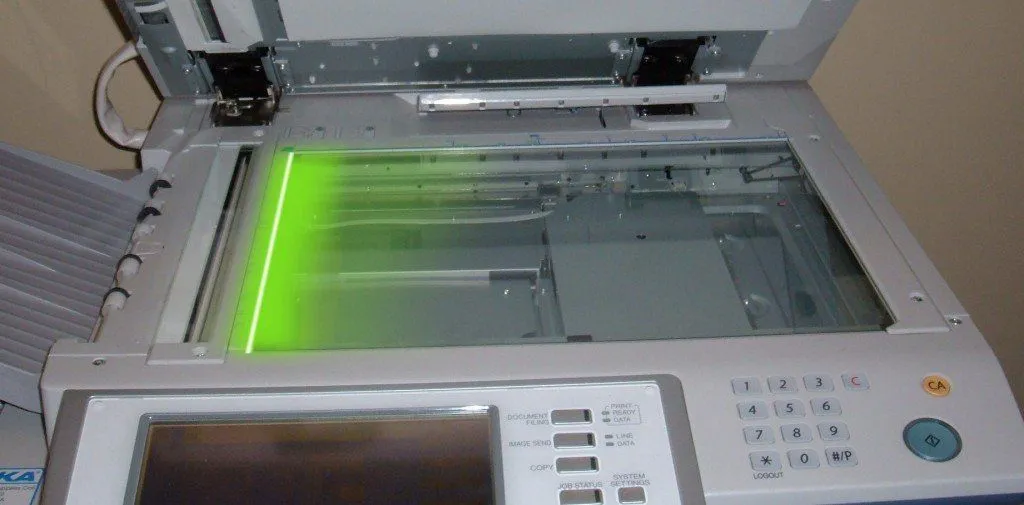
A fuser can be considered the ‘final’ main component of a photocopier, as a fuser unit melts and presses the toner image onto the copy paper and imparts the final touches to the duplicate image just before it’s ejected from the machine.
How Does A Photocopier Work?
To begin the photocopying process, the top lid of the photocopier is opened and the master copy is placed face-down on the glass surface, where a bright light beam will scan the entire document. White areas on the paper reflect more light, while black areas reflect little or no light. An electrical shadow (or image) of the master copy is formed on the photoconductor.
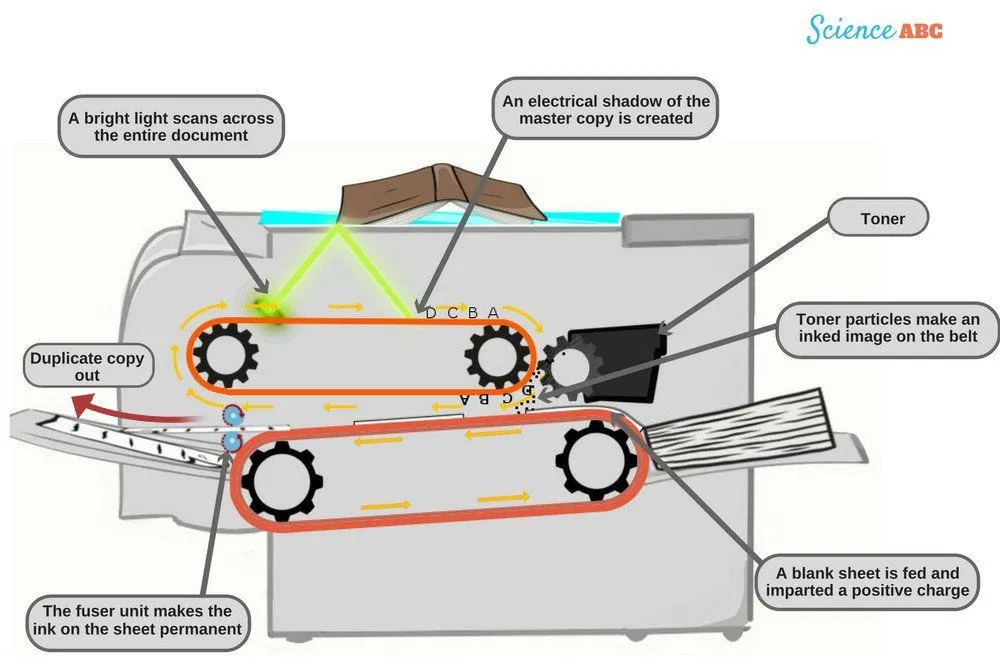
As the conveyor belt (with the photoconductor coating) moves, it takes the electrical shadow along with it too. The negatively-charged toner particles stick to the electrical shadow and an inked impression of the master copy is made on the conveyor belt.
A blank piece of paper is fed into the photocopier from the other side, which slowly moves towards the photoconductor belt. As it moves on the conveyor belt, a strong positive charge is imparted to it. The strong positive charge of the blank paper pulls the negatively-charged toner particles towards itself. Consequently, a duplicate image of the master copy is formed on the blank paper.
Finally, just before spitting the paper out, a fuser unit (a pair of hot rollers) supply heat and pressure so the toner particles are permanently attached/fused onto the paper. This is why a freshly ejected duplicate copy is quite warm to the touch.
What Is A Xerox Machine, And Why Do We Call It ‘Xeroxing’?
Here is something that trips a lot of people up: a ‘xerox machine’ is simply a photocopier. ‘Xerox’ is not a separate technology; it is a brand name that became so famous it turned into a verb. To understand why, you have to go back to the name of the process itself.
When Chester Carlson first made his copier work, he called the process electrophotography. It was an accurate name, but a clunky one. The Battelle Memorial Institute, which helped develop the technology, turned to a classics scholar for something snappier, and the answer came from ancient Greek: xeros (meaning ‘dry’) and graphein (meaning ‘writing’). Put them together and you get xerography, or ‘dry writing’, a nod to the fact that, unlike earlier wet copying methods, this one used no liquid chemicals at all.
The small Rochester firm that licensed the invention, the Haloid Company, coined the trademark Xerox from that same root and eventually renamed itself after it. The machine that made the name a household word was the Xerox 914, launched in 1959 as the first automatic copier that worked on ordinary plain paper. It was such a runaway success that ‘to xerox’ became everyday shorthand for ‘to photocopy’, even on machines built by rival companies. So when someone asks you to ‘xerox’ a page, they are really just asking for a photocopy, made by exactly the xerographic process described above.

A Block Diagram Of The Photocopying Process
If you prefer to see the whole sequence laid out at a glance rather than read it step by step, the xerographic process breaks neatly into six stages that repeat for every copy you make:
- Charging: a corona wire (or charge roller) coats the photoreceptor drum with a uniform blanket of static charge in the dark.
- Exposure: light reflected from the original is focused onto the drum. Wherever bright light lands, the photoconductive coating becomes conductive and the charge drains away, leaving a hidden ‘latent image’ of the dark areas.
- Developing: oppositely-charged toner powder is brought close to the drum and clings only to the still-charged regions, turning the invisible latent image into a visible one.
- Transfer: a fresh sheet of paper is given a stronger charge and pressed against the drum, pulling the toner off the drum and onto the paper.
- Fusing: heated rollers melt and press the toner so it bonds permanently to the page (this is why a fresh copy feels warm).
- Cleaning: any leftover toner is scraped or brushed off the drum and the surface is discharged, ready for the next copy.

The same six-stage loop is what runs inside a laser printer too; the only real difference is that a printer paints the latent image with a scanning laser instead of light reflected from a paper original.
Do Photocopiers Give Off Radiation?
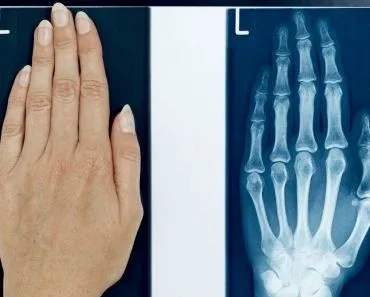
A common worry, especially for anyone who works next to a copier all day, is whether the machine bathes them in harmful radiation. The reassuring short answer is no: a photocopier does not produce X-rays or any other ionizing radiation. It reads the original with an ordinary bright lamp, not with the high-energy rays used in medical imaging.
That lamp does emit a little ultraviolet (UV) light along with the visible light, and the high-voltage corona wires generate a small amount of ozone (a reactive form of oxygen). Both are real, but both are small. A peer-reviewed study published in the Journal of Hazardous Materials measured photocopy centers and found hourly ozone concentrations in the range of roughly 2 to 46 parts per billion, well under the typical occupational limit of about 100 parts per billion averaged over an eight-hour day. The same study found UV exposure (UVA, UVB and UVC combined) stayed below international safety guidelines.
In practice, the glass platen blocks most of the UV from reaching you, so the simplest precaution is the obvious one: keep the lid closed while copying rather than staring into the light. Good room ventilation handles the trace ozone. The bigger long-term consideration in a busy copy room is fine toner dust, which is why high-volume machines use sealed cartridges and filters. For an occasional copy at the office, though, the radiation a photocopier gives off is nothing to lose sleep over.
References (click to expand)
- (1998) Photocopier Hazards and a Conservation Case Study. The American Institute for Conservation
- Tutorial: Photoconductivity | Fundamentals of Photovoltaics. MIT OpenCourseWare
- US2297691A - Electrophotography - Google Patents. Google Patents
- Xerography | Photocopying, Laser Printing, Electrostatic Printing - Britannica
- Photoconductive Properties of Semiconductors. The University of Illinois Urbana-Champaign
- Chester Carlson and the History of Xerography. Xerox
- Xerography. ASME Historic Mechanical Engineering Landmark
- Xerography. Wikipedia
- An assessment of ozone levels, UV radiation and their occupational health hazard estimation during photocopying operation. Journal of Hazardous Materials (2014). PubMed