Table of Contents (click to expand)
Amazon’s Alexa builds a voice profile, or Voice ID, for each user from their speech samples. When a command arrives, neural speaker-recognition models compare the incoming voice with those stored profiles to tell who is speaking, letting Alexa personalize responses for different people in the same household.
Speech is the natural mode of communication between people. If you watch a conversation flow, it becomes apparent how effortlessly we can speak, how fundamental it is to the way we are. And rightly so, as it enables the quick transfer of information filled with the rich nuances of language, culture, gestures, and tone.
This mode of input has largely been unused when it comes to human-computer interaction; for most of our communication with computers, we have used keyboards, mouse and touch screens with our thumbs and fingers.
This is not for lack of imagination though, as science fiction has been rife with voiced personas who assist human protagonists, from JARVIS helping Tony Stark build a next-level flying bodysuit in Iron Man to Samantha helping the main character of Her get out of a rut and discover what love truly means.
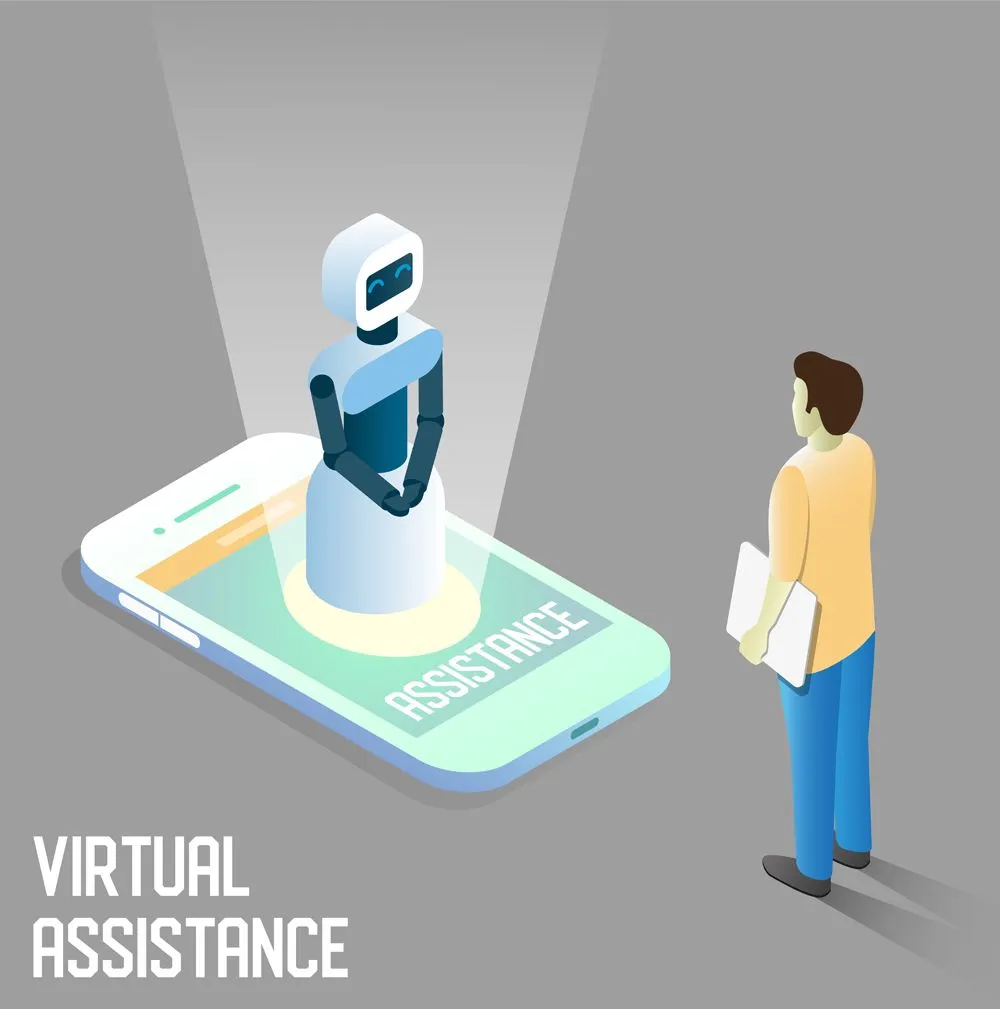
Although the current state of voice assistance is nowhere near the capabilities of JARVIS or Samantha, we have seen the mass-market adoption of voice-enabled devices in recent years. Among these, the market leader that has annihilated its competition and still commands roughly two-thirds of the US smart-speaker market is the Amazon Echo.
It lets you play music and games, order things from Amazon, set reminders, stream podcasts, make to-do lists, and automate home lights, along with many other functionalities that are added by Amazon or third-party developers who build on top of the Alexa platform.
All of this functionality is powered by your voice alone! The question is, how does Alexa recognize who is giving the commands? Let’s try to understand the context around Amazon Echo to get a better idea of how this behind-the-scenes magic occurs.
Alexa’s Conception
Amazon began developing its voice-enabled smart speakers in its Lab126 office. This is wholly owned by Amazon, is situated in Silicon Valley, and is responsible for its research, development and computer hardware. The Echo device was conceived in 2010 as an attempt for Amazon to broaden its range from its e-reader Kindle.
The device debuted much later, in November 2014, and the initial sale was invite-only, before it became widely available in the US by July 2015. In the first release, the device was shipped with a remote control, as there was ambiguity among the creators as to whether the speaker alone would suffice to register voice commands. After the first batch of this product was used by consumers, it became clear that the device was adept on its own and the remote control was phased out in subsequent releases.
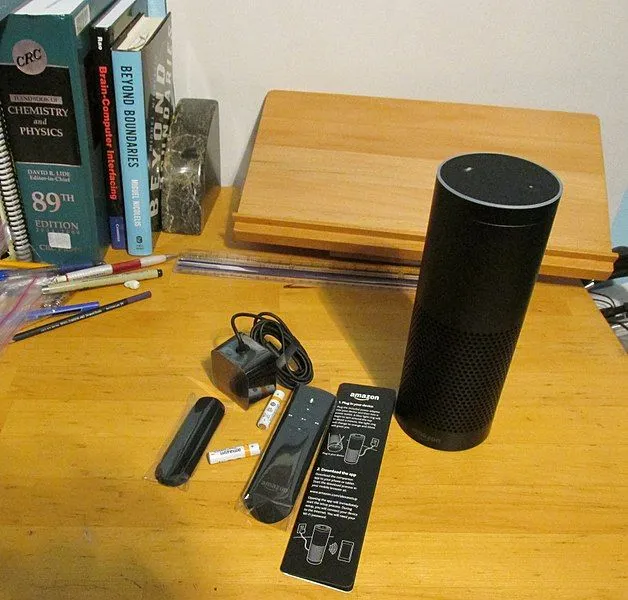
The wake word (the word that the device is waiting to listen for before registering a command) for the device during the development of the device was ‘Amazon’ and the device was itself called the Amazon Flash. However, the development team felt that Amazon is a very common word, one that is used in conversations and during television commercials, so this could trigger the device unintentionally and make it order something from Amazon. They suggested ‘Alexa’ as the wake word and Amazon Echo as the device name, which seems like a decision that has paid off. That being said, a user can change the wake word to ‘Amazon’, ‘Echo’ or ‘Computer’ if they wish.
The device has been wholeheartedly adopted not only by consumers, but also by developers. The third-party “skills” that Alexa can perform crossed 100,000 back in 2019 and have since grown past 130,000, all of which rely on the robust ecosystem that Amazon has built.
The Alexa Ecosystem – The Journey Of Your Voice
By January 2019, Amazon had already sold 100 million Alexa devices, and that figure crossed half a billion by 2023. Alexa is integrated into many of the products released by Amazon, as well as into third-party products. Amazon has created a platform for voice-enabled devices and third-party skills that developers can use without needing the server space while training Alexa to perform particular tasks.
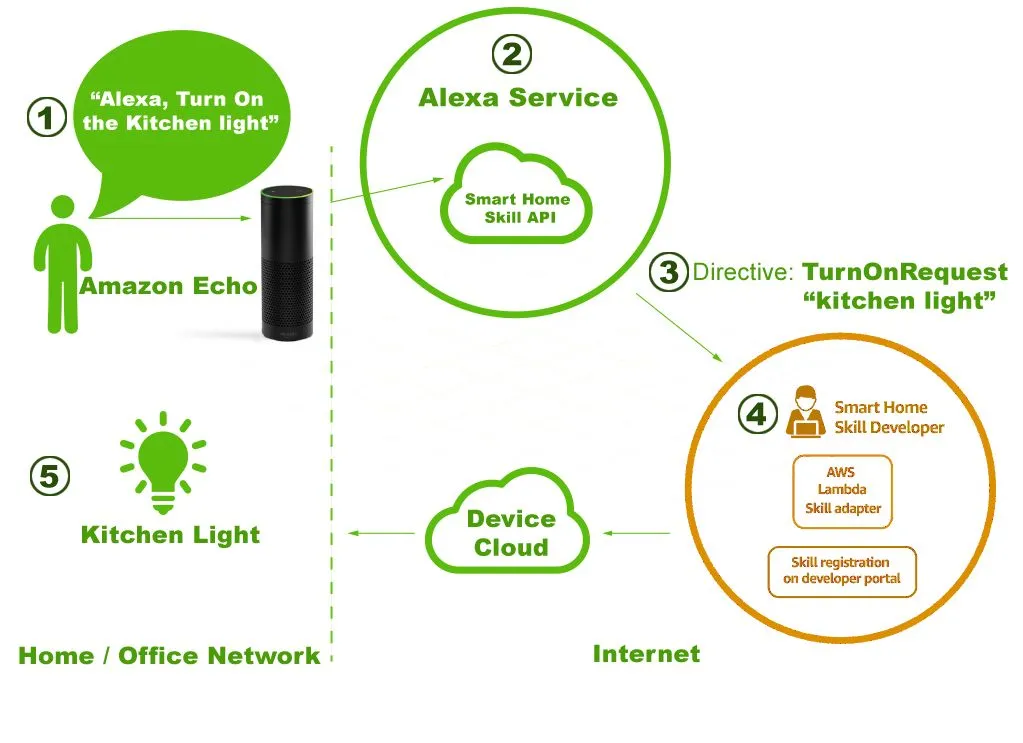
The Echo itself doesn’t house much of the processing power to recognize commands and fulfill them. It holds an array of microphones with a cylindrical speaker. The processing is done through the mammoth cloud computing infrastructure that Amazon already has in place, namely AWS (Amazon Web Services). A small computer in the device constantly keeps listening for its wake word, after which it registers the command you give.
As you command something to Alexa, the inboard computer sends the command to the cloud, which is then interpreted by the Alexa Voice Service (AVS). The command is broken down by AVS and the necessary action is taken, depending on the skill type, namely whether it is an in-house skill or one developed by a third party. The actions are then relayed back to the Echo and delivered to you. All of this is done through your WiFi, in seconds, without so much as a whisper to you. The next interesting bit comes when it recognizes your voice!
How Does Alexa Recognize Your Voice? – Voice Profiles
When you command Alexa to perform a certain task, you preface your command with the wake word (‘Alexa’, ‘Amazon’, ‘Echo’ or ‘Computer’). Your voice is detected as the analog input in this instance and must be converted into a digital format for the device to understand your command and perform the necessary action.
This is where analog-to-digital converters come in, which Alexa does with its Automatic Speech Recognition (ASR). This deep-learning process enables Alexa to convert spoken sounds into words, making it the first step to enable voice-enabled assistance.
When you start using Alexa, you can train it to recognize you by creating your unique voice profile, which Amazon calls Voice ID. This profile is built from a handful of your spoken samples, which Alexa boils down into a numerical “signature” of the characteristics of your voice. When you speak to it going forward, neural speaker-recognition models compare the incoming voice with your stored signature and work out whether it is, in fact, you on the other end. It uses the same process to tell apart multiple users in the same household, so each person gets their own calendar, music and shopping list.
Amazon actually runs two models in tandem here. One is text-dependent: because most commands start with the wake word, it can match the specific way you say “Alexa” against the way you have said it before. The other is text-independent, matching the general texture of your voice no matter what words you use. Combining both as deep neural networks gave Amazon what its researchers called an order-of-magnitude jump in accuracy, and newer Echo devices increasingly run this recognition on their own AZ1 neural chip rather than shipping every word to the cloud.
When you access a third-party skill with your voice, Alexa can pass along an anonymous identifier tied to your profile, which lets the skill distinguish you from other users without handing over a recording of your voice. You can personalize your settings across the skills Alexa offers and assign different privileges to different members of the household.
All of this is getting a serious upgrade, too. In 2025 Amazon began rolling out Alexa+, a generative-AI version of the assistant that holds far more natural, back-and-forth conversations and remembers context across your devices. It still leans on the same Voice ID foundation to know who it is talking to, but the answers on top are now powered by large language models rather than a fixed set of scripted skills.
So go ahead, create your voice profile and customize your Echo. And if you haven’t gotten your hands on one yet, you can learn more and pick one up here.
References (click to expand)
- Alexa and Alexa Device FAQs. Amazon.com
- What Is Automatic Speech Recognition? - Alexa Skills Kit .... Amazon.com, Inc.
- Amazon Transcribe – Speech to Text - AWS. Amazon Web Services, Inc.
- Alexa’s New Speech Recognition Abilities Showcased at Interspeech. Amazon Science.
- Introducing Alexa+, the Next Generation of Alexa. Amazon.com.
- Amazon Alexa. Encyclopaedia Britannica.